The Big Phive
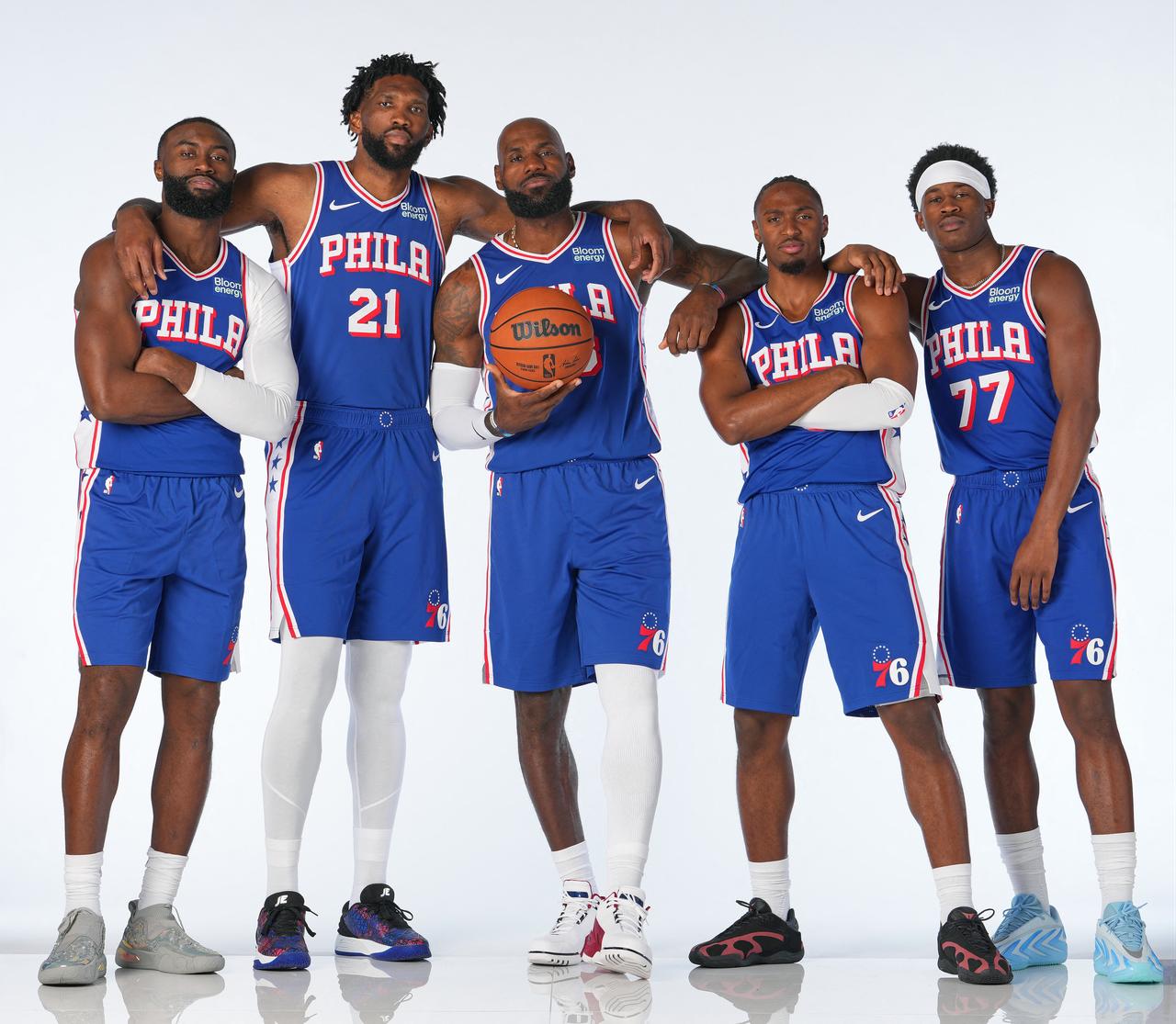
LeBron James, Joel Embiid, Tyrese Maxey, Jaylen Brown and VJ Edgecombe are more than an outrageous starting lineup on paper. Philadelphia’s first two victories have given their five-star experiment a remarkable beginning.
It takes a special kind of NBA roster to make five familiar faces look like something invented for a basketball video game. Yet that is exactly what Philadelphia unveiled for the 2026–27 season: LeBron James beside Joel Embiid, Tyrese Maxey, Jaylen Brown and VJ Edgecombe. A lineup assembled from different eras, playing styles and expectations was suddenly supposed to function as one unit.
Within two games, the 76ers had already provided enough drama to justify the attention. On October 20, Philadelphia spoiled the reigning champion New York Knicks’ opening night, winning 106–100 at Madison Square Garden. On October 22, the team staged an even more remarkable performance, erasing a 29-point deficit to defeat the Cleveland Cavaliers 114–106 in its home opener.
Those results transformed the conversation from speculative roster construction to actual basketball. The nickname “The Big Phive” plays on the number five and Philadelphia’s familiar “Philly” identity, bringing the players together as a collective cultural image rather than a promise of guaranteed championships.
How the Big Phive Came Together
The foundation remained the pairing of Embiid and Maxey, two players who had already given Philadelphia a recognizable offensive identity. Embiid’s interior scoring, screening and physical presence drew defensive attention, while Maxey’s quickness and perimeter threat offered a contrasting way to attack opponents.
Then came the major changes. LeBron James arrived from Los Angeles, bringing two decades of professional experience and one of basketball’s most recognizable public identities. Jaylen Brown joined from Boston, giving Philadelphia another powerful scorer and versatile wing. VJ Edgecombe, the young guard, completed a starting group that combined star reputation with emerging potential.
Of course, names do not automatically produce chemistry. James has traditionally controlled the pace of games as a primary decision-maker. Brown thrives attacking favorable matchups. Maxey needs opportunities to push tempo. Embiid demands touches near the basket and in the midrange, while Edgecombe is developing within an established group. The challenge for coach Nick Nurse is making every strength useful without reducing the others.
The Cavaliers Game Made the Nickname Feel Real
Philadelphia’s home opener was initially a disaster. Cleveland raced to a 69–45 halftime lead, and its largest advantage reached 29 points. The Cavaliers looked comfortable, the Sixers looked disjointed and any celebration of the newly assembled roster appeared premature.
Then the second half changed everything. Philadelphia outscored Cleveland 69–37 after the break. Maxey finished with 32 points, Embiid contributed 24 and Brown scored 21, including an important fourth-quarter stretch. James provided 17 points and 10 rebounds, while Edgecombe added 11 points, seven rebounds and six assists.
The win was the largest comeback in 76ers franchise history during the NBA’s play-by-play era. The official NBA highlights capture how Philadelphia turned defensive stops into a wave of momentum. Instead of collapsing under the weight of its own expectations, the team responded with collective urgency.
One performance cannot settle the argument over whether the Big Phive can sustain that level of coordination through the entire season. But it did provide the kind of early evidence that fans need before an ambitious roster stops feeling like an offseason fantasy.
What Each Member of the Phive Represents
The unusual appeal of this lineup is its contrast. James represents a historically significant career approaching its final stages. Embiid embodies Philadelphia’s long-running ambitions. Maxey is a homegrown centerpiece of the current era, Brown arrives with championship experience from a major rival, and Edgecombe is the youngest face of the group’s potential future.
That combination creates multiple fan storylines at once. Some follow LeBron’s longevity. Others want to see Embiid finally lead a deep postseason run. Maxey supporters see the opportunity for another leap, while Brown and Edgecombe bring entirely different expectations. The team must negotiate all those narratives while solving the ordinary details of spacing, turnovers and defense.
Why the Cartoon Lineup Works as a Sports Graphic
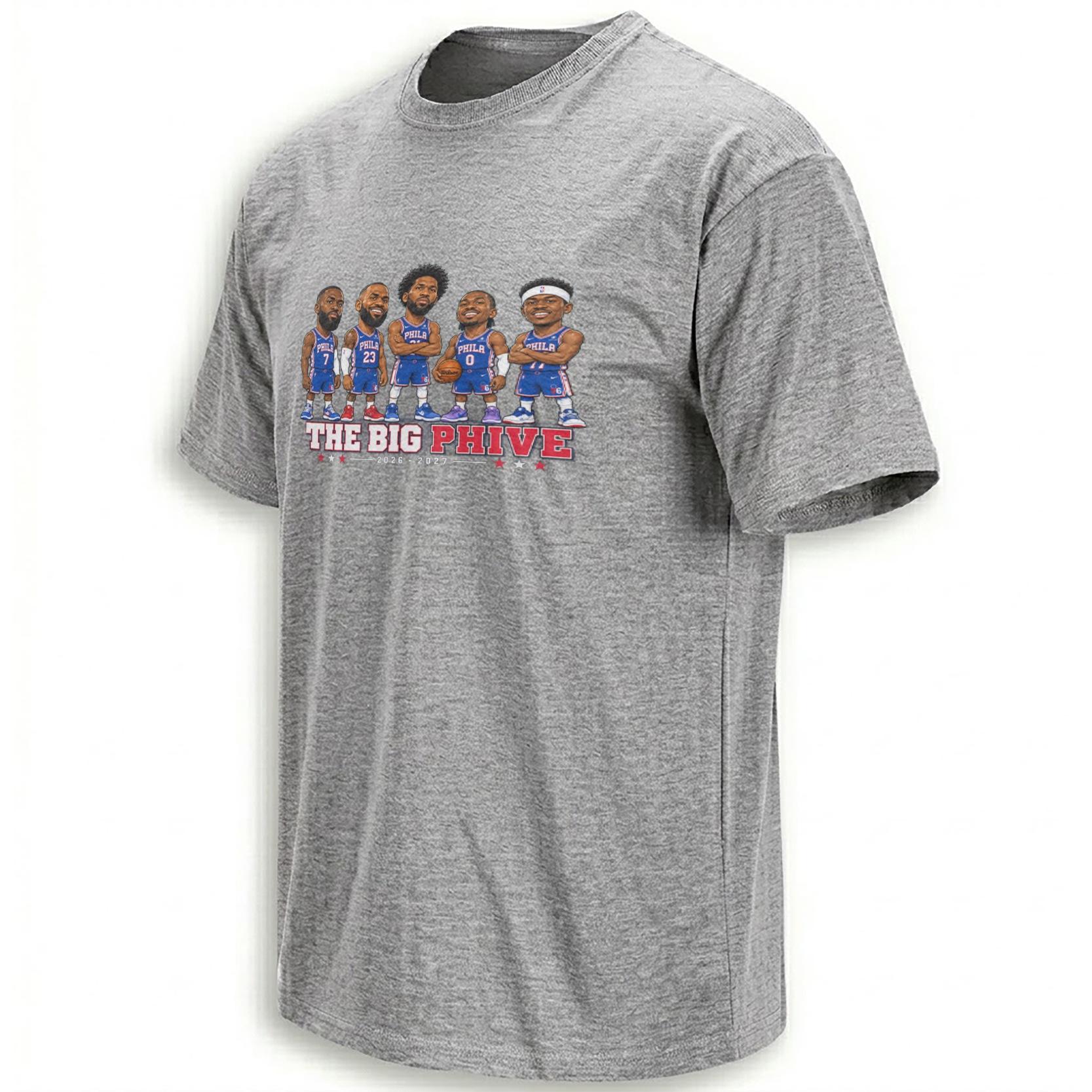
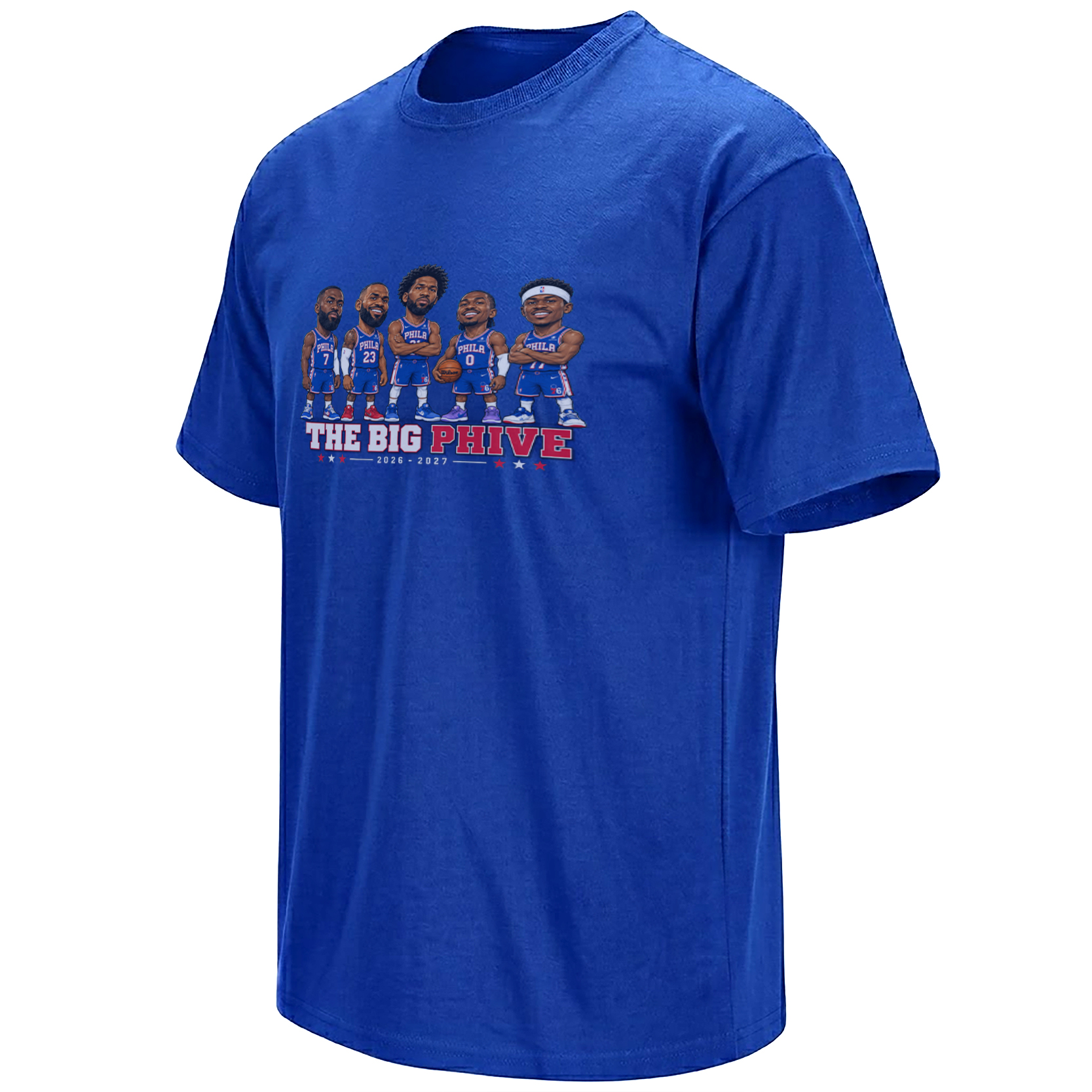
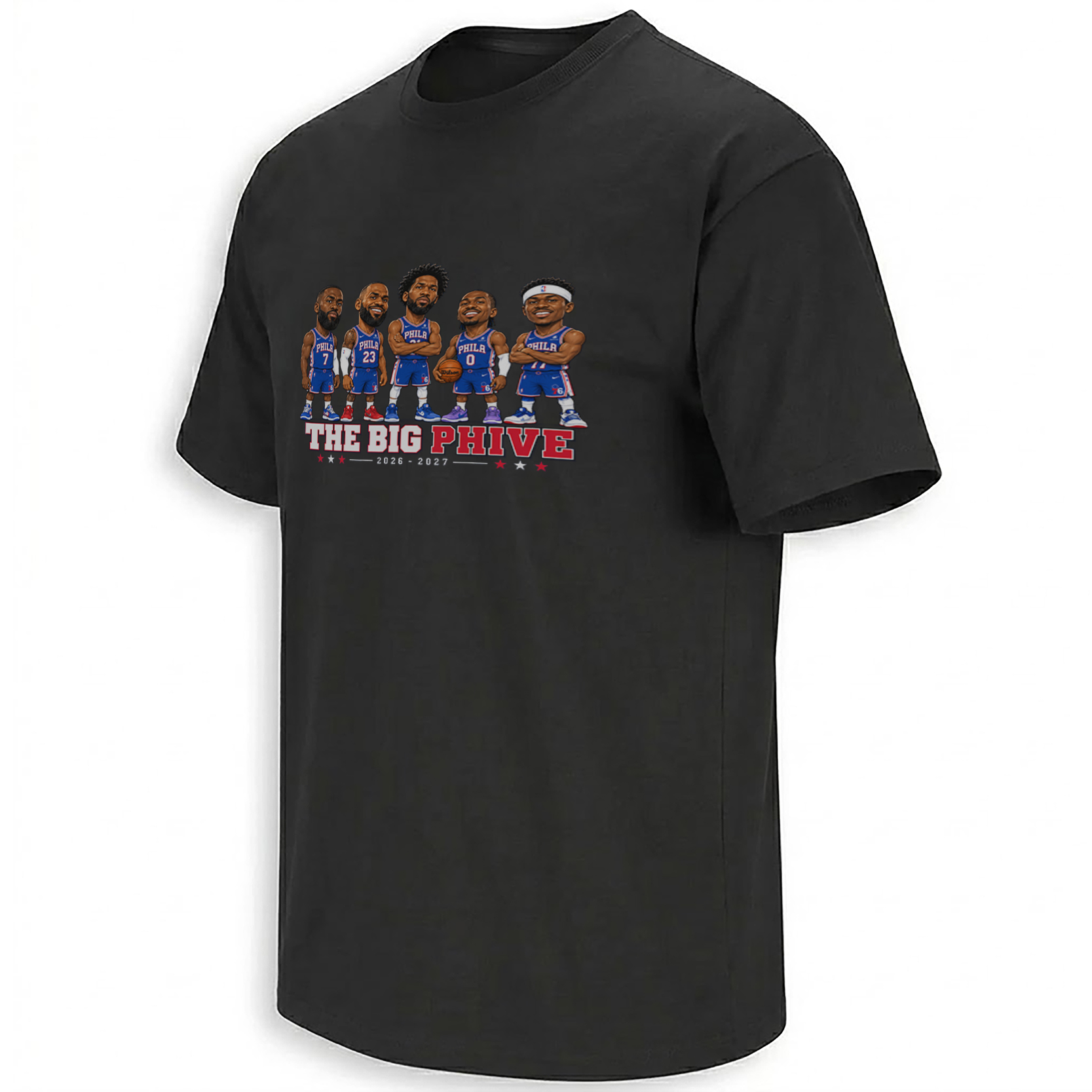
The Big Phive design turns those separate identities into an exaggerated illustrated group portrait. Its cartoon approach softens the usual seriousness of a superstar lineup, presenting the players as a cast in the same story rather than five isolated advertisements.
Oversized character features, bold headline typography and Philadelphia’s blue-and-red identity give the composition the feeling of a throwback basketball cartoon or sports-magazine cover. The name itself is a deliberate wordplay: “Phive” turns the familiar idea of a Big Five into something unmistakably local.
Unlike a graphic focused solely on opening-night statistics, the illustration does not expire after one game. It records the roster’s identity at the beginning of this unusual chapter. Whether the season develops into a sustained contender story or becomes a study in expectations, the five players are its defining image.
Three Colorways, Three Different Visual Moods
The same artwork has a different personality depending on the background. Sport Grey creates an archival, casual sportswear atmosphere. Royal Blue connects the graphic directly to Philadelphia’s familiar basketball palette, while Black emphasizes the contrast of the characters and headline.
From Five Stars to Philadelphia’s Next Big Debate
The internet’s fascination with star-heavy rosters is not new. Every ambitious NBA assembly attracts two immediate camps: those imagining the best possible outcome and those predicting problems over touches, roles and defensive balance. Philadelphia now has all the ingredients for that kind of debate.
The opening victories supply an encouraging answer but not a final verdict. Against New York, the Sixers found enough execution to spoil a championship celebration. Against Cleveland, they demonstrated they could withstand an enormous deficit without abandoning the game.
The larger Philadelphia 76ers collection documents different chapters of this fan culture, while the NBA collection connects Philadelphia’s current roster experiment with other basketball moments.
Player-specific searches such as LeBron James, Joel Embiid and Tyrese Maxey offer additional perspectives on the personalities involved.
Frequently Asked Questions
Who are the Philadelphia 76ers Big Phive in 2026?
The nickname refers to LeBron James, Joel Embiid, Tyrese Maxey, Jaylen Brown and VJ Edgecombe.
What happened in the Sixers’ October 22 game?
Philadelphia recovered from a 29-point deficit to defeat Cleveland 114–106, completing a historic comeback.
What does “Phive” mean?
It is a Philadelphia-themed spelling of “five,” referring to the team’s five prominent starting players.
What colors are available for the Big Phive design?
The featured graphic is shown on Sport Grey, Royal Blue and Black backgrounds.
The Big Phive cartoon roster design captures the first season when these different basketball stories converged in Philadelphia.
The Big Phive Philadelphia 76ers 2026–27 design brings LeBron James, Embiid, Maxey, Jaylen Brown and VJ Edgecombe into one illustrated lineup, inspired by their dramatic opening victories and historic comeback against Cleveland.