Welcome to Ballhalla: The Valkyries’ Historic Finals Run
In only their second WNBA season, the Golden State Valkyries have reached the Finals. From Gabby Williams’ leadership to the noise inside Chase Center, Ballhalla has become one of basketball’s most distinctive new fan cultures.
When the Golden State Valkyries returned to Chase Center for Game 2 of the 2026 WNBA Finals, the arena looked like a declaration of belonging. Lavender shirts filled the seats, fans arrived wearing wings and supporters turned the San Francisco venue into the place they had named Ballhalla.
The occasion was extraordinary for a franchise in its second season. Golden State had reached its first WNBA Finals after sweeping the defending champion Las Vegas Aces in the semifinals. The Valkyries then defeated the Atlanta Dream 68–64 in Game 1, giving their supporters a victory to celebrate in the franchise’s first championship-series appearance.
Game 2 brought a different result. Atlanta responded with a 79–65 win on October 19, leveling the best-of-seven series at one game apiece. The defeat did not silence Ballhalla. According to reporting from SFGATE, supporters gave their team an ovation after the final buzzer, reflecting a fan culture already deeply invested in the franchise’s story.
How Ballhalla Became the Home of the Valkyries
The name Ballhalla draws on Valhalla, the mythological hall associated with Norse warriors, transforming it into a basketball expression that fits the Golden State Valkyries name. It gives the arena a character distinct from traditional venue branding.
Instead of functioning only as a nickname for Chase Center, Ballhalla represents the collective experience of attending Valkyries games. The chants, purple apparel, coordinated fan sections and shared rituals have helped create a distinctive identity for a club that began play in 2025.
This matters because expansion teams usually need years to develop the traditions of older franchises. Golden State started with the unusual advantage of a basketball-rich Bay Area audience, but the speed with which supporters adopted a dedicated Valkyries identity has been remarkable.
Ballhalla quickly became a place where women’s basketball could feel both intensely competitive and openly celebratory. The name appears on official team materials, Finals giveaways and the broader visual language of the franchise.
From Expansion Team to WNBA Finals in Two Seasons
Golden State’s rise has broken the usual expectations for a new WNBA organization. In 2025, the Valkyries became the first expansion team to reach the playoffs in its inaugural season. They finished with a 23–21 record, laying the foundation for a second season built around defense, depth and disciplined team basketball.
In 2026, the team improved substantially, earning the No. 2 seed in the WNBA playoffs. The postseason run included a semifinal sweep of the Las Vegas Aces, one of the league’s most accomplished modern teams.
The 87–77 victory in the deciding semifinal game sent Golden State into the championship series. The achievement was historically significant: the Valkyries became the fastest expansion franchise to reach the WNBA Finals, doing so in only their second year.
Head coach Natalie Nakase’s approach was a major part of that identity. Rather than depending exclusively on one superstar, Golden State emphasized collective defense, player versatility and contributions throughout the rotation.
Gabby Williams and the Identity of the 2026 Valkyries
Gabby Williams emerged as one of the defining figures of Golden State’s playoff run. Her defensive instincts, versatility and ability to create offense under pressure gave the Valkyries a central personality as they faced increasingly difficult postseason opponents.
Against Las Vegas, Williams helped lead the series sweep. In Game 1 of the Finals, she scored 26 points, including 16 in the second quarter, as Golden State recovered from an early deficit to defeat Atlanta.
The Valkyries’ broader identity is equally important. Veronica Burton’s playmaking, Kayla Thornton’s experience, Tiffany Hayes’ scoring ability, Kiah Stokes’ interior defense and Janelle Salaün’s energy all contribute to the roster’s character.
The depth has also become a postseason talking point. After Golden State’s Game 2 loss, analysts questioned whether Nakase should shorten her rotation and increase the minutes of key players. The debate reflects the tactical challenges of a Finals series rather than any lack of talent in the squad.
The Lavender Crowd at Chase Center
The 2026 Finals supplied one of the clearest visual expressions of Ballhalla’s culture. At Chase Center, fans received lavender shirts bearing the words This Is Ballhalla, creating coordinated sections of color around the court.
That atmosphere became especially visible in photographs from Game 2. Rows of purple seats and supporters formed a backdrop that could be recognized even without the players in the frame.
Lavender and violet have become central to the Valkyries’ visual identity. Their connection with the team’s mythology-inspired name creates a recognizable palette, while gold accents communicate the elevated atmosphere of a championship run.
At an NBA or WNBA arena, coordinated colors can make a powerful statement. The crowd becomes part of the visual record, reminding viewers that postseason basketball is not only about the athletes but also about the community surrounding the team.
The 2026 Ballhalla Roster as a Visual Archive
The Ballhalla Shirt Golden State Valkyries 2026 Roster interprets this moment through a championship-era name-stack composition. Instead of emphasizing a single star, the design brings the team’s players together as a collective identity.
That approach is particularly well suited to Golden State’s story. The Valkyries reached the Finals through a team-centered system, making the roster itself an important part of what supporters are celebrating.
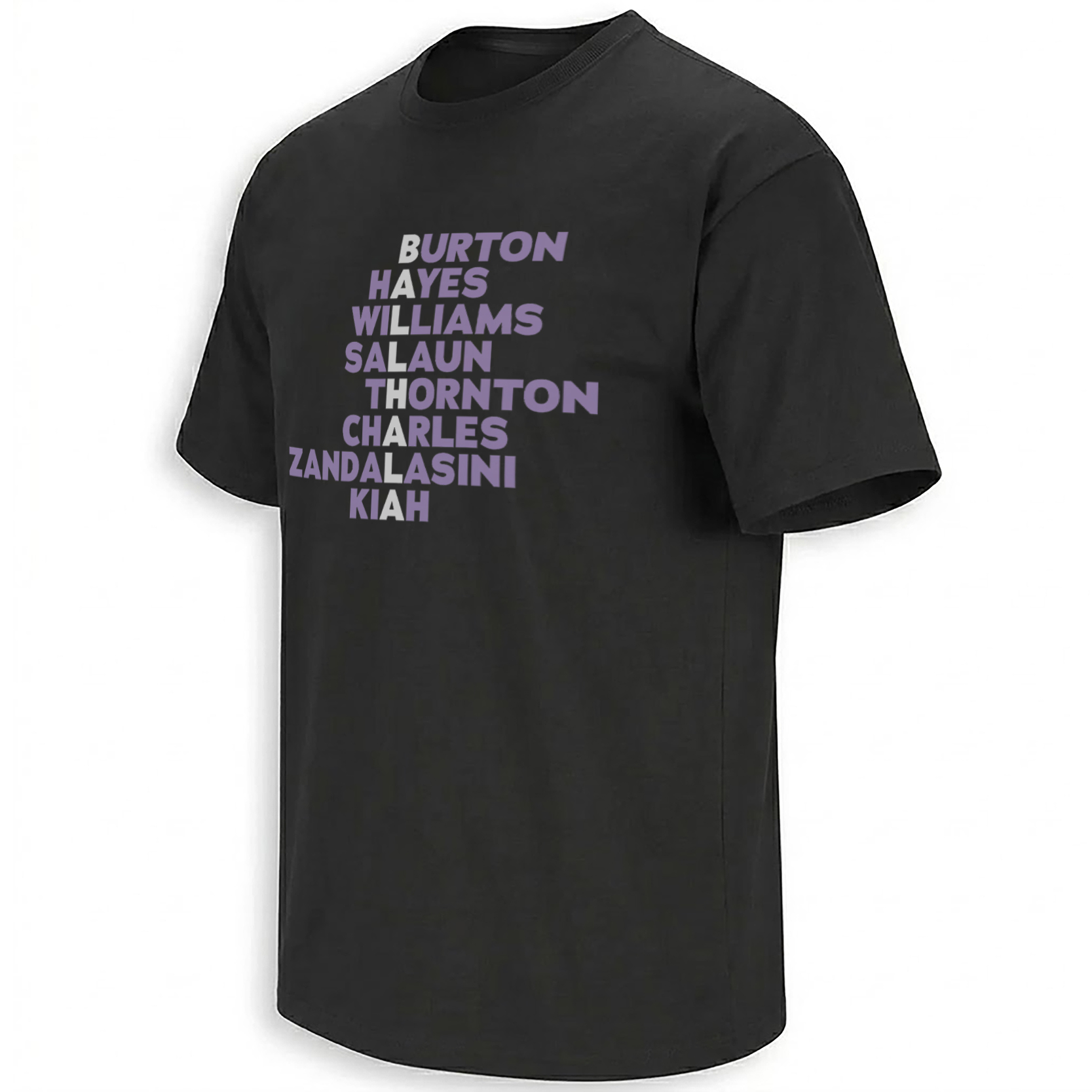
A lavender-and-violet roster tribute to Golden State’s first WNBA Finals appearance, emphasizing the collective team behind the historic run.
Explore the Ballhalla roster graphic →Name-stack graphics have long been part of championship sportswear. They resemble the layouts found on concert tour shirts, combining multiple names into one instantly recognizable group identity.
For a young franchise, that format can become a powerful form of memory. Years from now, the names will recall the players who established the team’s competitive foundation and helped introduce Ballhalla to a national audience.
Meet the Players Behind the 2026 Finals Run
Golden State’s official roster has evolved throughout the season, and the original opening-day list is not necessarily identical to every postseason game-day roster. The names most closely associated with the 2026 team include the following players listed in the franchise’s official roster records.
The roster blends international talent and WNBA experience. Williams and Salaün bring French basketball connections, Jocytė represents Lithuania’s emerging generation, and veterans such as Thornton, Hayes and Stokes offer established league experience.
This mixture helps explain why Golden State’s team identity feels broader than one individual personality. The franchise has built a style of play around complementary strengths, turning collective contribution into an essential part of its competitive appeal.
What Happened in WNBA Finals Games 1 and 2?
Game 1 at Chase Center was a defensive battle. Golden State struggled early but responded with a strong second quarter from Williams and a disciplined late-game performance. The Valkyries held Atlanta to just eight points in the fourth quarter and closed out a 68–64 victory.
Game 2 demonstrated how quickly a Finals series can change. Angel Reese produced 30 points and 16 rebounds for Atlanta, while the Dream took control during a third quarter in which Golden State managed only nine points.
Atlanta won 79–65, tying the series 1–1. The loss forced the Valkyries to consider how their defensive strategy and offensive rotations might need to change before Game 3 in Atlanta.
Why the Ballhalla Name Will Outlast This Finals Series
Golden State has already achieved something exceptional by reaching the WNBA Finals in its second season. Whether the series ends in a championship or a defeat, the Valkyries have established a competitive and cultural foundation at an extraordinary pace.
Ballhalla is a significant part of that foundation. Fans have adopted the name as a symbol of belonging, and the arena’s visual identity has helped the franchise distinguish itself within an increasingly competitive women’s basketball landscape.
Supporters exploring the Golden State Valkyries collection can follow the team’s player tributes, playoff graphics and Ballhalla-themed designs. The broader WNBA collection provides context for the league’s expanding fan culture and championship traditions.
For individual player designs, the Gabby Williams product archive connects one of Golden State’s leading postseason figures with the wider team story.
Frequently Asked Questions
What does Ballhalla mean for the Golden State Valkyries?
Ballhalla is the fan-created basketball identity associated with the Valkyries’ home arena, Chase Center, inspired by the mythological concept of Valhalla.
Did the Golden State Valkyries reach the 2026 WNBA Finals?
Yes. Golden State reached the Finals in its second season after sweeping the Las Vegas Aces in the semifinals.
Who are the Valkyries playing in the 2026 WNBA Finals?
The Golden State Valkyries are facing the Atlanta Dream in the 2026 WNBA Finals.
What is the WNBA Finals series score after Game 2?
The series is tied 1–1 after Golden State won Game 1 by 68–64 and Atlanta won Game 2 by 79–65.
What does the Ballhalla 2026 roster design celebrate?
It celebrates the Golden State Valkyries’ first Finals appearance through a collective player-name design reflecting the franchise’s 2026 team identity.
Ballhalla Golden State Valkyries 2026 Finals Roster Shirt commemorates the franchise’s historic second-season WNBA Finals appearance through a lavender-and-violet name-stack design celebrating Gabby Williams, Veronica Burton and the team that brought championship basketball to Ballhalla.