Aaron Ashby’s Nine-Out Save: The Great Ashby
Three scoreless innings, one 2026 NL pennant, and a pair of illustrated sunglasses that turn a baseball reliever into the protagonist of his own October story.
For Aaron Ashby, the most important nine outs of October came at Dodger Stadium on October 15, 2026. The Milwaukee Brewers had erased a four-run deficit against Los Angeles, but finishing the comeback required something far less theatrical than a home run: a pitcher willing to hold the lead for three entire innings.
Ashby was that pitcher. The left-hander shut out the Dodgers over the seventh, eighth and ninth innings, struck out three, and recorded the save in Milwaukee’s 6–4 victory. The Brewers had swept the NLCS 4–0 and reached their first World Series since 1982.
In a postseason built around Milwaukee’s team-wide resilience, this was an individual performance that deserved its own chapter. It also created the perfect context for an unusually simple piece of baseball humor: The Great Ashby.
What Did Aaron Ashby Do in NLCS Game 4 Against the Dodgers?
The Brewers needed more than an ordinary one-inning closing appearance. Los Angeles still had Shohei Ohtani, Mookie Betts and Freddie Freeman waiting in its dangerous lineup, and a single swing could have changed the series’ direction.
Manager Pat Murphy left Ashby in charge of the final stretch. In the seventh, he escaped trouble against the heart of the Dodgers order. Another tense moment followed in the eighth, but Ashby continued to execute. In the ninth, he retired the side in order, securing the National League pennant for Milwaukee.
MLB’s official video documents the three scoreless frames and three strikeouts. Its significance went beyond conventional closer statistics: Ashby provided all nine final outs of a championship-series clincher.

Why Was Ashby’s Nine-Out Save Historically Unusual?
Modern baseball often divides late innings among multiple specialized relievers. A three-inning save therefore asks one pitcher to handle a workload that conventional ninth-inning closers rarely face, especially under the pressure of an elimination game.
According to MLB’s account of Milwaukee’s dominant bullpen, Ashby joined a small group of pitchers who have recorded saves of at least three innings in postseason series-clinching games since the save became an official statistic in 1969.
The appearance also capped a spectacular start to his postseason. Through six playoff outings, Ashby had thrown 12⅓ innings without allowing a run. His role was not simply protecting an advantage; it was giving Milwaukee an entire late-game structure around which teammates could play.
Nine outs stood between Milwaukee and a World Series. Ashby took every one of them.
Editorial interpretation · 2026 NLCS Game 4What Does “The Great Ashby” Mean?
The phrase reads as a playful variation on The Great Gatsby, F. Scott Fitzgerald’s famous novel title. By replacing Gatsby with Ashby, the design transforms a familiar cultural reference into a deliberately exaggerated compliment for Milwaukee’s left-handed pitcher.
It works because postseason sports language already encourages mythmaking. A player can spend years building a professional reputation, then earn a new visual identity from one unforgettable night. The words The Great Ashby frame the reliever as a cool, composed October character without demanding that the nickname become official.
The joke is design-led. It should not be presented as a verified nickname formally adopted by the Brewers or as evidence that Ashby himself used the phrase.
Why Are Sunglasses the Centerpiece of This Brewers Design?
The The Great Ashby shirt avoids player portraits, stadium imagery and numerical scoreboards. Instead, the composition relies on gold lettering and a large, thick-framed pair of sunglasses against a deep navy background.
The upper phrase, THE GREAT, introduces the joke. The illustrated sunglasses create a theatrical pause. ASHBY then arrives in oversized lettering at the bottom, completing the reference. The artwork uses minimal elements to communicate confidence, personality and player identity.
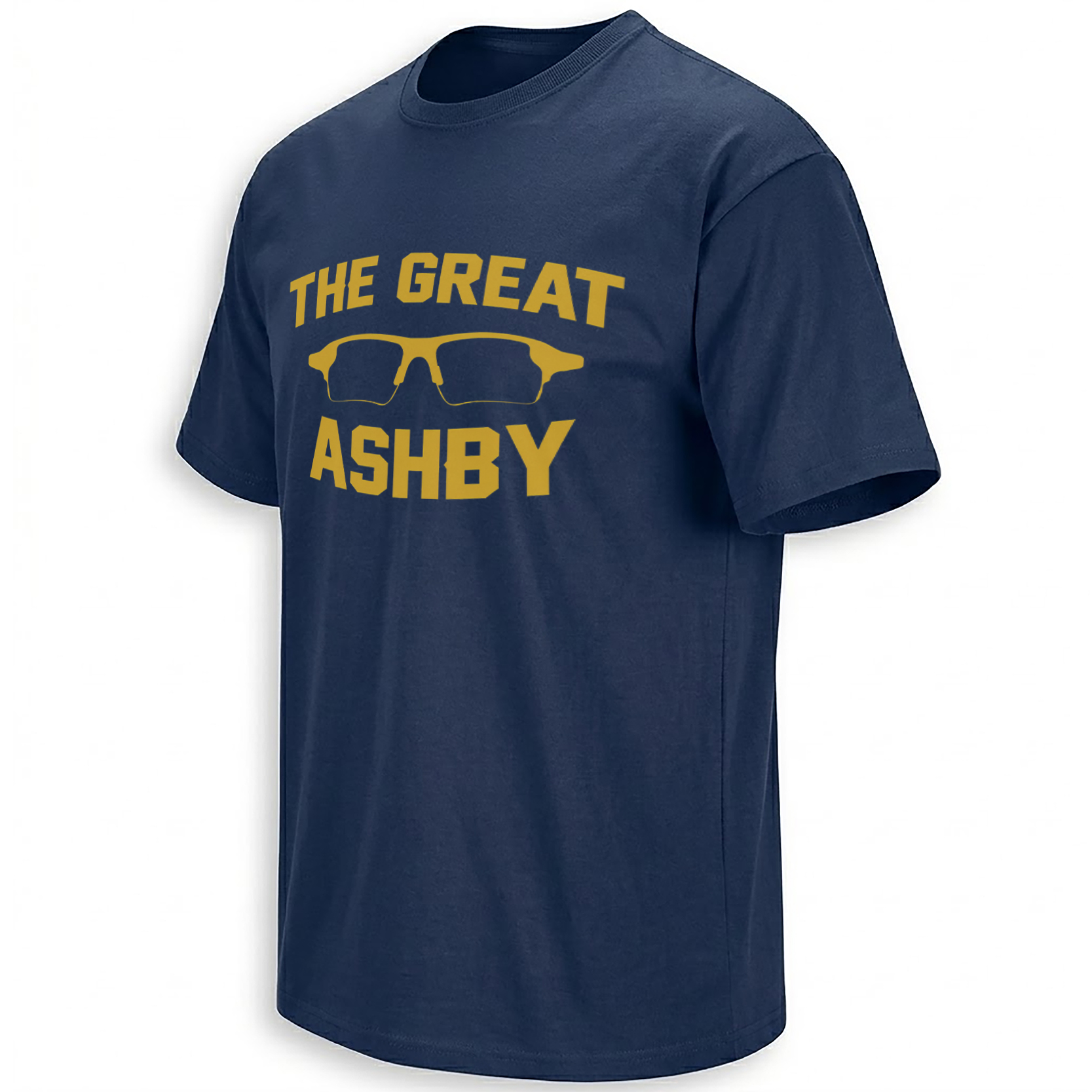
The gold-on-navy graphic transforms a historic postseason pitching performance into minimalist literary-style baseball humor.
View the illustration →The illustrated sunglasses symbolize composure and swagger. They are a creative design element, not a claim that Aaron Ashby wore these exact glasses during the NLCS. The image’s strength comes from its playful abstraction rather than photographic realism.
How Did Aaron Ashby Become Such an Important Brewers Pitcher in 2026?
Ashby’s value came partly from versatility. He had worked as a starter and opener in previous seasons, giving him experience with longer assignments. That background became especially useful as the Brewers leaned on their bullpen to navigate demanding postseason matchups.
He also had to adapt across a long regular season. The transition between pitching roles requires stamina, availability and trust from the manager. By October, the coaching staff could call upon Ashby for far more than a short matchup against one left-handed hitter.
Milwaukee’s pitching staff was an essential reason a 103-win club could survive October’s compressed schedule. Ashby’s three-inning save represented that philosophy at its most dramatic: one pitcher capable of delivering a full game’s worth of closing pressure.
Why Did Brewers Fans Celebrate Ashby After the Sweep?
Fans recognized that a highlight built around a final home run can obscure the pitcher who protected the result. In a genuine r/Brewers appreciation thread published after the clincher, supporters singled out his ability to escape difficult situations and praised his postseason intensity.
That discussion illustrates the difference between statistical recognition and emotional recognition. A box score assigns the save. Fans remember who made them believe the lead was safe, even against a lineup capable of turning a game around in seconds.
Where Does The Great Ashby Fit in Milwaukee’s Postseason Culture?
The Milwaukee Brewers collection documents the team’s postseason from several perspectives: player moments, locker-room rituals, NL championship imagery and fan-created slogans. The broader MLB archive places those moments within baseball’s changing October culture.
For more designs tied specifically to the left-hander, the Aaron Ashby product search provides a player-focused route. The Great Ashby is distinctive because it preserves the personality of one performance without requiring the entire postseason story to be printed on the graphic.
Frequently Asked Questions
What did Aaron Ashby do in the 2026 NLCS clincher?
Ashby pitched three scoreless innings, recorded three strikeouts and earned the nine-out save in Milwaukee’s 6–4 Game 4 win over Los Angeles on October 15, 2026.
Why is it called The Great Ashby?
The phrase is a playful literary-style reference reminiscent of The Great Gatsby, using Aaron Ashby’s surname to celebrate the Brewers pitcher’s postseason performance.
Is The Great Ashby an official Aaron Ashby nickname?
The design uses the phrase as creative fan expression; it should not be treated as a verified official nickname adopted by Aaron Ashby or the Milwaukee Brewers.
Why does the Aaron Ashby design feature sunglasses?
The sunglasses create a confident, understated visual character for the wordplay. They are an illustrated symbol rather than evidence of eyewear Ashby wore in the game.
Did Aaron Ashby help the Brewers reach the 2026 World Series?
Yes. His three-inning save completed Milwaukee’s sweep of the Dodgers and secured the team’s first World Series berth since 1982.
The Great Ashby sunglasses illustration captures the cool simplicity of Milwaukee’s nine-out postseason hero, while the Brewers collection preserves the wider pennant-winning story.
The Great Ashby connects Aaron Ashby’s nine-out save against the Dodgers in the 2026 NLCS with a playful literary-inspired sunglasses graphic. Gold lettering and deep navy styling capture the confidence, pitching endurance and fan appreciation surrounding Milwaukee’s World Series return.