Dodgers Dinosaurs 2026: How Teoscar’s Joke Became Dinosaur Baseball
One unexpected comment about fossil collecting turned into a running Dodgers joke. Then Teoscar Hernández gave it a voice inside the clubhouse, and fans started imagining an entire prehistoric baseball team.
The Los Angeles Dodgers reached the 2026 National League Championship Series with an unusual new nickname: dinosaurs. The joke did not begin with a mascot, promotional campaign or player interview. It started with a comment from San Diego Padres co-owner José E. Feliciano that fans initially interpreted as a reference to Los Angeles’ veteran-heavy roster.
The twist was that Feliciano was referring to something literal. Dodgers owner Mark Walter collects dinosaur fossils. That clarification could have ended the conversation. Instead, the internet found a second meaning that proved far more entertaining.
On October 7, after Los Angeles eliminated the Atlanta Braves in NLDS Game 4, Dodgers manager Dave Roberts celebrated his team’s resilience. Teoscar Hernández added the now-recognizable punch line: “And we’re dinosaurs!” The clubhouse laughed, and a strange rivalry reference began evolving into a fan-culture identity.
“And we’re dinosaurs!” — Teoscar Hernández
Why Are the Dodgers Called Dinosaurs in 2026?
The story began on October 1, when Feliciano and fellow Padres owner Kwanza Jones spoke with reporters during the Wild Card Series. Feliciano joked that Dodgers owner Mark Walter owned numerous dinosaurs. A reporter asked whether those dinosaurs were on the baseball field.
According to Sports Illustrated’s October 2 explanation, Walter has a documented interest in dinosaur fossils, including a Tyrannosaurus rex skull associated with his Chicago office. The original remark concerned that collection. Treating it as a direct insult about the players’ ages would misrepresent its documented context.
But the reporter’s interpretation was enough to give the joke a second life. Los Angeles has experienced veterans alongside younger players, making the word “dinosaurs” easy to repurpose as playful commentary about experience. The humor no longer depended entirely on what Feliciano had originally meant.
How Did a Fossil Comment Become a Dodgers Rally Cry?
The transformation happened in stages. First came the ambiguity of the ownership comment. Then came the interpretation that the Dodgers themselves were dinosaurs. Finally, Hernández repeated the identity in a celebratory setting after the Dodgers advanced to the NLCS.
That final moment mattered because a potential rival’s joke had become something the clubhouse could laugh at. Rather than treating the nickname solely as criticism, Hernández used it to punctuate Roberts’ message about the team. Fans recognized the comic potential almost immediately.
The Real October Baseball Behind the Dinosaur Meme
The clubhouse celebration followed a specific postseason achievement. Andy Pages supplied a decisive two-run single in the seventh inning of NLDS Game 4 against Atlanta, and Max Muncy later homered. Los Angeles won 4–1 on October 7, taking the best-of-five series 3–1.
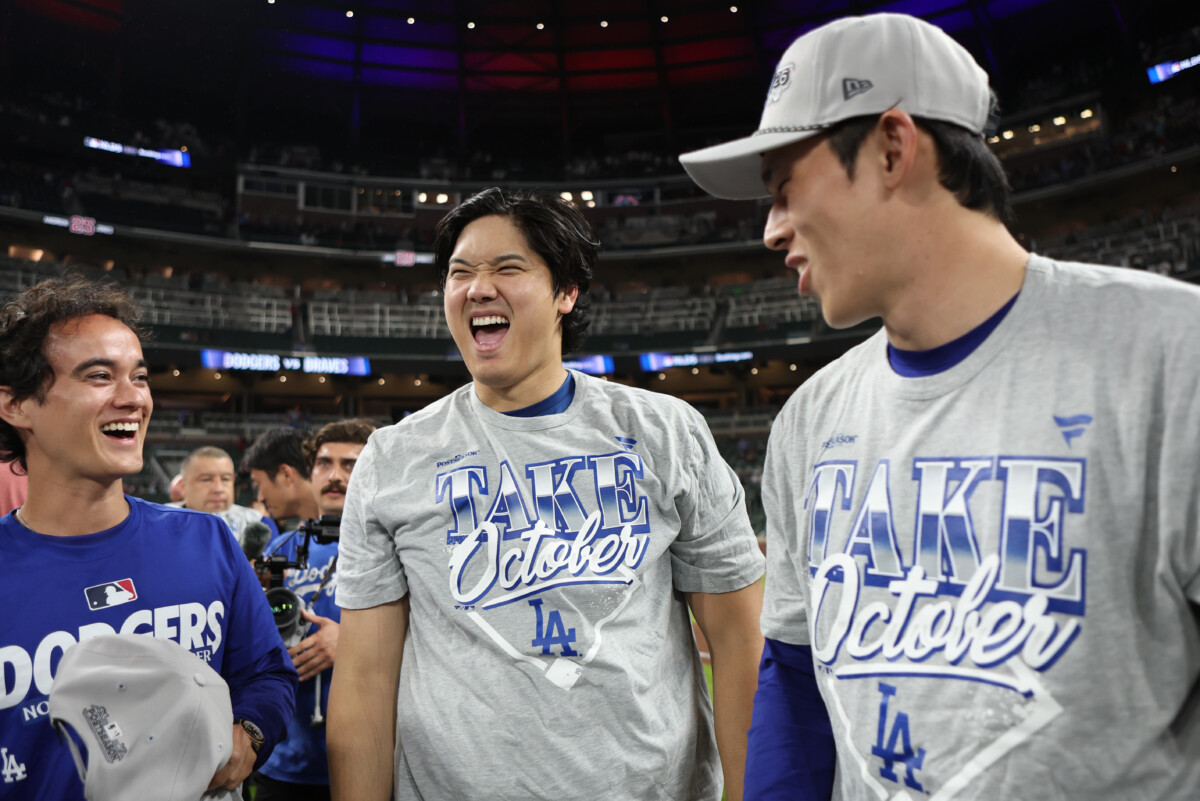
The victory brought the roster together for another postseason celebration. A photograph from that evening shows Shohei Ohtani, Roki Sasaki and interpreter Will Ireton celebrating at Truist Park. It is one of the real moments surrounding the clubhouse atmosphere from which the dinosaur joke emerged.
The Original Social Post Behind the Dinosaur Story
The original ownership remark was captured in a video shared by reporter Michael J. Duarte on October 1. That clip provides the necessary context: Feliciano refers to Walter’s dinosaurs, and the reporter supplies the on-field interpretation.
Why Did the Dodgers Fan Community Embrace It?
In an October 8 r/Dodgers thread, supporters reacted to the clubhouse exchange by imagining dinosaurs wearing Dodgers caps and appearing on T-shirts. Others referenced the Jurassic Park theme or joked about the team’s veteran roster. The reaction was playful rather than a formal declaration of a new team nickname.
That discussion shows the path from an on-field event to internet artwork. A short comment acquires an identity, fans begin proposing visual interpretations, and baseball culture supplies the colors, player numbers and familiar team references.
How “It’s Time for Dinosaur Baseball” Became a Cartoon Roster
The concept behind the It’s Time for Dinosaur Baseball Shirt is to replace a familiar baseball lineup with an imaginary prehistoric one. The characters are not just generic animals. Many wear blue caps bearing numbers associated with recognizable members of the Dodgers roster.
The headline combines cursive script with oversized, arched collegiate lettering. Beneath it, smiling prehistoric creatures gather like an overcrowded team photograph: long-necked dinosaurs, toothy reptiles, spiked creatures and a flying pterosaur. A small DINO badge completes the playful team-emblem treatment.
Player references include No. 17 Shohei Ohtani, No. 18 Yoshinobu Yamamoto, No. 5 Freddie Freeman, No. 50 Mookie Betts and No. 8 Kiké Hernández. The numbered caps transform recognizable roster identities into cartoon shorthand, without presenting the dinosaurs as literal depictions of the players.
Two Visual Interpretations of the Same Meme
The designs share a composition but use color to tell the story differently. One resembles an old cream-ink sports illustration printed on royal blue. The other turns every dinosaur into a distinct colorful personality, recalling animated ensemble cartoons.
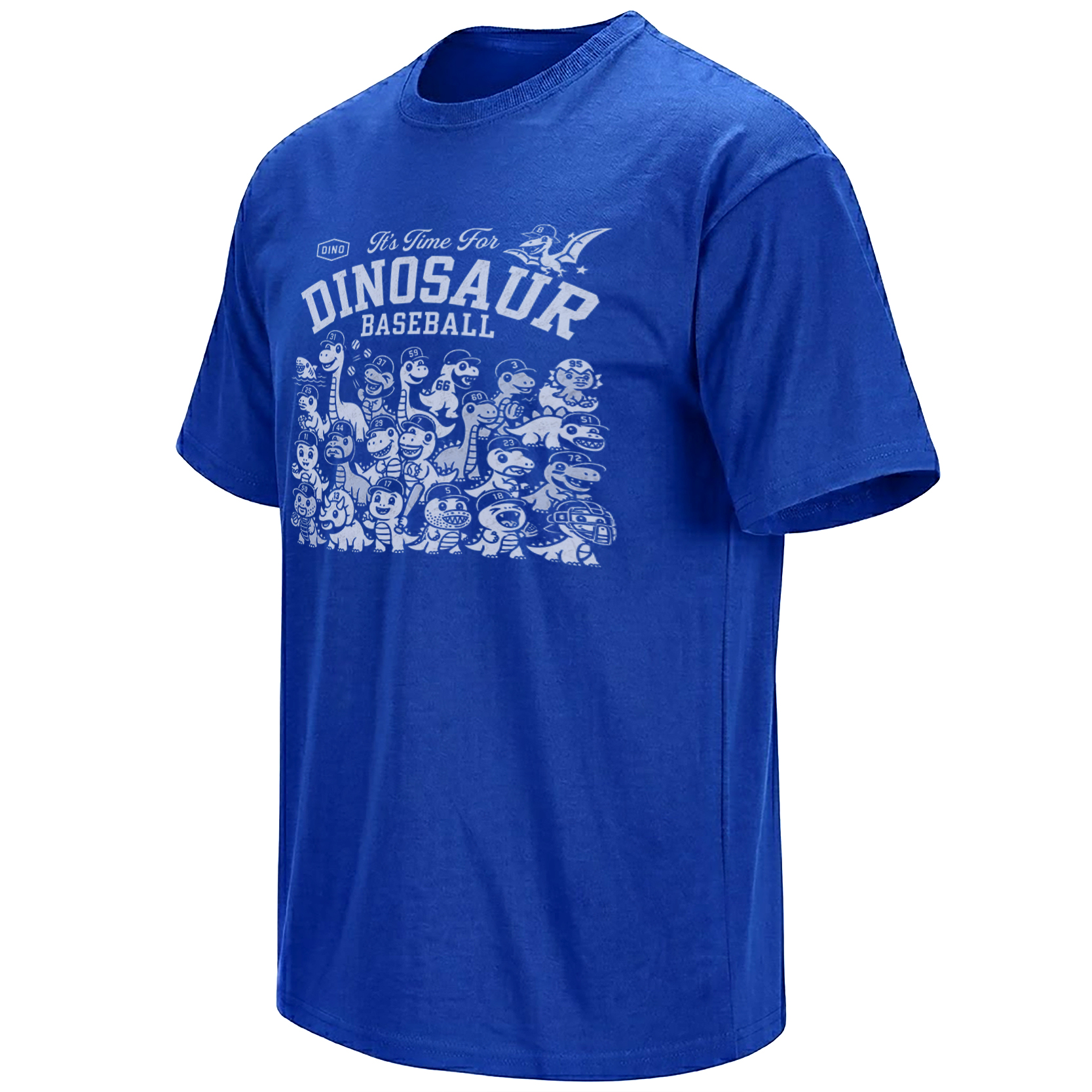
Cream-colored dinosaurs and collegiate lettering make the meme resemble an old baseball team illustration.
View the vintage roster →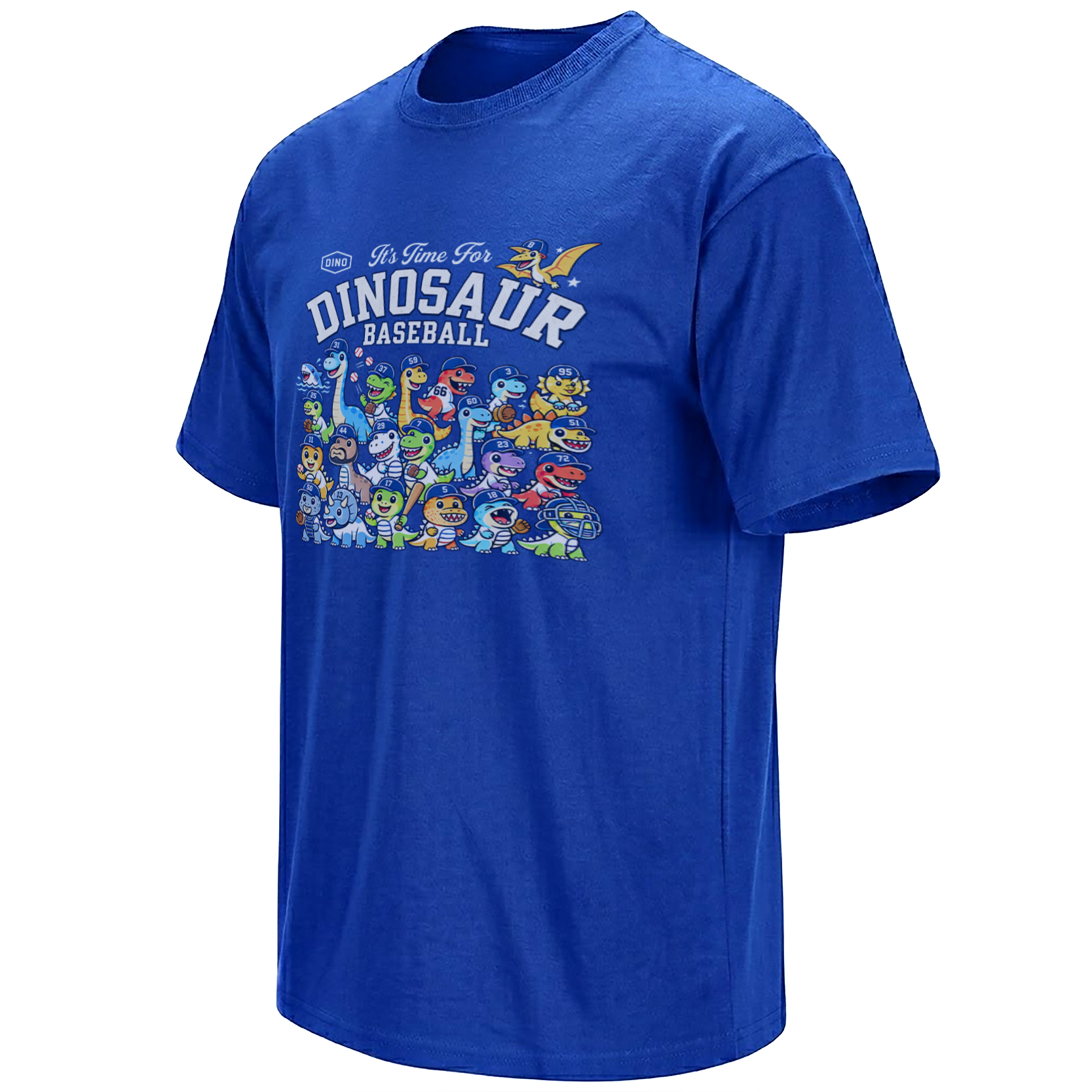
Bright green, yellow, orange, purple and turquoise characters emphasize the humor of a prehistoric team.
Explore the colorful roster →Are the Dodgers Actually an Older Team?
The dinosaur nickname is a joke, not an official judgment about the roster’s age. Los Angeles combines accomplished veterans with younger contributors, and the 2026 postseason provides examples of both experience and emerging talent.
The nickname’s appeal lies in that mixture. Players who have accumulated years of postseason memories are placed in an imaginary prehistoric setting, while newer teammates become part of the same cartoon universe. It turns longevity from a potential criticism into a shared humorous identity.
Current postseason status: As of October 13, the Dodgers trail the Milwaukee Brewers 0–2 in the NLCS. The dinosaur designs refer to an already documented 2026 meme, not a claimed NLCS or World Series championship.
Why This Moment Belongs in Dodgers Fan Culture
Dodgers history includes countless rallying cries, postseason graphics and inside jokes. The dinosaur nickname stands out because its path from a literal fossil reference to a locker-room punch line is unusually easy to trace through dated reporting and fan posts.
The wider Los Angeles Dodgers collection records similar player and postseason references. The MLB collection supplies the broader baseball context, while related graphics featuring Shohei Ohtani and Teoscar Hernández connect the artwork to individual players.
Frequently Asked Questions
Why are the Dodgers called dinosaurs in 2026?
The nickname grew from Padres co-owner José E. Feliciano’s comment about Dodgers owner Mark Walter’s dinosaur fossil collection, which fans reinterpreted as a roster joke.
Who said “And we’re dinosaurs”?
Teoscar Hernández made the joke during the Dodgers’ celebration after defeating Atlanta in the 2026 NLDS.
Did the Padres owner directly call Dodgers players old?
Reporting indicates the original remark concerned Mark Walter’s fossil collection, rather than a direct claim about player ages.
What does It’s Time for Dinosaur Baseball represent?
It turns the Dodgers’ 2026 dinosaur meme into an illustrated prehistoric baseball team with numbered caps referencing familiar players.
What is the difference between the two designs?
One uses a primarily cream-colored vintage illustration, while the other features a colorful cartoon roster against royal blue.
A comment about fossil collecting became a joke about veterans, then a clubhouse punch line, then a visual identity for a cartoon baseball team. The vintage Dinosaur Baseball design and its colorful companion capture that unexpected piece of Dodgers internet history.
It’s Time for Dinosaur Baseball Shirt celebrates the Dodgers’ 2026 dinosaur meme sparked by a Padres ownership comment and Teoscar Hernández’s NLDS clubhouse joke. Two cartoon roster editions feature prehistoric players, numbered caps and nostalgic baseball typography.