
120 Years Later: Why White Sox Fans Wanted to Party Like It’s 1906
An extraordinary 1906 World Series connection turned Chicago’s 2026 playoff run into a conversation about history, home-field celebrations and a wait stretching across generations.
CHICAGO — OCTOBER 9, 2026
For two nights at Rate Field, White Sox supporters gathered with an unusual piece of baseball history hanging over the ballpark. Their team had won the first two games of the American League Division Series in Cleveland. One more victory in Chicago would have produced something the franchise had not experienced since 1906: clinching a postseason series on its own field.
That is how a 120-year-old World Series became one of the most intriguing storylines of October 2026. The phrase “Let’s Party Like It’s 1906” was suddenly not just historical nostalgia. It described the possibility of a new South Side celebration echoing one of the most improbable championships in baseball history.
The celebration never arrived during the two ALDS games in Chicago. Cleveland won Game 3 by a 9–3 score and took Game 4 by 9–5 on October 8, forcing a deciding Game 5 in Cleveland. The 120-year home-clinching drought remained intact. Yet the anticipation revealed how one forgotten historical distinction could become meaningful to a new generation.
What Happened to the Chicago White Sox in 1906?
On October 14, 1906, the White Sox defeated the Chicago Cubs at South Side Park to win the World Series four games to two. The championship was an upset of remarkable proportions. The Cubs had won 116 regular-season games, while the White Sox had struggled at the plate so badly that they became known as the “Hitless Wonders.”
Chicago’s American League club nevertheless found a way to win behind its pitching staff and timely offense. The sixth game ended 8–3, securing the White Sox’s first World Series championship and a place in the history of the city’s baseball rivalry.

The specific location is essential. White Sox championships in 1917 and 2005 followed, but those titles were clinched away from home. Consequently, 1906 remained the last occasion when a White Sox team finished a postseason series with a victory in front of its home supporters.
Why Did 1906 Suddenly Matter Again in the 2026 ALDS?
Chicago’s 2026 turnaround made the historical comparison relevant. Only two years removed from a 121-loss season, the White Sox returned to the postseason, eliminated Houston in the Wild Card Series and opened their Division Series against Cleveland with consecutive road victories.
That created a rare opportunity. Chicago could clinch at Rate Field, with a modern postseason crowd witnessing something never repeated on the South Side since the early twentieth century.
It would not have been another World Series championship. It would have been a Division Series victory. But the significance came from the shared location of a decisive celebration, rather than an equivalence between the two trophies.
History did not promise Chicago another championship. It offered the possibility of another home-field ending.
What Does “120 Years. End the Wait.” Really Mean?
The slogan is a rallying cry about the home postseason-clinching drought, not a claim that Chicago had gone 120 years without winning a championship. That distinction makes the wording particularly important.
When the White Sox returned home up 2–0 in the 2026 ALDS, the scenario was straightforward: win either Game 3 or Game 4 and end the drought. Instead, Cleveland’s pitching and offense took control of both games, sending the series back to Ohio.
For supporters who had waited through difficult seasons, the missed opportunity was especially frustrating. Still, it did not erase the achievement of reaching October with a genuine chance to advance. The phrase now records both the anticipation and the unresolved historical milestone.
The White Sox won World Series titles in 1906, 1917 and 2005. The 120-year wait specifically concerns a postseason series-clinching victory at home. Chicago did not end that streak in its two home ALDS games in 2026.
How the Front-and-Back Graphic Connects Two Centuries
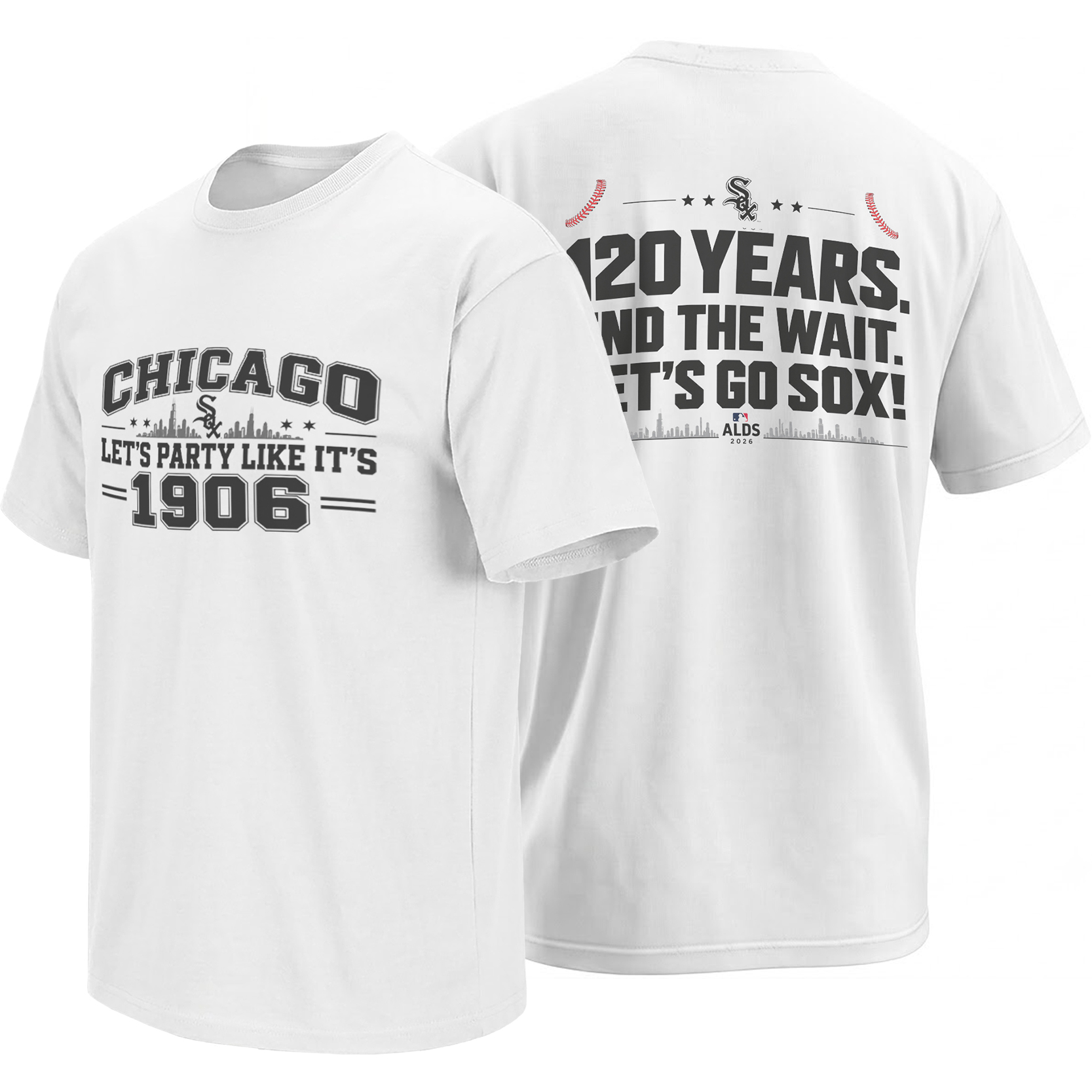
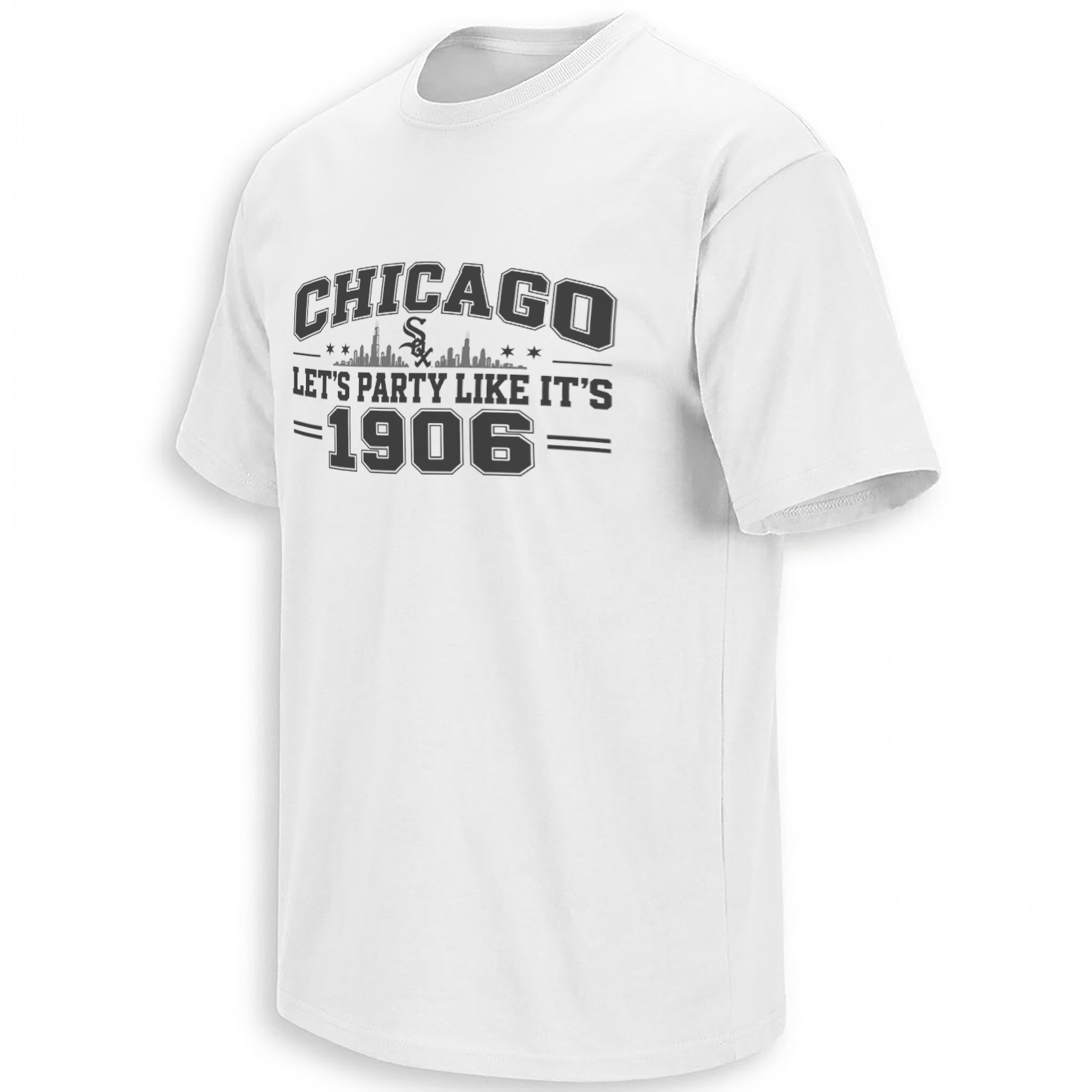
The Let’s Party Like It’s 1906 design approaches the moment as an illustrated historical poster. Its front uses prominent CHICAGO lettering, the Sox emblem, a grayscale skyline, stars and a commanding 1906 date. The arrangement draws from vintage athletic graphics and old commemorative baseball programs.
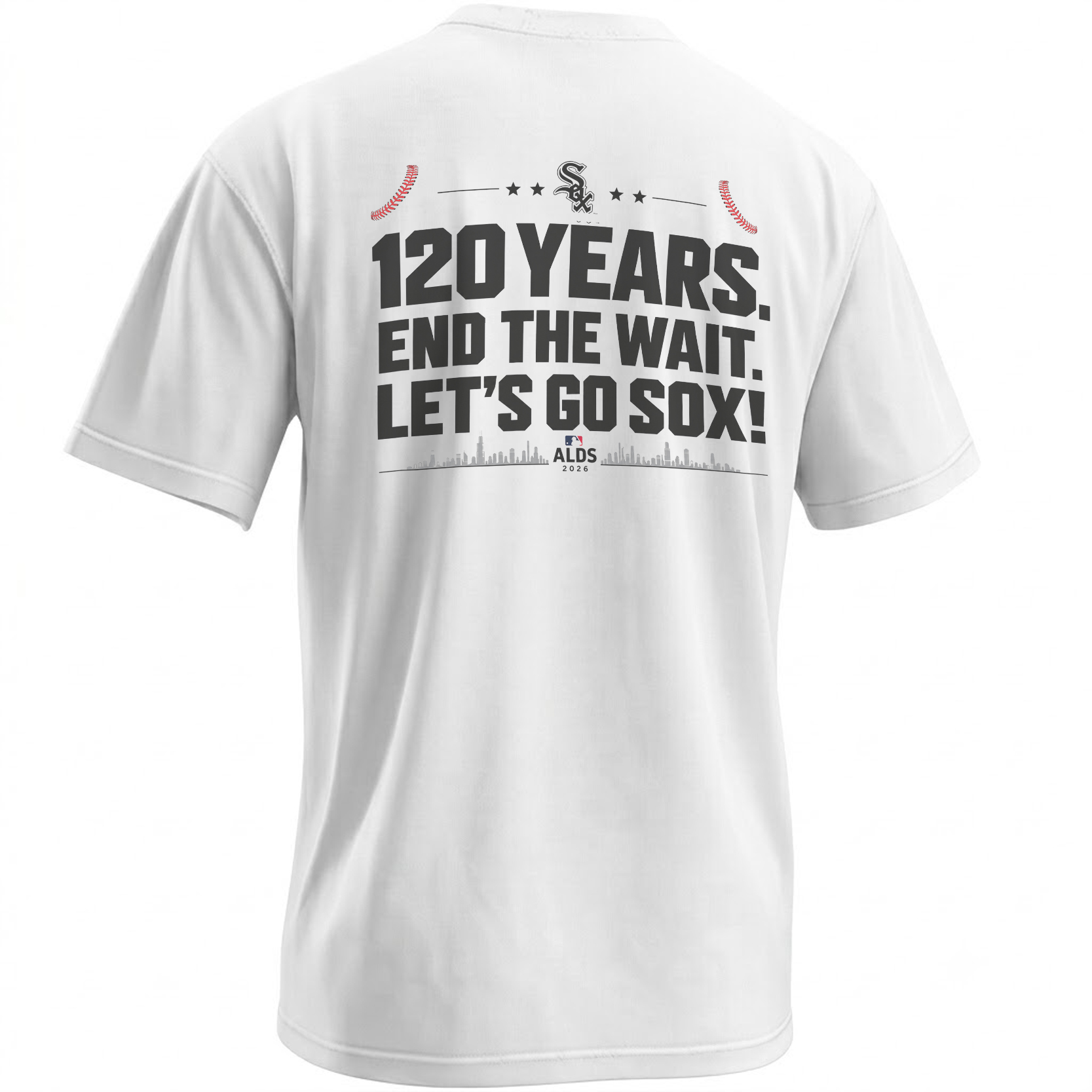
The back moves the story forward to 2026. “120 Years,” “End the Wait” and “Let’s Go Sox!” form a three-part message surrounded by baseball stitching, a Chicago skyline and an ALDS 2026 reference.
The restrained black, gray and red palette makes the two sides feel connected despite their different purposes. The front recalls an achievement; the back captures an unfinished ambition. Together they create a graphic record of an unusually specific October storyline.
Why Were Fans Talking About the 120-Year Wait?
The historical detail spread through baseball discussion forums as Chicago moved within one victory of advancement. Some supporters imagined witnessing a rare home clincher. Others compared the baseball world of 1906 with the present, reminding readers just how distant the earlier moment really was.
A White Sox Reddit discussion explored what life and baseball looked like during the previous home-clinching season. Its popularity demonstrated how a statistic can become a shared history lesson when a team suddenly has an opportunity to change it.
Why Does This Moment Belong to South Side Baseball Culture?
The history of the White Sox is not defined by championship seasons alone. The identity of the South Side includes loyalty through rebuilding years, local pride and an awareness that major postseason moments have sometimes been separated by decades.
The wider Chicago White Sox collection reflects those changing stories, while the MLB collection connects them to the broader tradition of baseball anniversaries, playoff rivalries and historic celebrations.
October 2026 revived the memory of 1906 without reproducing its final outcome. Sometimes that is what makes a sports artifact interesting: it records what supporters hoped could happen, not only what appeared in the official results.
Frequently Asked Questions
What happened in the 1906 World Series?
The Chicago White Sox defeated the Chicago Cubs four games to two, clinching their first World Series championship at South Side Park on October 14, 1906.
Why does the White Sox design say 120 years?
It refers to the 120 years between 1906 and 2026, during which Chicago had not clinched another postseason series on its home field.
Does it mean Chicago last won a World Series in 1906?
No. The White Sox also won World Series championships in 1917 and 2005. The milestone concerns the location of a postseason series-clinching victory.
Did Chicago end the streak in the 2026 ALDS home games?
No. Cleveland won Games 3 and 4 in Chicago, forcing a deciding Game 5 in Cleveland.
What appears on the front and back of the design?
The front references Chicago’s 1906 championship with a skyline and vintage typography. The back displays the 120-year rallying cry, Sox identity and ALDS 2026 imagery.
For the South Side, Let’s Party Like It’s 1906 became a way to connect a century-old championship with the anticipation surrounding a new generation of White Sox postseason baseball.
Let’s Party Like It’s 1906 connects the Chicago White Sox’s first World Series victory with the 120-year home playoff-clinching storyline of the 2026 ALDS. Its two-sided artwork pairs vintage Chicago baseball memory with the “End the Wait” rallying cry.