
Atlanta Needed 27 Outs. Kerr–Fuentes ’26 Delivered the Ticket
Holding Chris Sale for Game 3 looked like an October gamble. Ray Kerr and Didier Fuentes turned it into strategy, combining for 6⅓ innings against the Dodgers and helping Atlanta leave Los Angeles with the NLDS tied 1-1.
Atlanta entered NLDS Game 2 in the uncomfortable territory where postseason plans often become postseason improvisation. The Braves had lost the opener. Their pitching staff had already been worked heavily by the Wild Card round. Chris Sale could have been pushed back to the mound, but Walt Weiss chose something more complicated.
He saved Sale for Atlanta.
That left Sunday night at Dodger Stadium in the hands of an unconventional chain of relievers beginning with Ray Kerr, a 32-year-old left-hander who had spent most of the previous two seasons fighting his way back from Tommy John surgery.
By the ninth inning, the headline belonged to Kerr and a 21-year-old right-hander throwing close to 100 mph named Didier Fuentes.
“Kerr ’26 / Fuentes / For The A” works because Atlanta’s bullpen game briefly looked less like emergency planning and more like a winning campaign ticket.
Why did the Braves start Ray Kerr instead of Chris Sale?
The decision only makes sense when the previous four days are included. Kerr had already opened Atlanta’s winner-take-all Wild Card Game 3 against Philadelphia, throwing 3⅓ scoreless innings in the 6-2 victory that sent the Braves to the NLDS.
Sale had then worked out of the bullpen to finish that clincher. Rather than bring him back on shortened rest in Los Angeles, Weiss chose to absorb another bullpen game and line Sale up at full strength when the series returned to Truist Park.
The risk was obvious. Atlanta had already lost Game 1. A second defeat would have sent the Braves home facing a 0-2 hole.
Kerr made the plan viable. On only a few days’ recovery from his Philadelphia outing, he held Los Angeles scoreless for 2⅔ innings, allowed two hits and struck out four. He faced Shohei Ohtani twice and retired him both times.
Then Didier Fuentes took over the night
Fuentes entered later with the game still balanced on narrow margins. He was supposed to be one part of a bullpen chain. Instead, the chain almost stopped with him.
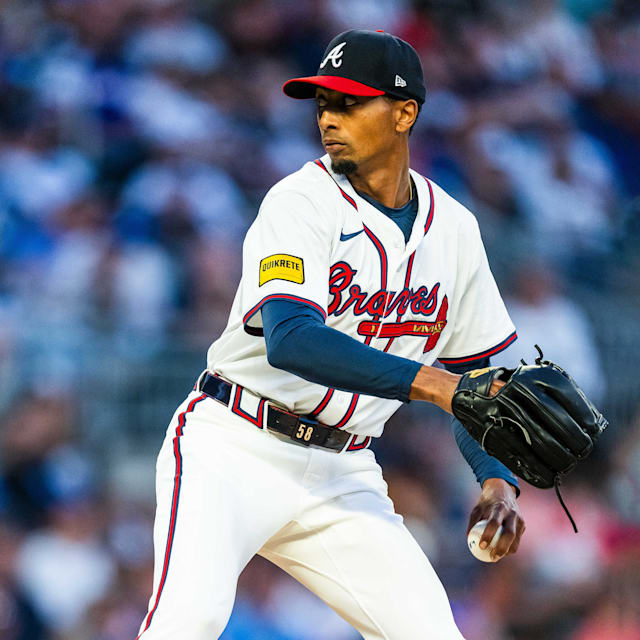
The 21-year-old retired eleven consecutive Dodgers. MLB measured his four-seam fastball at an average 99.4 mph for the outing, significantly harder than his regular-season average. He kept attacking a lineup filled with former MVPs, postseason veterans and hitters who had spent the season punishing mistakes.
Max Muncy finally ended the streak with a two-out solo homer in the ninth. By then, Fuentes had already recorded eleven outs. Raisel Iglesias entered for the final batter and finished Atlanta’s 3-2 win.

The 11-out streak became a record
The performance gained another layer the following day when OptaSTATS quantified it. Fuentes’ run of eleven consecutive batters retired was the longest by a relief pitcher age 21 or younger in a postseason game.
That statistic is important because it explains why the outing immediately felt larger than ordinary middle relief. Atlanta had not simply survived several innings with a young pitcher. Fuentes had produced a historically unusual stretch against the Dodgers in a game the Braves effectively needed to rescue their series.
Why “Kerr–Fuentes ’26” looks like a political campaign
The artwork understands that postseason fandom often turns unlikely names into slogans overnight. Instead of building a normal baseball composition with action shots, baseballs and a giant team wordmark, it treats Kerr and Fuentes like candidates on an Atlanta campaign ticket.
“KERR ’26” sits at the top with the visual authority of a yard sign. “FUENTES” occupies the second line. “FOR THE A” turns the joke into a local endorsement rather than a generic Braves slogan.
Navy, red and cream push the graphic toward American campaign-poster language, but the joke remains legible to baseball fans because the year is doing two jobs at once: 2026 is both the campaign year and the postseason being commemorated.
The concept also fits the personalities of the moment. Neither Kerr nor Fuentes entered October as the obvious face of Atlanta’s playoff marketing. That is precisely why putting their surnames on a mock election ticket feels right. Postseason baseball is constantly electing new folk heroes without asking permission first.
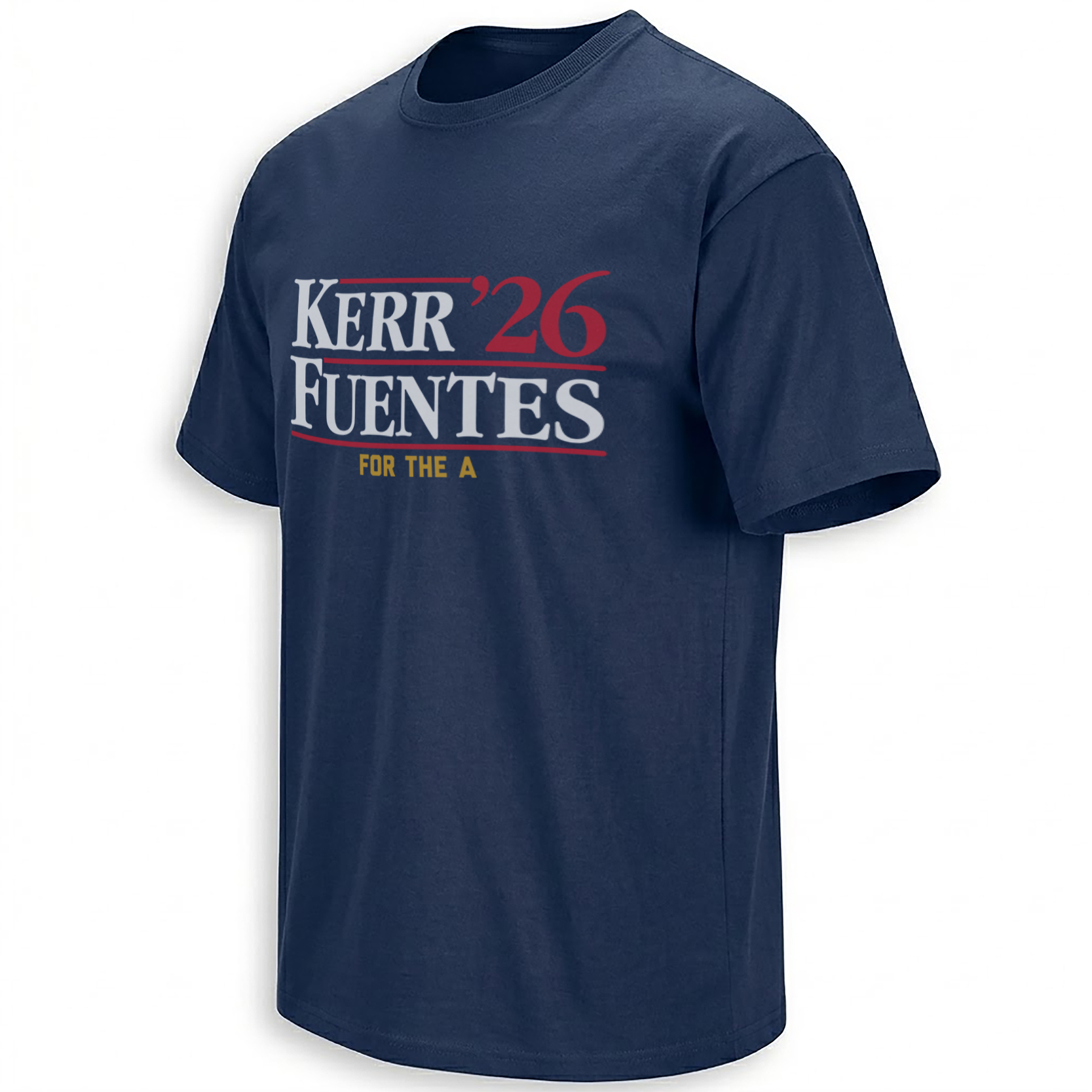
A mock Atlanta campaign ticket built around two pitchers whose combined 6⅓ innings turned a vulnerable bullpen plan into a 3-2 postseason win.
View the postseason graphic →Two pitchers, two completely different October stories
Kerr’s appeal comes from distance traveled. His Braves future looked uncertain after Tommy John surgery cost him most of two seasons. He returned late in 2026, appeared only sparingly in the majors and then suddenly found himself starting consecutive high-pressure postseason games.
Fuentes represents the opposite end of the career curve. At 21, he is still close enough to prospect status that every high-leverage inning also looks like a preview of what Atlanta may have in the future.
Game 2 brought those trajectories together: the veteran fighting his way back and the young arm accelerating toward prominence. Kerr gave Atlanta the beginning. Fuentes almost supplied the entire ending.
Atlanta left Los Angeles tied 1-1 instead of trailing 0-2 and returned home with Chris Sale rested for Game 3. The bullpen game did not merely steal one win; it changed the pitching geometry of the entire NLDS.
Why Braves fans will remember the names together
Michael Harris II supplied Atlanta’s biggest offensive swings, including a triple and an RBI double. Six pitchers were needed to complete the twenty-seven outs. The 3-2 victory was unquestionably a team construction.
But fan memory tends to compress complicated games into pairs, phrases and images. Kerr and Fuentes are the pair because together they accounted for 6⅓ innings while allowing only one run. One established the possibility that the bullpen gamble might work; the other stretched that possibility deep into the ninth.
That makes the wider Atlanta Braves collection a natural archive for the slogans and unexpected postseason heroes emerging from this run, while the MLB collection places the piece inside the larger 2026 playoff landscape. Individual player designs can also be followed through the Ray Kerr and Didier Fuentes search archives.
Frequently Asked Questions
What does Kerr–Fuentes ’26 refer to?
It is a mock campaign-style reference to Ray Kerr and Didier Fuentes after their pitching helped Atlanta beat Los Angeles 3-2 in 2026 NLDS Game 2.
How many innings did Ray Kerr pitch in Game 2?
Kerr opened the game with 2⅔ scoreless innings, allowing two hits while striking out four.
What did Didier Fuentes do against the Dodgers?
Fuentes recorded 11 consecutive outs and worked 3⅔ innings, allowing only a late solo home run before Raisel Iglesias recorded the final out.
Why did Atlanta save Chris Sale for Game 3?
The Braves wanted Sale at full strength after his recent postseason workload, so they used a bullpen plan in Game 2 and lined him up for the series’ return to Atlanta.
What does “For The A” mean on the design?
It turns the mock Kerr–Fuentes campaign ticket into an Atlanta-specific slogan, with “The A” functioning as shorthand for the city and Braves fan culture.
The Kerr–Fuentes ’26 graphic preserves one of the strangest pleasures of October baseball: two pitchers who were never supposed to be the postseason campaign ticket becoming exactly that for one enormous night.
Kerr-Fuentes ’26 Shirt captures Ray Kerr and Didier Fuentes’ Game 2 NLDS pitching heroics through a campaign-style “For The A” graphic inspired by Atlanta’s 3-2 win over Los Angeles.