How “Osama Bin Larkin” Became the Cruelest Symbol of Detroit’s Dylan Larkin Breakup
Detroit’s 2026 home opener did not simply produce boos for Dylan Larkin. It produced altered jerseys, hostile arena humor and one surreal fan-made image that condensed an entire summer of frustration into three words: “Osama Bin Larkin.”
The most revealing image from Detroit’s opening weekend was not a goal, a save or even the final 2–0 loss to the New York Rangers. It was the sight of Red Wings fans turning their former captain into material for handmade protest merch.
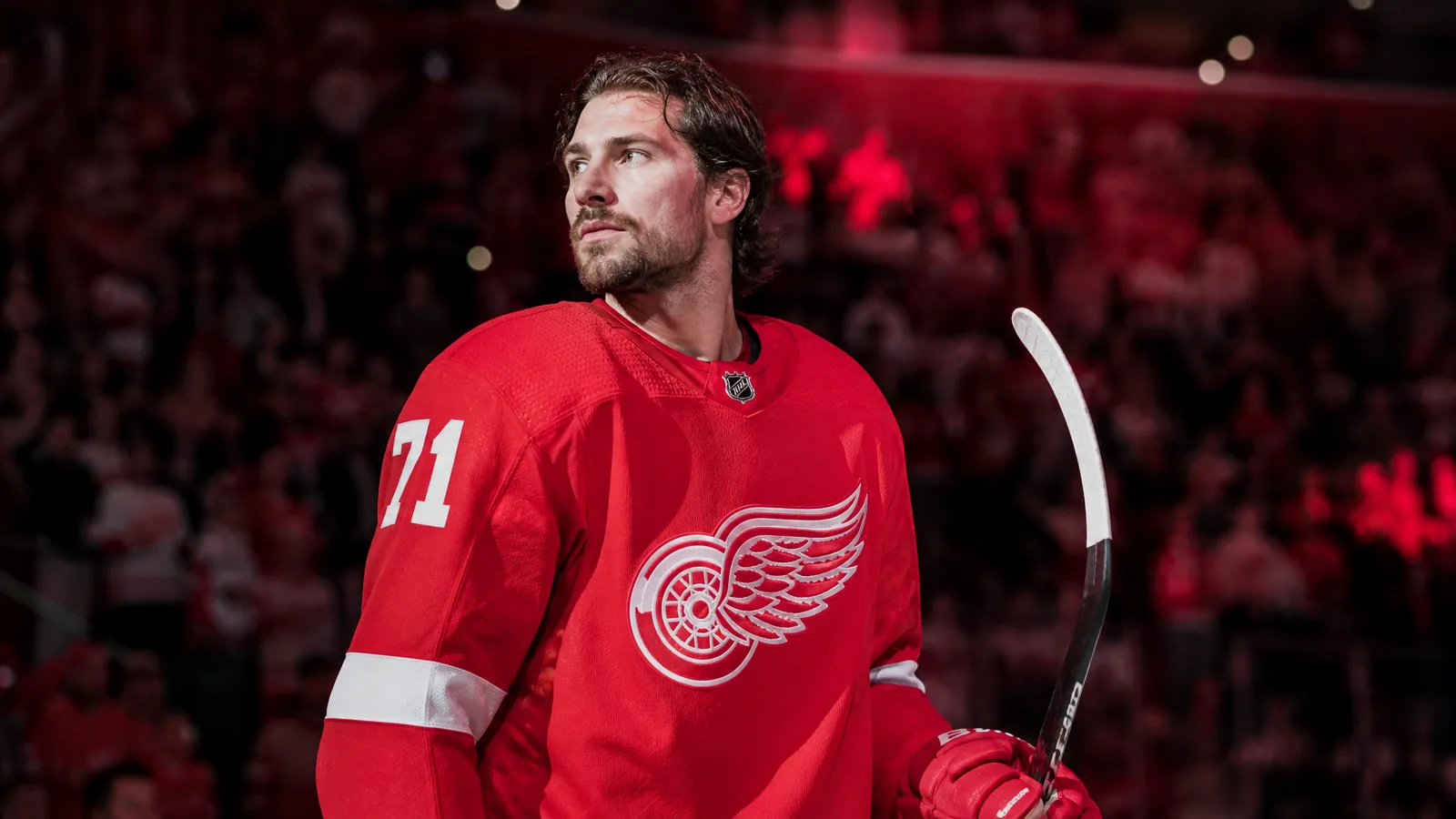
Dylan Larkin was injured and did not play in the October 2 opener, yet his name still became one of the night’s loudest stories. When he appeared during introductions at Little Caesars Arena, boos rolled through the building. By the following morning, photos of customized No. 71 jerseys labeled “TRAITOR,” “LEAVIN” and “LOSER” were circulating across hockey media.
Then there was the shirt that pushed the hostility into pure internet absurdity: an edited portrait styled after Osama bin Laden, topped with the phrase “OSAMA BIN LARKIN.” It was offensive by design, exaggerated beyond reason and instantly recognizable as the sort of arena meme that only emerges when fandom has moved from disappointment to open ridicule.
The joke is extreme because the emotional reversal is extreme: hometown captain to trade request, captaincy gone, then boos in the same building that spent years cheering him.
Why were Red Wings fans booing Dylan Larkin?
The anger did not begin on Opening Night. Larkin requested a trade after Detroit missed the Stanley Cup Playoffs for a tenth consecutive season. The Michigan-born center had spent his entire NHL career with the organization and wore the captain’s “C” for six seasons, which made the request feel different from an ordinary star-player trade story.
By September, the Red Wings had decided to begin the season without Larkin as captain. Larkin himself acknowledged that requesting a trade while holding that role carried consequences. At the same time, he reported to camp and remained under contract while Detroit continued trying to navigate a complicated situation involving his no-trade protection and preferred destinations.
That ambiguity created perfect conditions for fan resentment. He was still physically part of Detroit, but symbolically his relationship with a section of the fan base had already changed.
The social post that pushed the shirt beyond the arena
What does “Osama Bin Larkin” actually mean?
It should not be read as praise for Osama bin Laden or as a literal political statement. The construction is a name mashup: “Osama bin Laden” becomes “Osama Bin Larkin,” while Larkin’s face is visually transformed to make the pun immediate.
Its function is closer to ruthless sports heckling. Fan culture often turns betrayal narratives into exaggerated villain imagery — burned jerseys, renamed nameplates, altered posters and deliberately disproportionate comparisons. The more unreasonable the comparison, the more obvious the insult becomes.
That matters because the design is documenting a specific breakdown between player and city. A few years ago, a Dylan Larkin graphic would naturally center leadership, Michigan identity and the Winged Wheel. In October 2026, one of the most circulated images instead presented him as a fan-made villain.
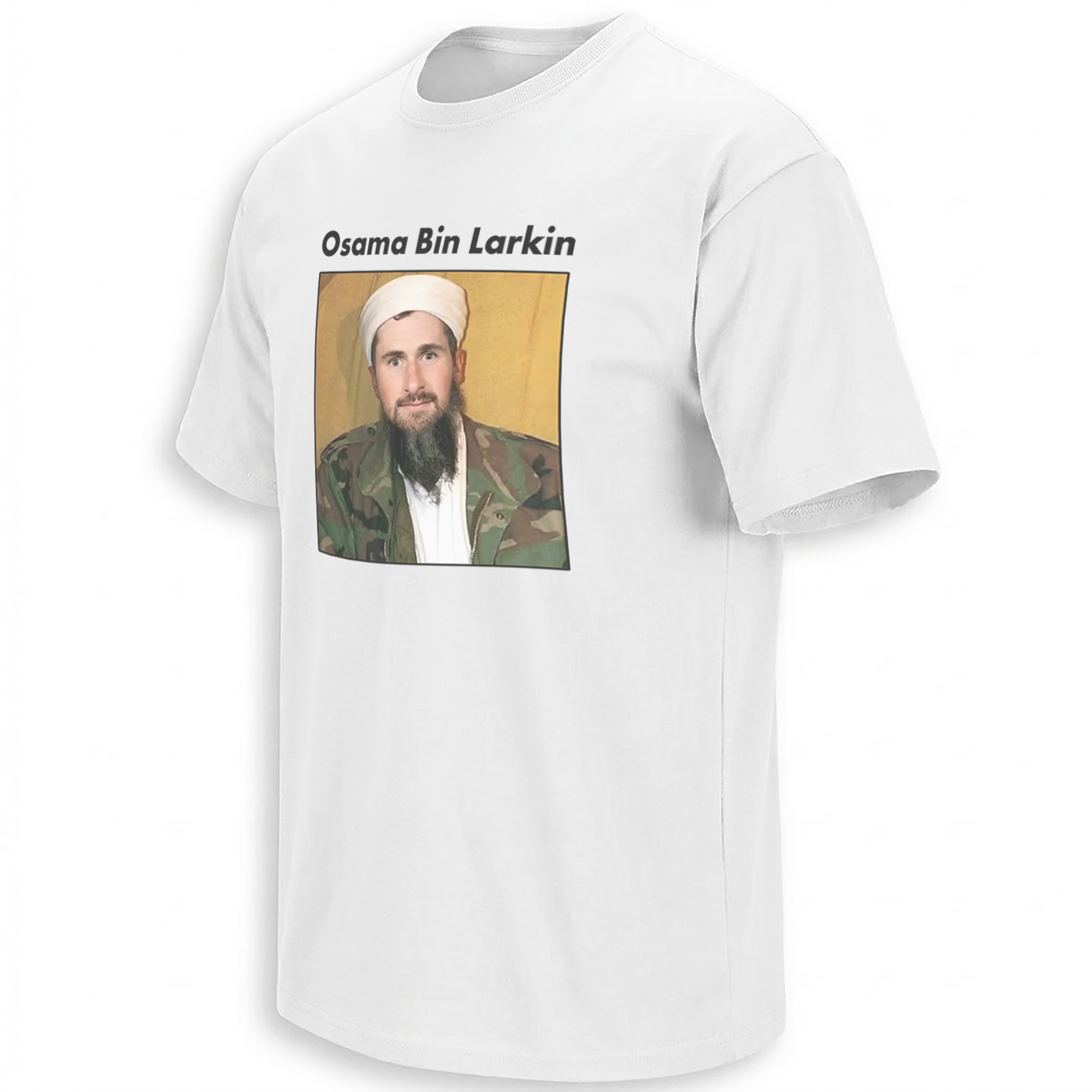
The graphic preserves the exact fan-meme language that surfaced during Detroit’s hostile 2026 Opening Night reaction.
View the fan-culture piece →Why this design feels like homemade Hockeytown protest merch
The visual is intentionally crude and direct. A large headline sits above a rectangular portrait with none of the polished geometry associated with licensed NHL graphics. That simplicity matters. The shirt feels closer to something produced overnight for the next game than to official team merchandise.
That homemade quality places it beside the altered “TRAITOR,” “LEAVIN” and “LOSER” jerseys photographed in the arena. All of them perform the same job: changing Larkin’s familiar identity into a negative nickname that other fans can decode in seconds.
For anyone following the full Detroit story, the wider Detroit Red Wings collection functions as a running archive of Hockeytown graphics and player moments. The broader NHL collection connects the meme to the larger culture of hockey rivalries, playoff frustration and fan-made arena language.
Because this story is centered on one player, related Dylan Larkin graphics can also be found through the Dylan Larkin product search.
Frequently Asked Questions
What is the Osama Bin Larkin meme?
It is a fan-made Dylan Larkin name mashup and edited portrait that surfaced during the hostile reaction surrounding Detroit’s 2026 home opener.
Why were Detroit fans angry with Dylan Larkin?
Larkin requested a trade after another season without a playoff appearance, creating tension around a player who had spent his entire NHL career in Detroit and served six seasons as captain.
Was the shirt actually seen around the Red Wings opener?
Yes. Coverage of the October 2–3 fan reaction specifically documented the “Osama Bin Larkin” shirt alongside altered No. 71 jerseys.
Is the graphic an Osama bin Laden tribute?
No. The historical figure is used only as the basis of an intentionally extreme name-and-image parody targeting Larkin.
Why did the design spread online?
The phrase compressed the entire Larkin trade saga into a visually shocking joke that was easy to photograph, repost and understand within hockey fan culture.
The Osama Bin Larkin graphic records one of the strangest images from that transition, while the wider Detroit Red Wings archive follows the other player moments and fan language shaping Hockeytown.
Osama Bin Larkin Shirt captures the brutal Detroit fan meme that surfaced after Dylan Larkin’s trade request, loss of the Red Wings captaincy and hostile 2026 Opening Night reception.