How Sonic’s “That’s No Good” Became the Internet’s Simplest Moral Verdict
A strange educational tag from a 1993 cartoon became YTMND material, YouTube Poop vocabulary and eventually a reusable reaction format. “Racism? That’s no good” is the meme doing exactly what it learned to do online.
Long before Sonic reaction images filled timelines, the blue hedgehog occasionally stopped running long enough to give children advice. Episodes of Adventures of Sonic the Hedgehog regularly ended with brief educational segments known as “Sonic Says” or “Sonic Sez.”
The structure was wonderfully blunt. Sonic appeared, identified a problem, explained what viewers should do and delivered the lesson with the confidence of a cartoon character who had solved morality in less than a minute.
One particular line escaped the show. In the “Lovesick Sonic” segment, Sonic discusses personal boundaries and unwanted touching before declaring the situation “that’s no good!” The phrase was ordinary. The delivery was unforgettable. By the mid-2000s, internet remix culture had turned those three words into something much larger than the PSA they came from.
The meme survived because Sonic can judge almost anything in three words — and the answer sounds funnier when the lesson is painfully obvious.
The Original “That’s No Good” Lesson Was Not About Racism
This distinction is essential. Sonic did not appear in a 1993 episode, point at the audience and say “Racism? That’s no good.”
The famous source clip came from a PSA about personal boundaries. Sonic explains that nobody has the right to touch someone in a way that makes them uncomfortable and tells young viewers to get away and tell a trusted adult.
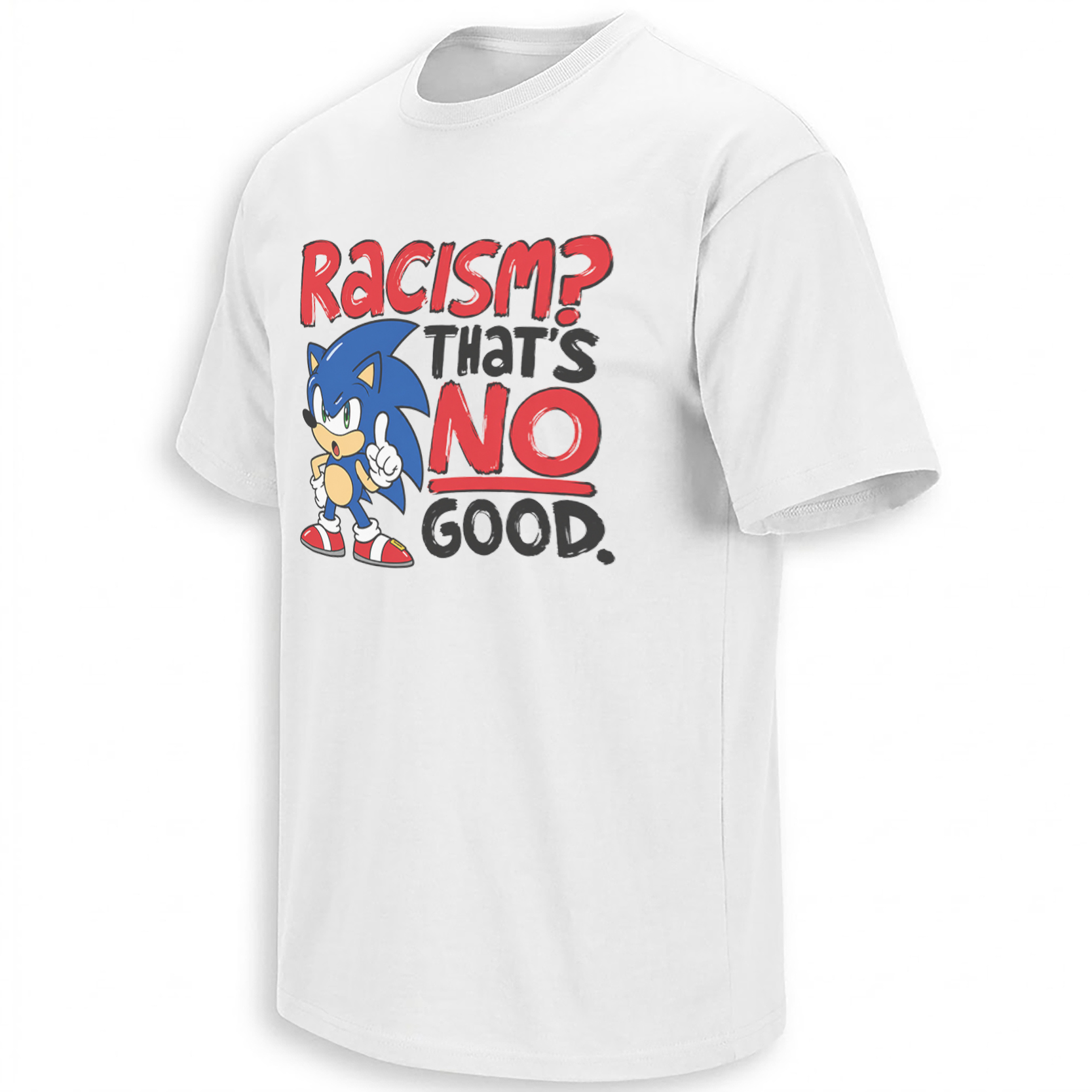
The anti-racism graphic takes the shape of that lesson rather than its literal wording. It asks an almost insultingly obvious moral question, places Sonic back into his teacher pose and supplies the same familiar conclusion.
“Racism? That’s no good” is a parody adaptation of Sonic Says. It is not a quote from the original cartoon and should not be described as an official Sonic anti-racism PSA.
Sonic Says Became an Early-Internet Remix Format
Know Your Meme traces the online Sonic Says phenomenon to YTMND in 2004. The timing places it inside an internet very different from today’s algorithmic short-video ecosystem: looping audio, crudely edited images, Flash culture and early remix communities were enough to turn one weird cartoon moment into shared vocabulary.
The “Lovesick Sonic” clip was particularly useful because the phrase could be separated from its original subject. Once “that’s no good” became the recognizable unit, creators could attach almost any bad idea, awkward behavior or ridiculous situation to it.

YouTube Poop Helped Keep the Phrase Alive
Sonic Says was almost designed for remix culture by accident. The segments isolate Sonic from the episode’s normal action, address the viewer directly and contain clean pieces of dialogue that can be clipped, repeated, rearranged or attached to completely different visuals.
That made the material especially compatible with YouTube Poop, where old children’s cartoons, video-game cutscenes and exaggerated voice clips were repeatedly chopped apart and rebuilt into nonsense.
Why Applying the Format to Racism Works
The joke is not that racism itself is lightweight. The humor comes from treating the answer as so obvious that a 1990s cartoon character can settle it using the vocabulary of an elementary-school PSA.
“Racism?” becomes the setup. “That’s” creates the rhythm. The oversized red “NO” becomes both the grammatical center and the moral answer before the final word even arrives.
That is a very different visual strategy from a dense protest poster or long political slogan. The shirt refuses complexity. In its internal cartoon logic, racism belongs beside every other piece of behavior a children’s PSA would identify and reject.
The meme also works because audiences recognize Sonic’s finger gesture. Even viewers who cannot name the episode can often read the pose as “cartoon character giving advice.” The old source material therefore survives at two levels: a specific reference for internet-history fans and a readable visual cue for everyone else.
The Typography Turns a Meme Into a Poster
The artwork does not recreate a television screenshot. Instead, it borrows the PSA’s personality and rebuilds it as hand-drawn poster language.
“RACISM?” is large and red at the top, functioning almost like the topic written on a classroom board. “THAT’S” pulls back into black. Then “NO” becomes enormous, red and heavily underlined before “GOOD” resolves the phrase underneath.
Sonic’s blue, peach and red palette occupies relatively little physical space compared with the lettering, but his raised finger gives the entire composition its identity. Without him, it would be an anti-racism text graphic. With him, the viewer hears the meme.
Why the Meme Still Reads Decades Later
Some early-internet jokes survive only as archaeology. Sonic Says has lasted because its structure remains useful. Modern meme communities still repeat “that’s no good,” and younger Sonic audiences encounter the phrase through reaction images, edits, fan animation and references rather than the original syndicated cartoon.
That layered history makes the design a natural fit for Ellie Shirt’s verified Sonic collection, while the Newest archive places it beside other current internet-culture graphics. Readers looking specifically for the character can also use the Sonic the Hedgehog product search.
FAQ: Sonic Says “That’s No Good” Meme
Where does Sonic’s “That’s no good” meme come from?
It comes from the Sonic Says educational segments attached to the 1993 animated series Adventures of Sonic the Hedgehog, especially the segment at the end of “Lovesick Sonic.”
What was the original Sonic Says segment about?
The famous “That’s no good” segment taught children about personal boundaries and what to do when unwanted touching makes them uncomfortable.
Did Sonic originally say “Racism? That’s no good”?
No. The anti-racism sentence is a parody adaptation of the meme format rather than dialogue from the original television episode.
When did Sonic Says become an internet meme?
Know Your Meme traces the early online format to YTMND in 2004, after which the material spread through remix culture and YouTube Poop.
Why does the anti-racism version work as a meme?
It treats rejecting racism as an intentionally obvious moral lesson and lets Sonic’s familiar PSA voice deliver the simple conclusion: that’s no good.
The Racism? That’s No Good Shirt applies Sonic Says meme grammar to a direct anti-racism message. Continue through Ellie Shirt’s Sonic archive or browse the Newest collection for other internet-culture graphics.
Racism? That’s No Good Shirt remixes the 1993 Sonic Says PSA and its famous “That’s no good” internet meme into a direct anti-racism graphic built from retro cartoon nostalgia and early-web culture.