Why the Duck You Meme Works Before You Even Read the Words
A cute cartoon bird, one unmistakably rude silhouette, and a two-word punchline have turned the “Duck You” gag into the kind of visual meme that survives because almost no explanation is required.
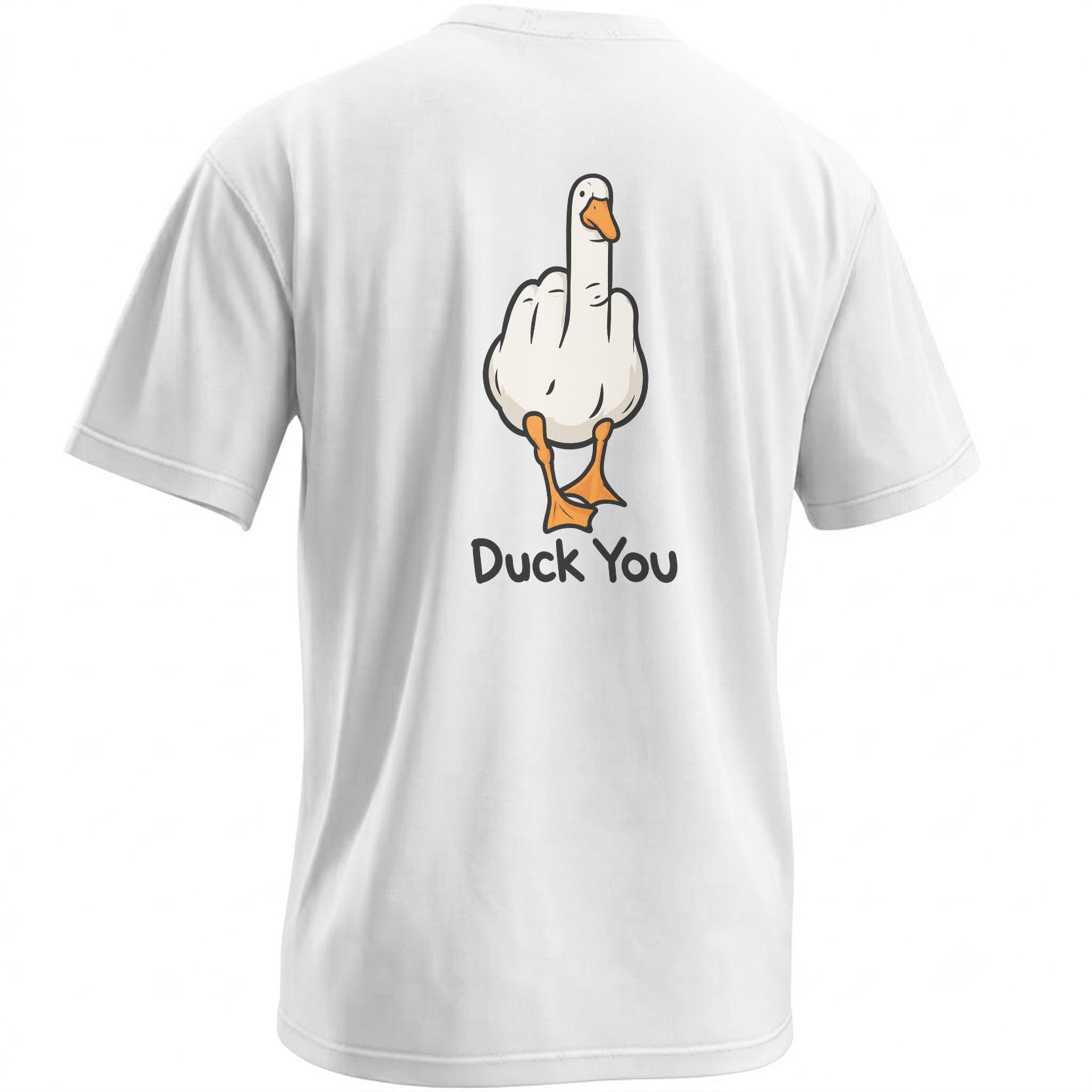
The joke arrives in stages. At first glance, it is just a cartoon duck: white body, orange bill, rounded shapes, intentionally harmless energy. Then the eye catches the silhouette. The duck is not simply standing inside a rude joke. Its body has been arranged to resemble a hand with the middle finger raised.
That delayed recognition is the entire engine of the meme. The viewer gets a fraction of a second of “cute duck” before the image turns into “wait, is that…?” The words “Duck You” arrive afterward almost as confirmation. Instead of carrying the punchline, the text lets the picture finish it.
The visual has circulated beyond a single shirt or isolated graphic. A Reddit post titled “This duck is my spirit animal” presented the same duck-as-middle-finger idea and drew reactions built around the exact double meaning: “Duck You,” flipping the bird, and the familiar joke that autocorrect can turn a much less polite phrase into “duck you.” The important part is not one specific comment. It is how quickly different viewers arrive at the same language because the image is so readable.
The duck is funny because the viewer understands the insult twice: first as a shape, then as a sentence.
The Visual Joke Is Literally “Flipping the Bird”
English already gives this image a ready-made layer of wordplay. The middle-finger gesture is commonly described as “flipping the bird.” Put an actual bird inside the silhouette and a phrase that once worked metaphorically becomes literal.
That is why versions of the concept keep reappearing. Independent apparel artwork on Threadless has used an elongated duck body to create the same middle-finger silhouette, confirming that the joke functions as a recognizable visual format rather than depending on one celebrity, franchise, movie scene, or news event.
Why Cute-Meets-Rude Humor Travels So Easily
Meme graphics often work fastest when two emotional signals collide. Ducks belong to pond cartoons, bath toys, children’s illustrations and harmless animal humor. The middle finger belongs to irritation, rebellion and blunt refusal. Put the two together and neither side completely wins.
The animal softens the hostility while the gesture ruins the innocence. That tension lets the same image read as sarcastic, passive-aggressive, ridiculous or openly rude depending on context. It is confrontational enough to get noticed but cartoonish enough to stay unserious.

The Design Language: Almost Too Friendly for the Joke
The most effective choice in the Duck You graphic is restraint. The orange bill and feet provide only a small burst of color. The white body creates immediate contrast. The dark outline gives the character a sticker-like readability. Nothing competes with the silhouette.
Even the typography helps. Instead of using a hostile gothic font, warning stencil or aggressive protest lettering, “Duck You” appears casual and approachable. That mismatch extends the joke: the graphic looks as though it is trying to behave while communicating the exact opposite.
This also explains why the meme works well at shirt scale. A viewer does not need to read several lines of text from across a room. The gesture is visible first, the animal identity arrives second, and the phrase completes the loop at close range. Three separate recognition beats happen inside one compact design.
Not Every Meme Needs a News Cycle
Some graphics depend completely on one game, one quote or one celebrity moment. The Duck You meme belongs to a different category: evergreen internet visual humor. It can resurface whenever someone wants a sarcastic reaction image, an animal joke or a slightly censored way to express the same old insult.
That makes the design less like documentation of one date and more like a reusable piece of meme vocabulary. The wider Newest collection contains other graphics built around that same idea: everyday phrases, visual jokes and internet language translated into wearable images.
A similar independent design on Threadless also describes the duck’s elongated body as forming an extended middle-finger shape, reinforcing how clearly the concept reads across different executions of the joke.
FAQ: Duck You Meme Explained
What does the Duck You meme mean?
It is a censored wordplay joke that substitutes “duck” into a rude phrase while the illustration communicates the original attitude through a middle-finger gesture.
Why is the duck shaped like a middle finger?
The visual merges the animal and the gesture into one image, allowing the viewer to recognize the insult before fully reading the text.
What does “flipping the bird” have to do with the meme?
The phrase normally refers to giving someone the middle finger. In this joke, the “bird” is literally a bird, creating a second layer of wordplay.
Is Duck You connected to a specific cartoon character?
No. The concept works through a generic cartoon-duck visual rather than relying on one named entertainment character or franchise.
Why does the meme remain easy to understand?
Because the image, gesture and two-word phrase all communicate the same idea. Very little cultural background is needed to decode it.
The Duck You Shirt preserves the joke in its simplest form, while the Newest Ellie Shirt archive tracks other graphics built from current internet humor and visual punchlines.
Duck You Shirt turns a cartoon duck into a middle-finger visual pun, combining “flipping the bird,” censored wordplay and cute-meets-rude meme humor in one instantly readable graphic.