Before the Puck Drops, Hockey’s Most Famous Machine Owns the Ice
The 2026–27 NHL season opens on September 29 with stars, rivalries and a defending champion raising another banner. Yet inside almost every hockey arena, one of the sport’s most recognizable rituals still belongs to someone who never records a goal, assist or save: the Zamboni driver.
Opening Night usually begins with players. Carolina raises its Stanley Cup banner. Montreal visits Toronto. The Rangers go into Boston. Another hockey season starts accumulating goals, grudges and screenshots almost immediately.
But before every clean faceoff comes a quieter piece of the sport’s machinery. The surface has to be ready. Skate cuts have to disappear. Snow has to be collected. Water has to settle into the glassy sheet that makes NHL speed possible.
That is where the Zamboni enters hockey culture — not simply as maintenance equipment, but as one of the few machines in professional sports that fans routinely watch do its job.
Hockey has goal horns, organ music and flying hats. It also has the strangely satisfying sight of rough ice turning perfectly smooth one slow lap at a time.
The Machine Was Born From a Very Ordinary Rink Problem
Frank J. Zamboni was not initially trying to invent a piece of sports iconography. His family operated Paramount Iceland in Southern California, where resurfacing a large skating surface required several workers and a long sequence of scraping, collecting snow, washing the ice and applying fresh water.
After years of prototypes, his self-propelled Model A produced a consistent resurfaced sheet in 1949. The basic idea condensed multiple maintenance tasks into one moving machine operated by one person.
That efficiency changed rink operations. The silhouette eventually became so familiar that “Zamboni” entered everyday hockey speech as though it were the generic name for any resurfacing vehicle. It is not: ZAMBONI is a registered brand, while “ice resurfacing machine” is the generic category.
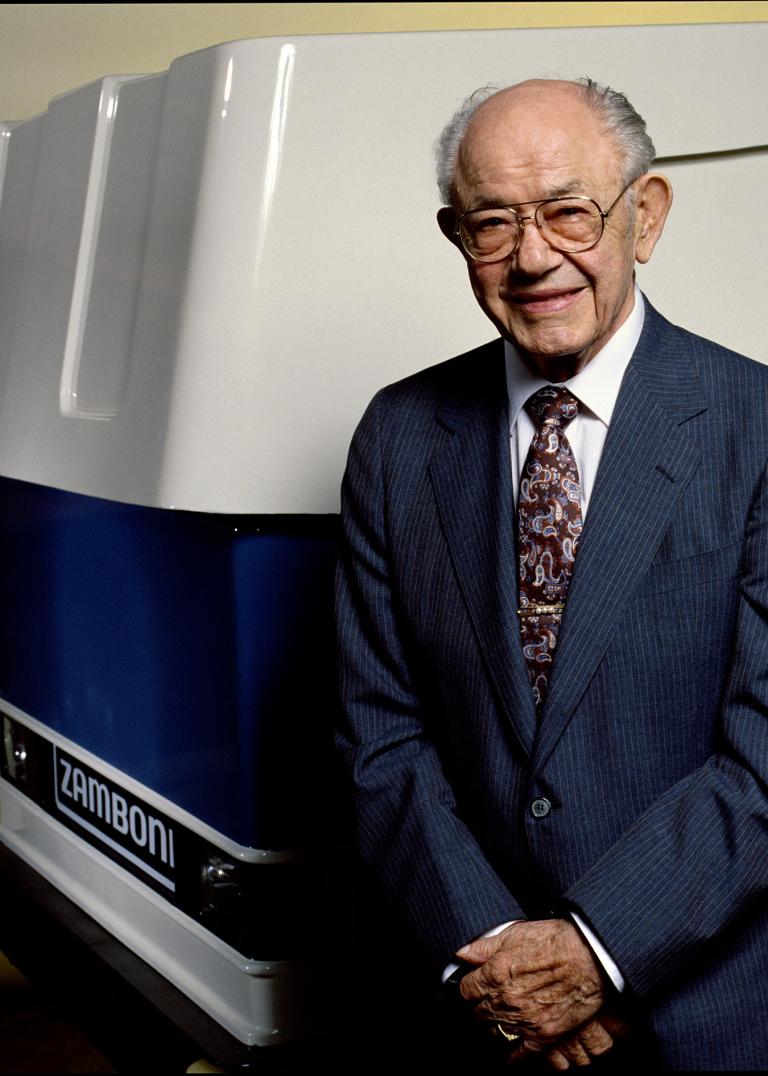
Frank J. Zamboni beside the machine whose name would eventually become one of the most instantly recognizable words in rink culture.
Why Fans Treat a Maintenance Vehicle Like a Hockey Character
The emotional relationship has little to do with engineering. The machine appears at a very specific time in the arena rhythm. The period ends. Players disappear down the tunnel. The ice doors open. For several minutes, the Zamboni gets the entire rink to itself.
That repetition creates recognition. Youth players watch it. Parents waiting through tournaments watch it. Season-ticket holders recognize the resurfacing pattern. Rink employees understand every turn. Children often want to ride one long before they know anything about blade depth or wash water.
In 2026, Utah Mammoth pushed that fascination to its logical extreme. The team rebuilt an old machine used at the 2002 Salt Lake Winter Olympics into the enormous tusked “Zammoth,” a vehicle designed to carry fans around Delta Center before games and during intermissions.
That transformation tells the story better than any definition could. A piece of rink equipment had become fan entertainment, nostalgia object and hockey mascot all at once.
Four Jokes, Four Ways of Understanding Rink People
The four Zamboni graphics in this collection work because none of them needs a player, franchise or score. They speak to a part of hockey culture shared across arenas.
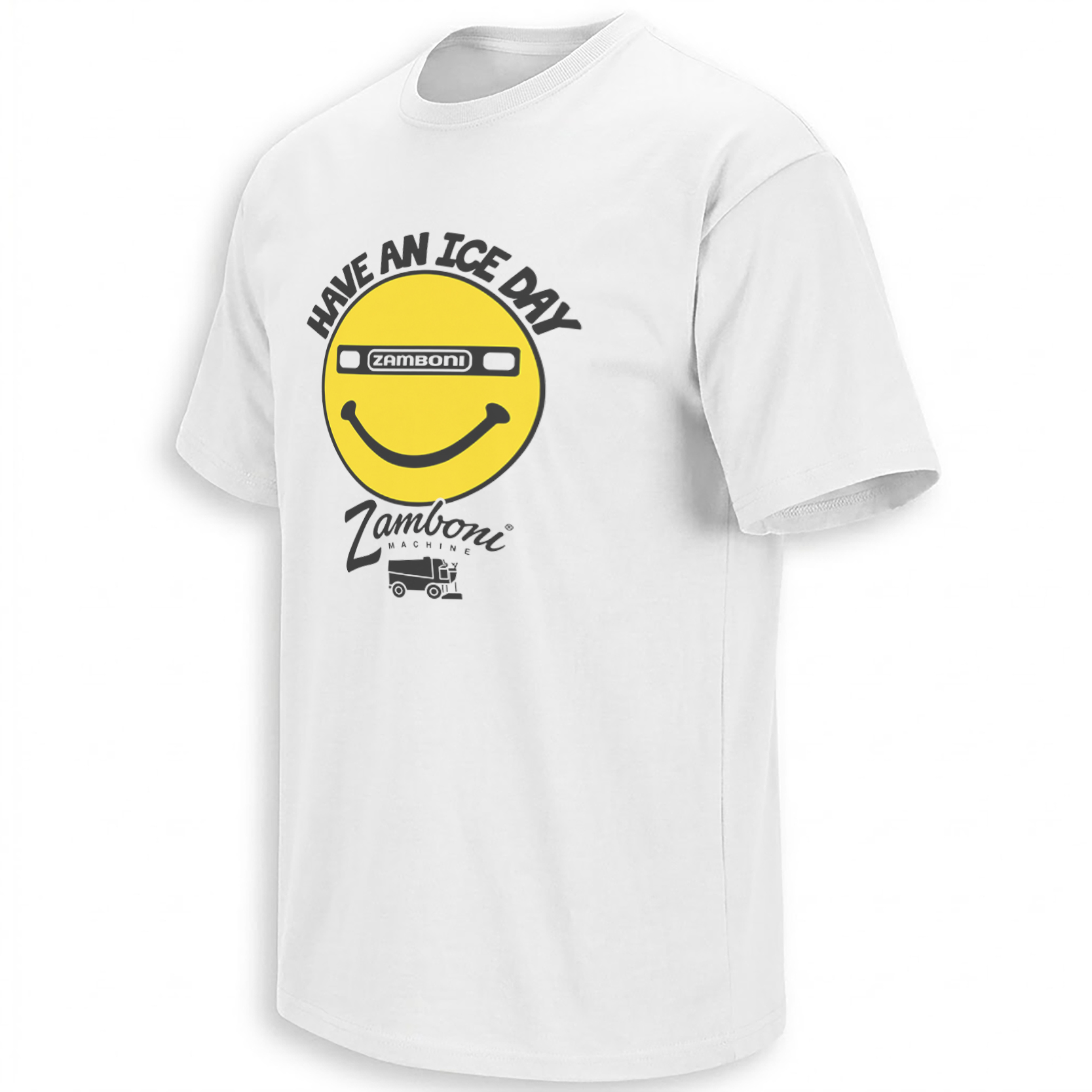
A yellow smiley face merges with the front of the machine, turning the familiar “Have a nice day” phrase into cheerful rink language.
View the smiley piece →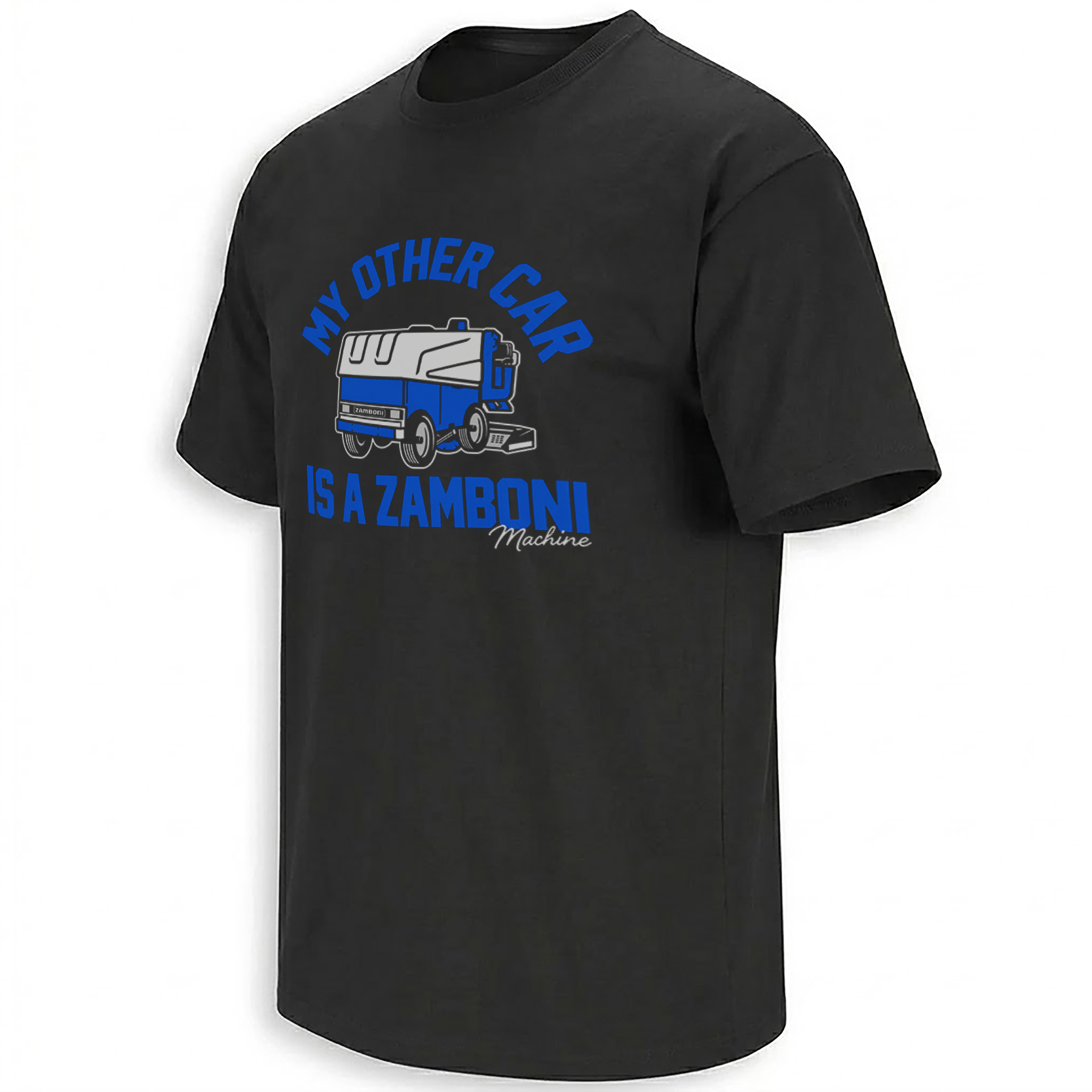
The old bumper-sticker fantasy swaps the sports car for the vehicle rink people secretly want to drive anyway.
See the driver joke →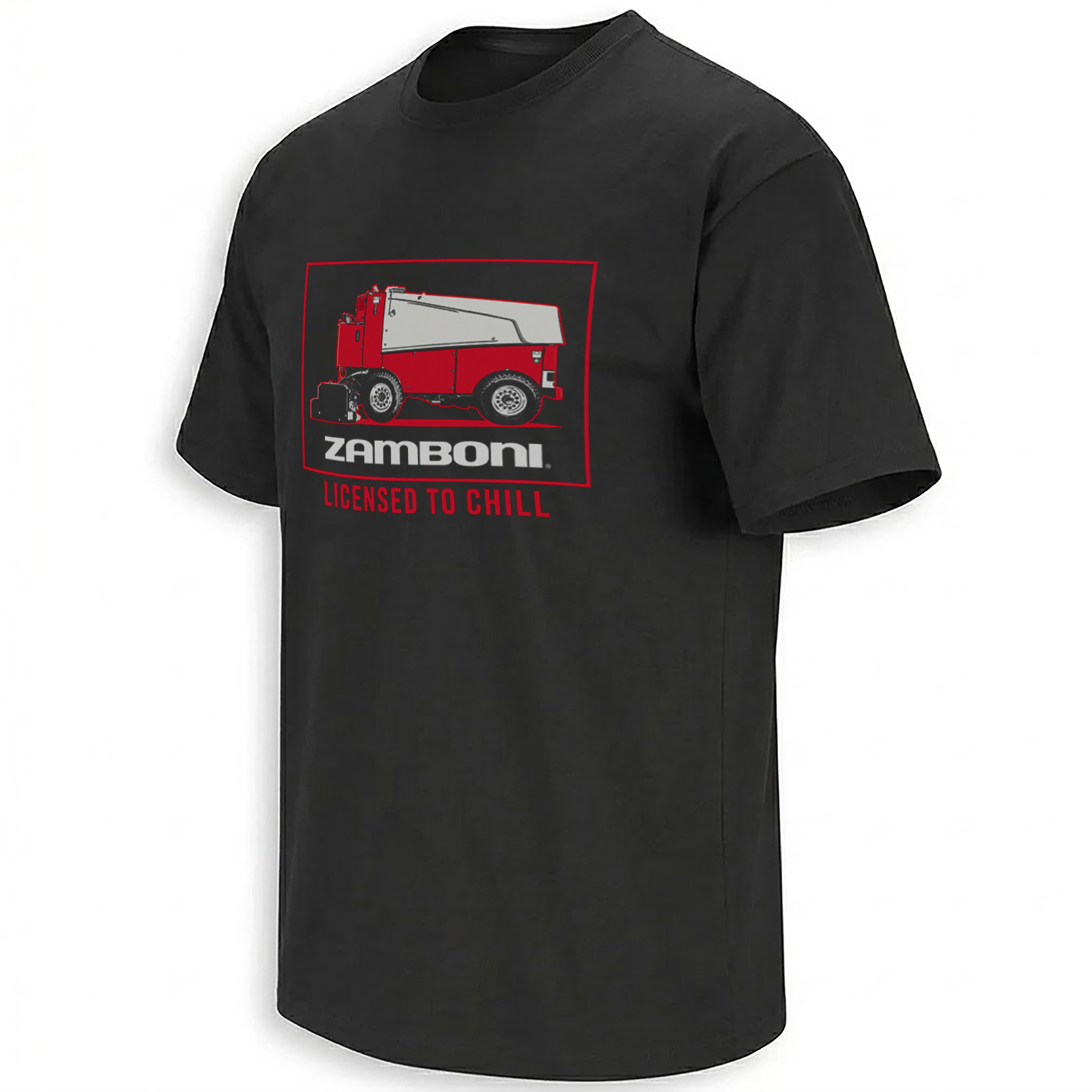
Red-and-gray industrial styling turns the machine into an equipment badge before the final cold-weather pun delivers the joke.
View the machine graphic →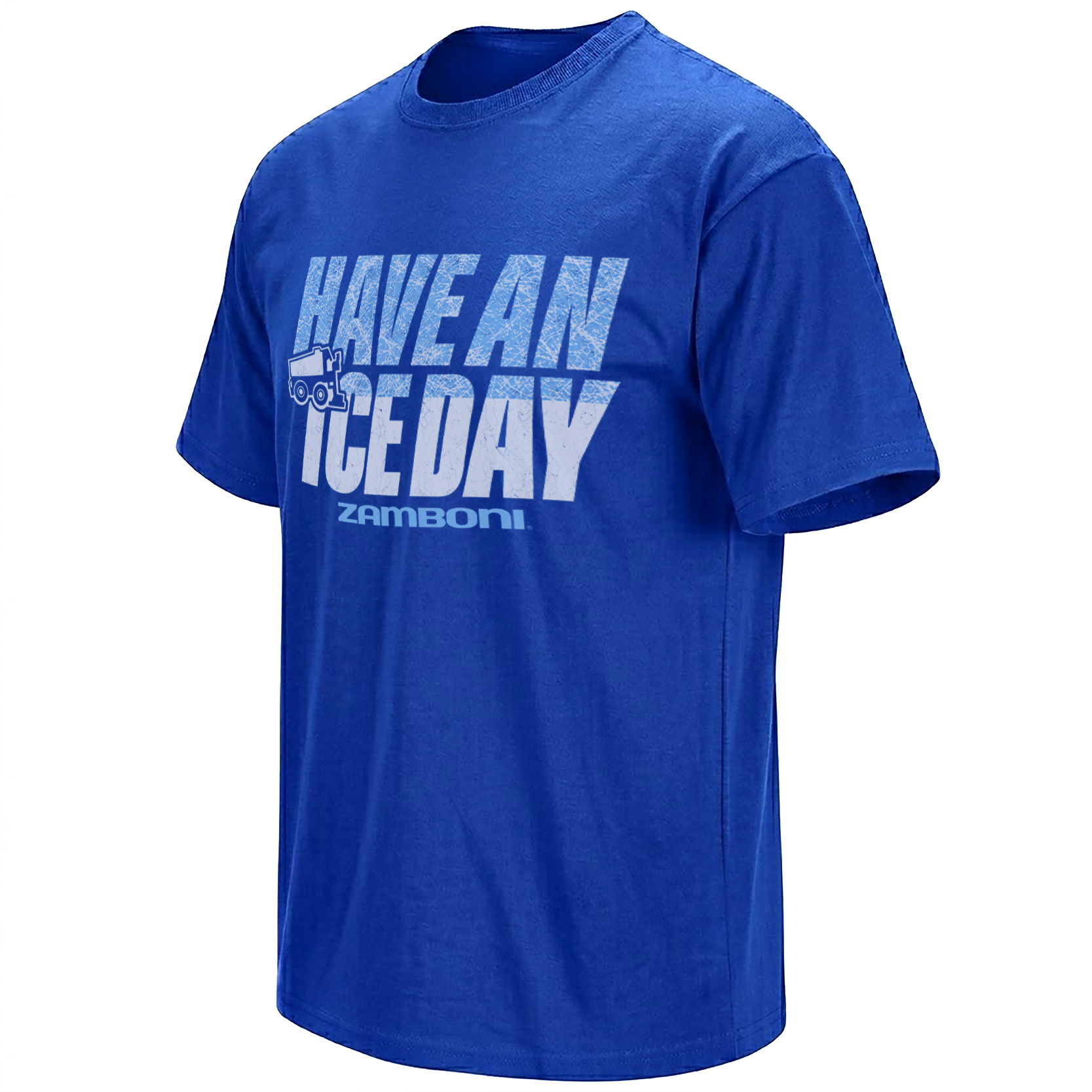
Oversized scratched lettering looks like skate-cut ice while the resurfacer appears to drive through the typography itself.
Explore the rink version →The Best Design Detail Is the Ice Itself
The second “Have An Ice Day” graphic is especially rink-specific because the typography is visibly damaged. Scratches and frozen texture make the letters resemble a surface after a period of hockey.
The small resurfacer then crosses through that visual damage. In other words, the machine is not merely illustrated beside the phrase; it appears to perform its job on the artwork.
Modern resurfacing combines several actions in one pass: a blade shaves damaged ice, snow and shavings are collected, the surface can be washed, and fresh water is distributed behind the machine to freeze into a smoother sheet.

A modern electric Zamboni at Varsity Arena shows how recognizable the basic machine silhouette remains decades after the original Model A.
“My Other Car” Explains the Driver Fantasy
The funniest thing about “My Other Car Is A Zamboni” is that the supposed fantasy vehicle is extremely slow. The joke only works because rink culture has assigned the machine status that ordinary logic cannot explain.
Driving one means briefly owning the entire sheet. Thousands of people may be in the building, yet the operator gets a few minutes in which every line, every turn and every strip of unfinished ice is visible.
Zamboni’s own collection of historical facts includes driver-of-the-year voting, machines used in Olympic competition and even restored vintage models that became museum objects. The driver fantasy is therefore not something invented by apparel culture; it has been embedded in the machine’s public identity for decades.
Why These Designs Fit Opening Night Better Than a Team Shirt
September 29 begins another NHL season, but a Zamboni graphic does not expire when a team loses. That is the advantage of rink culture.
Carolina, Boston, Toronto, Edmonton and every other hockey market may argue about completely different players and expectations. The resurfacing ritual remains recognizable everywhere.
That makes the collection unusually broad. A youth-hockey parent in Minnesota, rink operator in Ontario, recreational skater in Massachusetts and NHL season-ticket holder in Nevada can all recognize the joke without sharing the same team.
The Ellie Shirt Rink Archive
All four pieces fit inside Ellie Shirt’s dedicated Zamboni tag archive , which collects the ice-resurfacer designs in one place.
They also connect naturally with the broader NHL collection , where the machine sits beside players, teams and hockey moments as a reminder that fan culture includes far more than the action between the whistles.
Frequently Asked Questions
Who invented the Zamboni ice resurfacing machine?
Frank J. Zamboni developed the first successful self-propelled Model A resurfacer in Paramount, California, in 1949.
Is “Zamboni” the generic name for every ice resurfacer?
No. Zamboni is a registered brand name. The generic term is ice resurfacing machine.
Why are Zamboni machines so closely associated with hockey?
They are a visible part of the arena ritual, resurfacing heavily skated ice during breaks and preparing a fresh sheet before play resumes.
What does “Have An Ice Day” mean?
It is a hockey-rink variation of “Have a nice day,” replacing “nice” with “ice” and tying the phrase directly to resurfacing and skating culture.
What does “Licensed To Chill” reference?
The phrase plays on “licensed to kill,” replacing “kill” with “chill” to turn cold arena conditions and the Zamboni machine into deadpan rink humor.
Explore the full Zamboni design archive or move back into the wider NHL collection as the 2026–27 season begins on fresh ice.
Have An Ice Day, My Other Car Is A Zamboni and Licensed To Chill turn hockey’s most recognizable ice resurfacing machine into rink-culture humor as the 2026–27 NHL season begins.