
DENVER DEFENSE / NO. 9 / SEPTEMBER 27
Talanoa Hufanga’s Pick-Six Powers Broncos’ Wild Rams Win
A sack, a touchdown return and the final interception: the defensive sequence behind a full-volume Broncos tribute.
Talanoa Hufanga gave Denver a lead and then, later, made sure it could keep one. His 66-yard interception return transformed the fourth quarter against the Los Angeles Rams on September 27. His second interception ended the game, protecting a 30–26 Broncos victory after an evening spent repeatedly recovering from trouble.
The Broncos’ official account of his performance also highlights a crucial sack before those two takeaways. Together, the plays explain why a design reading “Talanoa Fuckin Hufanga” feels less like a considered slogan than the first thing somebody shouts when the television finally provides relief.
The wording belongs to the tribute’s fan voice. It is not presented here as a verified locker-room quote or the night’s most-used social caption. Its relevance comes from the performance: No. 9 repeatedly entered the decisive frame when Denver needed the game to change.
The Play That Turned Defense Into Offense
The Rams were leading 19–16 when Hufanga intercepted Matthew Stafford and carried the ball back for a touchdown. Denver suddenly led 23–19. It was the kind of change that makes a crowd process two emotions almost simultaneously: the danger has disappeared, and the team is scoring.
A pick-six has a particular force in football storytelling because the offense does not get a turn between those developments. One defensive read becomes a run toward the opposite end zone. The camera changes direction, the spectators change volume, and a possession that looked threatening becomes an image worth replaying.

Why the Second Interception Matters Just as Much
The touchdown return did not settle the night. Los Angeles answered, and Denver needed another scoring drive. Bo Nix supplied the go-ahead touchdown with 47 seconds remaining, leaving Stafford one final opportunity. Hufanga intercepted the pass into the end zone on the last play.
That sequence gives the tribute its full meaning. Remember only the scoring return and the story becomes a highlight. Remember the final interception too and it becomes a rescue followed by a finish. Hufanga helped create the possibility of winning, then removed the last possibility of losing.
The difference is important for any graphic attached to a specific game. “Pick-six hero” is an accurate shorthand, but the second takeaway explains the depth of the release. The final whistle allowed supporters to celebrate both plays without waiting for another answer from the Rams.
The Sack Before the Spotlight
There was another intervention before the touchdown. Defensive coordinator Vance Joseph sent Hufanga after Stafford, producing a 10-yard sack that helped restrict Los Angeles to a field goal. The Gazette’s defensive analysis emphasized the significance of that pressure.
It is the less spectacular part of the sequence, but it keeps the account honest. The evening was not decided by a player appearing out of nowhere for one fortunate bounce. Pressure, anticipation and finishing all appear in the same stretch of work.
For a fan tribute, that gives the name substance. The emotional wording can be loud because the football underneath it is specific. The design does not need a made-up record or a sweeping claim about an entire career to justify the attention.
Why the Phrase Sounds Like a Fan Reaction
Putting an expletive between a player’s first and last names changes the rhythm. It creates a pause, adds emphasis and makes the name feel like an announcement. “Talanoa Fuckin Hufanga” communicates astonishment and admiration in the register of a watch party rather than a formal game report.
The full name matters. A generic victory phrase could belong to any team. This wording assigns the emotion to the defender who produced the moments. It also gives the graphic a useful specificity: somebody encountering it later can connect the words to a person, a team and a particular Sunday night.
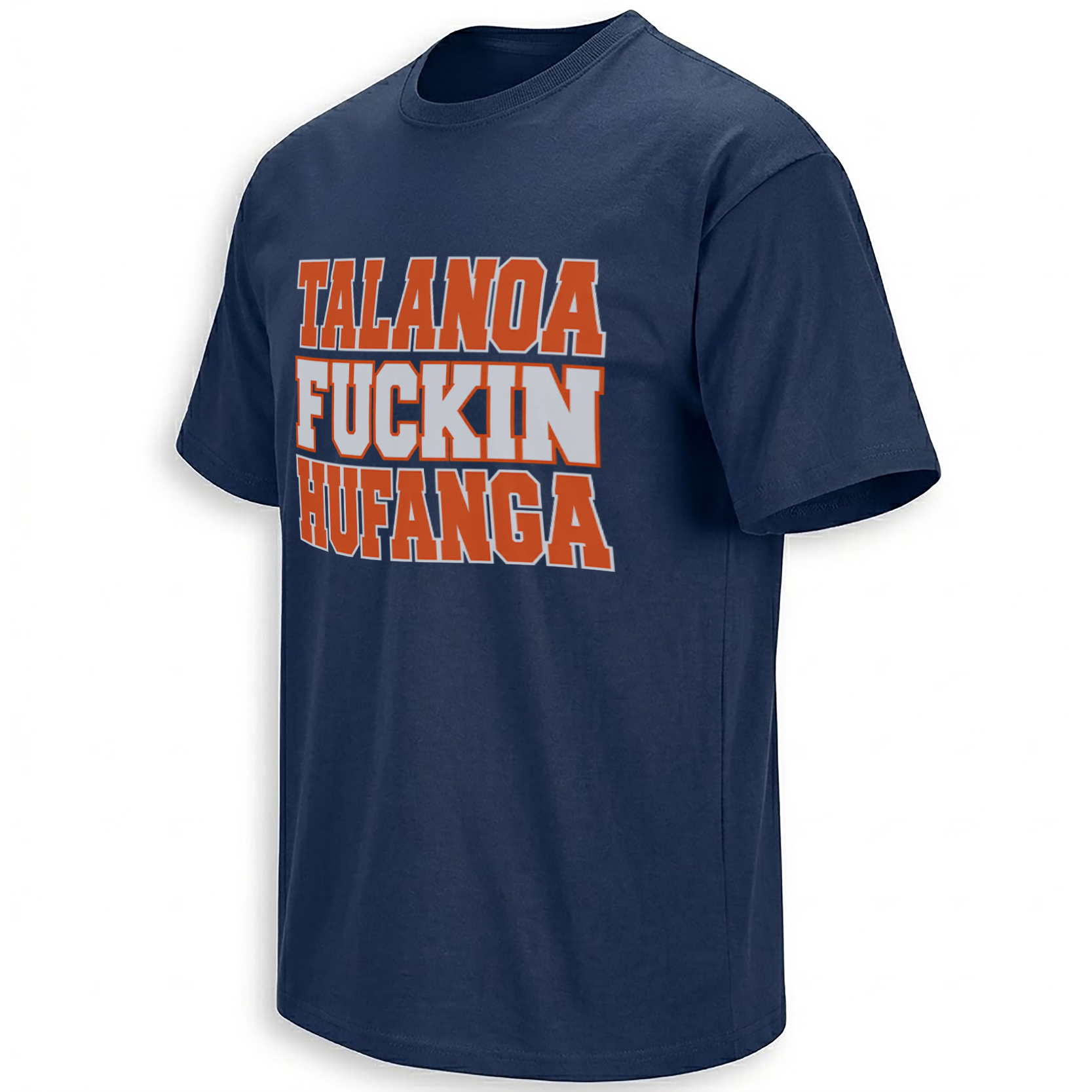 TALANOA FUCKIN HUFANGAA player-specific tribute to the defensive moments that changed Denver’s night.View the piece →
A Comeback With a Personal Reversal Inside It
Denver Sports reported another layer: Hufanga had missed earlier interception opportunities before making the two that mattered at the finish. That detail makes the performance more human. His night contained frustration before it contained the highlights.
The emotional connection is easy to understand without turning it into mythology. A missed chance can dominate how a player or supporter remembers a game. Two later catches can reorder that memory. The final version of the story is shaped by what happened after the disappointment.
The Talanoa Hufanga product search follows that individual story, while the Denver Broncos collection places it alongside the team’s broader fan language. This piece preserves the defensive side of a result that a quarterback-only summary would leave incomplete.
Frequently Asked Questions
How long was Hufanga’s pick-six against the Rams?
Talanoa Hufanga returned the interception 66 yards for a touchdown in Denver’s September 27, 2026 game against Los Angeles.
Did the pick-six end the game?
No. The Rams retook the lead, Denver answered, and Hufanga intercepted the final pass to secure the Broncos’ 30–26 win.
Is Talanoa Fuckin Hufanga an official player quote?
The wording is treated here as the design’s emphatic fan tribute, not as a verified quote from Hufanga or an official team slogan.
Within the wider NFL collection, this tribute has an unusually clear reference point: the defender who supplied a touchdown, then caught the ball that let everybody finally exhale.
Talanoa Fuckin Hufanga captures the raw celebration surrounding Denver’s No. 9 after his 66-yard pick-six and game-sealing interception against the Rams.