
Caleb Odom’s LSU Breakout Made One Football Instruction Feel Obvious: Feed Him
Five catches. A career-high 88 receiving yards. A statement win over LSU. Caleb Odom’s September 19 performance did more than raise his stat line — it made Ole Miss’ evolving tight-end role suddenly visible.
By the end of Ole Miss’ 32–24 win over LSU, Caleb Odom no longer looked like a player waiting for the offense to define him. The 6-foot-5 tight end had five receptions for a career-high 88 yards, and the way those yards arrived made the performance more interesting than the final number.
Odom was not merely standing in one alignment and winning the same matchup repeatedly. He was part of an offense using him as a movable piece — a receiver-sized target who is increasingly comfortable doing actual tight-end work, from lining up beside tackles to blocking, moving through formations and attacking linebackers or safeties in space.
HottyToddy’s postgame breakdown added an important detail: 39 of Odom’s yards came after the catch, and he drew eight targets. That is the profile behind the phrase “Feed Him.” It is not a manufactured quote from the fanbase. It is an editorial reaction to a game in which giving No. 4 opportunities repeatedly produced useful offense.
“Feed Him” works because the LSU game supplied the football logic: target the matchup, get the ball in his hands, let the size and movement finish the play.
The Image From LSU Explains the Appeal
One of the defining photographs from the game shows Odom carrying the football while extending one long arm into an LSU defender. It is almost a visual summary of the player Ole Miss wants him to become: too large to treat like a normal receiver, too fluid to defend like a traditional attached tight end.
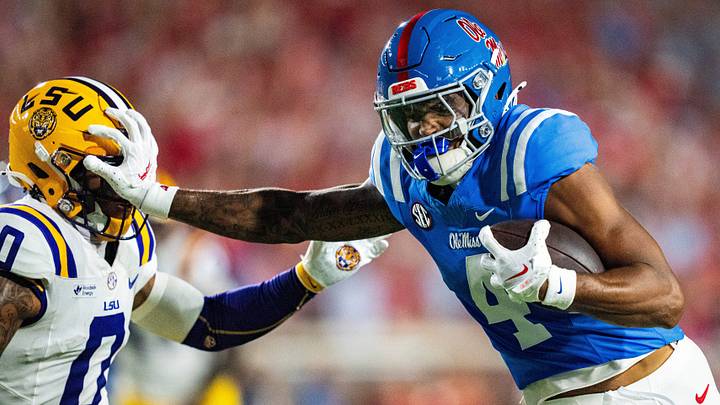
That physical contrast is why the breakout feels more sustainable than one lucky deep ball. Ole Miss can build different kinds of snaps around him. The defense has to decide whether to answer his size with a linebacker or his receiving ability with a defensive back. Either choice can create a weakness somewhere.
This Was a Breakout Inside a Much Bigger Ole Miss Night
The opponent mattered. LSU arrived in Oxford ranked No. 7 while Ole Miss was No. 8, making it the first meeting between the rivals with both teams inside the AP top 10 since 1962. Vaught-Hemingway Stadium drew 70,033 fans, an attendance record for the venue.
Ole Miss built a 24–7 halftime lead, survived LSU’s second-half response and finished the night with a 32–24 victory. Trinidad Chambliss threw for 363 yards and two touchdowns, Traylon Ray went over 100 receiving yards, and Odom supplied another matchup that LSU had to account for.
The result pushed the Rebels to No. 4 in the next AP poll. That makes Odom’s 88-yard night part of something larger than an individual box-score spike. It happened at the moment Ole Miss moved from an interesting early-season team into the national top-five conversation.
Why the Tight-End Change Matters
Odom’s development is especially interesting because his role has changed. Official Ole Miss roster information lists him at 6-foot-5 and 245 pounds, while recent reporting describes a player increasingly embracing the full-time tight-end identity rather than operating only as an oversized receiver.
That means blocking technique matters now. Protection matters. Alignment matters. His ability to play attached to the formation matters. Those responsibilities do not make him less useful as a receiver — they make the passing threat harder to diagnose.
Offensive coordinator John David Baker’s system has also created more opportunities for tight ends through multiple-TE personnel and motion. For Odom, that environment allows the offense to disguise whether his next responsibility is route, block or protection help until the formation begins moving.
Listen to Odom Explain the Role Himself
Odom’s September 22 media availability is useful because it keeps the breakout grounded in his own explanation rather than outside hype. He talked about weekly game plans, how coverages change as games progress and why playing the full tight-end role has made him more versatile and comfortable.
Why the “Feed Him” Graphic Works
The Feed Him Shirt translates the performance into football shorthand instead of trying to reproduce an entire game poster. The phrase is enormous. A blue helmet gives the graphic its Ole Miss football language. Then the crossed fork and knife turn the command into a visual pun: feed the target, feed the offense, keep putting the ball on his plate.
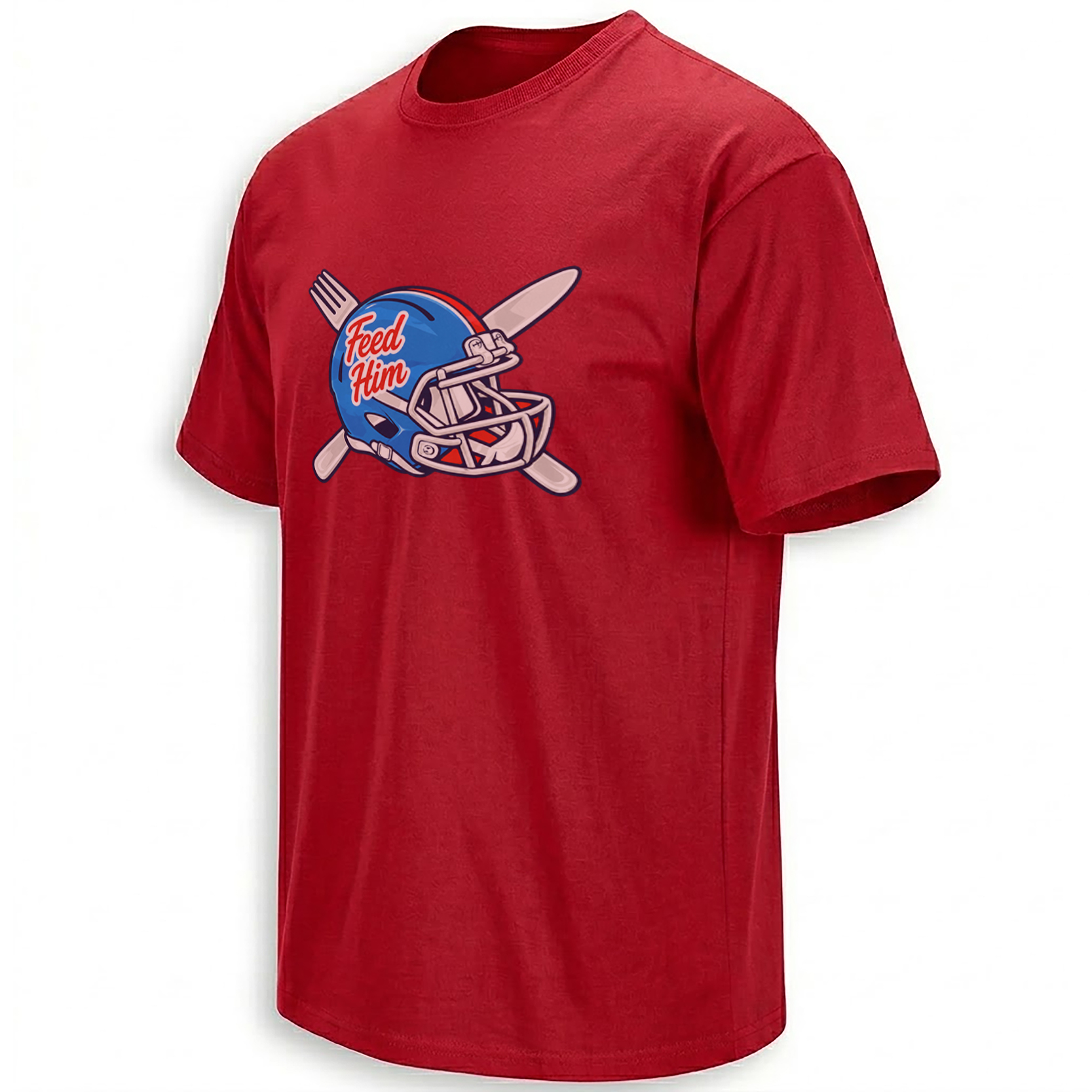
The helmet, fork-and-knife iconography and oversized command turn an 88-yard LSU performance into an instantly readable football instruction.
View the piece →The visual restraint is important. Odom’s breakout is still developing, so the graphic does not need an exaggerated career claim or fake accolade. “Feed Him” simply captures the current football question: after five catches and 88 yards against LSU, what happens if Ole Miss keeps finding ways to get him involved?
From LSU to Florida: The Breakout Now Has to Travel
The timing gives the story another layer. Ole Miss cannot spend a week admiring the LSU win. The Rebels head next to No. 21 Florida, where Odom’s job becomes more complicated because his tight-end responsibilities include helping against an aggressive front as well as creating receiving mismatches.
That is what makes the next stage worth watching. A true breakout is not only about repeating 88 yards. It is about becoming important enough that the offense still needs you when the matchup changes.
For more moments around the player, Ellie Shirt’s Caleb Odom search archive keeps the focus on his evolving story. The Ole Miss Rebels collection follows the wider visual language around the program, while the NCAA collection places the moment inside the larger college-football season.
Performance data is grounded in Ole Miss Athletics’ official LSU postgame notes and box score. Role and yards-after-catch context comes from HottyToddy’s September 23 Odom feature, with national ranking context verified through the Associated Press.
Frequently Asked Questions
How many receiving yards did Caleb Odom have against LSU?
Odom recorded a career-high 88 receiving yards on five catches in Ole Miss’ 32–24 win over LSU on September 19, 2026.
How many yards after the catch did Odom produce against LSU?
Postgame reporting credited Odom with 39 yards after the catch on eight targets.
What position does Caleb Odom play for Ole Miss?
Ole Miss lists the 6-foot-5, 245-pound junior as a tight end, with a role that allows him to move around formations as both a blocker and receiving threat.
Why does the phrase “Feed Him” fit the LSU performance?
The phrase works as football shorthand for continuing to create targets for a player who produced a career-high 88 receiving yards when given opportunities.
What happened to Ole Miss in the AP rankings after beating LSU?
Ole Miss rose to No. 4 in the AP Top 25 following the 32–24 victory.
The Feed Him graphic freezes Odom’s LSU breakout into one compact football phrase, while the Ole Miss archive follows the broader season as new performances reshape the Rebels’ identity.
Feed Him Shirt captures Caleb Odom’s 2026 Ole Miss breakout after the tight end posted a career-high 88 receiving yards on five catches in the Rebels’ 32–24 win over LSU.