
Inside NFL After Dark: 27 Icons, 9 Teams and One Impossible Midnight Football Universe
NFL history normally lives in highlight reels, retired numbers and arguments about who belongs on a franchise Mount Rushmore. NFL After Dark asks a stranger question: what if those generations could leave the stadium, meet after midnight and behave like they had always known each other?
The timing makes the concept feel unusually alive in September 2026. Jordan Love just helped Green Bay erase a 10-point fourth-quarter deficit before beating the Jets in overtime. Jalen Hurts led Philadelphia’s late winning drive in Tennessee. Maxx Crosby’s Raiders moved to 2–0, while Alvin Kamara returned as New Orleans beat Baltimore. These are not museum pieces built only around retired players. Several of the newest faces are still adding chapters to the histories the artwork is remixing.
That is the key to NFL After Dark. The series is not trying to recreate real photographs. It builds fictional cross-era encounters from something fans already understand instinctively: jersey numbers, reputations, team colors, generational succession and the personalities that made certain players larger than their box scores.
NFL After Dark is less “three legends on a shirt” than an alternate football timeline: the stadium lights are off, the careers no longer overlap, and franchise mythology is still awake.
The Real History Underneath the Fiction
The invented nightlife scenes only work because the historical relationships are real. Philadelphia itself once staged a Cunningham–Hurts meeting as a “generational passing of the guard.” Seattle’s official history charts Matt Hasselbeck, Russell Wilson and Geno Smith through distinct quarterback eras. Drew Brees entered the Pro Football Hall of Fame in 2026 while Alvin Kamara remains part of the active Saints story.


QB Legends vs. Franchise Icons: The Two Engines of the Series
Three quarterbacks from different generations. The numbers become a succession code: who established the era, who followed, and who represents the next chapter.
Position does not matter. The trio is chosen because each player embodies a different part of the team’s DNA — attitude, championship history, defense, athleticism or city identity.
The Five QB Legends Nights
Green Bay is the purest bloodline: Brett Favre #4, Aaron Rodgers #12 and Jordan Love #10. Rodgers learned behind Favre; Love learned behind Rodgers. The Packers collection makes the succession unusually literal.
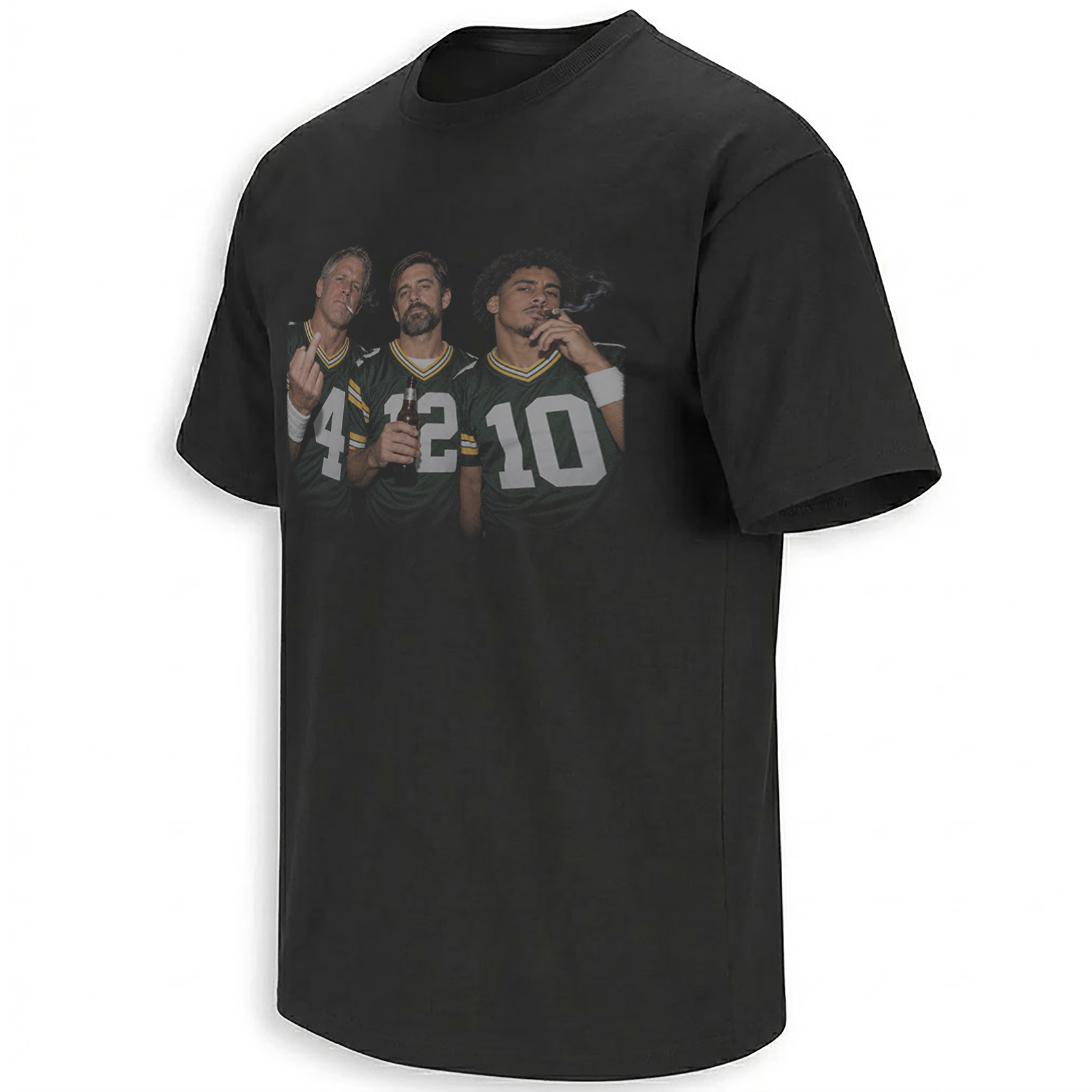
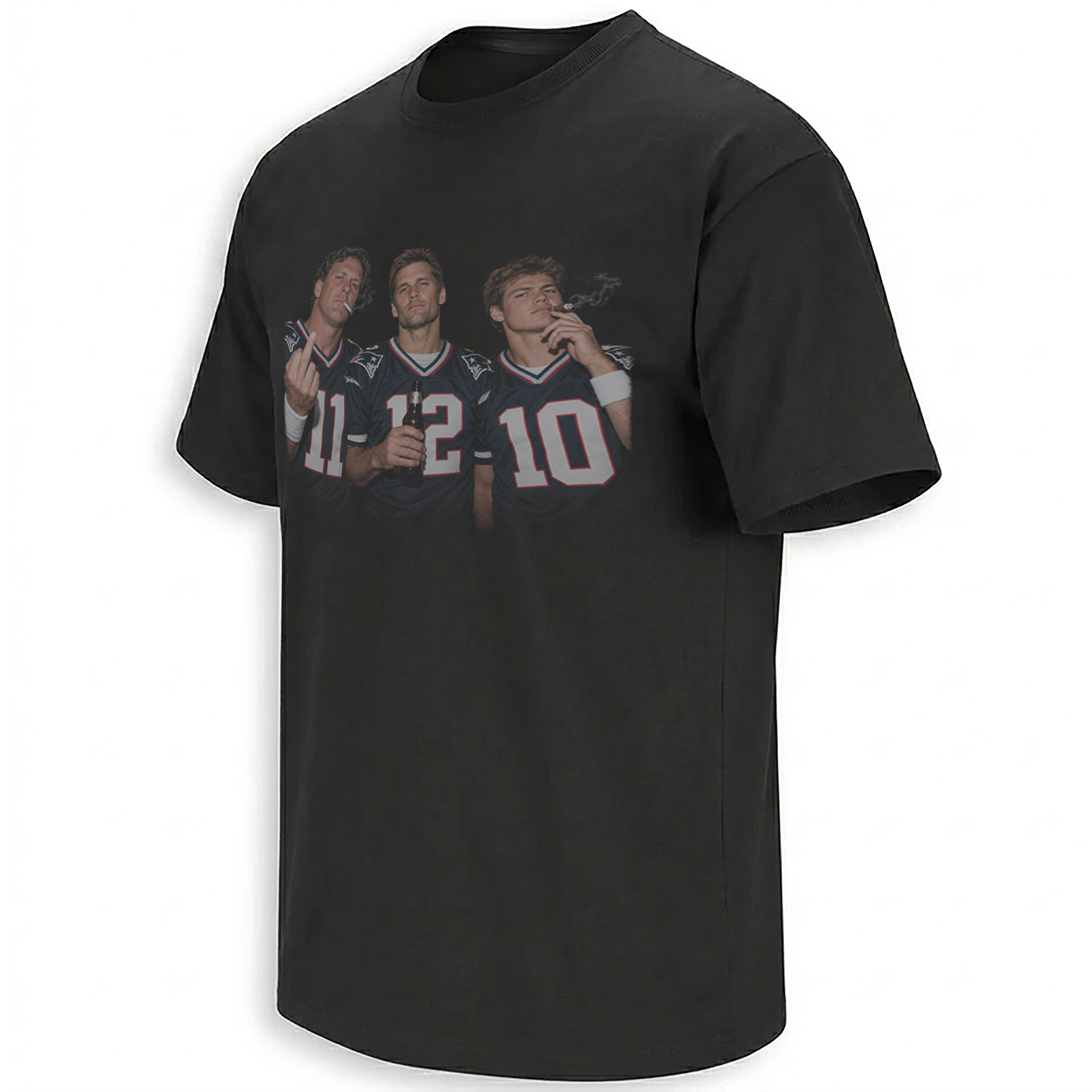
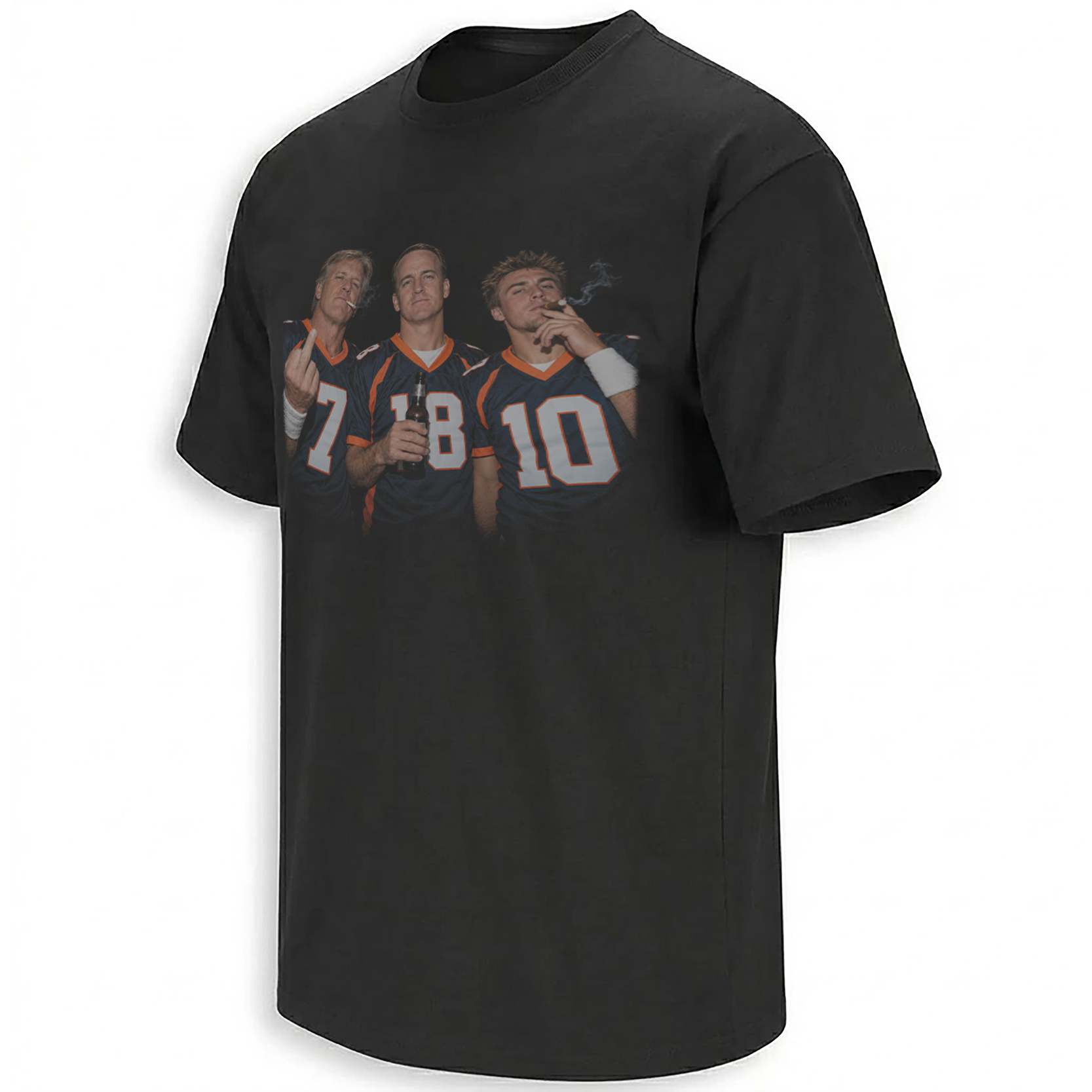
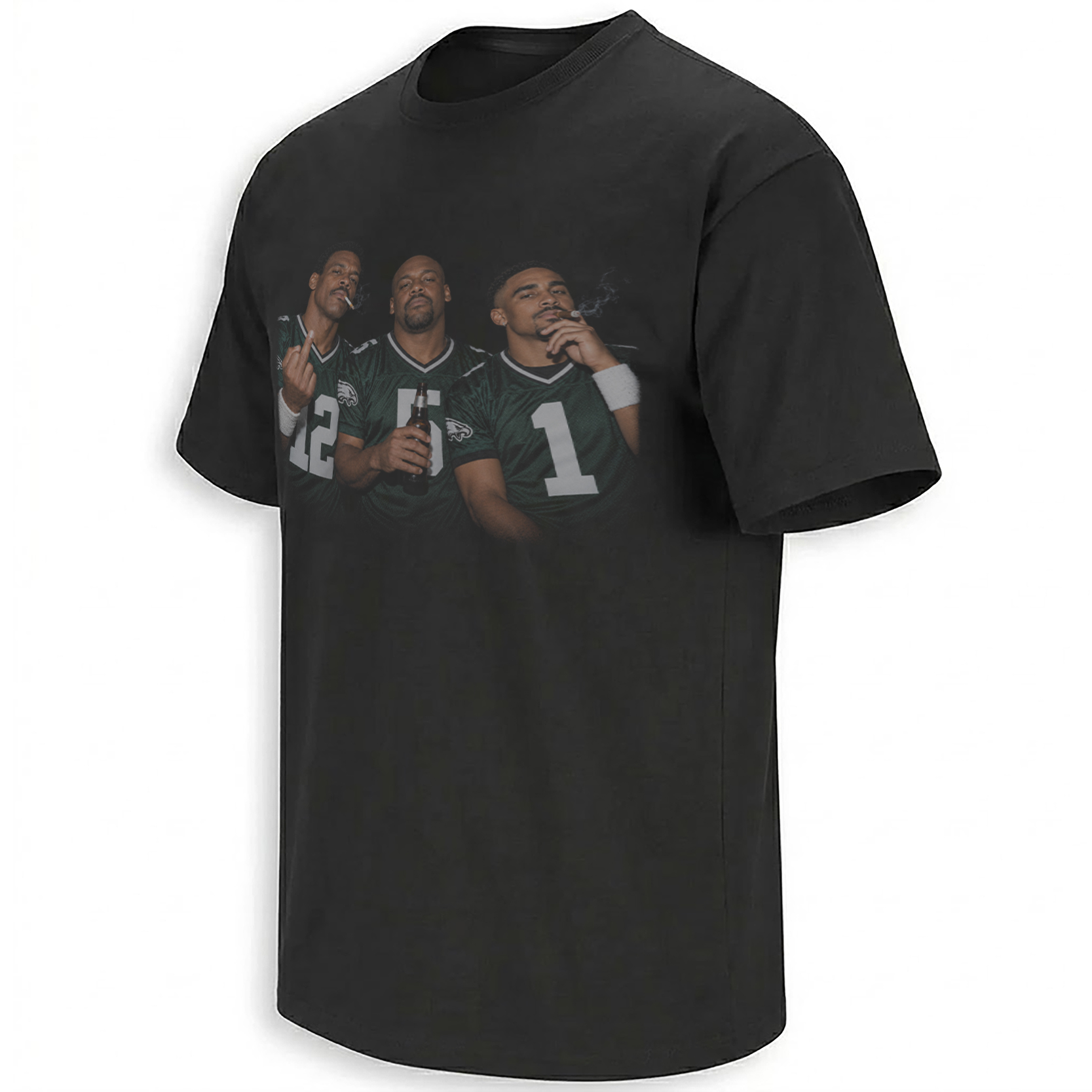
Randall Cunningham, Donovan McNabb and Jalen Hurts trace three generations of athletic quarterback play and Philadelphia pressure.
View Philadelphia After Dark →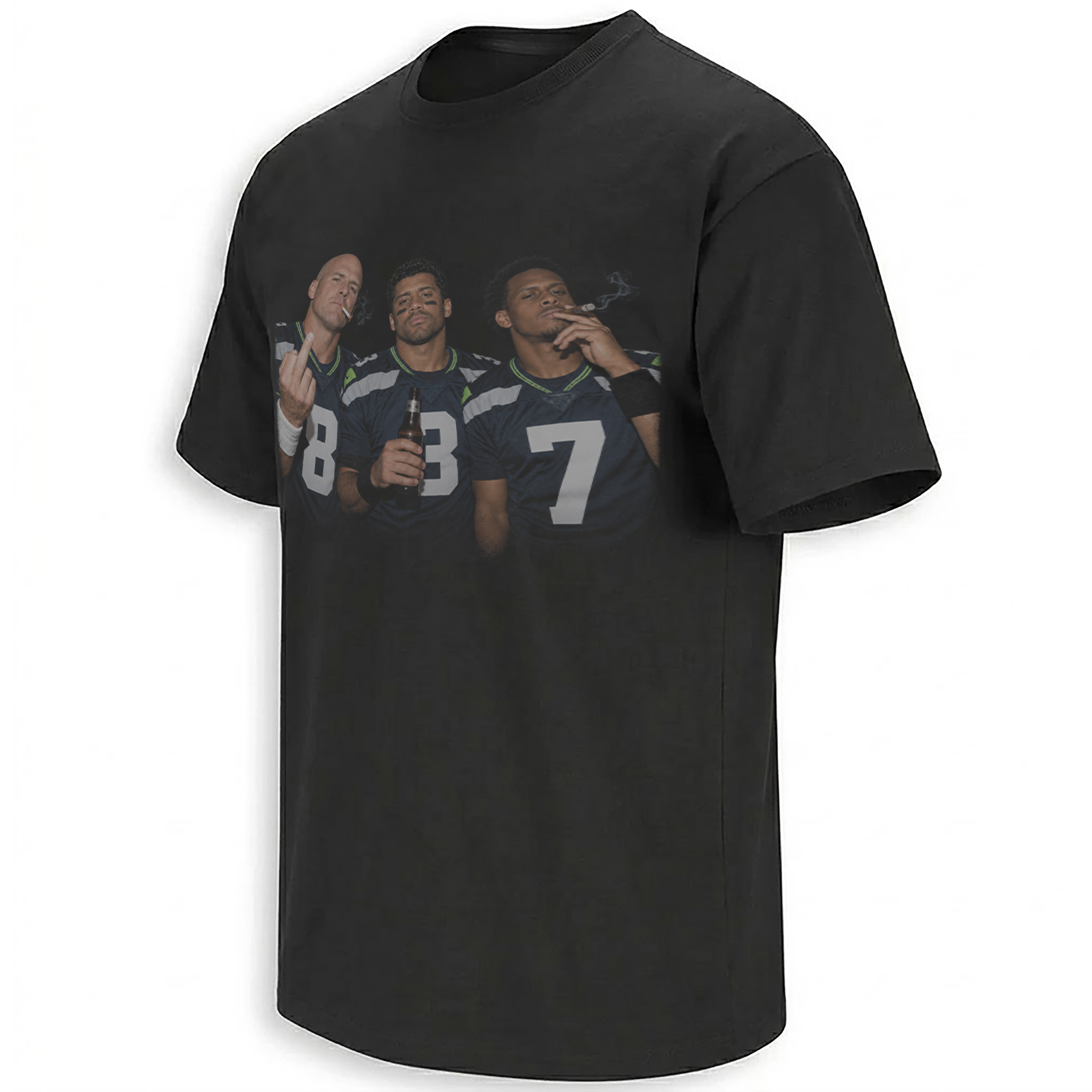
Matt Hasselbeck reached Seattle’s first Super Bowl, Russell Wilson won its first title and Geno Smith authored one of its great career revivals.
View Seattle After Dark →Then Franchise Icons Break the Position Rules
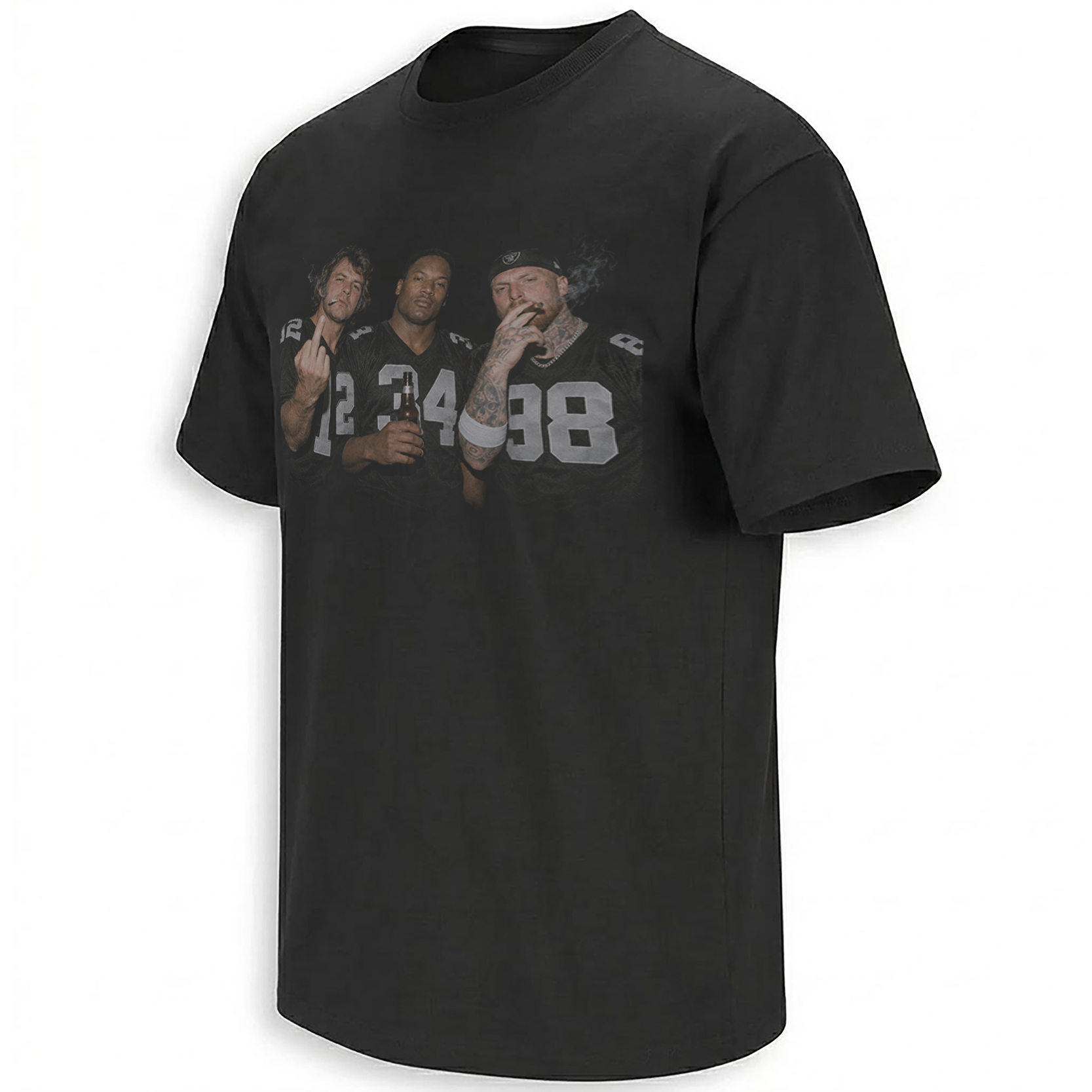
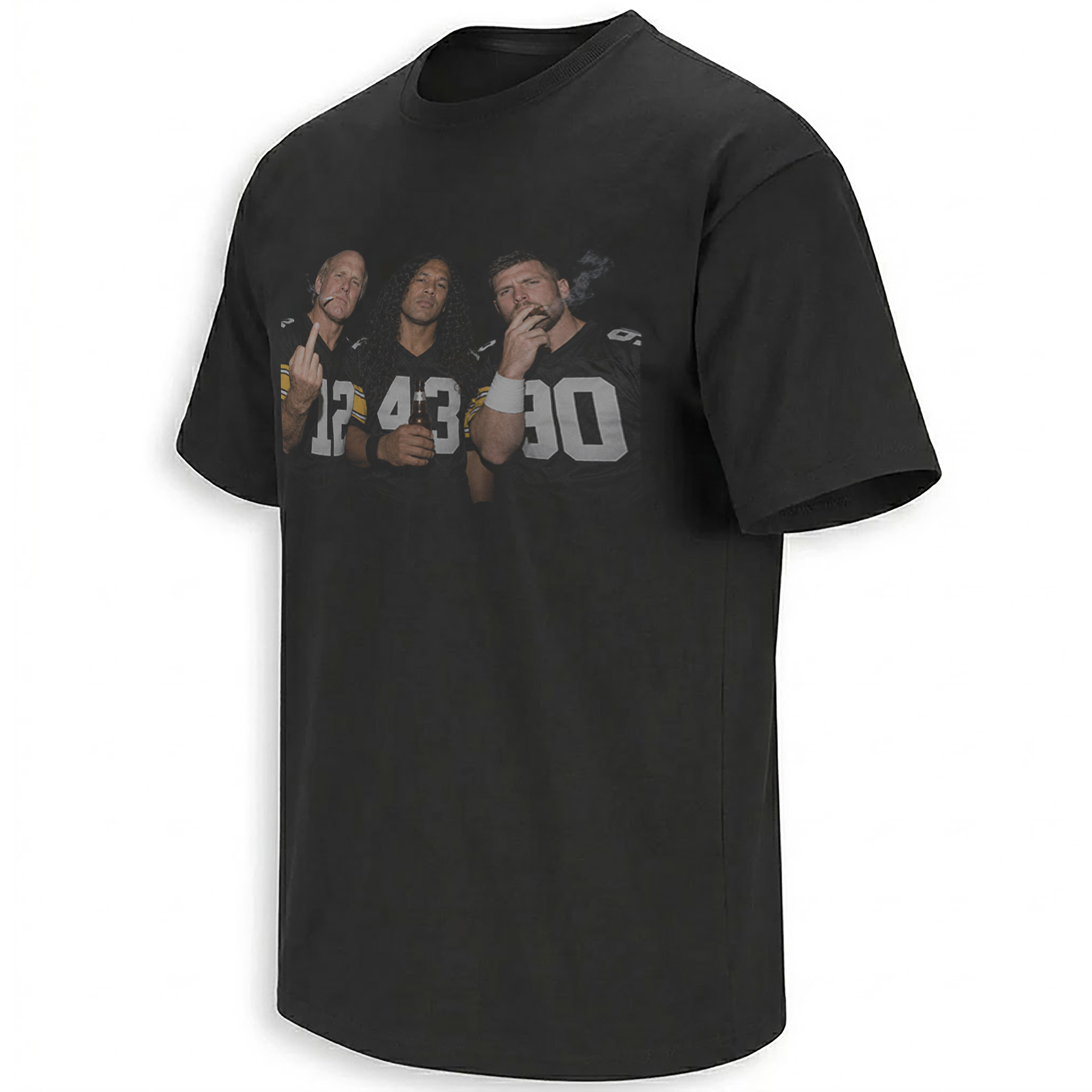
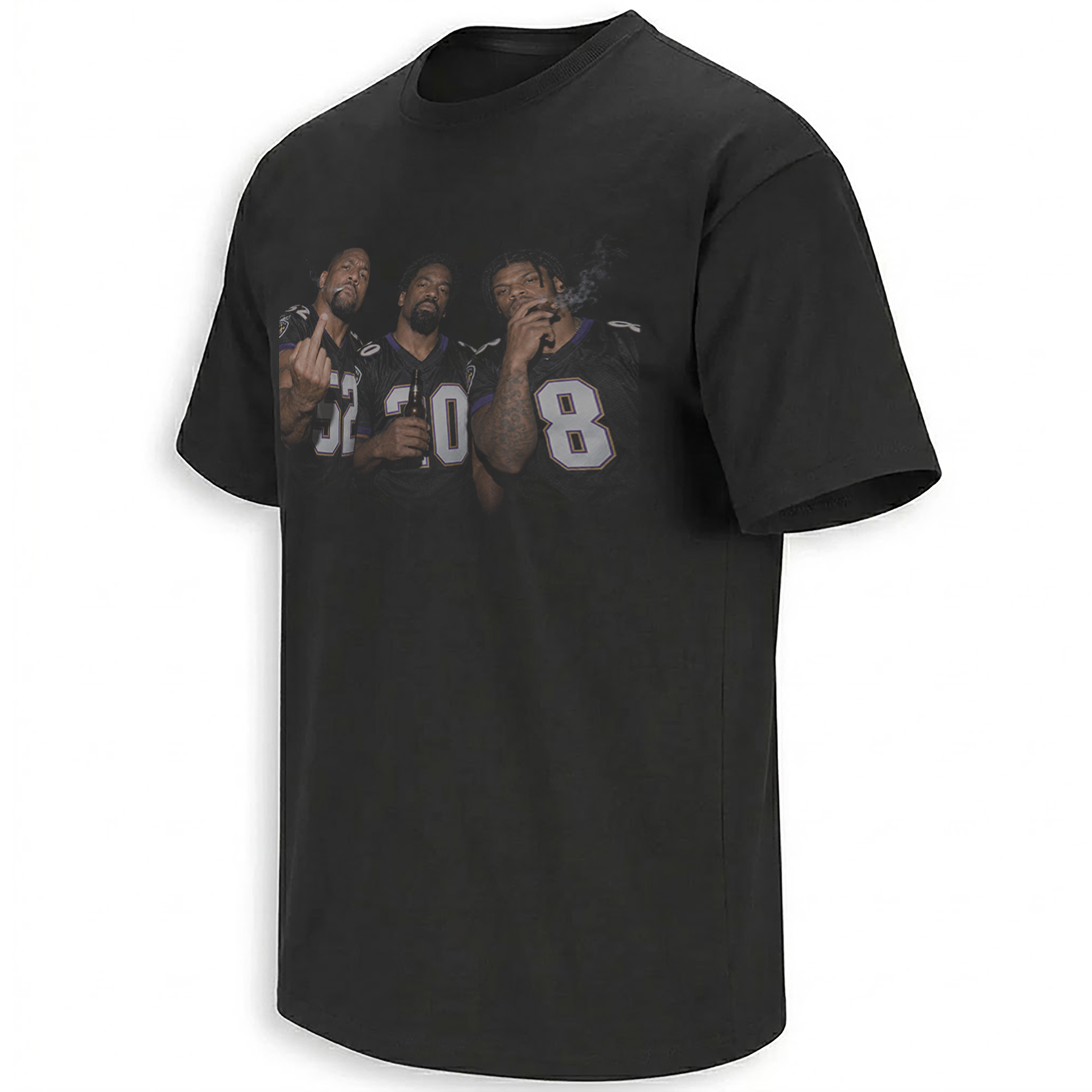
This is where NFL After Dark becomes more than a quarterback project. The Franchise Icons designs ask which three players feel like different pieces of the same team personality.
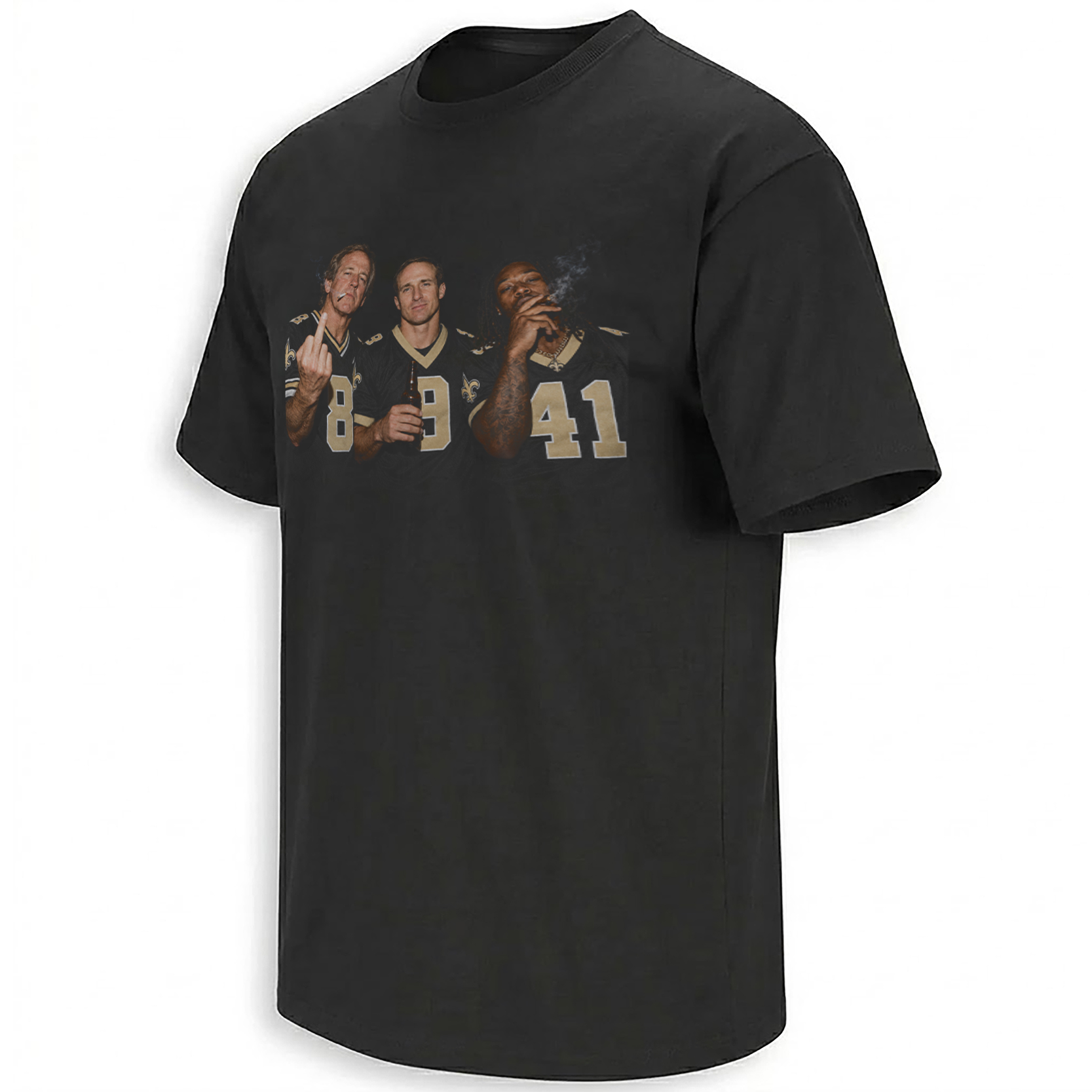
Why Jersey Numbers Are More Powerful Than Explanatory Text
The numbers make the series function like a fan password. Green Bay does not need to spell out why 4, 12 and 10 matter. Baltimore fans understand 52 and 20 before reading Ray Lewis or Ed Reed. No. 9 in New Orleans and No. 12 in New England already carry enormous historical weight.
That allows the artwork to spend its energy on mood instead: smoke, drinks, sunglasses, defiant gestures, deep shadows and the sense that the viewer has walked into a sports bar that exists outside normal time.
NFL After Dark is intentionally fictional and satirical. The scenes do not claim that these players drank, smoked or met together in the circumstances shown. Those elements are visual devices used to transform documented franchise history into exaggerated late-night fan folklore.
The Internet Version of Franchise Mythology
The modern players prevent the project from becoming pure nostalgia. Crosby’s response after Las Vegas reached 2–0 — “Done, NEXT. LFG!!!” — could almost function as a caption for the Raiders After Dark design itself.
That overlap between documented history and active fan culture is the collection’s real engine. Favre, Brady, Elway, Cunningham, Stabler, Bradshaw, Lewis and Brees provide the mythology. Love, Maye, Nix, Hurts, Crosby, Watt, Jackson and Kamara keep parts of that mythology unfinished.
Frequently Asked Questions
What is NFL After Dark?
NFL After Dark is an Ellie Shirt cultural-art series that places players from different franchise eras together in fictional late-night scenes built around jersey numbers, team identity and fan mythology.
What is the difference between QB Legends and Franchise Icons?
QB Legends follows three quarterbacks from different eras of one team. Franchise Icons can mix positions and instead chooses three players who represent different parts of the franchise’s identity.
How many NFL After Dark designs are in this collection?
This guide covers nine designs: five QB Legends teams and four Franchise Icons teams, featuring 27 players in total.
Which teams are included?
Green Bay, New England, Denver, Philadelphia, Seattle, the Raiders, Pittsburgh, Baltimore and New Orleans are represented in the current series.
Are the smoking, drinking and nightlife scenes based on real events?
No. The After Dark scenes are fictional visual storytelling. They combine real players, jersey numbers and franchise history with exaggerated nightlife imagery.
Explore the complete NFL After Dark collection or move into the broader NFL archive for other current moments, legends and franchise stories.
NFL After Dark brings 27 football icons across nine franchises into one fictional midnight universe, spanning QB bloodlines like Favre–Rodgers–Love and Cunningham–McNabb–Hurts to cross-position trios such as Stabler–Bo Jackson–Crosby and Ray Lewis–Ed Reed–Lamar Jackson.