
He Never Carried the Ball: Tyler Owens Still Won Angry Runs
Good Morning Football built Angry Runs around violent ball carriers. Tyler Owens was a punt-coverage gunner. One absurd Week 1 rep forced Kyle Brandt to bend the rule anyway — and suddenly “I Run Angry” belonged to No. 18.
Washington lost its opener in Philadelphia 24–22 on September 13. The box score belonged to quarterbacks, touchdowns and a failed two-point conversion. The clip that escaped the game belonged to a special-teams player who never touched the football.
Tyler Owens sprinted downfield as a gunner on punt coverage and met the kind of traffic designed to erase him from the play. Multiple Eagles blockers tried to redirect him. Owens kept working through them, stayed in pursuit and eventually arrived at returner Britain Covey with enough force to turn an ordinary punt into one of opening weekend’s most replayed sequences.
The Washington safety had produced only a special-teams tackle. Visually, it looked like an entire football philosophy compressed into a few seconds: effort after contact, refusal to disappear and an increasingly angry straight line toward the returner.
The joke is that Owens won “Angry Runs” without running with the ball. The reason it works is that almost nobody who watched the play cared about the technicality.
Kyle Brandt Had to Break His Own Rule
Angry Runs is one of Good Morning Football’s longest-running rituals. Kyle Brandt reviews the week’s most physical runs and awards a ceremonial scepter to the winner. Running backs dominate the history of the segment because the basic requirement is normally obvious: carry the football.
Owens created a category problem.
Brandt openly acknowledged that a special-teams gunner should not qualify. Then he replayed the sequence again and again. A viewer supplied the comic loophole: because Owens eventually carried the player who was carrying the football, perhaps he was temporarily a “ball-carrier carrier.”
That ridiculous logic was enough. Darnell Washington and Chris Godwin had both produced legitimate violent runs during Week 1, yet the scepter went to Owens.
Angry Runs normally celebrates ball carriers. Owens became the Week 1 winner because the force, effort and absurdity of his coverage rep became bigger than the format’s own definition.

The Best Detail: Owens Says He Actually Was Angry
That is where “I Run Angry” stops being only a slogan derived from Brandt’s segment.
Owens told Brandt that on the previous play he had complained to an official about being held by the jammers. Instead of calming down, he carried that frustration directly into the next rep.
Washington coach Dan Quinn described Owens’ speed and strain as qualities that are always present. Quinn also called the sequence one of his favorite special-teams plays in years. Owens’ own reaction was almost comically understated: he did not initially think the play was that unusual.
Everyone else disagreed. J.J. Watt said the rep was among the greatest football plays he had seen and predicted coaches would use it as teaching film. Michael Irvin, Pat McAfee and Rex Ryan all highlighted the effort.
The Front Design Looks Like a Battle Cry, Not a Player Portrait
The front does not show Owens’ face. It does not show the Eagles blockers. It does not reproduce the tackle.
Instead, burgundy graffiti lettering shouts “I RUN ANGRY” across black fabric. Gold outlines keep the words tied to Washington’s palette, while a hand-drawn metallic scepter slices underneath the phrase.
That is a smart choice because the scepter is the cultural object that explains the graphic. Without it, “I Run Angry” could be generic football language. With it, the lettering points directly toward Brandt’s Angry Runs ritual and Owens’ unlikely Week 1 win.
The Back Turns the Award Into a Player Identity
The reverse side changes scale completely.
“OWENS” sits at the top in aggressive burgundy-and-gold lettering. A giant metallic No. 18 dominates the center, finished with rivet-like details that make the numerals look closer to armored plates than ordinary jersey numbers. “ANGRY RUNS” closes the composition underneath.
The distinction between front and back is useful. The front is the attitude. The back identifies who earned it.
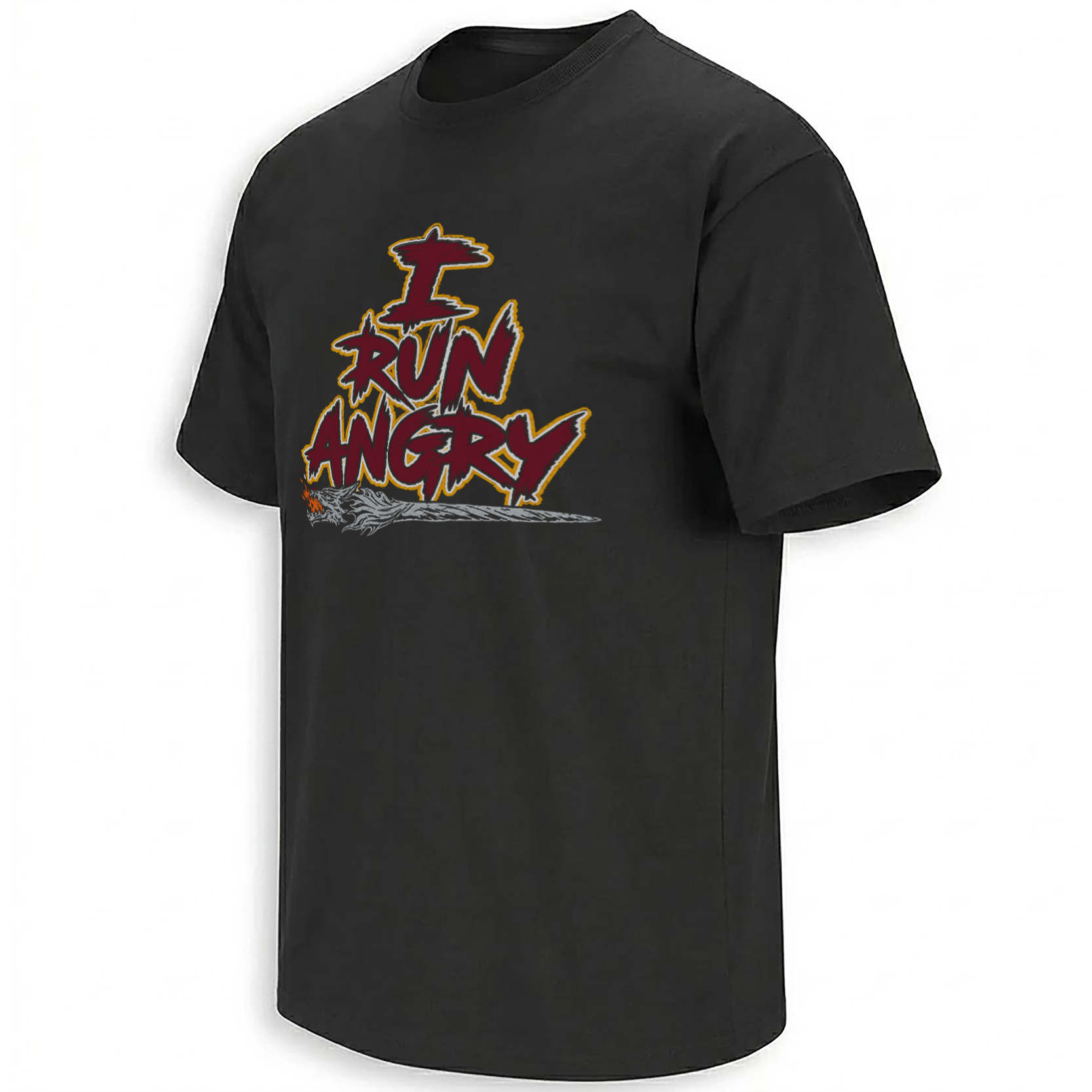
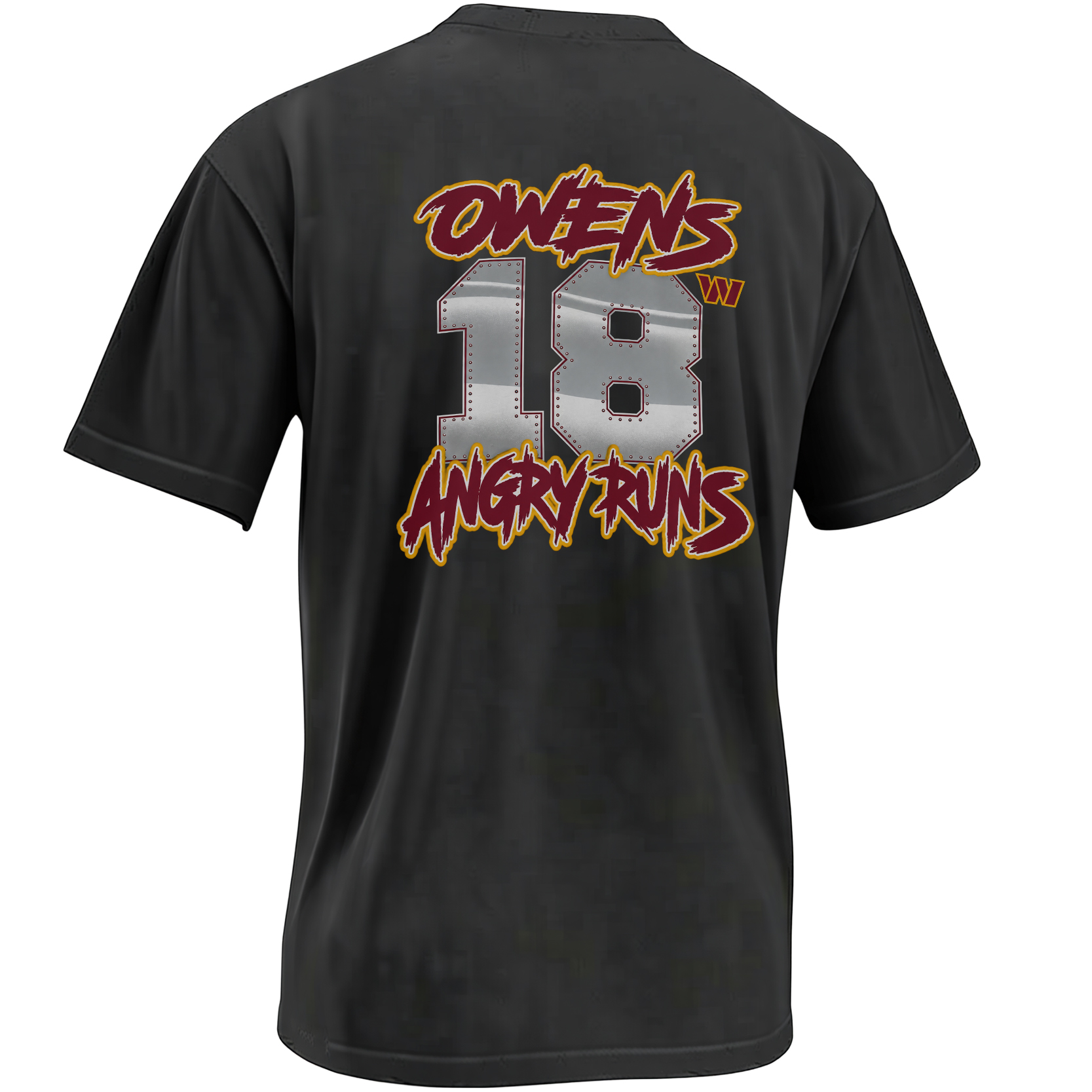
The front turns the Angry Runs scepter into a graffiti-style battle cry. The back gives the moment its owner: OWENS, metallic No. 18 and ANGry Runs stacked like a player badge.
Explore Tyler Owens designs →A Special-Teams Play Became Bigger Than the Loss
That is unusual in NFL culture. Coverage reps normally disappear unless they cause a fumble, allow a touchdown or involve a major mistake. Owens’ play did none of those things. It became famous because the effort was the event.
Washington had plenty of more conventional Week 1 storylines. Jayden Daniels threw two late touchdowns. Antonio Williams had a strong debut. The Commanders nearly erased Philadelphia’s lead.
Yet Owens was the player whose clip migrated into national shows, coaching conversations and an award built for a completely different position.
NFL Network’s official Good Morning Football segment shows Kyle Brandt working through the technical problem of an Angry Runs candidate who never carried the football before finally sending the scepter to Washington. Watch the Week 1 segment →
That Is Why This Version Is Different From “Owens Smash”
The earlier Tyler Owens graphics turn the same play into superhero mythology — smashing through blockers, vintage comic-book framing and exaggerated impact.
“I Run Angry” comes from somewhere more specific. It is about what happened after the clip went viral. The scepter, Brandt’s rule-breaking decision and Owens admitting that he actually entered the rep angry create a second chapter to the same moment.
The wider Washington Commanders collection tracks those emerging player stories, while Ellie Shirt’s NFL collection places Owens inside the broader visual language of the 2026 season.
Other No. 18 concepts can be found through the Tyler Owens search.
Frequently Asked Questions
Why did Tyler Owens win Angry Runs?
Owens fought through multiple blockers on punt coverage and still reached Eagles returner Britain Covey with a highly physical tackle, convincing Kyle Brandt to make an exception to the segment’s normal ball-carrier rule.
Was Tyler Owens carrying the football?
No. That was the joke behind the award. Owens was a Washington special-teams gunner covering a punt, not an offensive ball carrier.
What is the Angry Runs scepter?
It is the ceremonial prize Kyle Brandt presents on Good Morning Football to the player selected for the week’s most physical “angry” run.
Was Owens actually angry during the play?
Owens said he was frustrated because he believed blockers had been holding him on the previous rep, making the “I Run Angry” phrase unusually literal.
What number does Tyler Owens wear?
Owens wears No. 18 for the Washington Commanders.
What is on the back of the design?
The back features OWENS above a large metallic-style No. 18 with ANGry Runs typography beneath it.
The I Run Angry design captures the second life of Tyler Owens’ Week 1 moment — after the tackle became viral, after the football world replayed it and after an Angry Runs scepter unexpectedly started heading to Washington.
I Run Angry Shirt captures Tyler Owens’ unlikely Week 1 Angry Runs victory with a scepter-driven front graphic and an OWENS No. 18 back design, inspired by the special-teams play that forced Kyle Brandt to break his own ball-carrier rule.