
One Word Changes the Entire Joke: The Devil Wears MAGA
A famous fashion-film title returned to mainstream culture in 2026. Replace one luxury brand with America’s most recognizable political acronym and the elegant Runway joke suddenly becomes an openly anti-Trump editorial cartoon.
“The Devil Wears Prada” has always been a phrase with more cultural life than a normal movie title. Even people who have never worked in fashion understand the shorthand: power, impossible standards, immaculate presentation, ego, status and the kind of authority that can make an entire room nervous.
In 2026, that shorthand became current again. The Devil Wears Prada 2 reunited Meryl Streep, Anne Hathaway, Emily Blunt and Stanley Tucci nearly twenty years after the original film. It opened May 1 and turned the franchise back into a major pop-culture object rather than a piece of 2000s nostalgia.
That revival is what makes “The Devil Wears MAGA” feel unusually timely. The parody does not need to explain either half of itself. One side is a famous movie title. The other is Donald Trump’s most recognizable political symbol.
Prada represents fashion power. MAGA represents political identity. Replacing one word turns a movie reference into an accusation.
The Joke Works Because the Original Title Is Already a Cultural Template
Good parody depends on recognition before explanation. “The Devil Wears Prada” provides almost ideal material because its rhythm is so familiar. “The Devil Wears…” creates expectation; the final word supplies the target.
In the original cultural context, Prada represents luxury, fashion authority and the intimidating ecosystem around Miranda Priestly. In this design, that luxury label disappears and MAGA takes its place.
The result is explicitly anti-Trump satire. It is not making a neutral claim about policy or trying to summarize an administration. It is expressing a negative political viewpoint through the structure of a famous movie title.
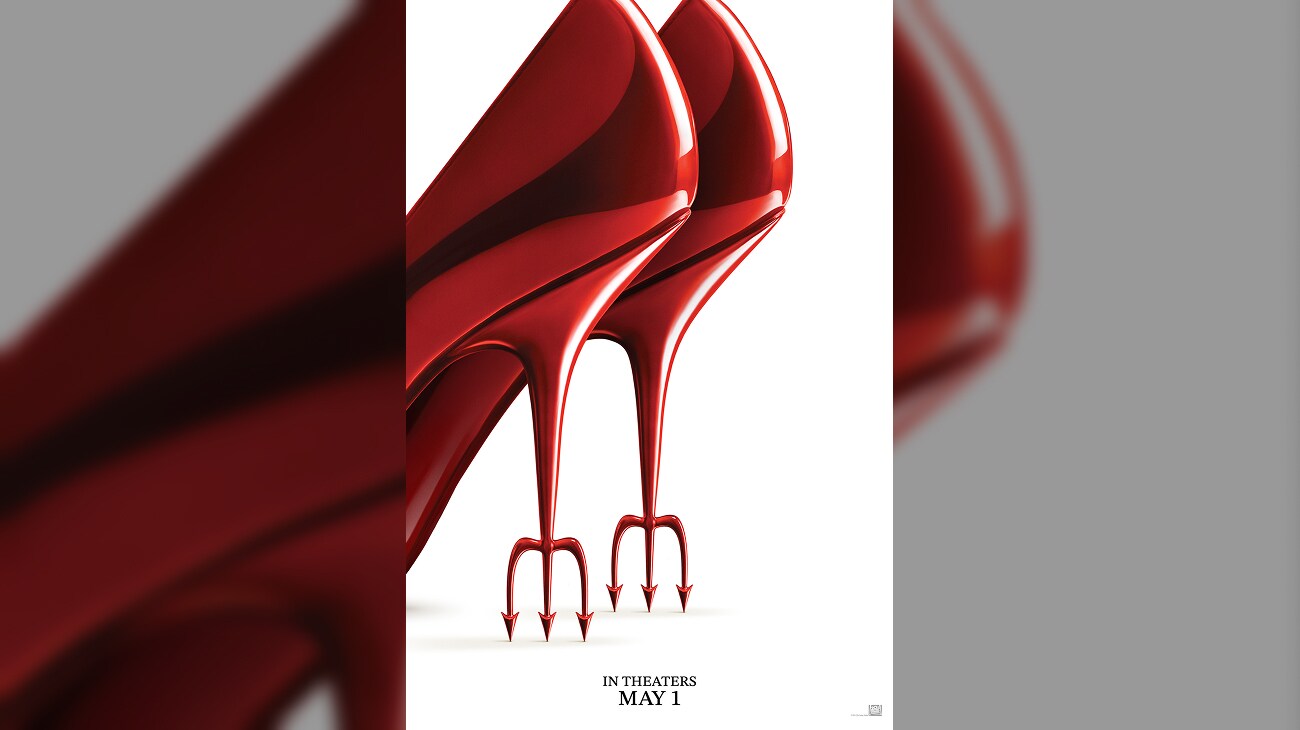
2026 Gave the Prada Reference New Cultural Energy
The sequel did not quietly appear and disappear. It opened with roughly $233 million worldwide in its first weekend and eventually reached about $693 million globally. Its cast, fashion, trailers and press tour brought phrases and visual cues from the original film back into feeds around the world.
That matters for parody because timing changes readability. A “Devil Wears Prada” joke made several years ago would rely primarily on nostalgia. A 2026 version lands while the franchise itself is active again.
The meme language therefore sits at the intersection of two live cultural systems: a renewed fashion-film phenomenon and a highly polarized American political identity.
The Red Hat Does Most of the Political Work
MAGA has moved far beyond being only campaign copy. The red cap became one of the most recognizable objects in contemporary American politics and a shorthand for Trump’s broader movement.
That visual familiarity is why the design can stay relatively sparse. Trump appears as an intentionally exaggerated caricature with heavy eyelids, rough orange and tan shading, pale hair, a dark-blue suit and red tie. Yet the red MAGA hat remains the brightest object.
The portrait is deliberately unflattering. That is an important distinction: viewers should read it as editorial cartooning, not as an attempt at neutral portraiture.
“The Devil Wears MAGA” expresses an anti-Trump opinion. It is satire, not a factual assertion that Trump is literally demonic, and the article treats the comparison as the viewpoint embedded in the artwork.
The Tiny Devil-Tail Detail Is What Makes the Typography Feel Designed
A parody can fail visually when it only swaps words. Here, the lettering participates in the joke. The pointed upward stroke over “DEVIL” resembles a devil tail or pitchfork flourish, creating a direct connection between the title and the hand-drawn portrait beneath it.
The rest of the composition stays deliberately restrained. Black serif text occupies the upper left. Trump dominates the lower area. Red appears primarily through the cap and tie. White space keeps the cartoon exposed instead of turning the piece into a crowded protest poster.
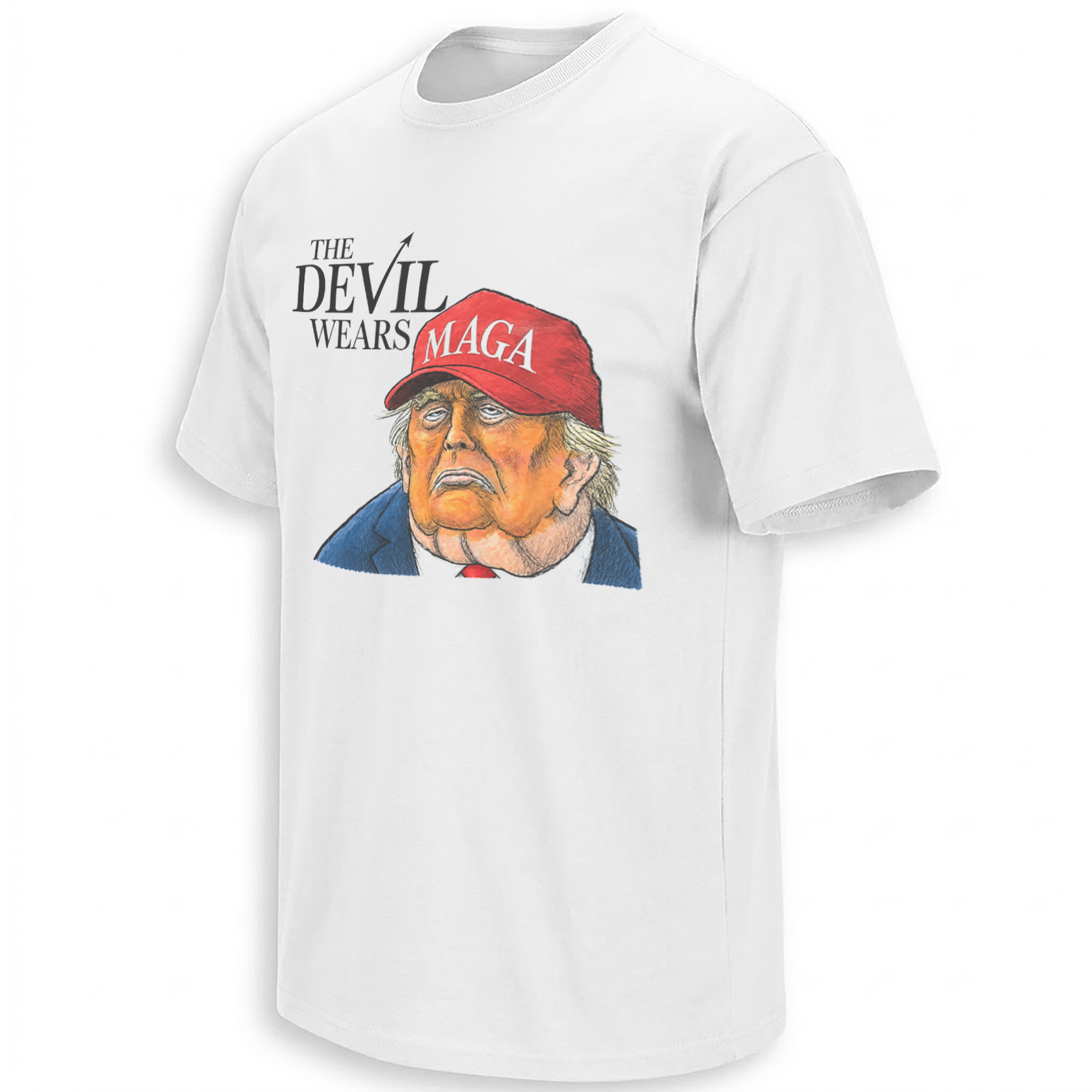
The artwork combines a rough Trump caricature, bright red MAGA cap and the familiar structure of The Devil Wears Prada into a deliberately hostile editorial-cartoon joke.
View the satire graphic →MAGA Is Still a Live Political Symbol, Not Campaign Nostalgia
The design also lands during the 2026 midterm cycle, when Trump remains deeply involved in Republican campaigning and organizations aligned with him are spending heavily in competitive congressional races.
That continued visibility matters because political parody loses force when its symbol stops carrying immediate meaning. MAGA has not reached that point. Supporters still use it as a movement identity; opponents still use it as a target for criticism.
For one audience, the red hat represents loyalty and a political worldview. For another, it represents precisely the politics this caricature is attacking. The design belongs openly to the second group.
The Movie’s Own Campaign Shows Why the Reference Was Everywhere Again
The studio’s global rollout moved through Mexico City, Tokyo, Seoul, Shanghai, New York and London, helping return Runway imagery and the film’s language to mainstream feeds months before and after the May release.
That widespread recognition gives “The Devil Wears MAGA” something many political shirts lack: a joke that can be understood as pop culture first and politics second.
Why This Is Different From a Normal Anti-Trump Slogan
Traditional protest apparel often speaks directly: an instruction, accusation or policy message in large text. This graphic is more dependent on cultural collision.
It asks the viewer to recognize a film, understand MAGA, identify Trump through caricature and then complete the comparison independently. That extra mental step is what makes it feel closer to an editorial cartoon than a campaign sign.
The wider Anti-Trump collection contains other political graphics built around current Trump-era commentary, while the Donald Trump search connects this parody to designs approaching him from very different political and cultural angles.
Frequently Asked Questions
What does “The Devil Wears MAGA” mean?
It is an anti-Trump parody that replaces “Prada” in the title The Devil Wears Prada with MAGA and uses that substitution as a negative political joke.
Is the shirt connected to The Devil Wears Prada?
Yes. Its wording directly parodies the famous film title, whose cultural visibility increased again when The Devil Wears Prada 2 was released in May 2026.
Who is depicted in the artwork?
The caricature represents Donald Trump wearing a red MAGA cap, blue suit, white shirt and red tie.
Is the design pro-MAGA?
No. The “devil” comparison and deliberately harsh caricature make the artwork explicitly anti-Trump and anti-MAGA satire.
Why is the parody especially timely in 2026?
The Devil Wears Prada franchise returned to mainstream attention through its 2026 sequel while MAGA remained highly visible during the U.S. midterm election cycle.
Is the design referring to one specific Trump speech?
No. It comments broadly on Trump and MAGA political identity rather than documenting one speech or policy announcement.
The The Devil Wears MAGA graphic captures the point where a revived 2000s pop-culture phrase collides with one of the most recognizable symbols in contemporary American politics.
The Devil Wears MAGA Shirt turns Donald Trump’s red campaign hat into an anti-Trump parody of The Devil Wears Prada, using caricature, devil-tail typography and the franchise’s renewed 2026 visibility to create instant political satire.