
Pete Alonso Hit No. 300 — and Citi Field Forgot He Was the Visitor
Pete Alonso’s 300th career home run already had the right number. Then baseball gave it the right pitcher, the right inning, the right stadium and one of the strangest curtain calls an opposing hitter could receive.
Pete Alonso spent seven seasons turning Citi Field into the place where New York learned to expect home runs from him. On September 15, 2026, he finally hit one there that belonged to somebody else. Wearing Baltimore colors and facing his former club, Alonso drove career homer No. 300 into left-center in the ninth inning and tied the game against the Mets.
The baseball facts alone were enough for a milestone story. Alonso entered the night on 299. Kodai Senga fell behind him 2–0. Alonso connected with the next pitch and sent the ball roughly 414 feet, producing his 36th homer of the season and the 300th of his career. Baltimore eventually won 7–5 in 11 innings.
Then the home crowd changed the meaning of the night. Citi Field stood for the visiting hitter. Fans chanted Alonso’s name until he came back out of Baltimore’s dugout, tipped his cap and accepted a curtain call in the stadium where 123 of his earlier home runs had been hit as a Met.
The exact moment looked almost too scripted
MLB’s own game story described the scene in cinematic terms, and the visual explains why. Alonso knew immediately. The bat left his hands toward the visiting dugout as the ball disappeared, and the crowd behind him was not reacting like a fan base that had just watched the opponent tie the game.
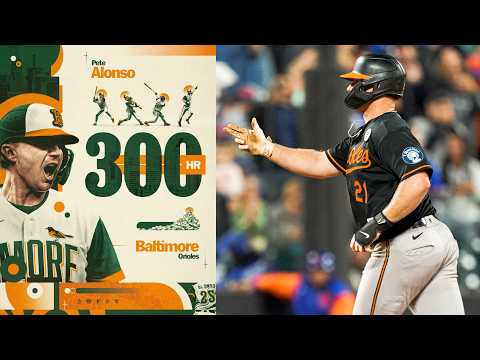
The statistical milestone belonged to Baltimore. The emotional moment still belonged to Queens.
A road-uniform curtain call changed the story
Alonso’s return had already been emotional before No. 300. A tribute video welcomed him back the previous night, and Mets fans repeatedly cheered their former first baseman. But celebrating him after a game-tying home run against New York pushed the homecoming into something much stranger.
Orioles manager Craig Albernaz admitted how unusual it looked: a player in road colors being summoned back out by the home crowd. Mets pitcher Sean Manaea, meanwhile, openly questioned why fans were cheering an opponent. That disagreement became part of the story almost instantly.
Then came another sound. After the Alonso celebration, chants aimed at Mets president of baseball operations David Stearns broke out around Citi Field. Suddenly the home run was no longer only about 300. It was being interpreted as a referendum on the relationship between Alonso, the Mets front office and the supporters who never seemed to emotionally accept the separation.
SNY documented Alonso meeting the three fans who recovered the milestone ball after the game. He signed memorabilia, thanked them and offered them tickets in Baltimore — a fitting epilogue to a night defined by the unusual relationship between Alonso and his former home crowd.
Then the “formulas” quote came roaring back
Months before the Citi Field homecoming, reporting had revived a confrontation from Alonso’s earlier Mets contract negotiations. According to Jon Heyman’s reporting, Alonso challenged David Stearns’ analytical evaluation of him by framing the argument around how his career might eventually be remembered.
“When my career is being evaluated for the Hall of Fame years from now, you’ll still be fiddling with your fucking formulas.”
At the time, the quote worked as a baseball argument: traditional production and player identity versus front-office valuation models. After Alonso left New York, became a Baltimore hitter and then reached 300 in front of the same fans who had watched most of the first 299, the line acquired a second life.
That does not prove analytics wrong, and home run No. 300 by itself does not settle Hall of Fame debates. What it does prove is that player value is experienced differently by executives and supporters. A spreadsheet can measure production. It cannot easily measure why an opposing home run can produce a curtain call.
Three graphics, three ways to remember the same night
The three Ellie Shirt designs treat the milestone less like duplicate merchandise and more like three editorial covers. One emphasizes the giant round number. One treats “PETE 300 HOME RUNS” like an old stadium poster. The third strips away the milestone number almost completely and makes the old “formulas” confrontation the headline.
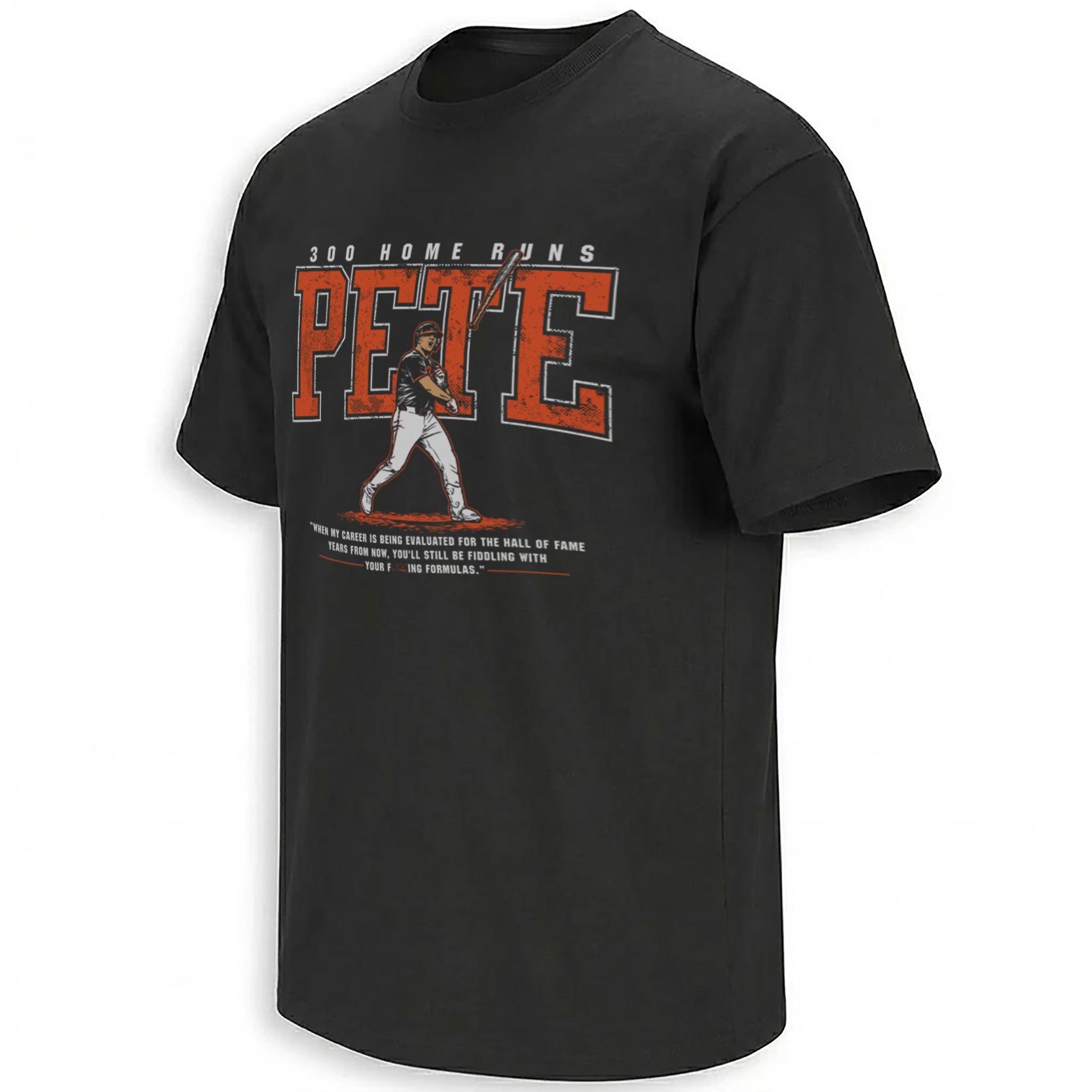
Oversized distressed PETE lettering, milestone typography and the formulas reference turn the achievement into an old-ballpark screenprint with an argument underneath it.
View the piece →
A vertical black-and-orange composition puts the enormous 300TH mark above the post-swing figure, treating one career number as the entire headline.
See the milestone graphic →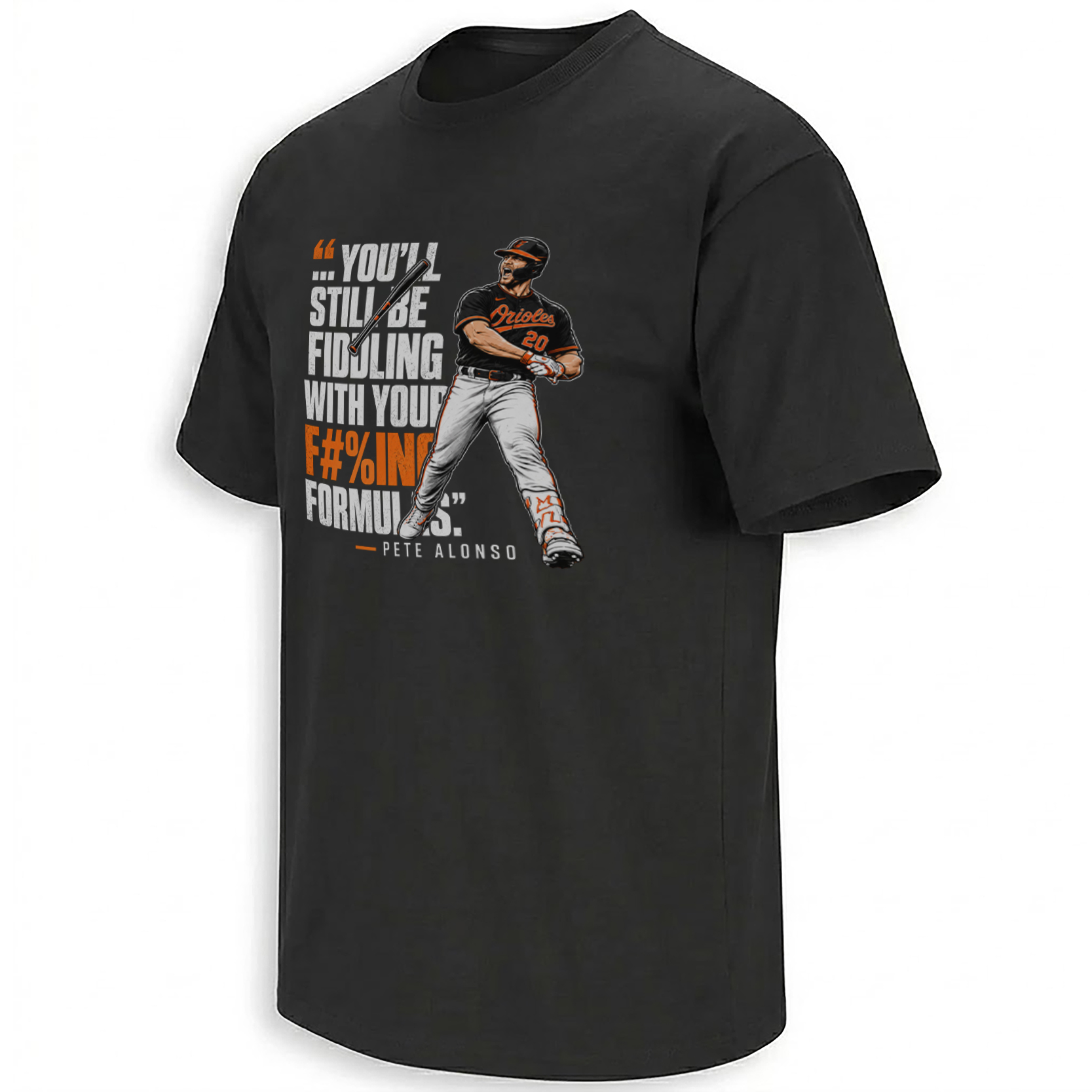
The statistic disappears and the argument becomes the design: oversized newspaper-like type, Baltimore orange accents and Alonso’s reported challenge to modern player valuation.
Open the quote design →No. 300 immediately became No. 301
The story did not freeze at the round number. Alonso homered again the following night at Citi Field, reaching career No. 301 as Baltimore completed a three-game sweep of New York. That follow-up changed the feel of the milestone: 300 was not a farewell gesture toward an old city. It was another marker inside an active Baltimore chapter.
That distinction matters for the artwork. These are not Mets-retirement graphics dressed in nostalgia. Their black-and-orange visual language deliberately places Alonso in the present while allowing Queens, Stearns and seven seasons of New York history to remain in the background.
Where the Pete Alonso moment lives inside Ellie Shirt
Because Alonso is now creating these milestones for Baltimore, the most direct team archive is the Baltimore Orioles collection. The wider MLB collection places No. 300 inside the broader late-season baseball conversation.
Since this story is centered on one player across two franchises, the Pete Alonso product search is the most useful route for following how his Mets history, Baltimore chapter and current milestone designs connect.
Pete Alonso 300th Home Run FAQ
When did Pete Alonso hit his 300th career home run?
Alonso reached 300 on September 15, 2026 during Baltimore’s game against the New York Mets at Citi Field.
Who allowed Pete Alonso’s 300th home run?
Mets right-hander Kodai Senga allowed the milestone homer in the top of the ninth inning.
Why was the Citi Field reaction so unusual?
Alonso was playing for the visiting Orioles, yet Mets fans gave him a standing ovation and called him back out of the visiting dugout for a curtain call.
How many home runs did Pete Alonso hit for the Mets?
He hit 264 home runs during seven seasons with New York and left as the franchise’s all-time home-run leader.
What does “fiddling with your formulas” refer to?
It refers to Alonso’s reported challenge to David Stearns during earlier contract negotiations, contrasting his confidence in his long-term baseball legacy with analytical player-evaluation models.
Did Alonso homer again after reaching 300?
Yes. He hit career home run No. 301 the next night as Baltimore completed its sweep of the Mets.
Career milestones usually simplify a player into a number. Pete Alonso’s 300th did the opposite. It reopened his Mets history, introduced his Baltimore future, triggered a visiting-player curtain call and revived an old argument about how baseball decides what a player is worth. Continue through the Baltimore Orioles archive, the MLB collection or Ellie Shirt’s Pete Alonso search.
Pete Alonso’s 300th home run at Citi Field became one of 2026 baseball’s strangest emotional moments: an Orioles slugger hurting his former team, receiving a Mets curtain call and giving new life to the famous “fiddling with your formulas” debate.