
“Los Lakers” Was Never Just a Translation — It Became Part of Los Angeles Basketball Culture
Long before Mexican-inspired basketball graphics became common streetwear, “Los Lakers” had already moved from Spanish-language broadcasts onto official NBA uniforms. That history is what gives a Mexican Heritage interpretation of the phrase cultural weight instead of making it feel like a random recolor.
September 16 carries a particular rhythm across Mexican and Mexican-American Los Angeles. Mexican Independence Day arrives through family gatherings, flags, music, neighborhood celebrations and the green-white-red palette that becomes unusually visible across Southern California.
Basketball does not sit outside that identity. In Los Angeles, sports allegiance and family heritage regularly occupy the same room, and few phrases express that overlap as naturally as “Los Lakers.”
The key is that the name has real history. The NBA launched Noche Latina during the 2006-07 season, and participating teams wore names reflecting how bilingual Latino communities and Spanish-language broadcasters referred to them. Chicago became “Los Bulls.” San Antonio became “Los Spurs.” Los Angeles became “Los Lakers.”
The power of “Los Lakers” is that it never asks a fan to choose between Mexican identity and Los Angeles basketball identity.
The Phrase Has Official NBA History Behind It
The Lakers themselves documented the Noche Latina program as a celebration of Latino fans and players, with jerseys carrying team names as they were spoken by bicultural, bilingual communities. That makes “Los Lakers” different from an unofficial Spanish remix created later by fan culture.
It entered the actual visual history of the franchise. The white Noche Latina jerseys placed “LOS LAKERS” across the chest in familiar purple and gold, transforming an ordinary basketball wordmark with only one added word — but changing the voice of the uniform completely.
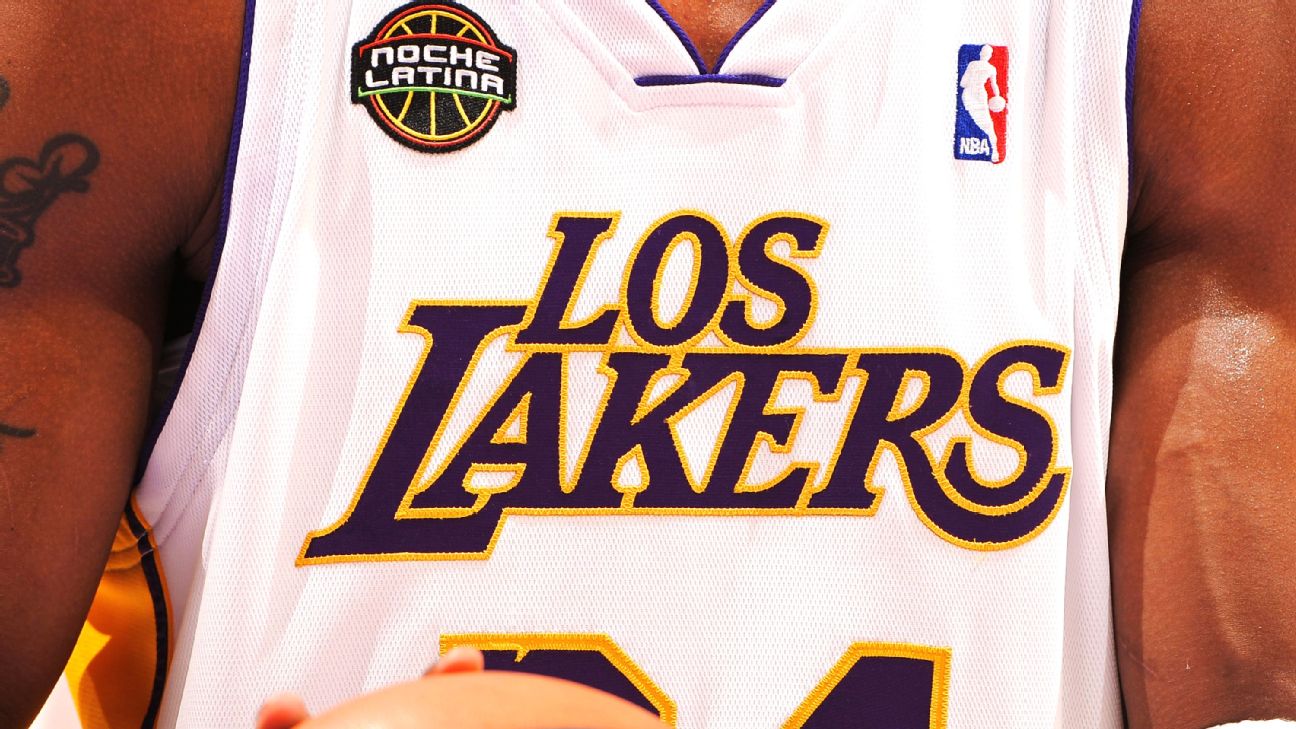
The persistence matters. The Lakers’ 2026-27 broadcast information still includes Spanish-language radio coverage on KFWB 980 AM. The team name may return to its standard form on the everyday uniform, but the Spanish-language relationship remains active around the franchise.
“Los Lakers” should be understood as an established Lakers/NBA cultural phrase. The Mexican Heritage artwork builds on that history, but the specific Mexican visual treatment is a fan-cultural interpretation rather than something that should automatically be described as an official 2026 Lakers campaign.
Mexican Heritage Changes the Visual Language, Not the Team Identity
The Los Lakers Mexican Heritage design moves further than the old Noche Latina jersey. Instead of simply placing the Spanish article “Los” above familiar purple-and-gold lettering, it rebuilds the entire graphic through Mexican-associated colors and symbols.
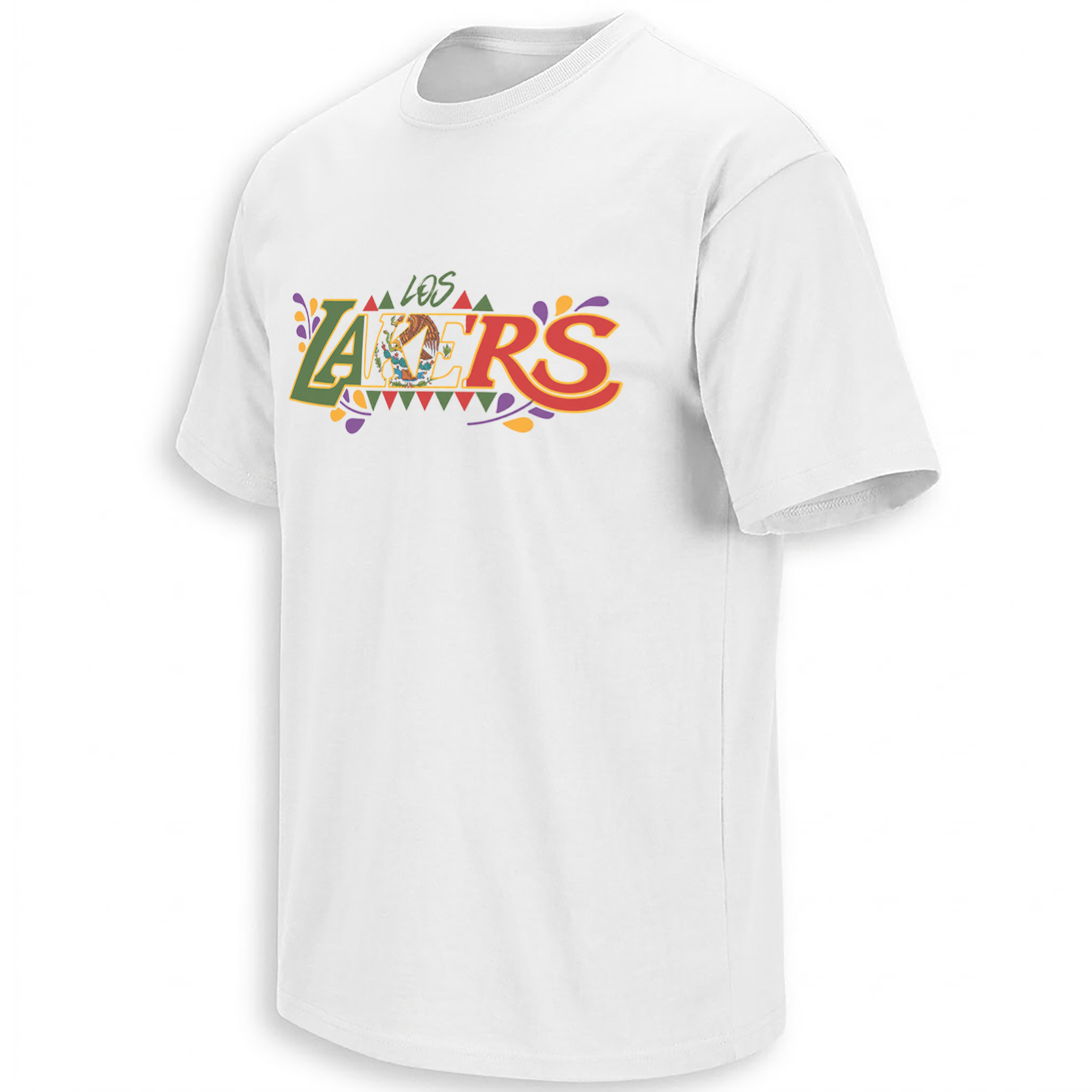
The most important decision is the palette. Green and red immediately shift the design away from standard Lakers merchandise. Gold acts as the bridge, because it belongs naturally to both the franchise’s visual memory and the warmer decorative language of the artwork.
Purple is not removed completely. Smaller purple accents keep Los Angeles basketball visible around the edges, preventing the design from feeling like one identity has replaced another.
The green lettering gives the artwork its first unmistakable Mexican visual cue and separates “Los Lakers” from normal purple-and-gold presentation.
Gold becomes the connective color — familiar to Lakers basketball while also warming the red-and-green heritage palette.
Red completes the Mexican color language and gives the right side of the lettering a stronger celebratory contrast.
The Eagle Is What Makes the Design Specifically Mexican
Without the central eagle-and-serpent-style motif, the piece could be read broadly as Latino or Hispanic-inspired basketball art. The eagle makes the intended cultural direction much clearer.
That symbol should be treated as visual inspiration rather than as a claim that the artwork reproduces Mexico’s official national emblem exactly. Its purpose is cultural recognition inside a basketball composition.
Around it, small triangular and decorative elements create movement similar to festival banners and Mexican-American street graphics. They are subtle enough that the wordmark remains dominant, but strong enough to prevent the graphic from feeling like a normal logo with three new colors.
Los Angeles Makes the Crossover Feel Natural
This concept works especially well because Los Angeles basketball fandom is not culturally neutral. The city’s fan culture has always been shaped by neighborhoods, family traditions, language and immigrant histories.
The Lakers have also previously used their wider arts platform to feature Mexican-American artists such as Antonio Pelayo and Daniela Garcia Hamilton, whose work draws directly from family migration, Mexican traditions and the experience of viewing those traditions through life in Southern California.
That wider cultural environment is what keeps “Los Lakers” from feeling like a seasonal slogan. It can appear on a basketball jersey, a Spanish broadcast, a mural, a streetwear graphic or a family conversation and still sound at home.
2026 Gives the Phrase a New Context Before the Season Even Begins
The Lakers’ 2026-27 regular season does not tip until October 21, when Los Angeles hosts Golden State. That means this September heritage moment exists before wins, standings or playoff arguments begin shaping the conversation.
It is identity-first basketball culture: a reminder that fans carry the team through the offseason because fandom is not limited to game nights.
The verified Los Angeles Lakers collection holds the wider visual archive of current Los Angeles basketball culture, while the broader NBA collection places the design inside league-wide fan and streetwear language.
Readers looking specifically for this heritage direction can also use the Los Lakers product search or Mexican Heritage product search.
Frequently Asked Questions
Is “Los Lakers” an official historical Lakers phrase?
Yes. The Lakers used “Los Lakers” on official Noche Latina uniforms as part of the NBA program celebrating Latino fans and players.
When did the NBA begin using Los Lakers?
Noche Latina began during the 2006-07 NBA season, with participating teams using names that reflected how bilingual Latino communities and Spanish-language broadcasters referred to them.
Why does this design use green and red instead of only purple and gold?
Green and red move the artwork toward Mexican cultural identity, while gold and smaller purple details preserve the visual connection to Los Angeles basketball.
What does the eagle symbol mean in the design?
The eagle-and-serpent-inspired centerpiece is a visual reference to Mexican heritage and helps distinguish the artwork from a broader generic Latino basketball graphic.
Is this an official Lakers 2026 Mexican Heritage campaign?
The design is a fan-cultural heritage graphic. Its “Los Lakers” foundation has official Noche Latina history, but the specific 2026 Mexican visual treatment should not be presented as an official Lakers campaign without separate confirmation.
The Los Lakers Mexican Heritage graphic turns that long-running Spanish-language identity into a green-red-gold cultural piece, while the Los Angeles Lakers archive follows the wider visual language surrounding the team.
Los Lakers Shirt connects the Lakers’ real Noche Latina history with Mexican-inspired green, red and gold artwork, an eagle-centered heritage motif and the basketball identity of Mexican-American Los Angeles.