Texas Was Down 23–3. Then Austin Turned the Night Inside Out.
The Longhorns’ 24–23 comeback against No. 1 Ohio State was not simply a ranked win. It became one of those Austin nights where football language, local identity, music culture and instant fan art all began overlapping before the stadium had emptied.
For three quarters on September 12, Texas looked trapped inside the wrong version of its biggest home game of the young season. Ohio State had built a 23–3 advantage, the Longhorns had spent much of the night fighting their own mistakes, and the No. 1 Buckeyes seemed positioned to turn Austin into the backdrop for another national statement.
Fifteen minutes changed all of it. Arch Manning found Ryan Wingo for the first Texas touchdown. Hollywood Smothers scored twice from one yard. Ohio State went scoreless in the fourth quarter. With 25 seconds remaining, Smothers crossed the goal line again and Gianni Spetic’s extra point made it 24–23.
Texas Athletics called it the program’s second-largest fourth-quarter comeback. The Longhorns became the first team in more than two decades to erase a 20-point fourth-quarter deficit against an AP No. 1 team. In a stadium holding 105,044 people, the numbers stopped feeling like statistics and became shared fan memory.
“Texas Fight” sounds different after a team spends three quarters losing and fifteen minutes refusing to stay lost.
“Beef in the Heart of Texas” Became a Real Football Argument
Texas and Ohio State already arrived with unfinished business. The programs had met in each of the previous two seasons, and Texas entered the 2026 home game needing more than revenge language. The Longhorns needed proof that the current version of the program could absorb a disastrous stretch and still finish against the country’s top-ranked team.
That gives the Beef in the Heart of Texas Shirt a different texture after the final whistle. What begins as matchup art becomes a record of an actual fight: Texas and Ohio State, burnt orange against scarlet, a top-five game that changed direction at the exact moment it appeared settled.
“Texas Fight” Was Already in the Air Before Kickoff
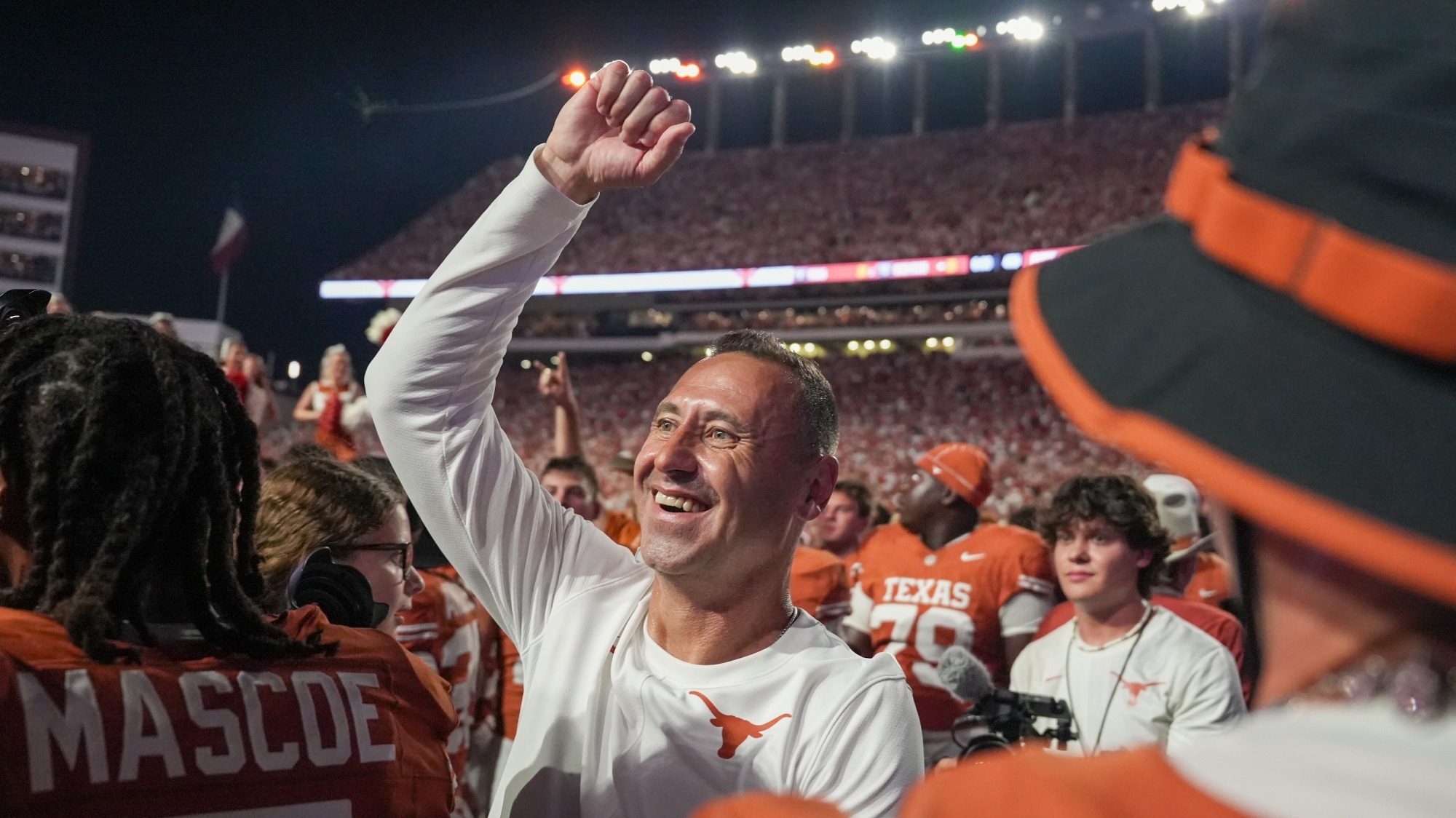
One day before the game, Texas Football released a hype film narrated by Matthew McConaughey. Its language revolved around preparation, pressure, Texas heat and “our Texas fight.” It was standard pregame mythology until the actual game forced the team to live inside the phrase.
That is why the That’s What You Call Texas Fight Shirt works as postgame fan language. The exact audio around Steve Sarkisian’s chaotic television exit was difficult to hear cleanly, and reports transcribed it in slightly different ways. The design is best understood as a fan-facing distillation of the moment, not a courtroom transcription.
Austin Had Already Been Living in “Night Champion” Mode
There is a second Austin thread running through this group of graphics, but it should not be confused with the football game itself. Nine days earlier, on September 3, Texas-born singer-songwriter Koe Wetzel brought The Night Champion World Tour to Moody Center in Austin with Ole 60, Bayker Blankenship and Logan Jahnke.
That concert is a separate cultural event, not a Texas Football collaboration. Yet the proximity creates a useful Austin snapshot: one city, one September stretch, and two different kinds of nighttime spectacle built around Texas identity.
Wetzel’s music has long mixed country with rock and heavier edges, which gives The Night Champion Shirt a darker visual vocabulary than the clean collegiate language of the football pieces. It belongs to Austin’s live-music side rather than the scoreboard, but together the graphics show how quickly a city can collect visual souvenirs from unrelated nights.
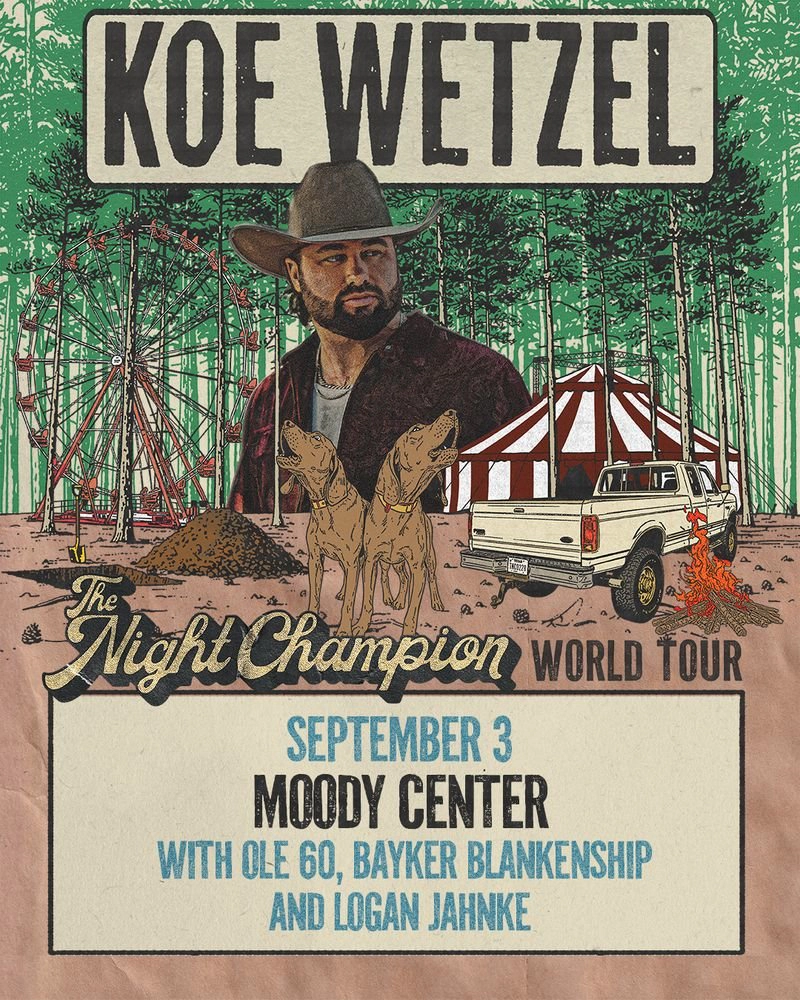
Koe Wetzel’s Austin concert happened on September 3. Texas–Ohio State happened September 12. The connection here is Austin culture and visual memory, not an official collaboration between Wetzel, Texas Football or the game.
Three Graphics, Three Ways to Remember Austin
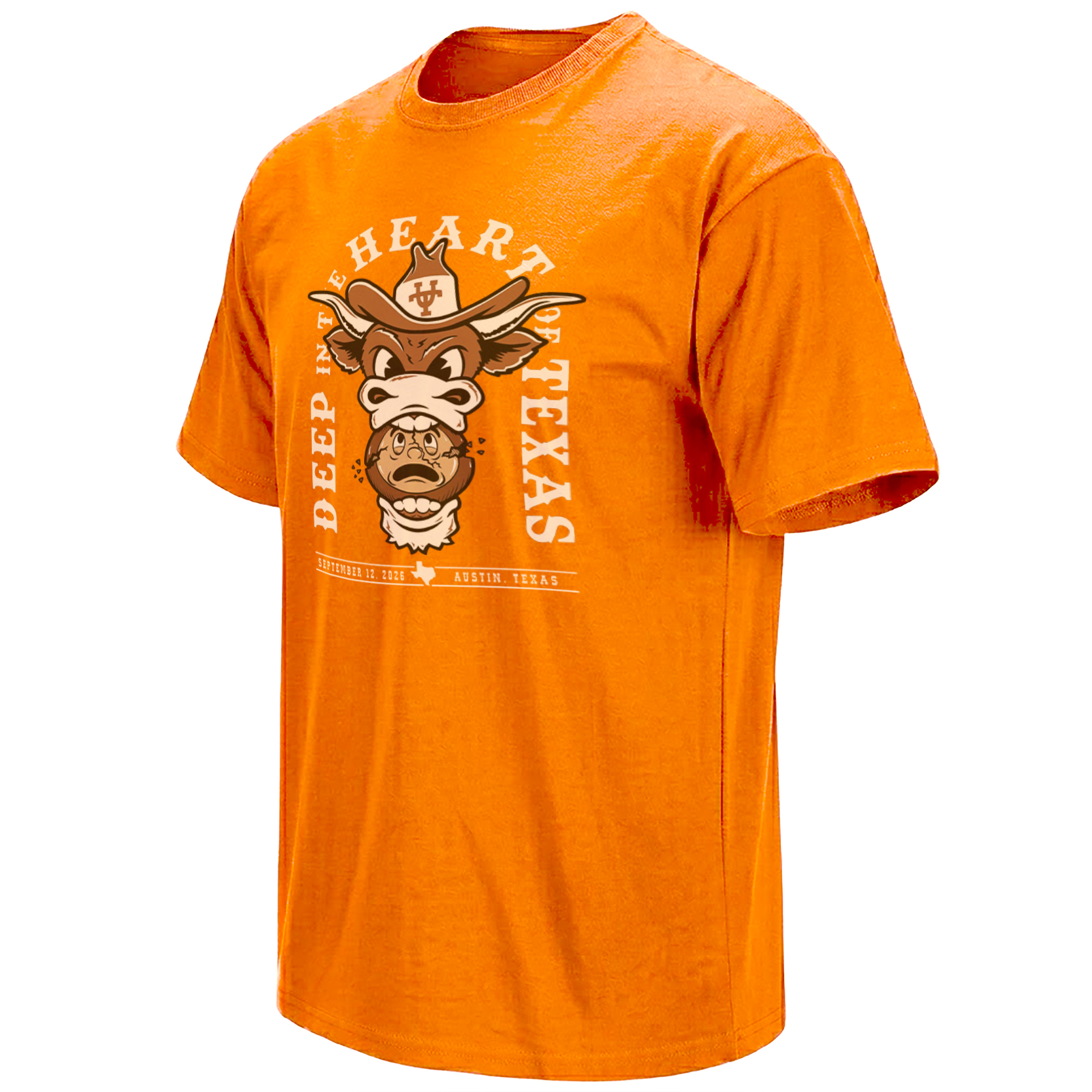
Rivalry-poster language for a game that turned an ordinary top-five matchup into genuine 2026 football folklore.
View the rivalry graphic →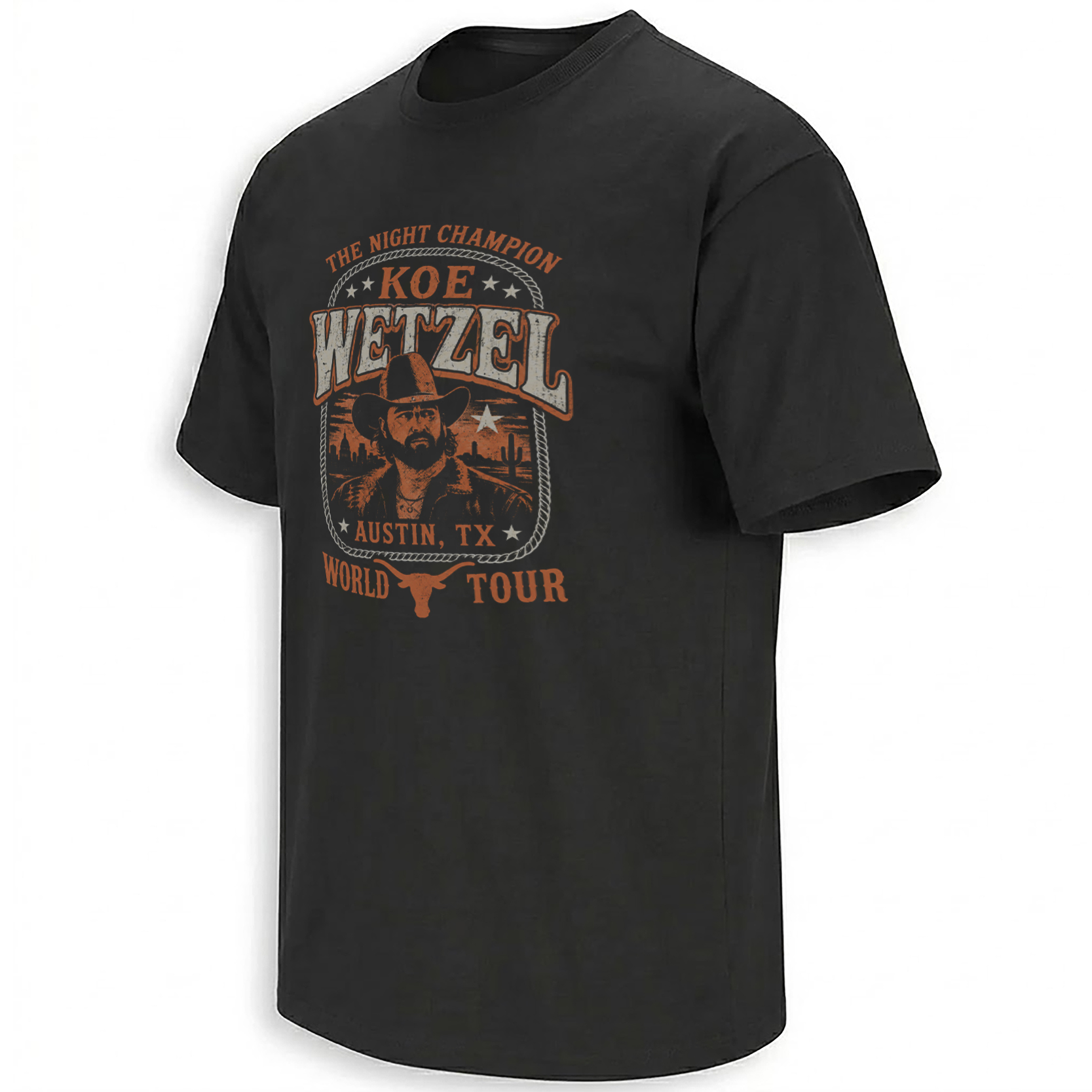
A separate September 3 music-memory piece tied to Koe Wetzel’s Moody Center stop and Austin’s after-dark culture.
Open the Austin tour piece →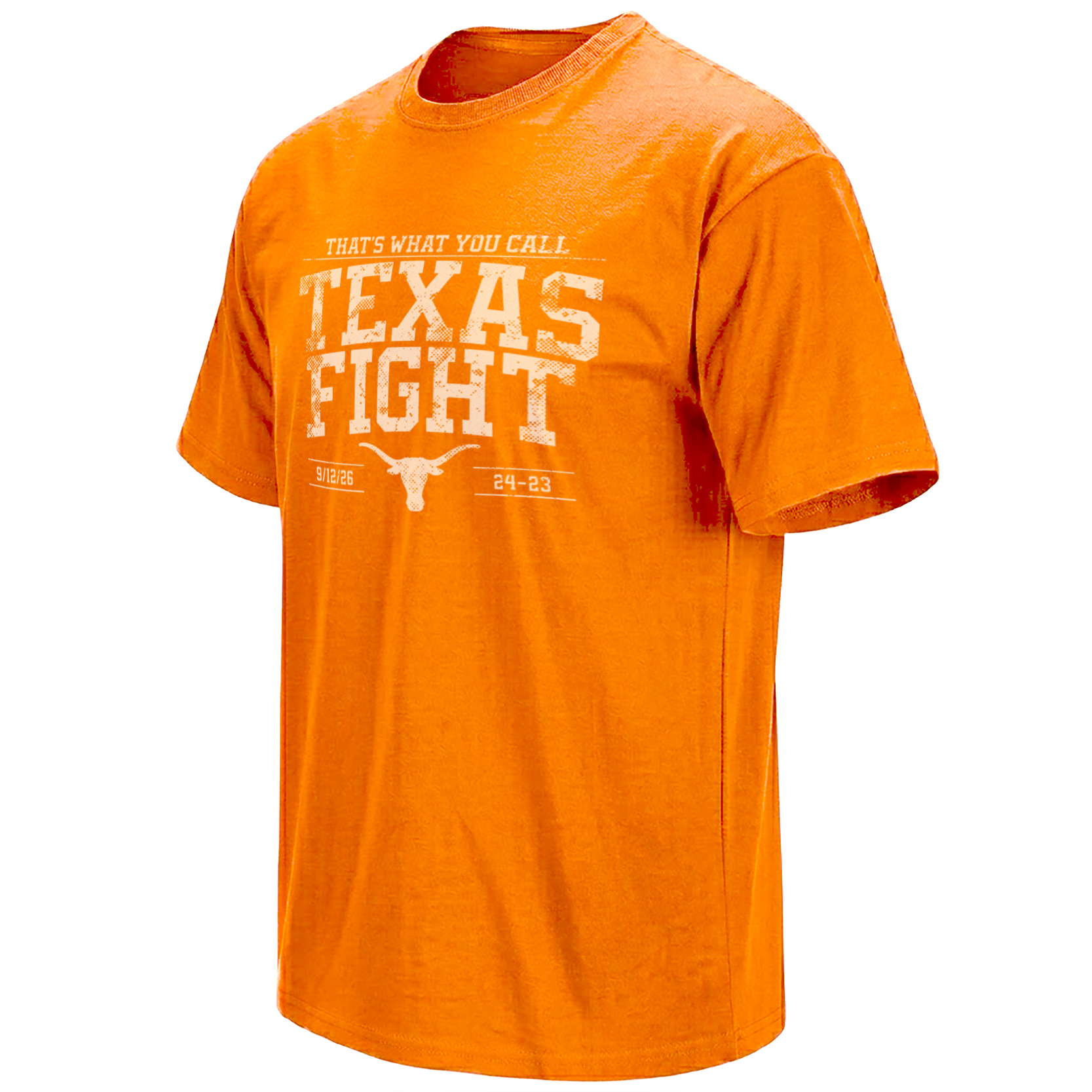
The comeback reduced to the phrase fans needed once a 23–3 fourth-quarter hole became a 24–23 win.
See the comeback piece →Why the Comeback Will Outlive the Ranking
Rankings change quickly in September. The emotional architecture of this game is more durable. A No. 1 opponent. A 20-point fourth-quarter deficit. Three touchdown drives. A missed Ohio State field goal. A final Texas possession that ended at the goal line with almost no time left.
Those are the details that allow fan art to survive after the AP poll has moved on. The wider Texas Longhorns collection becomes a visual running archive of the season, while the Ohio State Buckeyes collection preserves the opposite side of a game that will be remembered very differently in Columbus.
The broader NCAA collection places that moment inside college football’s larger rhythm of rankings, collapses, revenge games and Saturday language. Readers following the music side specifically can also browse the Koe Wetzel search archive.
Frequently Asked Questions
How did Texas beat Ohio State 24–23?
Texas entered the fourth quarter trailing 23–3, then scored three unanswered touchdowns and won on Hollywood Smothers’ one-yard touchdown followed by Gianni Spetic’s extra point with 25 seconds left.
Why is the comeback historically significant?
Texas became the first team in more than two decades to erase a 20-point fourth-quarter deficit against an AP No. 1 team, while matching the second-largest fourth-quarter comeback in program history.
What does “Texas Fight” mean in this 2026 moment?
It became shorthand for the resilience of a Texas team that played poorly for much of the night but produced 21 unanswered fourth-quarter points to win.
Was Koe Wetzel’s Austin concert connected to the Ohio State game?
No. Koe Wetzel’s The Night Champion World Tour played Moody Center on September 3, while Texas hosted Ohio State on September 12. They are separate Austin cultural moments.
Why do these graphics work as cultural artifacts?
Each preserves a different type of memory: rivalry tension, Austin music culture and the fan language that emerged from Texas’ historic comeback.
The three designs move from Texas–Ohio State rivalry to Koe Wetzel’s Austin night and back into the 24–23 comeback, creating a visual map of a city whose football and music cultures rarely stay quiet for long.
Texas’ 24–23 Ohio State comeback turned a 23–3 fourth-quarter deficit into instant Longhorns folklore, while Beef in the Heart of Texas, Texas Fight and Koe Wetzel’s separate Night Champion Austin moment capture different sides of the city’s September 2026 culture.