
No Thanks Talafreako: The Other Side of the James Talarico Nickname
James Talarico supporters turned “Talafreako” into rally language. His opponents never stopped using it as criticism. That contradiction is exactly why the same political meme can now support two completely opposite messages in the 2026 Texas Senate race.
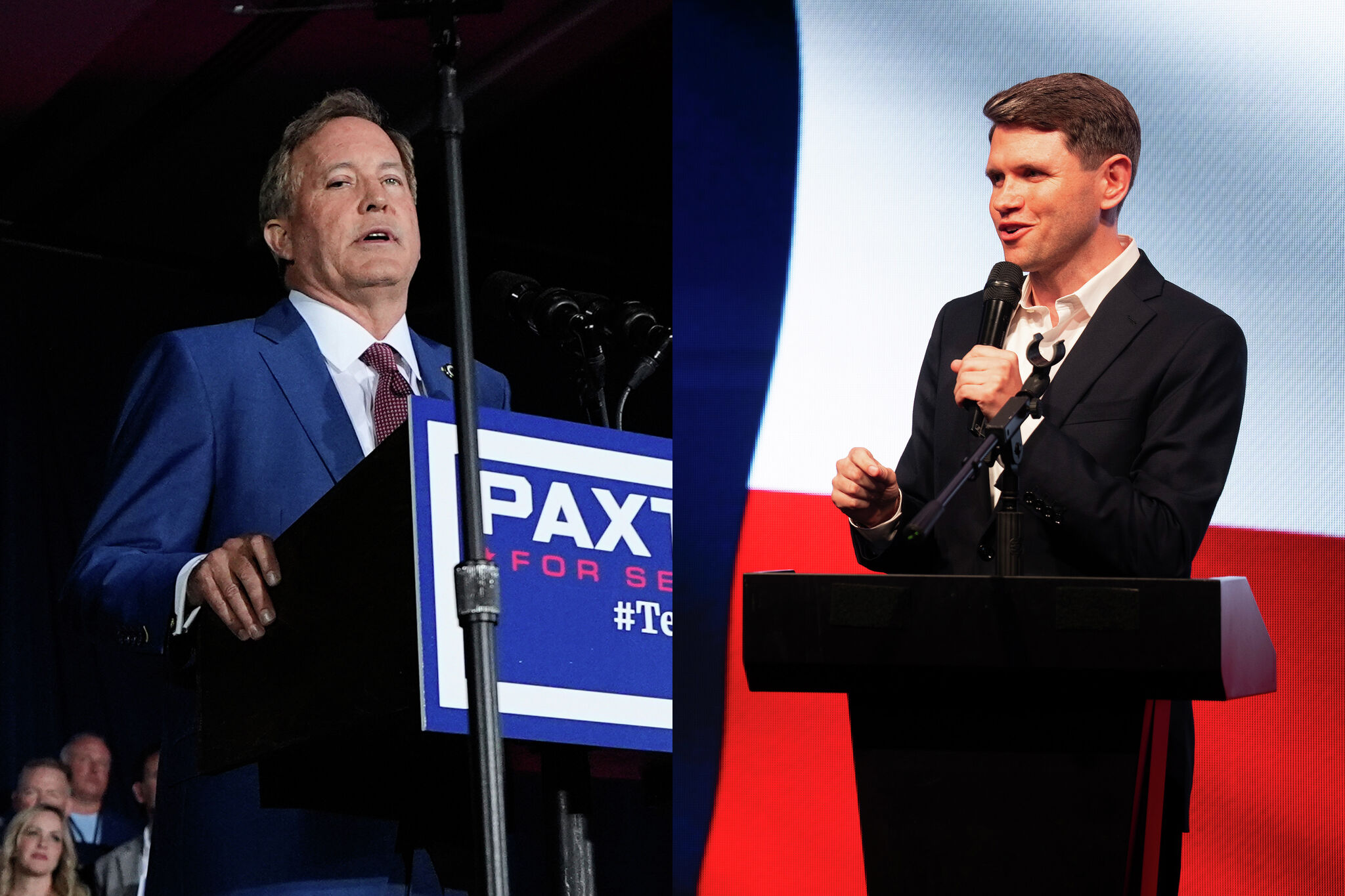
“Talafreako” has reached the unusual point where context matters more than the word itself. On one shirt, “I’m A Talafreako” signals support for Democratic Senate candidate James Talarico. Put a red prohibition symbol over his image and add “No Thanks,” and the exact same keyword becomes an anti-Talarico message.
The split did not happen by accident. Republican opponent Ken Paxton used Talafreako as attack language early in the general-election campaign. Donald Trump later amplified the nickname nationally. Talarico responded by reclaiming it and selling merchandise. Instead of killing the attack, that response created two parallel meanings.
By September, Republicans were still using the nickname while Talarico supporters were still wearing it. That makes “No Thanks Talafreako” fundamentally different from the supporter graphics. It belongs to the same internet conversation but speaks to the opposite audience.
“I’m A Talafreako” turns the insult into identity. “No Thanks Talafreako” turns it back into rejection.
Why Republicans Keep Using the Nickname
Political nicknames survive when they compress a larger argument into one memorable phrase. For Paxton and other Republicans, Talafreako has functioned as shorthand for their wider portrayal of Talarico as culturally and politically outside the Texas mainstream.
Paxton’s own September messaging shows that the nickname remains active rather than historical. In a post criticizing Talarico over energy policy, he again used Talafreako as the concluding label. The policy claims themselves are contested by the campaigns, but the linguistic strategy is unmistakable: repeat the nickname until it becomes inseparable from the opponent.
That continuing use matters because political meme language depends on repetition. Talarico’s reclamation did not cause Republicans to abandon the term. Instead, both camps now benefit from keeping it recognizable — one as criticism, the other as a joke they claim has backfired.
The Texas Senate Race Has Become Much Bigger Than a Nickname
The intensity around Talafreako makes more sense when viewed against the scale of the race. Talarico and Paxton are competing in a Senate contest drawing national attention, major outside spending and increasingly aggressive advertising.
In early September, Trump-aligned MAGA Inc. disclosed at least $10 million in spending connected to the Texas race, with $5 million designated for negative advertising against Talarico and another $5 million for positive Paxton messaging. That investment shows why memorable shorthand matters: millions of dollars in campaign communication are now competing for the attention of the same voters.
Why “No Thanks” Needs Its Own Design Language
The supporter Talafreako graphics lean into rally aesthetics: red-white-blue Texas maps, stars, collegiate lettering and language built around belonging. The anti-Talarico piece correctly moves in a different direction.
Its first visual is not a slogan but a universal symbol: a red circle and slash. That means the rejection lands before someone has even finished reading the words. Beneath it, rough lettering changes the tone from campaign souvenir to protest placard.
The portrait treatment also matters. A black-and-white political face beneath a red prohibition mark feels closer to an opposition poster or editorial cartoon than normal candidate merchandise. “NO THANKS” sounds conversational; the oversized red “TALAFREAKO” supplies the searchable political keyword.
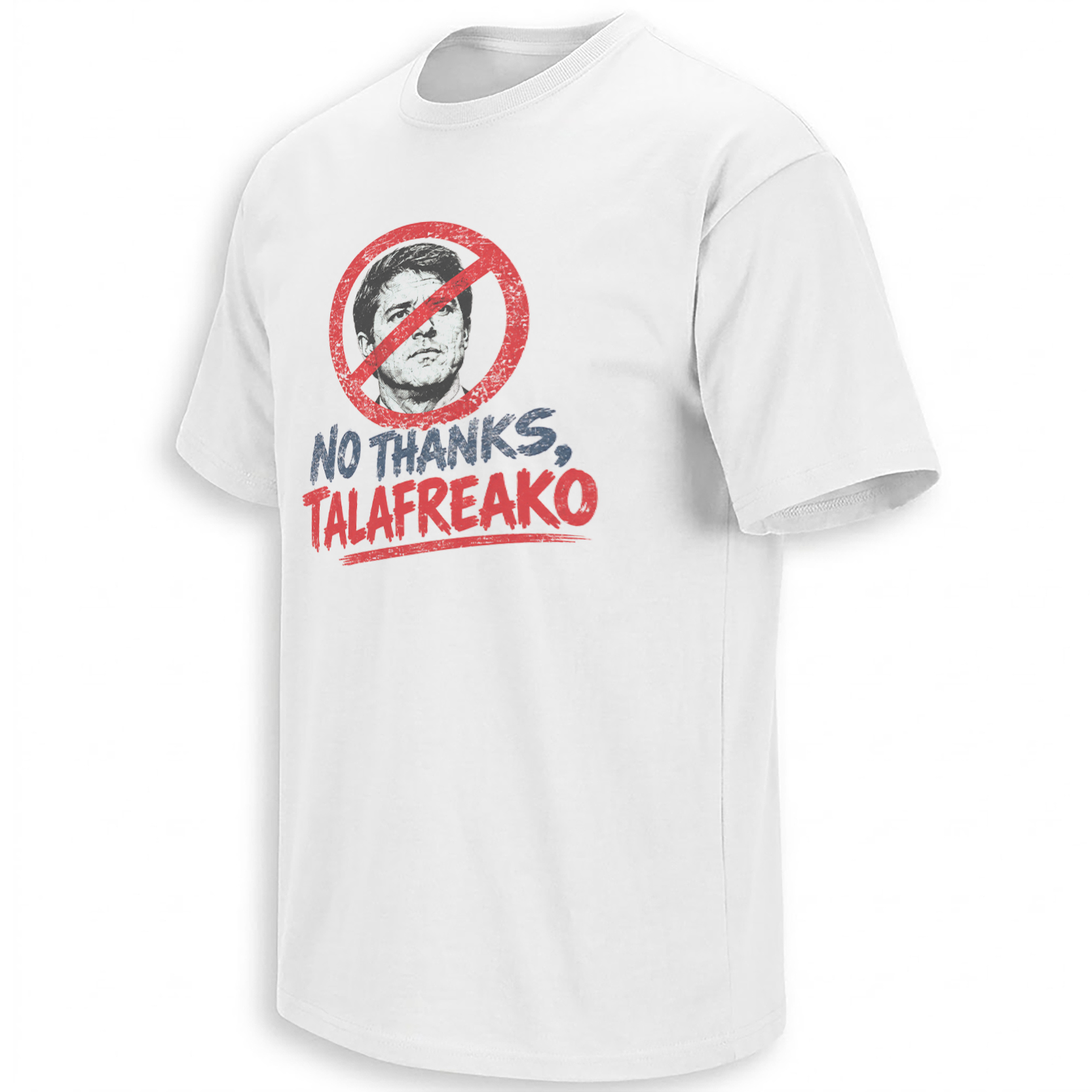
The prohibition mark, monochrome portrait and distressed protest lettering intentionally reverse the supporter-side reclamation and restore the nickname as opposition language.
View the opposition piece →One Word Can Now Signal Two Political Identities
That is the most interesting cultural development around Talafreako. Most campaign slogans have one owner. This one does not.
A Talarico supporter can wear the word as proof that an insult failed. A Talarico opponent can place the same word under a red slash as evidence that the attack still communicates exactly what it was supposed to communicate.
Neither interpretation cancels the other. In internet politics, conflict often makes a meme stronger because disagreement gives both sides a reason to repeat it.
Supporter searches such as “I’m A Talafreako Shirt” and opposition searches such as “Anti James Talarico Shirt” share the same entity but not the same intent. Separating them keeps each article emotionally and semantically coherent.
Where the Wider Talafreako Story Lives
The broader Talafreako collection now functions almost like a visual archive of that split: the nickname appears as supporter identity in some graphics and direct rejection in others.
Readers following the individual candidate rather than one side of the meme can also use the James Talarico product search to see how the same political figure is being interpreted across multiple 2026 designs.
Frequently Asked Questions
What does No Thanks Talafreako mean?
It is an anti-James Talarico political message that uses the Talafreako nickname as rejection rather than the supporter identity seen on “I’m A Talafreako” merchandise.
Why are there both pro- and anti-Talafreako shirts?
Talarico and his supporters reclaimed a nickname originally used against him, while Republican opponents continue using the same nickname critically. That allows the word to function in opposite ways.
Does Ken Paxton still use Talafreako?
Yes. Paxton continued using the nickname in public campaign messaging in September 2026 while criticizing Talarico.
Did Donald Trump help make the nickname more visible?
Yes. Trump repeatedly used Talafreako while attacking Talarico, significantly increasing the nickname’s exposure beyond the Texas campaign itself.
Why is the Texas Senate race receiving so much attention?
The Paxton–Talarico contest has attracted national political spending and media attention because it is viewed as an important race in the 2026 fight for control of the U.S. Senate.
The No Thanks Talafreako design records the opposition side of a nickname that supporters simultaneously reclaimed, while the wider Talafreako archive shows how one word became contested territory in the 2026 Texas Senate campaign.
No Thanks Talafreako Shirt captures the anti-James Talarico side of the viral 2026 Texas Senate nickname through a distressed red prohibition symbol, monochrome political portrait and direct opposition-poster language.