
Mike Macdonald Built the Dark Side. Now Seattle Is Running It Forward.
Seattle raised its Super Bowl LX banner, lost its starting quarterback on the opening possession, fell behind 10-0 and still left Lumen Field 1-0. The 13-10 comeback over New England turned Mike Macdonald’s offseason language — Dark Side, 12 As One and Run It Forward — into something fans could watch happen in real time.
A championship banner can make opening night feel backward-looking. Seattle spent part of September 9 celebrating what happened in Super Bowl LX, then spent the rest of the night discovering whether the identity that produced it could survive a completely different problem.
Sam Darnold exited on the opening drive with a hip injury. New England built a 10-0 lead. Backup Drew Lock was suddenly responsible for changing the game’s direction. Seattle eventually did exactly that, with Lock finding Jaxon Smith-Njigba for a 45-yard touchdown and the defense taking over the fourth quarter with three interceptions.
Josh Jobe’s end-zone pick finally closed the 13-10 win. For a team that spent the offseason insisting it was not trying to “run it back,” the opener became an unusually literal demonstration of Mike Macdonald’s preferred phrase: run it forward.
“Run It Forward” sounded like championship philosophy in May. On opening night, it looked like surviving a quarterback injury, a ten-point hole and a game that refused to follow the old script.
The First Night of “Run It Forward” Became a Stress Test
When Seattle returned to offseason work in May, Macdonald made an important distinction. The Seahawks were not interested in recreating last season scene by scene. The point was to carry forward the process, standards and shared identity that had produced the championship.
That language matters because defending champions are constantly invited to live inside their own highlights. Seattle instead returned most of its core while framing 2026 as a new problem. The banner could go up; the team still had to start at zero.
Week 1 rewarded that philosophy almost immediately. The Seahawks could not rely on a comfortable offensive script after Darnold left. Lock completed 16 of 22 passes for 187 yards, Smith-Njigba finished with 122 receiving yards, and the defense created the short fields and final stop that changed the night.

The Dark Side Is No Longer Just a Cool Defensive Nickname
Seattle already had evidence that the name matched the football. In 2025, the Seahawks allowed the fewest points in the NFL, their first league-leading scoring defense since the Legion of Boom era’s remarkable 2012-15 run. Then came Super Bowl LX: six sacks, three takeaways, a pick-six and three scoreless New England quarters in a 29-13 championship victory.
The unit returned ten of eleven starters, and the language around it became darker, sharper and more self-aware. “Dark Side” works because Macdonald’s defense is built on uncertainty for the offense: simulated pressure, disguise, rushes that do not always require heavy blitzing and coverage communication that depends on eleven players seeing the same picture.
The opener supplied the ideal sequel. Julian Love’s interception helped create the go-ahead field goal, Nehemiah Pritchett’s pick set up Seattle’s touchdown, and Jobe finished the game at the goal line. The nickname had an official social-media clip before the night was over.
12 Is 1: Macdonald’s Math for Seattle Culture
The strangest-looking phrase in this group may be the clearest expression of Macdonald’s culture. “12 As One” uses Seattle’s sacred number — the 12s — to describe connectedness. The idea is that eleven players doing their jobs with enough trust, communication and extra effort can feel like twelve moving toward one objective.
That gives “12 Is 1” a different energy from a normal fan slogan. It resembles something that belongs on a meeting-room wall or inside a coaching notebook. The oversized distressed 12, the solitary 1 and the route diagrams turn a culture principle into football-board typography.
Seattle’s “12” usually identifies the crowd. Macdonald extends the number inward: players, coaches and 12s aligned around the same standard. The design compresses that philosophy into an equation rather than a celebration slogan.
Four Graphics, One Mike Macdonald Vocabulary
The four designs work especially well together because they capture different layers of the same Seahawks identity. One is cultural math. One turns defense into horror imagery. One frames Macdonald as a blueprint builder. The last points the entire operation toward whatever comes next.
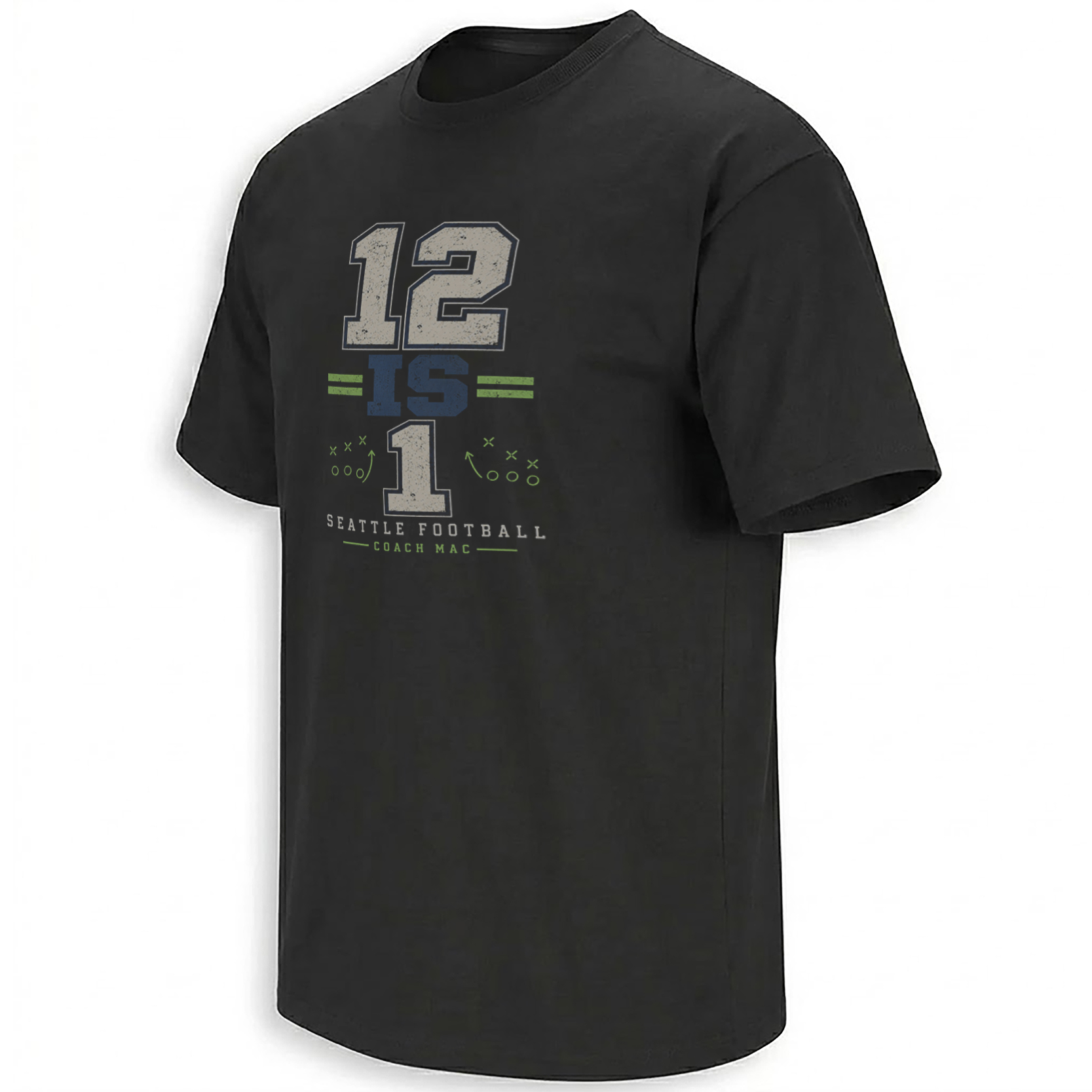
A meeting-room philosophy rendered like a worn Seattle play sheet: oversized numbers, route marks and one shared destination.
View the culture piece →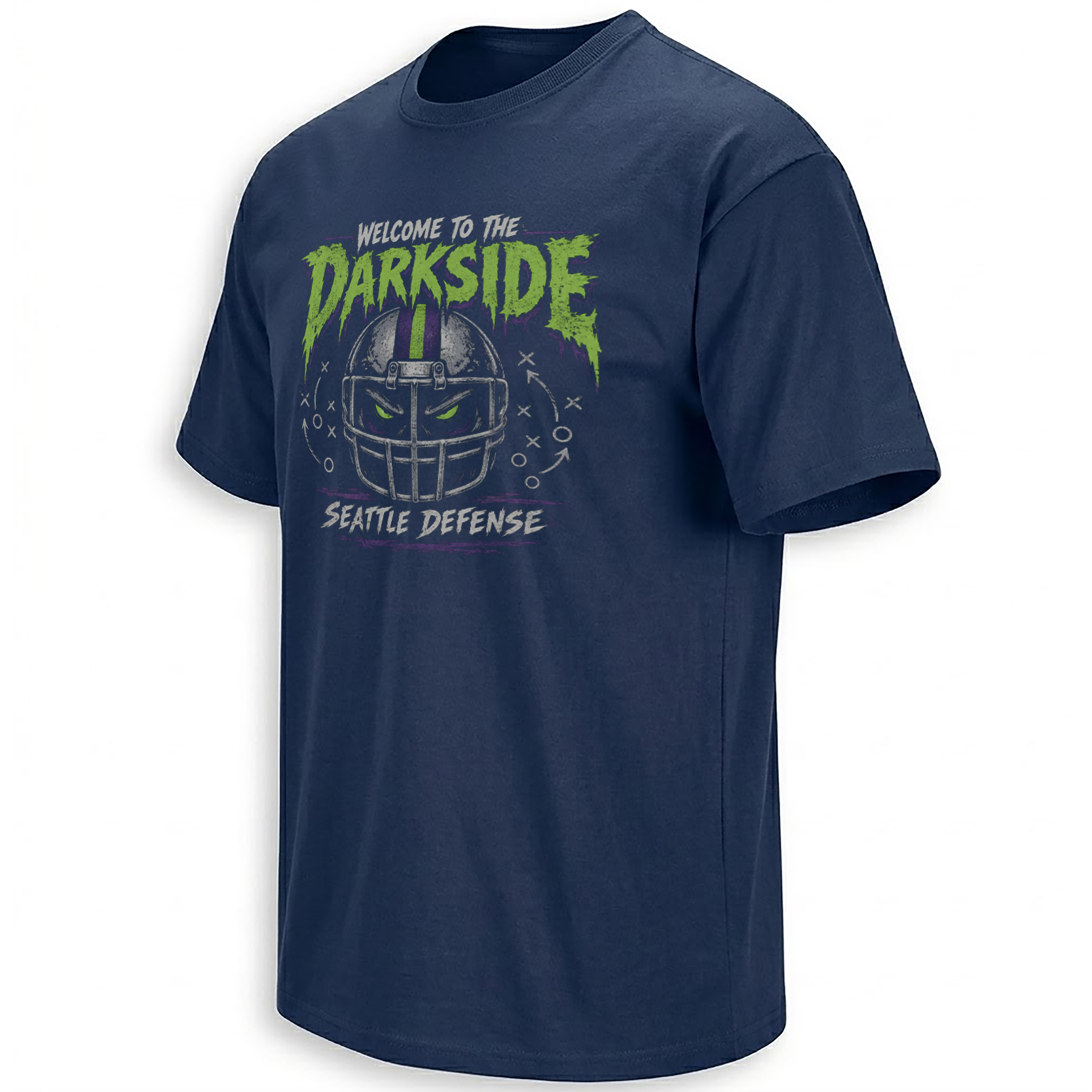
Glowing eyes, distressed horror lettering and X-and-O marks turn Seattle’s defensive nickname into a midnight football poster.
Enter the Dark Side →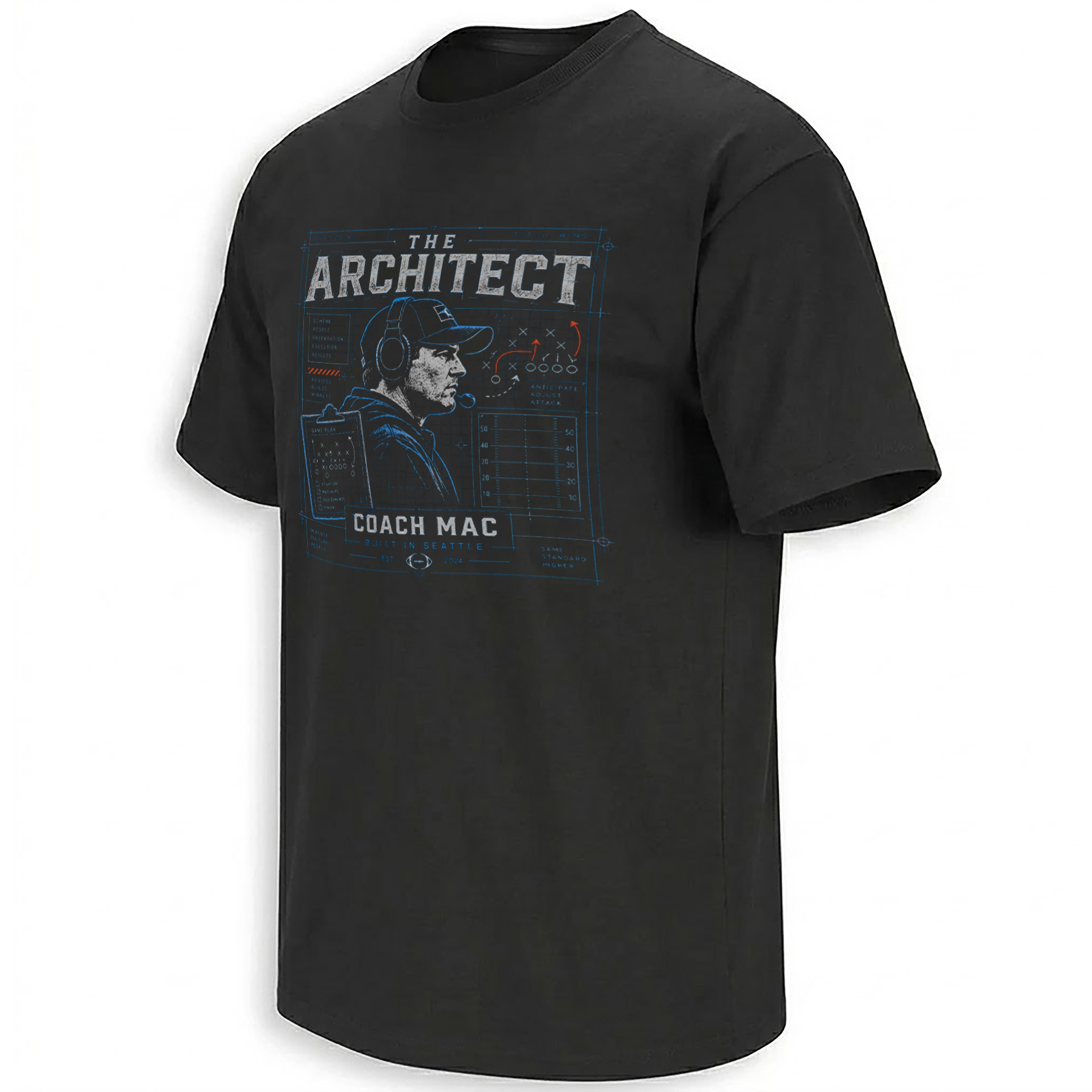
Blueprint lines, route arrows and process language frame Macdonald as the builder behind Seattle’s connected defensive system.
Explore the blueprint →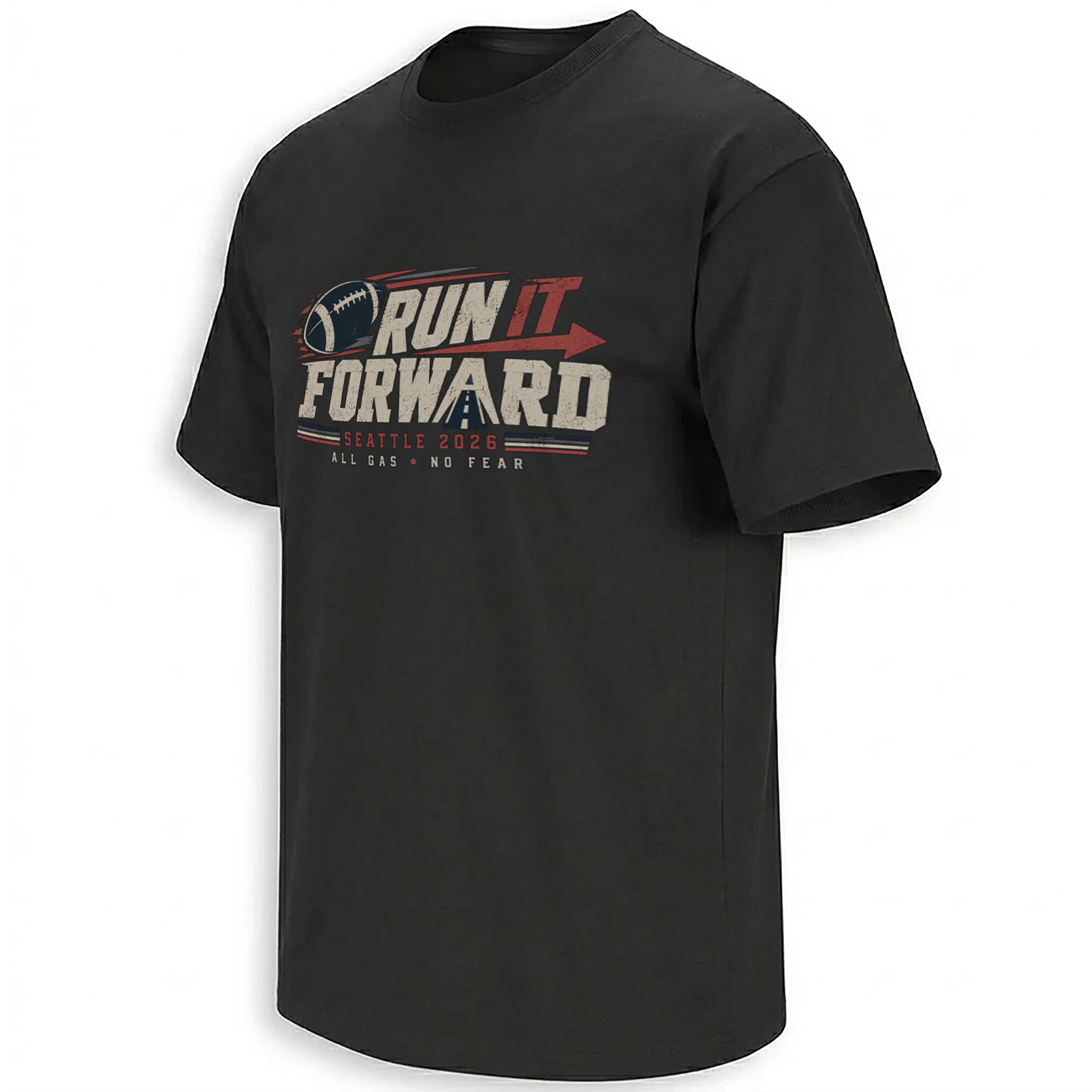
The football, directional arrow and worn collegiate type preserve the phrase Macdonald chose to separate this season from simple championship nostalgia.
See the 2026 piece →Why “The Architect” Works Without Pretending It Is an Official Nickname
“The Architect” is most useful as visual interpretation, not a factual title. Macdonald’s football reputation comes from building systems in which disguise, communication and personnel flexibility interact. The artwork turns those ideas into blueprint marks, formation sketches and small process notes such as anticipate, adjust and attack.
That visual metaphor also explains why the piece feels different from a coach portrait. Macdonald is not framed as a sideline celebrity. He appears inside the plan. The background becomes the actual subject: assignments, routes, adjustments and the belief that a repeated process can create a recognizable team identity.
The Banner Is History. Arizona Is the Next Problem.
Seattle has already received the first warning against romanticizing 2025. A 10-0 deficit and an injured starting quarterback arrived before the championship banner had emotionally cooled. The Seahawks still found a way through it, but nothing about Week 1 suggested the next season will simply replay the last one.
After the opening win, Seattle’s schedule moves to Arizona on September 20. That is where “Run It Forward” keeps its meaning: the Super Bowl remains part of the franchise’s history, while Macdonald’s system is evaluated one new problem at a time.
The wider Seattle Seahawks collection now reads like a visual archive of that transition — championship memory, defensive identity, coach culture and the language surrounding a new season. The broader NFL collection places Seattle’s story alongside the rivalries, coaches and moments shaping the rest of the league.
Readers following the coach at the center of this visual vocabulary can also browse the Mike Macdonald design archive.
Frequently Asked Questions
What does “Run It Forward” mean for the Seattle Seahawks in 2026?
Mike Macdonald used the phrase to distinguish Seattle’s new season from simply trying to repeat the championship year. The idea is to carry the team’s process, standards and identity forward while treating 2026 as its own challenge.
Why is Seattle’s defense called the Dark Side?
“Dark Side” has become the identity attached to Macdonald’s aggressive, deceptive and highly connected Seahawks defense. The name gained even more weight after Seattle led the NFL in scoring defense in 2025 and opened 2026 with three fourth-quarter interceptions against New England.
What does “12 Is 1” mean in Mike Macdonald’s Seahawks culture?
It draws from the team’s “12 As One” language: Seattle’s players, coaches and 12s working with enough connection and shared purpose that the entire group moves toward one goal.
Why does “The Architect” fit Mike Macdonald as a design concept?
The phrase works as a metaphor for his system-building approach. Blueprint lines, formations and adjustment notes visually represent a defense built around preparation, disguise, communication and coordinated execution.
What happened in Seattle’s 2026 opener against New England?
Seattle overcame a 10-0 deficit and an early injury to Sam Darnold to defeat New England 13-10. Drew Lock led the comeback and the Seahawks defense intercepted three passes in the fourth quarter, with Josh Jobe sealing the game in the end zone.
Run It Forward gives the 2026 philosophy its cleanest visual form, while Welcome to the Darkside, 12 Is 1 and The Architect preserve the connected defensive culture underneath it.
Seattle Seahawks 2026 culture comes together through Mike Macdonald’s Run It Forward philosophy, 12 Is 1 identity, The Architect blueprint aesthetic and the Dark Side defense that sealed a 13-10 opening-night comeback.