
“He’s From Texas, I Can Tell”: Why Leatherface Was Built for the Choosin’ Texas Meme
Ella Langley’s Texas heartbreak anthem has become so culturally recognizable that changing one pronoun is enough to send the phrase into an entirely different genre. Put Leatherface beneath it and country radio suddenly meets 1974 grindhouse horror.
On September 8, Ella Langley’s “Choosin’ Texas” reached another almost absurd milestone: a 21st cumulative week at No. 1 on the Billboard Hot 100. That leaves the song only one week behind the all-time 22-week mark currently held by Mariah Carey’s holiday perennial.
By this point, “Choosin’ Texas” is no longer functioning only as a country single. Its Texas language has entered the wider meme vocabulary of 2026, helped by months of TikTok jokes, lyric misunderstandings and crossover attention far beyond country radio. Earlier in the year, even Langley acknowledged how firmly parody versions of the song had lodged themselves in her head.
That makes the Leatherface version unusually clean. The original song opens its central idea with the recognizable phrase “She’s from Texas, I can tell.” The horror parody makes one tiny change: she becomes he. Then it places a masked man with a chainsaw against a scorched Texas landscape. There is almost nothing left for the viewer to solve.
A country lyric asks whether you can recognize Texas. Leatherface arrives carrying the answer.
Why the Joke Works Before You Even Hear the Song
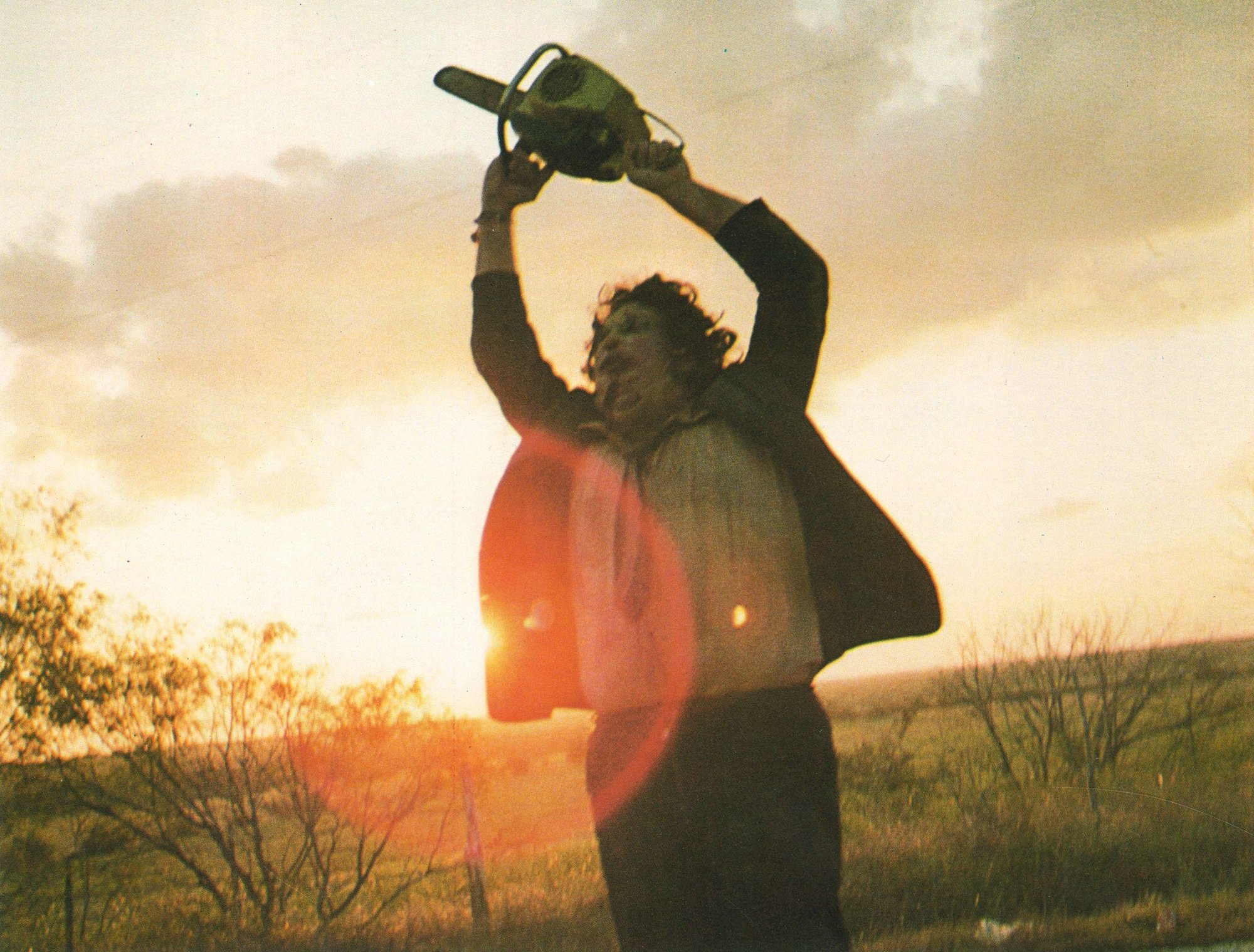
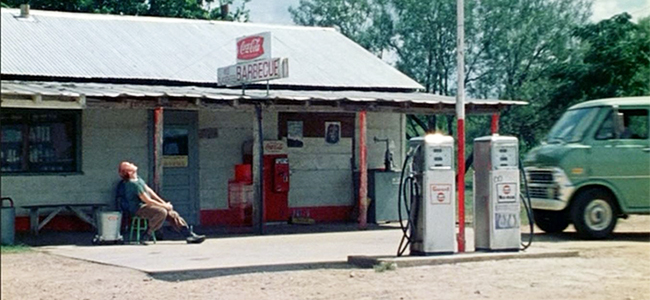
Leatherface is not being dropped into Texas as a random slasher character. Texas is built into the original film’s identity. Tobe Hooper and Kim Henkel developed The Texas Chain Saw Massacre in Texas, filmed it there during the summer of 1973, and used the landscape itself as part of the movie’s unease.
The Texas Film Commission describes the film’s isolation, farmhouse and remote-looking environment as central to its effect. The Texas State Historical Association likewise documents rural Williamson County, Leander, Bastrop and Round Rock among the locations that shaped the 1974 film. Leatherface, first played by Gunnar Hansen, emerged from that landscape rather than simply appearing in front of it.
The Song Was Already Teaching the Internet to Remix It
The leap from heartbreak lyric to horror joke did not happen in a vacuum. “Choosin’ Texas” had already become unusually adaptable internet material. The Guardian documented TikTok dances and viral misheard-lyric videos around the song, while its chart life kept extending month after month.
In April, Country Chord posted a real clip from Theo Von’s podcast in which Langley discussed the lyric parody circulating online. The significance is not the specific mishearing. It is that the song had already reached the stage where audiences were rewriting its language and expecting everyone else to understand the reference.
By September, that recognizability matters even more. “Choosin’ Texas” now sits at 21 weeks atop the Hot 100, the longest cumulative No. 1 run ever achieved by a non-holiday song. The phrase has enough cultural memory behind it that a parody does not need to reproduce an entire chorus. A handful of words can activate the reference.
The Main Leatherface Graphic Feels Like a Lost Texas Horror Poster
The first He’s From Texas I Can Tell Leatherface design leans hardest into exploitation-era horror. Burnt orange and dusty cream sit against black, while Leatherface carries the chainsaw through a rural scene of fences, open ground, a farmhouse-like structure and a windmill.

Leatherface, a chainsaw and a distressed Texas sunset turn current country language into something resembling a rediscovered 1970s roadside horror poster.
View the horror piece →The typography does not behave like modern pop merch. Weathered Western lettering, horizontal sunset bands and muted rural scenery create an aged-print effect closer to drive-in advertising, regional horror posters and old Texas souvenir graphics.
Four Visual Treatments Keep the Same Punch Line Fresh
The strongest part of the series is that the four pieces do not merely repeat one artwork on different shirt colors. The darker composition carries slasher weight; the white-and-sand versions expose more of the Western landscape; another treatment adds farmhouse, cactus, pickup and muted teal detail; and the chibi version deliberately destroys the threat by turning Leatherface into a tiny cartoon figure with an oversized chainsaw.
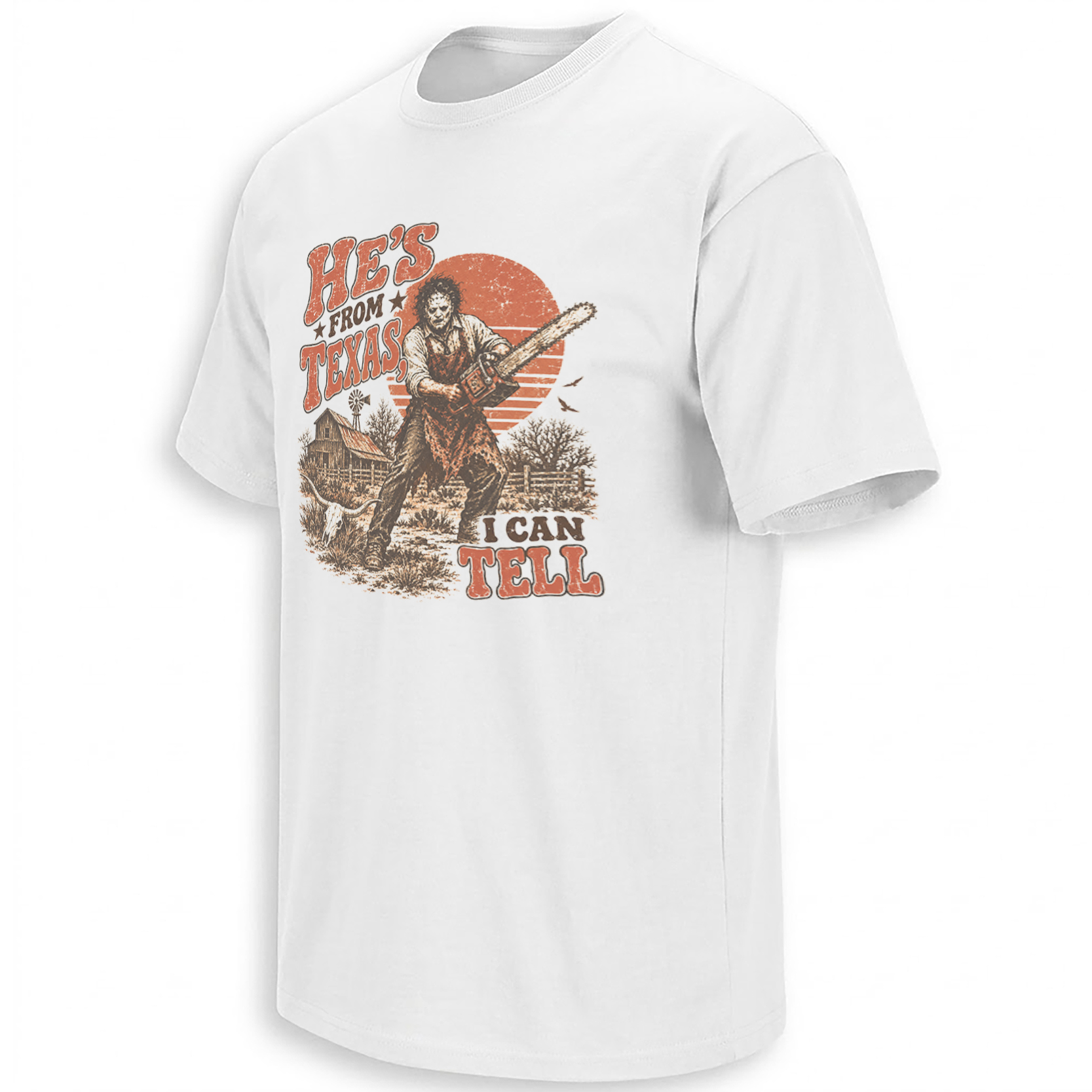
The lighter base lets the windmill, barn, sunset and aged brown-orange palette read like vintage Texas print ephemera.
Explore the visual →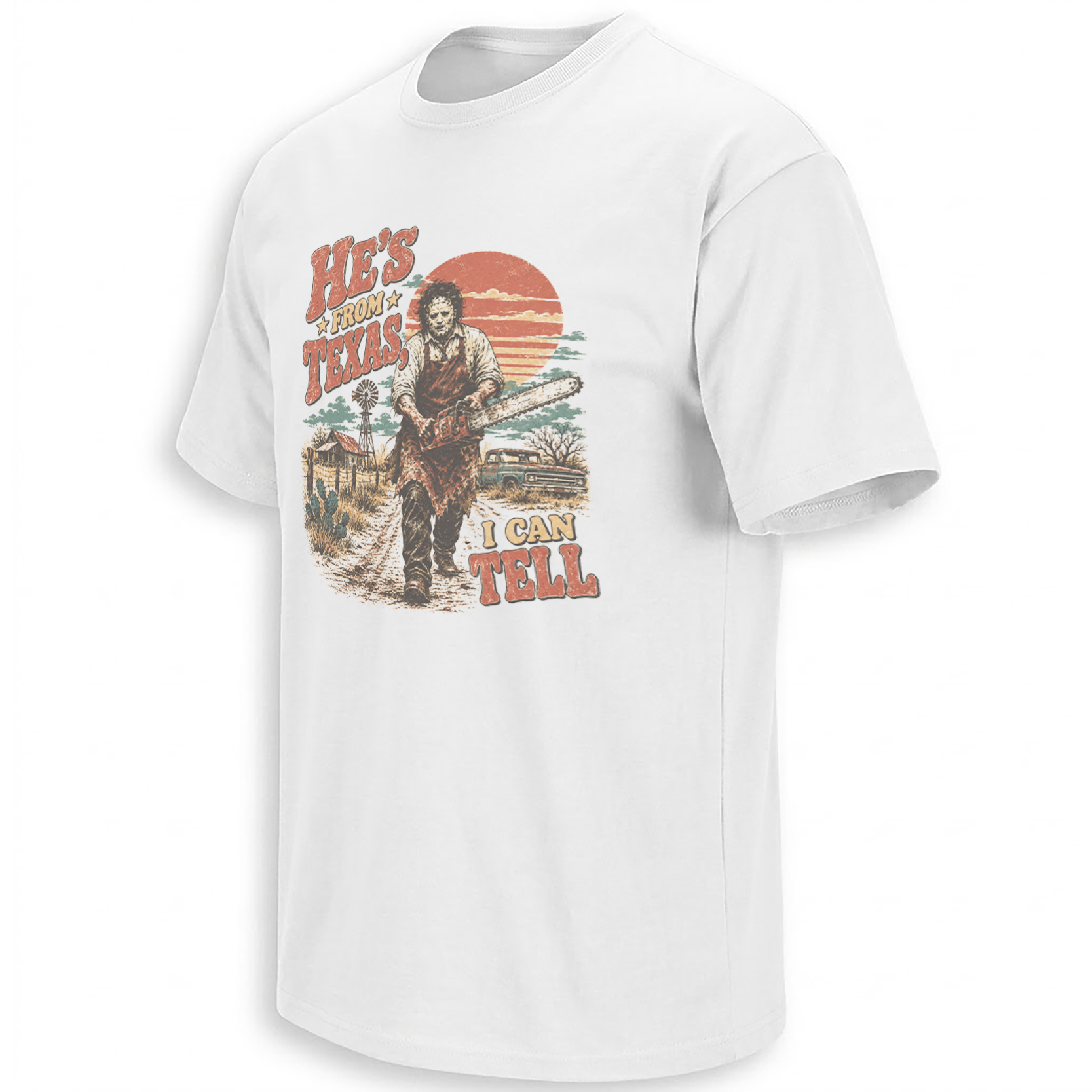
Farmhouse, pickup, cactus and faded teal details push the crossover even closer to a seventies regional movie poster.
See the graphic →
Chibi proportions turn a notorious slasher figure into sticker-like spooky art while leaving the Texas punch line completely intact.
View the chibi piece →Country Heartbreak Meets Texas Horror Memory
The crossover succeeds because neither half needs much introduction. Langley’s song is still sitting at the center of mainstream music conversation in September 2026. Leatherface, meanwhile, has been carrying Texas horror imagery for more than half a century.
One reference is extremely current; the other has accumulated decades of visual memory. Put them together and the shirt becomes a timestamp for a particularly internet-native form of 2026 culture: songs becoming phrases, phrases becoming memes, and memes colliding with characters from completely different fandoms.
Leatherface naturally connects this series to Ellie Shirt’s Movies collection and Halloween collection. Character-specific pieces can be found through the Leatherface search archive, while designs tied to the song’s artist can be explored through Ella Langley search.
Frequently Asked Questions
What does “He’s From Texas, I Can Tell” reference?
The wording is a parody twist on Texas-identification language from Ella Langley’s “Choosin’ Texas,” changing the perspective so Leatherface becomes the obvious Texas character in the joke.
Why does Leatherface fit the Choosin’ Texas parody?
Leatherface originates in The Texas Chain Saw Massacre, whose story, production and visual identity are deeply tied to rural Texas. The chainsaw and landscape make the identification joke immediately readable.
How successful is Choosin’ Texas in September 2026?
The song reached its 21st cumulative week at No. 1 on the Billboard Hot 100 on the chart dated September 12, leaving it one week behind the current all-time record.
Was the original Texas Chain Saw Massacre actually filmed in Texas?
Yes. The 1974 movie was filmed in Texas in 1973, with documented locations around Central Texas including Round Rock, Leander and Bastrop.
How is the Cute Leatherface version different?
It keeps the same Texas landscape, chainsaw and lyric-inspired joke but redraws Leatherface with exaggerated chibi proportions, shifting the mood from grindhouse horror toward playful spooky art.
He’s From Texas I Can Tell Leatherface designs remix Ella Langley’s 2026 “Choosin’ Texas” cultural moment through chainsaw horror, rural Texas imagery, distressed seventies poster styling and a playful chibi variation.