Before Avengers: Doomsday, Doctor Doom Already Knew How to Rule a Room
Marvel Studios is spending 2026 introducing a massive movie audience to Victor von Doom. The old comics needed far less machinery: a metal mask, a green cloak and a throne were enough to explain almost everything.
Doctor Doom does not need to charge into battle to look dangerous. Some of his most effective imagery does the exact opposite. Victor von Doom sits, lets everybody else approach him and behaves as if the outcome was decided before they entered the room.
That is the visual logic behind the Doctor Doom Vintage Throne Shirt. The illustration does not imitate Robert Downey Jr.’s current cinematic costume. It reaches backward toward the comic-book Doom: monarch, scientist, sorcerer and armored ruler of Latveria.
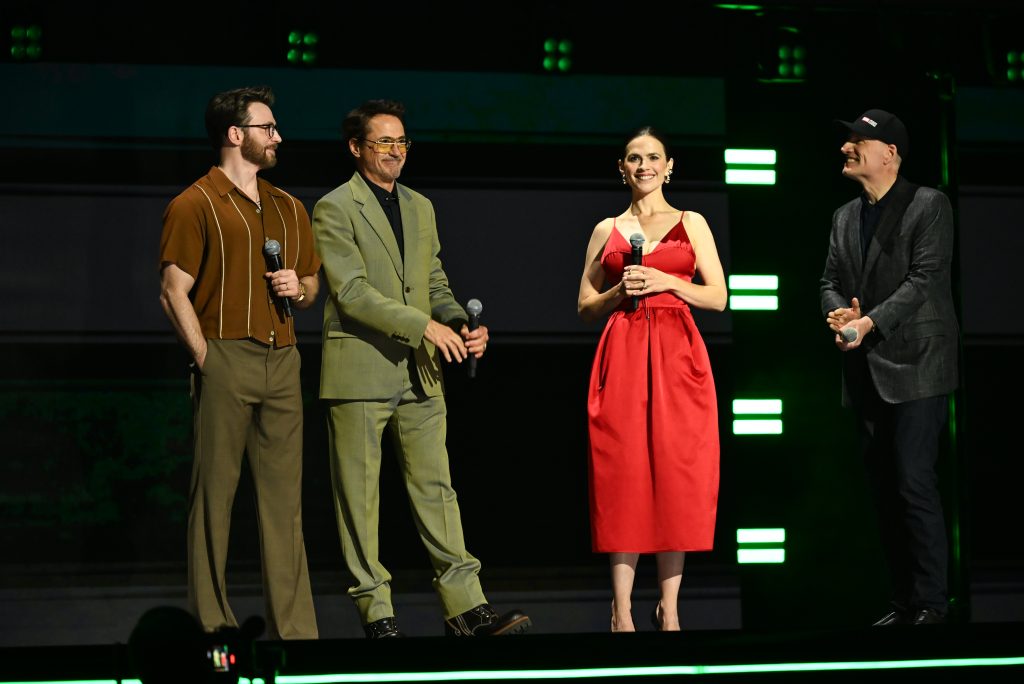
The timing makes that backward glance unusually current. Marvel Studios is now building toward Avengers: Doomsday on December 18, with Downey officially playing Victor von Doom. D23 in August placed him onstage beside Chris Evans, Hayley Atwell and Kevin Feige before Marvel released a new special look to the public.
The throne is important because Doom has never behaved like a villain asking permission to rule. He starts from the assumption that he already should.
Doom’s oldest power fantasy is political, not merely physical
Victor von Doom has always occupied an unusual position inside superhero storytelling. He is one of Reed Richards’ defining intellectual rivals, a master of advanced technology and mystic arts, but he is also the sovereign ruler of a fictional country.
That royal identity changes the visual vocabulary available to artists. A chair becomes a throne. A cape becomes ceremonial. Armor becomes both weapon and state uniform. Doom rarely needs to look anonymous because anonymity would contradict the entire point: Victor wants the world to know exactly who commands Latveria.
The supplied graphic understands that. His posture is relaxed. Armored hands rest near the throne. The large green cape spills downward around silver legs. He is not bracing for impact. He looks like the person who summoned everybody else.
2026 is introducing movie audiences to a face comic readers already know
Marvel’s current campaign creates a strange cultural reversal. Downey spent more than a decade attached to Tony Stark, the armored hero whose sacrifice defined Endgame. Now Marvel is using the same actor as another armored genius, but with a fundamentally different relationship to power.
At D23, Disney described Doomsday as a collision involving heroes from three separate universes. That scale makes Doom look like a threat large enough to reorganize the MCU around him.
Yet the vintage shirt makes a useful counterargument: Doom does not become compelling because dozens of heroes stand opposite him. The character was already visually complete when Fantastic Four comics gave him a metallic face, green hood and a country to command.
Marvel’s D23 special look is the current cinematic counterpoint to the old-school comic imagery used on the shirt.
The blue-teal throne may be the design’s best detail
Doom himself follows a familiar palette: green hood and tunic, silver segmented armor, circular gold cape clasps and a yellow-gold belt. The throne introduces cooler blue and teal machinery behind those colors.
That contrast is useful. If the throne were also green, Doom could dissolve into it. Instead, he remains the warm, recognizable center while the chair reads as technology—heavy armrests, mechanical panels and a tall rounded structure that looks somewhere between royal furniture and a command station.
The faded reds, rough outlines and slightly dulled colors give the whole piece the feel of an old comic-shop tee rather than a polished 2026 movie poster. On black, the shadows become heavier. On deep navy, the throne’s blue-green surfaces remain easier to distinguish.
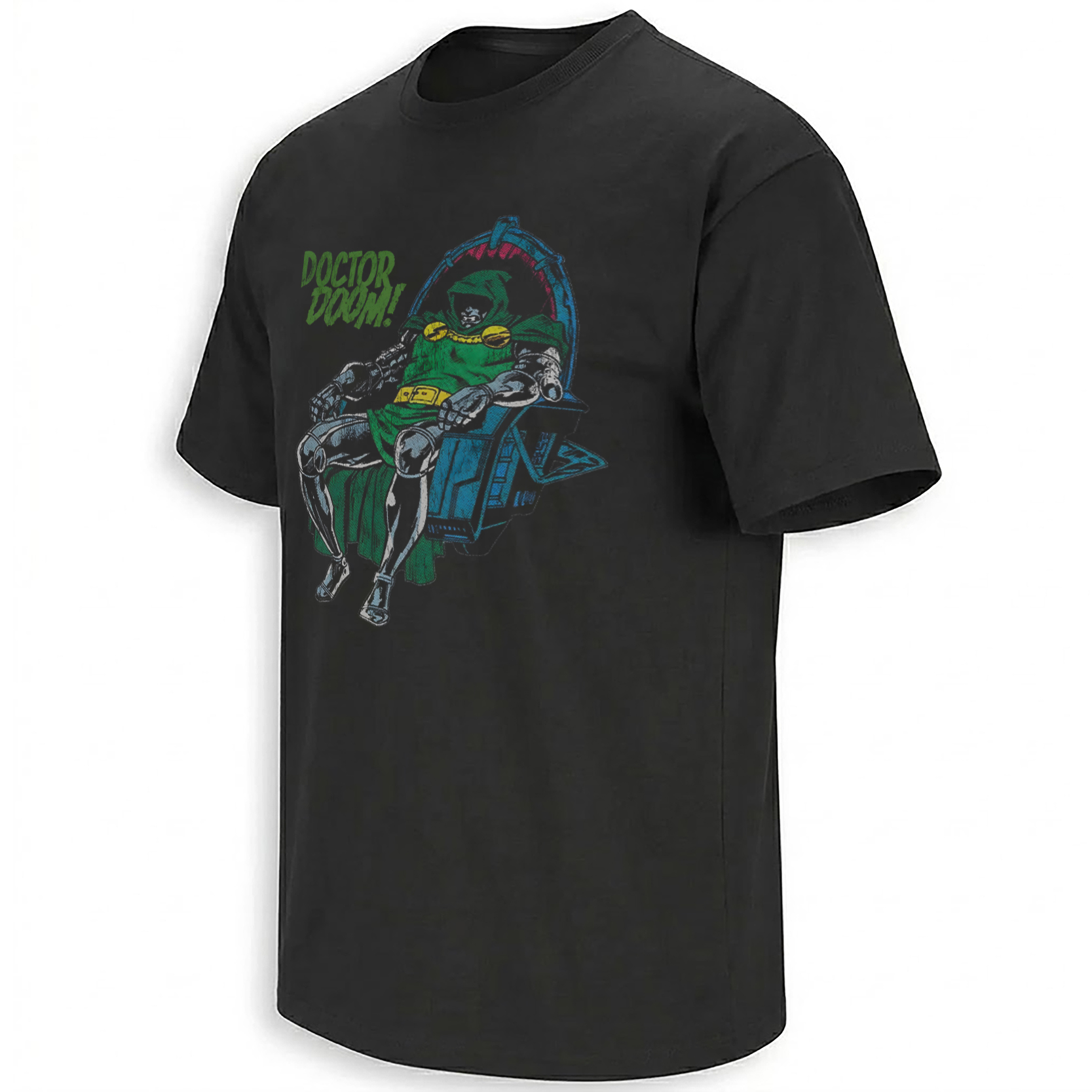
Classic Victor von Doom authority: green cloak, silver armor, gold details and an oversized blue-teal technological throne on a distressed black-base composition.
View the piece →Why old Doom matters when movie Doom becomes enormous
The closer December gets, the easier it will be for search culture to reduce Doctor Doom to a casting story: Robert Downey Jr., MCU return, multiverse villain, Avengers crossover. Classic imagery provides a reminder that the character is much larger than the casting conversation.
The throne version emphasizes what survives any adaptation. Doom wants control. Doom wants recognition. Doom considers Reed Richards a rival rather than an equal. Doom treats technology, magic and government as extensions of his will.
That makes the design a natural bridge between old comic readership and new cinematic interest. Ellie Shirt’s Marvel collection holds the broader crossover archive, while the Doctor Doom search connects the throne piece to newer Doomsday-era interpretations.
FAQ: Doctor Doom, the throne and Avengers: Doomsday
Who is sitting on the throne?
Victor von Doom, better known as Doctor Doom.
Why is Doom associated with throne imagery?
Doom is the ruler of the fictional nation of Latveria, so royal imagery is central to his character rather than merely decorative.
Is this the Robert Downey Jr. movie costume?
No. The artwork uses a distressed classic-comic interpretation instead of reproducing the 2026 live-action costume.
When does Avengers: Doomsday release?
Marvel Studios currently has the film scheduled for December 18, 2026.
Who plays Victor von Doom in Doomsday?
Robert Downey Jr. plays Victor von Doom / Doctor Doom.
The vintage Doctor Doom throne graphic preserves the monarch before the 2026 movie campaign turns him into the center of another Avengers event.
Doctor Doom Vintage Throne Shirt returns Victor von Doom to classic Marvel comic language—green cape, silver armor, Latverian authority and a blue-teal technological throne—just as Avengers: Doomsday puts the villain at the center of 2026.