
“Young and Turnt” Has Gone From Camp Joke to Team USA Identity
The 2026 FIBA Women’s Basketball World Cup begins in Berlin with the United States still carrying championship expectations — but the faces carrying them look noticeably younger.
On September 4, the United States opens World Cup play against China, a rematch of the 2022 championship game. The expectation remains familiar. The roster does not.
FIBA reports that nine players on the 2026 American team are making their Women’s World Cup debuts. Caitlin Clark, Paige Bueckers, Angel Reese, Sonia Citron and Kiki Iriafen are part of a roster carrying a dramatic generational transition into the most demanding tournament in international women’s basketball.
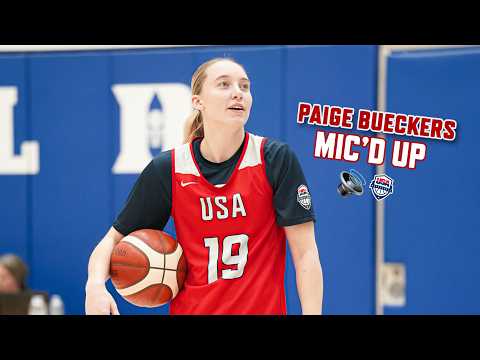
That makes one phrase from a December 2025 national-team camp feel remarkably well timed. Paige Bueckers called the younger newcomers the “Young and Turnt Corps,” a playful description of both their age and the energy they brought into their first senior USA environment. The nickname stuck because it sounded like the group itself rather than language produced for a campaign.
“Young” describes the transition. “Turnt” describes the personality entering with it.
Paige Bueckers Gave the Generation a Name
The phrase traces back to USA Basketball’s December camp at Duke, when a large group of newcomers joined veterans inside a program defined by almost impossible standards. Bueckers supplied the nickname, but the larger story was collective: Clark, Reese, Cameron Brink, Sonia Citron, Kiki Iriafen and other younger stars were beginning to move from college and WNBA rivalries into the same national-team ecosystem.
The idea gained real basketball substance in March. Clark and Bueckers made their senior USA debuts during World Cup qualifying in Puerto Rico, and an official USA Basketball social clip of Clark finding Bueckers for a basket carried the caption “That’s turnt.”
By September, the language had followed them all the way to Berlin. FIBA described the American roster as a team with nine World Cup debutantes but enough veteran experience to remain the tournament favorite. Breanna Stewart, Chelsea Gray and Jackie Young provide continuity; the new wave supplies the shift in tone.
Why the World Cup Makes the Phrase Matter More
A training-camp nickname is fun. A World Cup roster gives it historical weight.
The United States has won four consecutive Women’s World Cups and enters Berlin ranked No. 1 by FIBA. That means younger players are not entering a rebuilding program. They are inheriting a standard where anything other than the championship becomes a major global basketball story.
FIBA’s late-August roster update made the transition even sharper. Citron and Iriafen were added after A’ja Wilson and Kelsey Plum were ruled out, increasing the responsibility placed on younger players. China arrives first, followed by Italy and Czechia in Group D.
That tension is the real meaning of “Young and Turnt.” The phrase sounds carefree, but the basketball situation is not. Youth is being asked to function immediately inside one of sport’s most successful national programs.
The Signatures Turn the Graphic Into a Team Keepsake
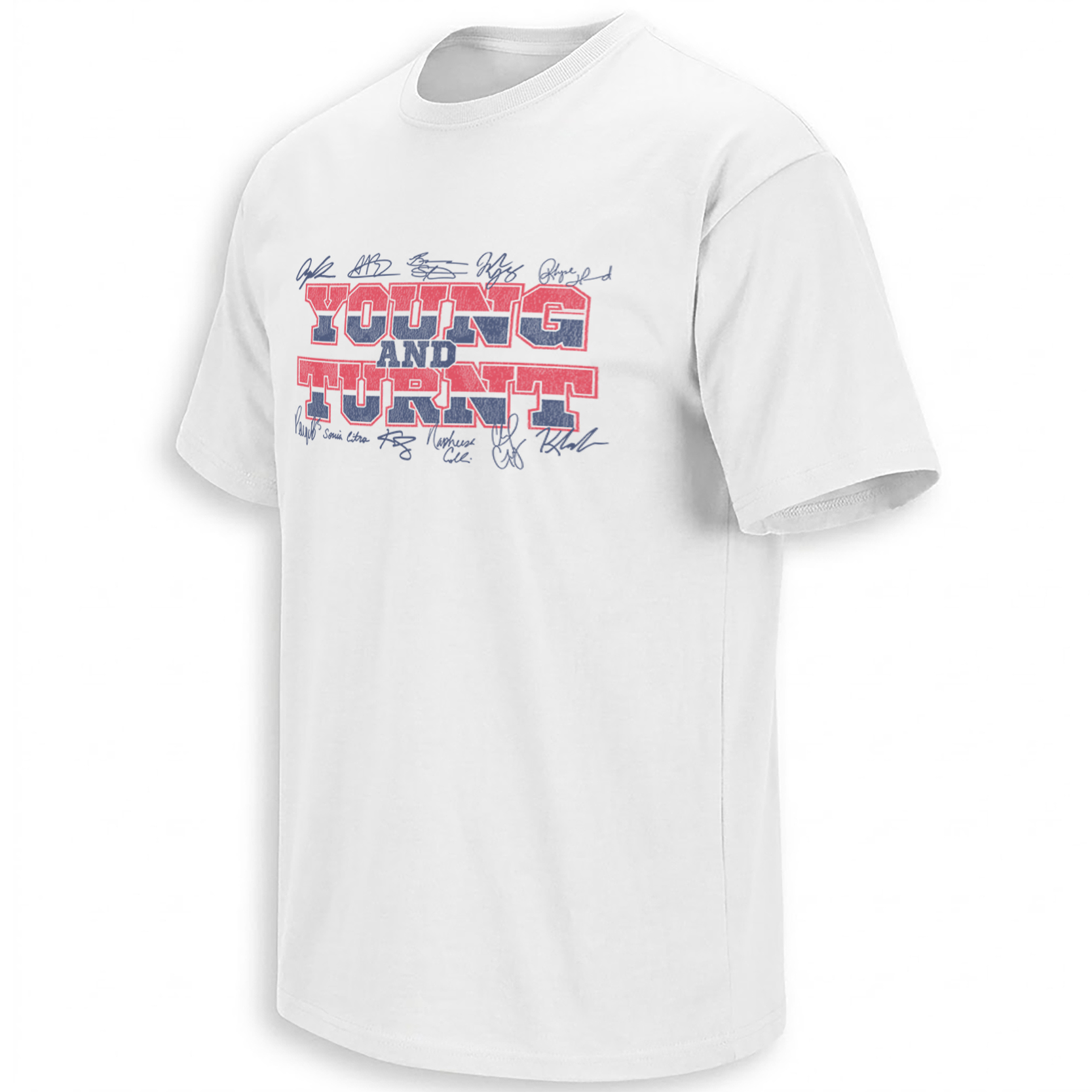
The Young and Turnt Shirt wisely avoids building the entire visual around a single player portrait. The concept is generational, so the artwork behaves collectively.
Oversized red collegiate lettering gives “YOUNG” and “TURNT” the weight of a varsity wordmark, while navy outlines create the familiar red-white-and-blue national palette. “AND” sits much smaller between them, turning the two key words into the dominant rhythm.
The autograph-style markings above and below the lettering change the emotional tone. Without them, the design would simply be a slogan. With them, it starts to resemble a team-signed tournament keepsake — something connected to a group arriving together.
Varsity typography supplies national-team tradition; loose autograph marks supply personality. The combination mirrors the roster itself: an established USA structure being occupied by a louder, younger generation.
A New Era Without Erasing the Old One
Generational change in USA Basketball rarely happens cleanly. New stars arrive while established champions remain essential. That is exactly what makes the 2026 group interesting: Bueckers, Clark, Reese, Citron and Iriafen do not represent a replacement team. They are entering a structure alongside players who already know what winning the tournament requires.
The broader WNBA collection is the confirmed Ellie Shirt category that naturally connects these players back to the professional women’s basketball culture from which much of the current roster emerges.
Because Bueckers created the phrase itself, readers can also continue through the Paige Bueckers product search for designs centered specifically on her.
Frequently Asked Questions
Who created the “Young and Turnt” nickname for USA women’s basketball?
Paige Bueckers used the nickname for the younger group entering the senior USA Basketball environment during the December 2025 training camp.
How many USA players are making their Women’s World Cup debuts in 2026?
FIBA reported that nine players on the final American roster are World Cup debutantes.
Who does Team USA play first at the 2026 Women’s World Cup?
The United States opens Group D against China on September 4 in Berlin, a rematch of the 2022 World Cup final.
What do the signatures in the Young and Turnt design represent?
They give the artwork the feeling of a team-signed keepsake and reinforce that the phrase represents a group rather than one isolated star.
The Young and Turnt graphic preserves the personality of this new USA generation, while Ellie Shirt’s women’s basketball archive connects many of the players back to the league culture they carry into Berlin.
Young and Turnt Shirt captures the new USA women’s basketball generation through Paige Bueckers’ real team nickname, red-and-navy varsity lettering and autograph-style details tied to the 2026 World Cup roster.