
Colton Cowser Finally Made “When Cows Fly” Look Possible
One game-ending leap at Coors Field transformed an old Orioles cow joke into something literal. Colton Cowser did not merely rob a home run — he gave Baltimore “When Cows Fly,” “Air Cowser” and “Just Moo It” in the same twenty seconds.
A baseball game is rarely decided by an outfielder reaching above the fence and physically pulling the opponent’s celebration back into the park. On August 31 at Coors Field, that was exactly the choice facing Colton Cowser: make the catch or watch Colorado walk off Baltimore.
The Orioles led 2–1. There were two outs in the bottom of the ninth and a runner stood on second. Jake McCarthy connected with Andrew Kittredge’s 95 mph sinker and sent the ball 425 feet toward center at 102.9 mph. If it cleared the wall, the Rockies won.
Cowser started relatively shallow, turned, sprinted toward the warning track and launched himself at the fence. His glove disappeared over the wall. His body crashed into the padding. He landed on his back holding the baseball.
Game over.
“When cows fly” is supposed to describe something that will never happen. Cowser apparently treated it as defensive positioning.
The Catch Was Bigger Than an Ordinary Home Run Robbery
Baltimore manager Craig Albernaz called it the best play he had ever seen. MLB quickly placed Cowser’s leap inside its archive of the greatest home-run robberies, and the circumstances explain why.
This was not a first-inning highlight that later became one item in a box score. McCarthy’s ball represented the final possible swing of the game. Catch it and Baltimore wins. Miss it and Colorado celebrates a walk-off.
Cowser had already robbed home runs on consecutive days in late June, so the athleticism was not new. What changed at Coors Field was the pressure attached to it. The catch also returned Baltimore to .500 for the first time since April and kept the Orioles directly inside the American League Wild Card conversation.
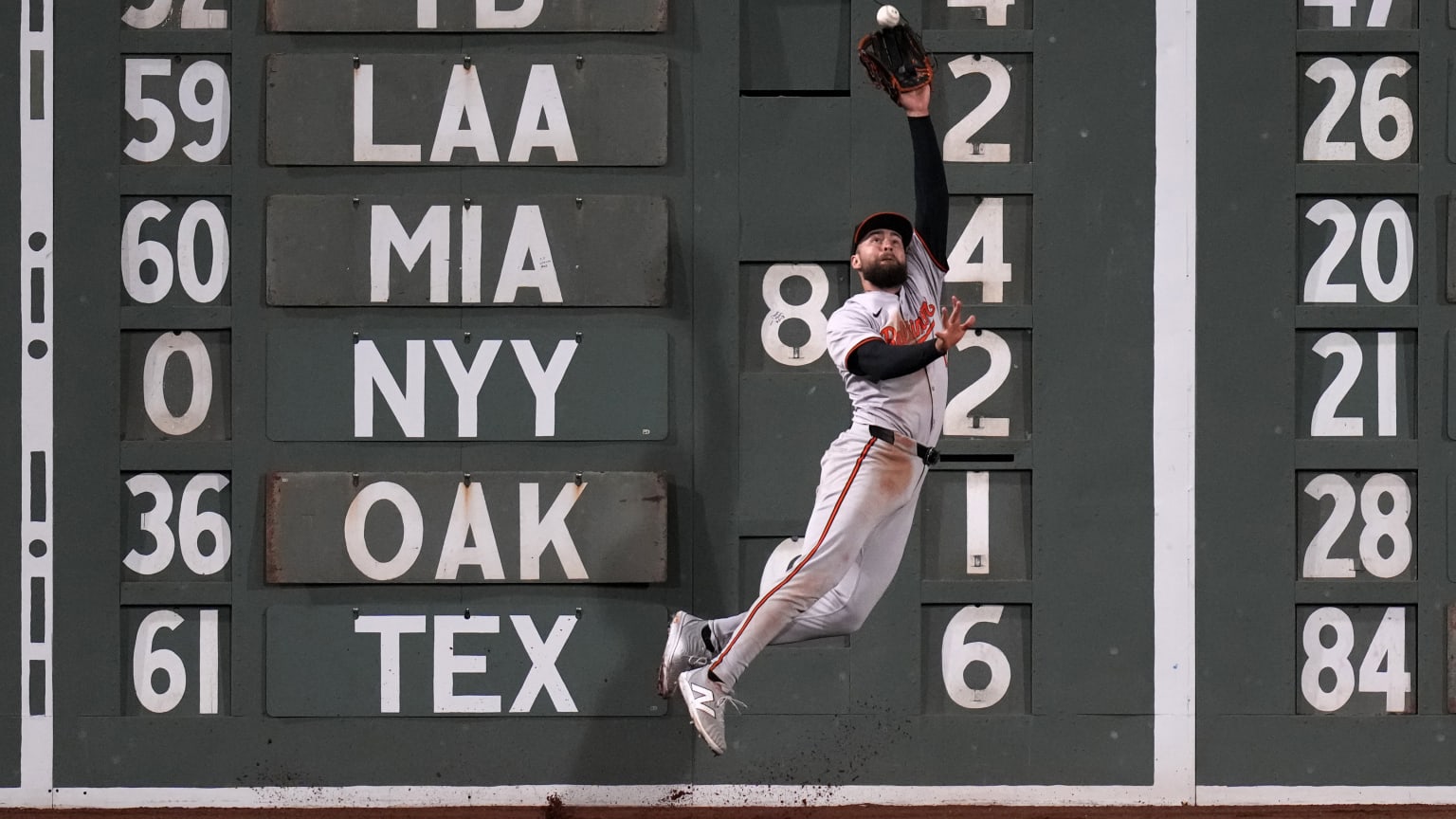
MLB’s Statcast page records the McCarthy drive at 102.9 mph with a 28-degree launch angle and 425-foot projected distance. See Cowser rob the walk-off homer →
Then the Orioles Posted the Only Caption That Made Sense
The wording worked because Baltimore did not invent the cow joke that night. It activated a fan language that had been developing around Cowser for years.
Why Camden Yards Moos for Colton Cowser
During Cowser’s 2024 breakout, Orioles fans began greeting him with “moos.” Visitors sometimes mistook the noise for booing, but the opposite was true. Fans wore cow costumes, others dressed as milkmen, and an entire section at Camden Yards became known as “The Pasture.”
MASN analyst Ben McDonald added another layer by calling Cowser “The Milkman,” a nickname Cowser embraced. The Chesapeake Baysox eventually went so far as to produce a Cowser bobblehead dressed in a full cow costume.
So when Baltimore wrote “WHEN COWS FLY” after the Coors Field catch, the phrase had several seasons of cultural infrastructure behind it. Cowser was already the player people mooed for. Now he had literally appeared to fly.
Cowser’s cow identity did not originate with this catch. The catch simply gave an established Baltimore joke its most visually perfect image yet: No. 17 airborne above a wall with the game in his glove.
Three Graphics, Three Ways to Remember the Same Leap
That is why these three Cowser designs work better as a small visual archive than as isolated products. Each interprets the same moment through a different piece of existing culture.
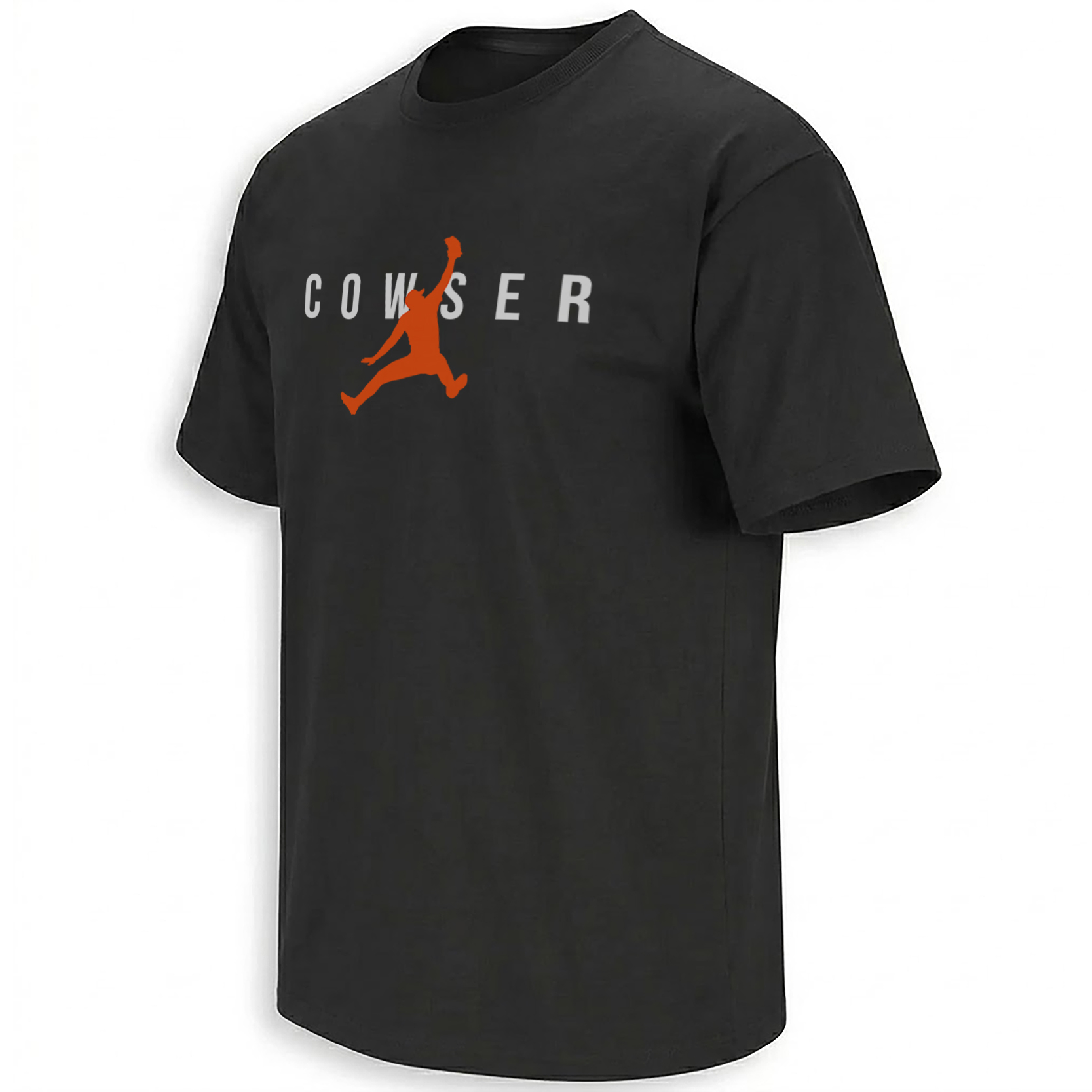
COWSER typography and an airborne orange silhouette translate the wall leap into basketball-logo language: a baseball catch that visually resembles a dunk.
View Air Cowser →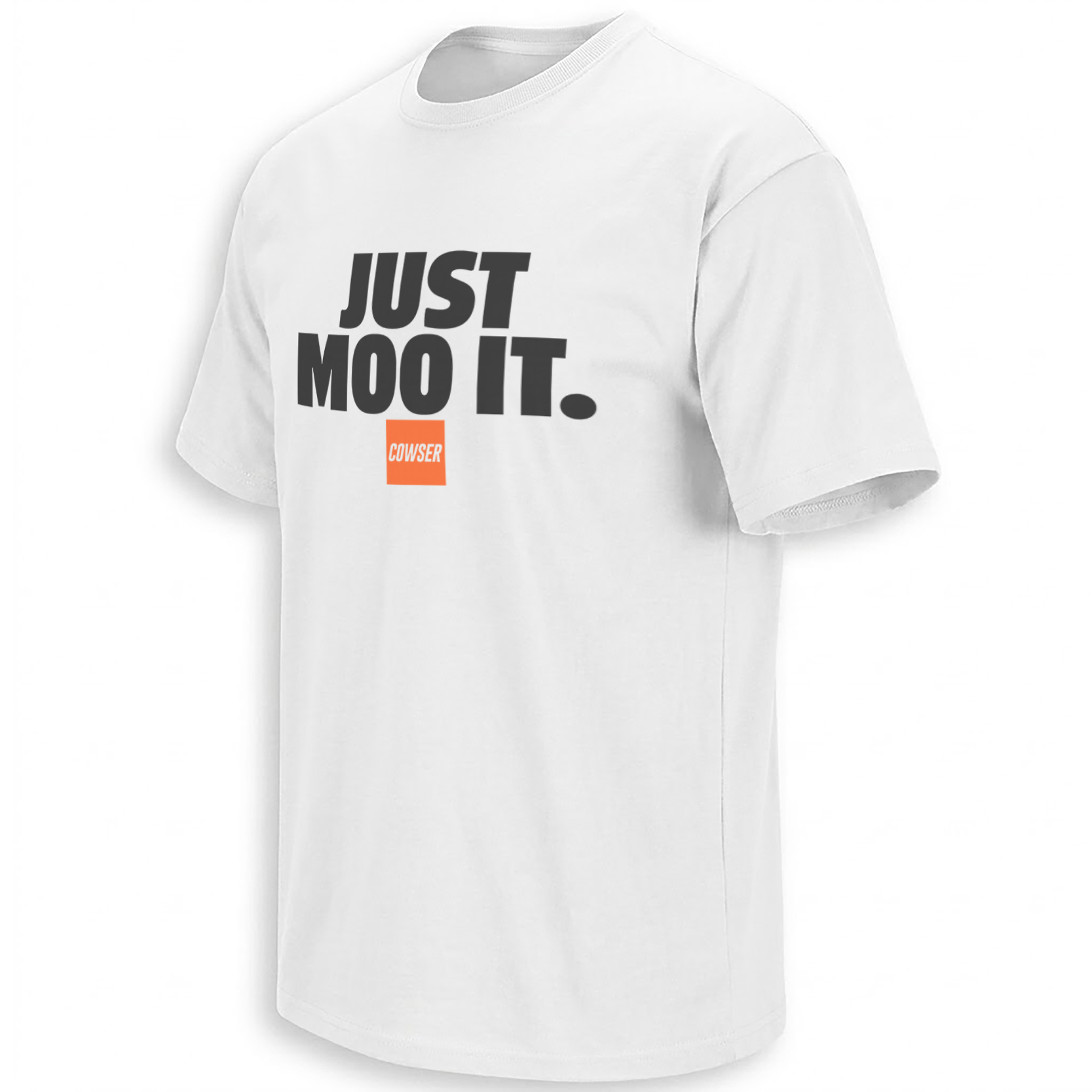
The familiar motivational structure becomes Cowser-specific fan language by replacing the expected verb with the sound Camden Yards already makes for him.
See the slogan graphic →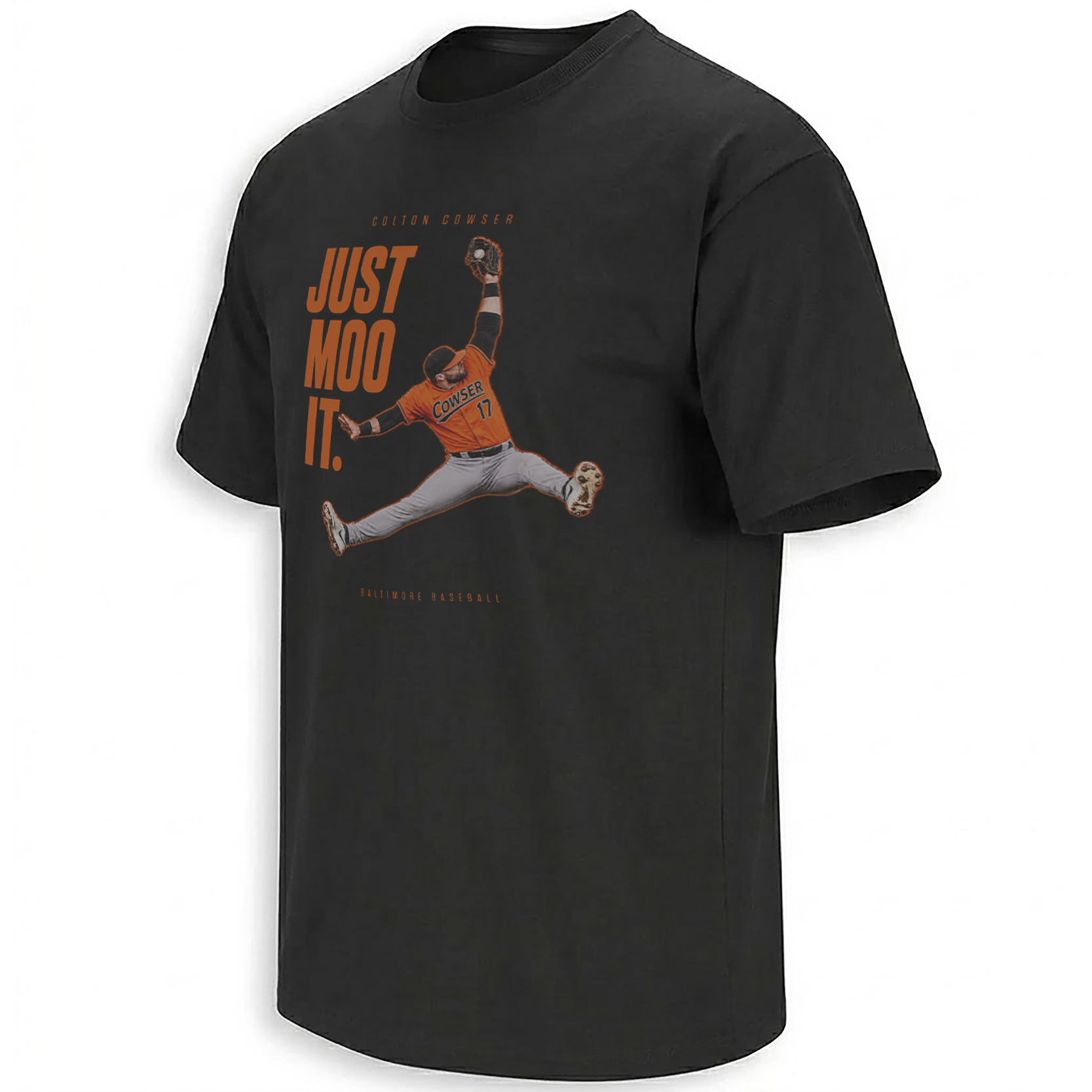
This version makes the athletic reference explicit, putting Cowser’s airborne defensive pose directly inside the joke.
View the flying-catch piece →Why “Air Cowser” Became the Natural Second Joke
The catch looked strange even by elite-outfielder standards. Cowser stretched upward with one arm high above his head, his legs hanging below him as he collided with the wall. National reaction quickly compared the visual to basketball’s most recognizable airborne imagery.
That makes “Air Cowser” different from a random crossover. The basketball language comes from the body position itself. The graphic strips away Coors Field and the scoreboard, leaving only COWSER, orange and the leap.
“Just Moo It” takes the opposite route. Instead of focusing on flight, it combines the established moo ritual with a universally recognizable sports-motivation phrase. The flying-catch version then connects both ideas: athleticism and Baltimore’s cow mythology.
One Catch, Years of Cowser Culture
The reason the meme traveled so quickly is that fans did not have to learn a new character. Cowser had already been “The Milkman.” Camden Yards already mooed. The Pasture already existed. Cow-themed merchandise and even a cow-costume bobblehead had already made the joke physical.
August 31 simply supplied the image those ideas had been waiting for.
The wider Baltimore Orioles collection records more of the phrases and player moments moving through Birdland, while the MLB collection places Cowser’s robbery inside the broader visual archive of the 2026 season. Readers following Cowser specifically can also browse Ellie Shirt’s Colton Cowser product search.
Frequently Asked Questions
When did Colton Cowser make the game-ending home run robbery?
Cowser robbed Jake McCarthy of a potential walk-off two-run homer on August 31, 2026, at Coors Field.
How far was Jake McCarthy’s ball projected to travel?
MLB Statcast listed the drive at 425 feet with a 102.9 mph exit velocity.
Why did the Orioles say “When Cows Fly”?
The phrase plays on Cowser’s surname and Baltimore’s established cow-themed fan culture while describing the spectacular airborne catch that ended the game.
Why do Orioles fans moo for Colton Cowser?
The tradition began during his 2024 breakout. Fans began mooing as a playful reference to Cowser’s surname, and the sound eventually became part of his Camden Yards identity.
Why is Colton Cowser called The Milkman?
Orioles broadcaster Ben McDonald introduced the nickname during Cowser’s early MLB success, connecting the “cow” wordplay with the idea that “The Milkman always delivers.”
What do the Air Cowser and Just Moo It designs represent?
Air Cowser turns the Coors Field leap into an airborne sports-logo parody, while Just Moo It combines Cowser’s defensive highlight with Baltimore’s long-running “moo” fan tradition.
The Air Cowser and two Just Moo It interpretations preserve three different pieces of the same Baltimore moment, while the Orioles archive follows the wider culture around Cowser and Birdland.
Air Cowser and Just Moo It designs capture Colton Cowser’s game-ending 2026 Coors Field home run robbery through “When Cows Fly,” Baltimore’s famous moo tradition and the airborne visual that instantly became Orioles fan culture.