
Miguel Vargas Is No Longer a Projection. He Is Powering Chicago’s Division Race.
With 29 home runs, 30 doubles and an .854 OPS in MLB’s latest player data, Miguel Vargas has moved from intriguing young hitter to one of the defining offensive pieces of a White Sox team leading the American League Central.
The most important change in Miguel Vargas’ story is no longer mechanical. It is contextual. Chicago is playing meaningful late-August baseball, the White Sox are sitting on top of the American League Central, and Vargas’ bat has become part of the reason every series suddenly feels connected to October.
MLB’s current 2026 data lists Vargas with 29 home runs, 30 doubles, 74 RBIs and an .854 OPS through 129 games. Those numbers change the way a player is discussed. They move the conversation away from what he might eventually become and toward what he is already doing in the middle of a pennant race.
Chicago’s position makes the production even louder. After a 10–4 win over Texas on August 27, the White Sox maintained a 2½-game advantage in the AL Central. The roster around Vargas is producing its own collection of unexpected stories, but No. 20 has become one of the season’s most stable offensive signatures.
A year ago, Vargas could still be discussed as a player Chicago hoped would become part of its future. In 2026, he is producing inside the standings that define the present.
The Home Runs Changed the Shape of the Conversation
Vargas’ season has accumulated one memorable power moment after another. On August 11, he drove his 25th homer of the year 406 feet with a 106.6 mph exit velocity. Three days later, MLB’s player archive recorded another multi-homer sequence against Detroit, including his 26th and 27th home runs.
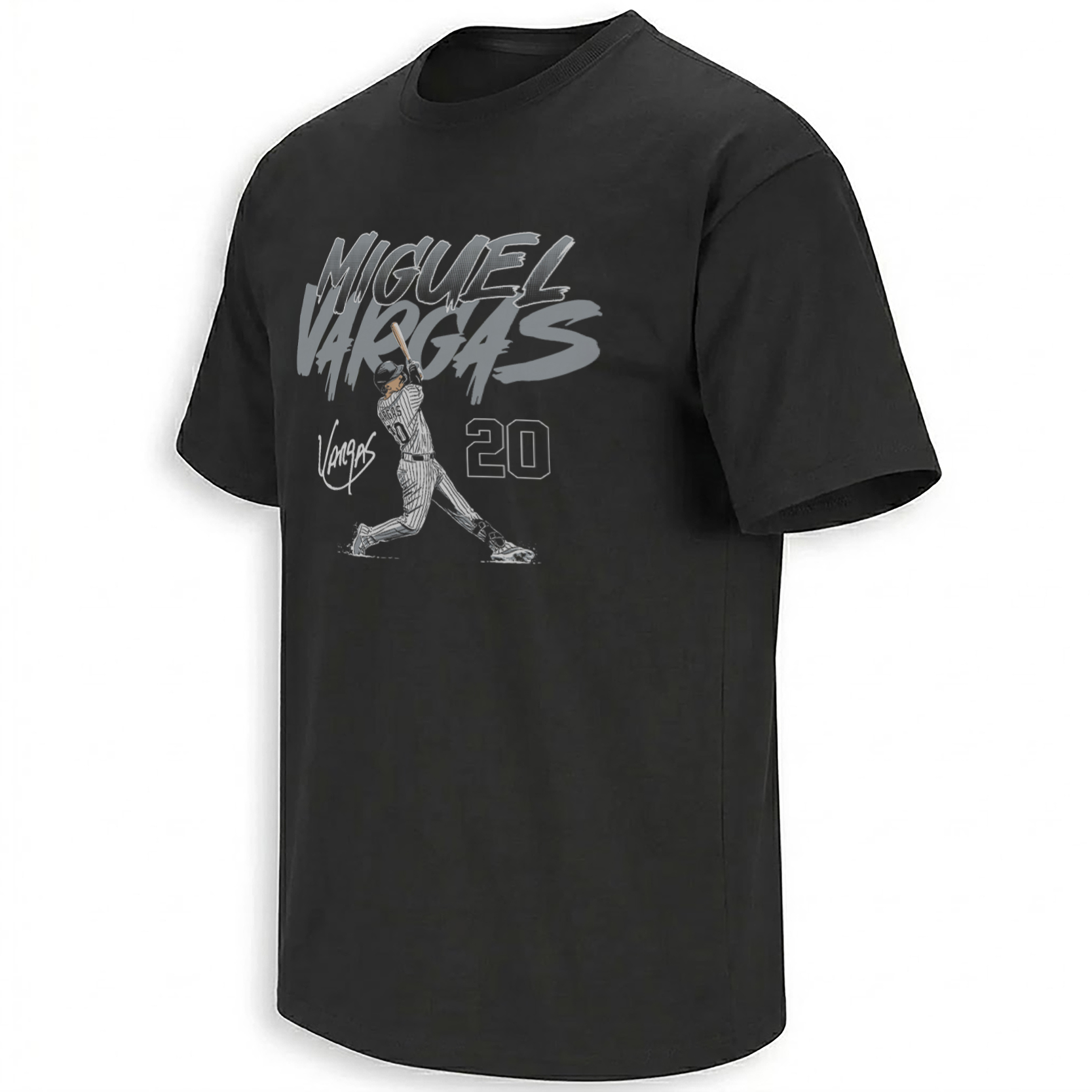
Those swings helped create a very different visual identity around him. Vargas is not being represented here standing casually beside a jersey number. The Miguel Vargas Shirt freezes him at full extension, the body rotation and follow-through doing most of the storytelling.
That makes the design fit the current version of the player. His 2026 story is increasingly told through impact contact: balls pulled with authority, doubles into gaps and home runs that turn a seemingly ordinary inning into a scoreboard event.
The MLB Image Behind the Power-Swing Idea
The graphic’s strongest choice is the pose. Vargas is shown during the violent end of a swing rather than before the pitch. That distinction matters because the design is not about anticipation. It is about impact.
MLB’s own 2026 imagery repeatedly shows the same shape: torso turned, bat extended, eyes following the flight of the ball. The visual match between real action photography and the illustrated design helps the piece feel tied to this season instead of functioning like a generic roster graphic.
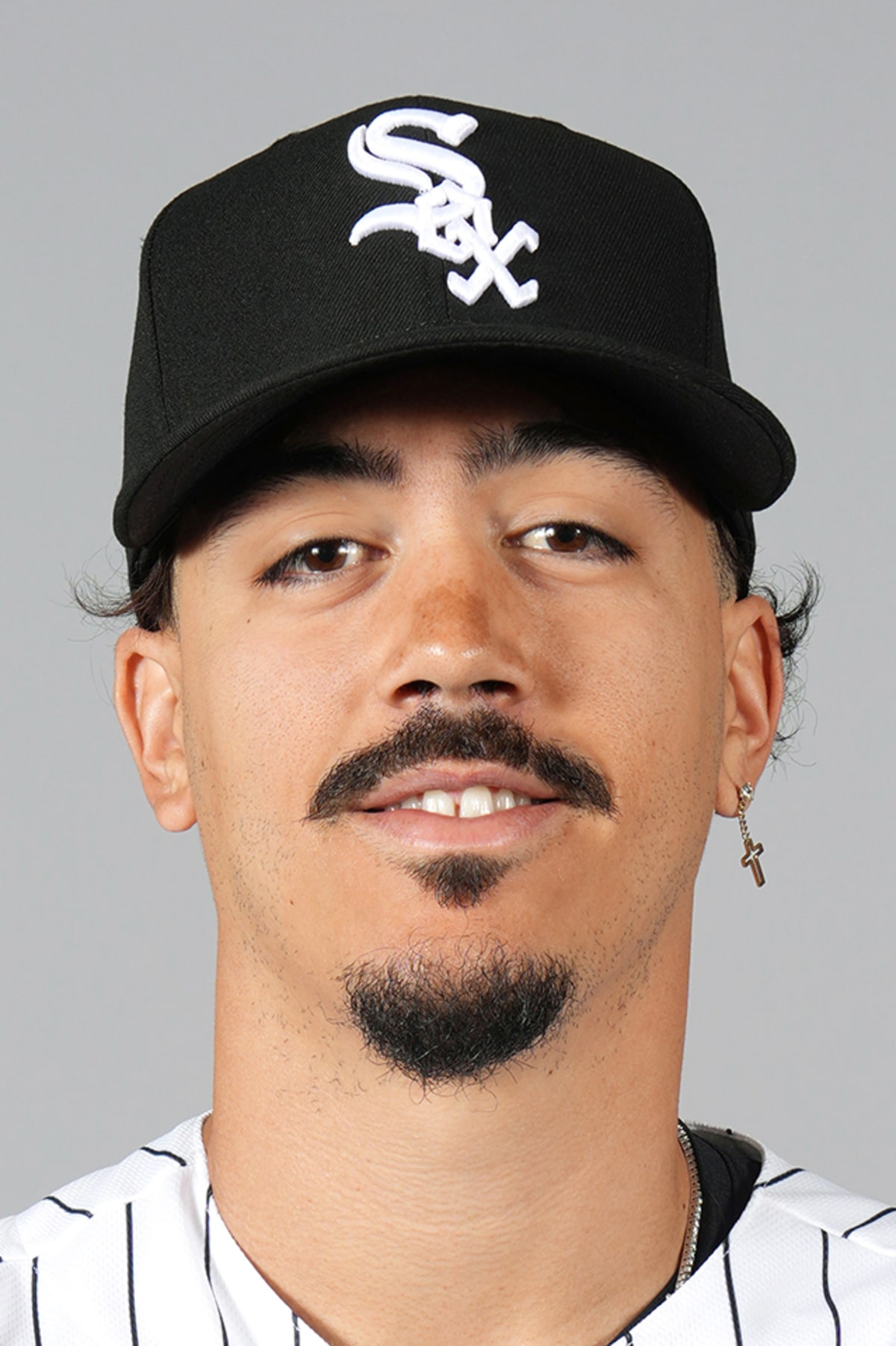
MLB’s official Vargas coverage provides the real-player context for the No. 20 illustration and the power-hitting season behind it. Open the MLB source →
MLB highlight: Vargas’ 25th homer of 2026 — measured at 106.6 mph off the bat and more than 400 feet — gives a direct game-action reference for the power-swing visual.
Why No. 20 Feels Different During a Division Race
Baseball statistics acquire a different emotional value once the standings become part of every conversation. A home run in April can feel like evidence. A home run in late August can feel like leverage.
Chicago’s 2026 season has created that shift. The White Sox are no longer operating in the abstract language of rebuilding and development. They are protecting a lead in the division, which means every contribution from Vargas is being absorbed into a larger question: can this team remain there?
That pressure also explains why player-specific graphics become more meaningful during a race. They preserve who fans were watching when the season stopped feeling theoretical.
Chicago entered the final days of August leading the AL Central, while Vargas sat among the White Sox leaders in home runs, runs scored and overall offensive production.
The Design Speaks South Side Without Overexplaining It
Black is doing most of the cultural work. The shirt base creates the familiar hard-edged South Side mood, while the player artwork stays primarily grayscale. That restraint gives the image a photocopied concert-poster quality rather than the polished symmetry of conventional licensed sports graphics.
“MIGUEL VARGAS” is oversized and rough, almost like a brush-painted wall graphic. The No. 20 outline occupies its own visual territory instead of simply sitting beneath the name. The composition feels asymmetrical, energetic and slightly industrial — appropriate for a Chicago player graphic centered on power.
Most importantly, the swing is allowed to cut through the typography. The athlete is not placed beneath the text as decoration. He interrupts it. That makes the figure feel active and gives the whole design forward motion.
From Development Story to South Side Identity
Vargas arrived in Chicago with talent, questions and time still needed for the story to resolve. That type of player is common in baseball. What is less common is watching the projection become visible almost all at once.
His 2026 power numbers, on-base production and role within a first-place club have pushed him into a different category of recognition. White Sox fans are no longer only tracking whether Vargas develops. They are tracking what he does tonight because it can directly affect the division tomorrow morning.
That is the cultural shift the graphic captures. It is a player portrait from the moment No. 20 stopped looking like background roster information and started functioning like an identifiable part of Chicago’s season.
The Wider White Sox 2026 Visual Archive
Vargas’ breakout belongs naturally inside the wider Chicago White Sox collection , where different player moments and South Side phrases collectively document a season that has developed into a genuine AL Central race.
The broader MLB collection expands that idea across the league, capturing the swings, nicknames, surprise breakouts and late-season storylines that give each baseball year its own visual language.
Additional No. 20 graphics can be found through Ellie Shirt’s Miguel Vargas search .
Frequently Asked Questions
How many home runs does Miguel Vargas have in the latest 2026 MLB data?
MLB’s late-August player data lists Vargas with 29 home runs through 129 games.
Why is Miguel Vargas important to the White Sox in 2026?
Vargas has combined substantial home-run power, extra-base hits and on-base production while Chicago competes at the top of the American League Central.
What happened on Miguel Vargas’ 25th home run?
On August 11 against Cincinnati, Vargas hit a solo homer measured by MLB at 106.6 mph off the bat and approximately 406 feet.
Why does the Miguel Vargas design feature No. 20 so prominently?
The number functions as an immediate player identifier alongside his surname and power-swing illustration, giving the composition the feel of a player poster rather than a generic team design.
Is the Miguel Vargas graphic tied to one particular game?
No. The artwork represents his broader 2026 emergence as a power hitter and important offensive figure in Chicago’s division race.
The Miguel Vargas power-swing graphic preserves the player emerging behind the statistics, while the wider White Sox archive follows the evolving language of Chicago’s 2026 AL Central run.
Miguel Vargas Shirt captures the White Sox No. 20 during his 2026 power breakout, pairing a full-swing player illustration with a dark South Side poster aesthetic as Chicago fights at the top of the AL Central.