
PCA Went 30–30 Again — and “PCA for MVP” Suddenly Feels Real
Pete Crow-Armstrong did not quietly reach his second consecutive 30–30 season. He reached it with a walk-off home run at Wrigley Field, in a Crosstown game, after already homering to open the night — exactly the kind of sequence that turns an MVP argument into baseball theater.
Before the bottom of the tenth inning on August 17, Wrigley Field already knew who was coming. “P-C-A” chants moved through the ballpark while Pete Crow-Armstrong waited to hit. Minutes later, the baseball was over the right-field wall, the Cubs had beaten the White Sox 7–5, and one of the most electric players in baseball had completed his second straight 30-homer, 30-steal season with the first walk-off homer of his career.
That ending mattered because the milestone was already significant before the drama was added. Crow-Armstrong became the first Cubs player ever to record consecutive 30–30 seasons and only the tenth player in MLB history to accomplish the feat. His ledger stood at 30 home runs and 31 stolen bases when the night ended.
Yet statistics alone do not explain why “PCA for MVP” has become increasingly natural language around Chicago. Crow-Armstrong combines power, speed, elite center-field defense and a style of playing that makes routine innings feel capable of becoming highlights.
The strongest MVP campaigns eventually become emotional as well as statistical. PCA’s 30–30 moment arrived with Wrigley already chanting his initials.
The Night PCA Turned a Milestone Into a Scene
Crow-Armstrong opened the game by homering. He then reached base repeatedly, stole a bag and finished with four hits. By the tenth, all that remained was the ending.
He delivered a two-run walk-off homer, flung the bat away, rounded the bases and disappeared into a celebration at home plate. The blast simultaneously ended the Crosstown game and secured the milestone.
That official Cubs post is the cleanest visual source for the moment because the achievement and the celebration are inseparable. This was not a milestone reached with a quiet steal in the third inning of an ordinary afternoon. It happened under Wrigley’s lights with the game ending on the same swing.
Why 30–30 Means More the Second Time
Crow-Armstrong had already entered rare Cubs territory with his first 30–30 campaign. Doing it again removes the sense that one season was simply a perfect alignment of health, opportunity and hot streaks.
Consecutive 30–30 seasons place him alongside a short historical list that includes players such as Willie Mays, Barry Bonds, Alfonso Soriano, Ryan Braun, Bobby Witt Jr. and José Ramírez. Within Cubs history, the distinction is even sharper: no player before PCA had produced 30–30 seasons back to back.
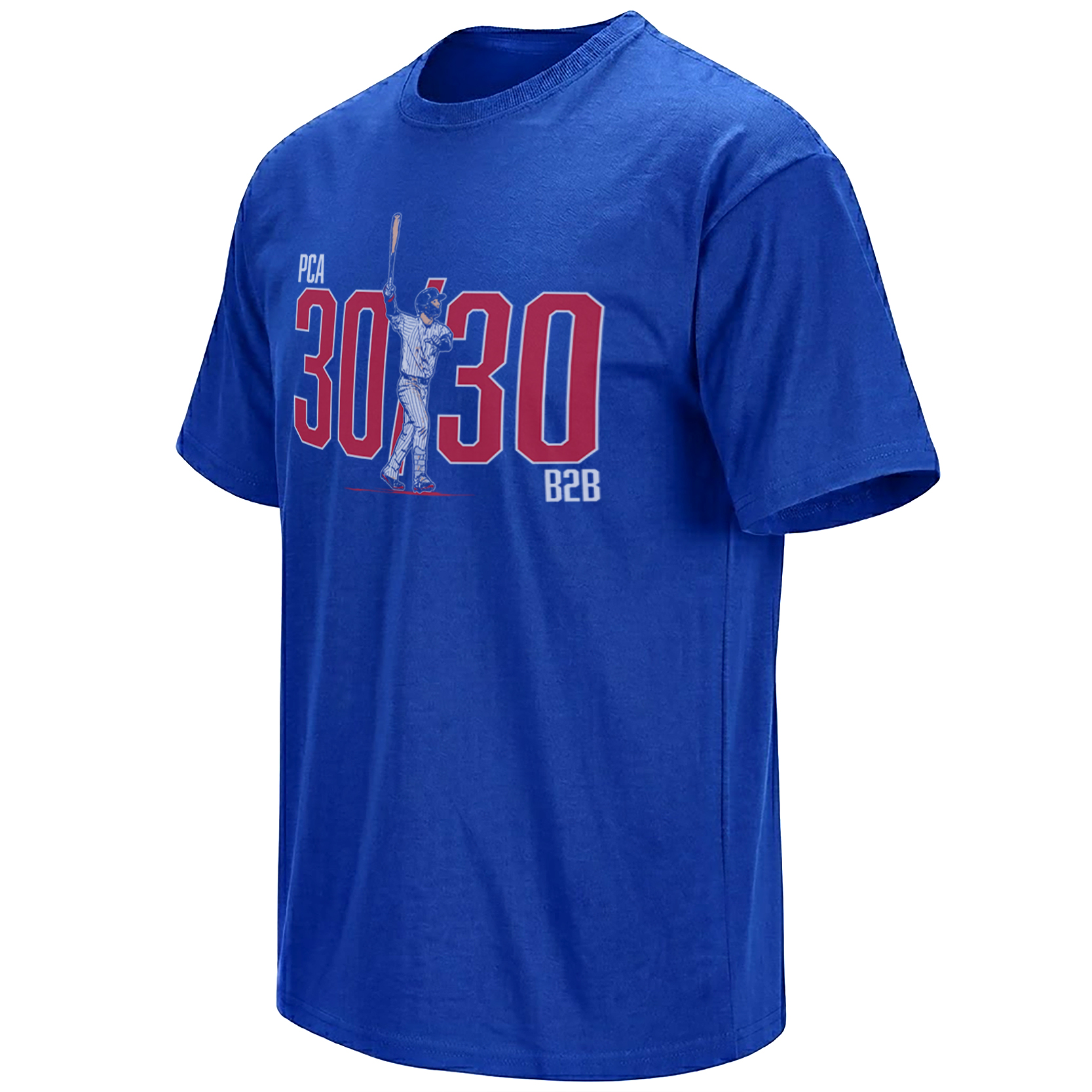
That is why the PCA 30–30 Back to Back design works best as a milestone artifact. “30–30” is already baseball shorthand. Adding “Back to Back” turns the numbers from one excellent season into a statement about sustained identity.
The MVP Case Is Bigger Than 30 Homers and 30 Steals
Crow-Armstrong’s argument is unusual because his value does not live in one statistical category. Power establishes the threat. Speed changes what happens after he reaches base. His range in center field can erase balls that appear headed for extra bases.
MLB’s own July examination of his candidacy emphasized that mixture, including his defensive impact and unusual number of five-star catches. By mid-August, the offensive résumé had acquired an additional layer: historic Cubs consistency plus several signature games.
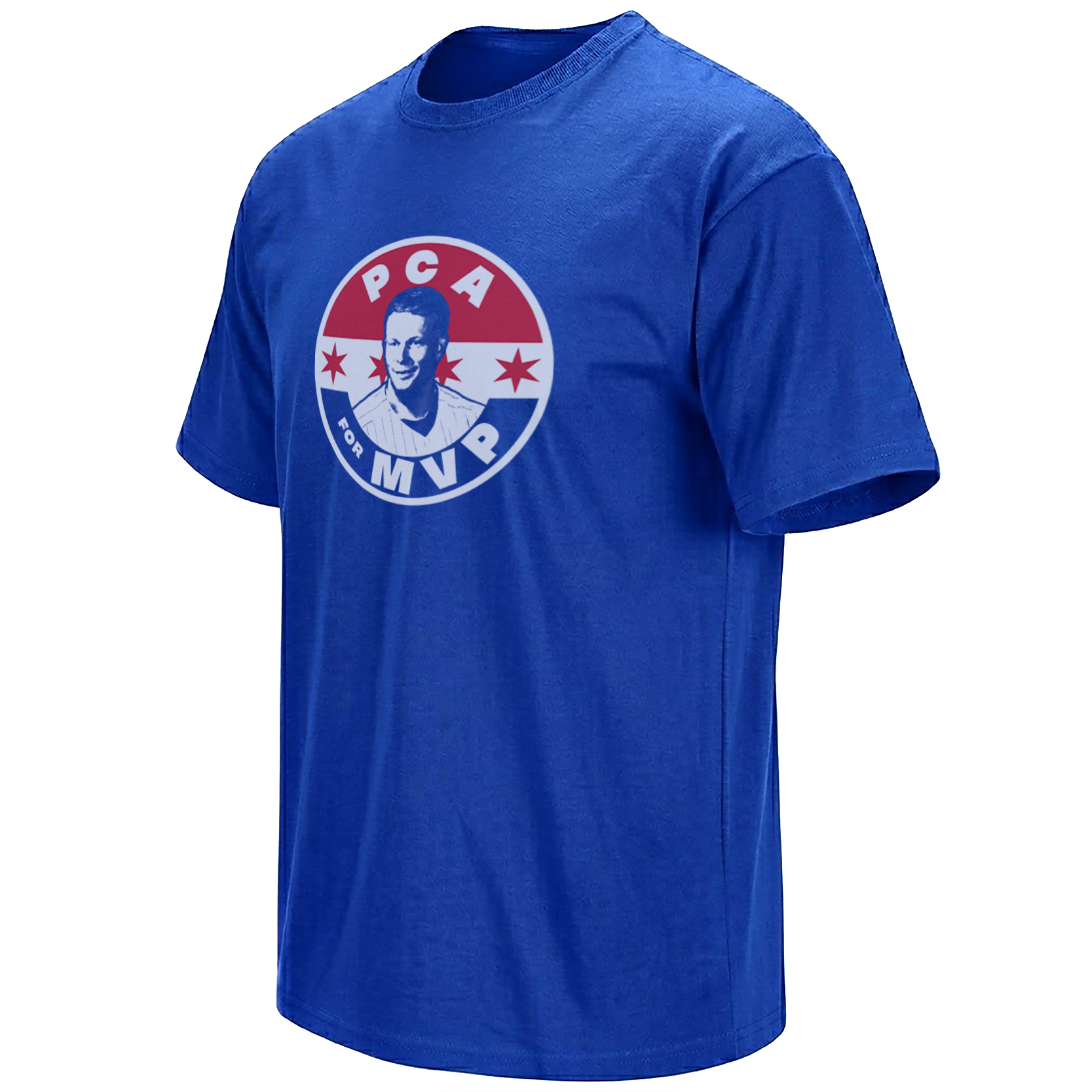
The phrase “PCA for MVP” therefore works because it resembles a political campaign while still sounding exactly like something fans would chant. The initials are already a brand. The award simply supplies the argument.
From Player Nickname to Wrigley Campaign
Campaign-style baseball graphics have a long history because awards are subjective enough to invite fandom into the discussion. Statistics can be compared endlessly, but “MVP” eventually becomes a story about what kind of season feels defining.
Crow-Armstrong has built that emotional case with movement. He plays center field at full speed, attacks extra bases aggressively and can change a game before a fan has finished processing the previous pitch. That visual electricity is especially effective at Wrigley Field, where the closeness of the crowd makes big moments feel theatrical.
For a wider view of 2026 baseball culture, the MLB Shirts collection tracks milestone graphics, viral moments and player narratives across the league. PCA-specific pieces can also be found through the Pete Crow-Armstrong product search.
Frequently Asked Questions
When did Pete Crow-Armstrong reach his second straight 30–30 season?
He reached it on August 17, 2026, with a two-run walk-off home run against the Chicago White Sox at Wrigley Field.
What were PCA’s numbers when he reached the milestone?
Crow-Armstrong finished the night with 30 home runs and 31 stolen bases.
Is PCA the first Cubs player with consecutive 30–30 seasons?
Yes. He became the first player in Cubs franchise history to record 30 home runs and 30 stolen bases in back-to-back seasons.
Why is Pete Crow-Armstrong in the 2026 MVP conversation?
His case combines power, baserunning, elite center-field defense and high-impact games, giving him value in several different phases rather than one offensive statistic.
What does the PCA for MVP design represent?
It transforms Chicago’s growing MVP argument into campaign-poster language, using PCA’s initials as the central identity of the fan movement.
The Back-to-Back 30–30 piece preserves the achievement, while PCA for MVP captures the debate that grew around it.
PCA for MVP and PCA 30–30 Back to Back capture Pete Crow-Armstrong’s historic second consecutive 30–30 season, his August 17 Wrigley walk-off and the growing Cubs fan campaign behind his 2026 NL MVP case.