
Califraudia Republic: How Nick Shirley Turned a Fraud Fight Into a Political Slogan
“Califraudia Republic” compresses months of California fraud allegations, taxpayer anger, confrontational video journalism and partisan counterattack into one altered-state nickname — part accusation, part meme and increasingly part of Nick Shirley’s political brand.
The phrase did not arrive in isolation. In March 2026, Nick Shirley published a roughly 40-minute investigation in which he and his team visited California daycare and hospice locations and alleged large-scale misuse of public money. Shirley claimed the material he assembled represented more than $170 million in fraud. The video rapidly moved through X and political media, collecting millions of views and pushing his confrontational reporting style into a much larger California argument.
The crucial word is “alleged.” Shirley’s videos contain accusations, location visits, public-record references and interviews, but the most dramatic dollar figures circulating around the project should not be treated as final judicial findings simply because they became viral. That distinction is especially important because the story quickly stopped being only about individual businesses and became a fight over California itself.
“Califraudia Republic” is the language that emerged from that second phase. By replacing the middle of “California” with “fraud,” the phrase turns a complicated oversight dispute into a state nickname anyone can understand in one second.
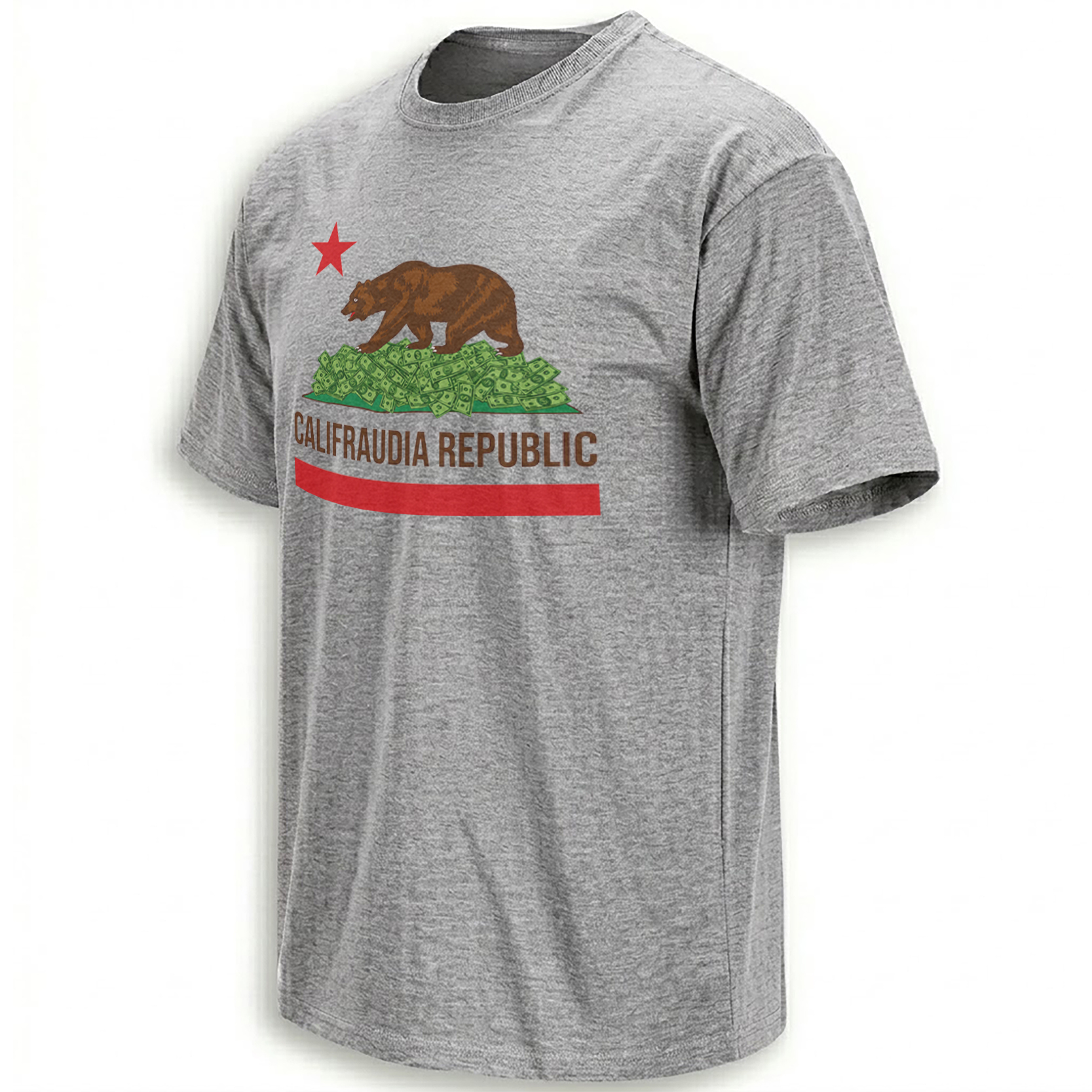
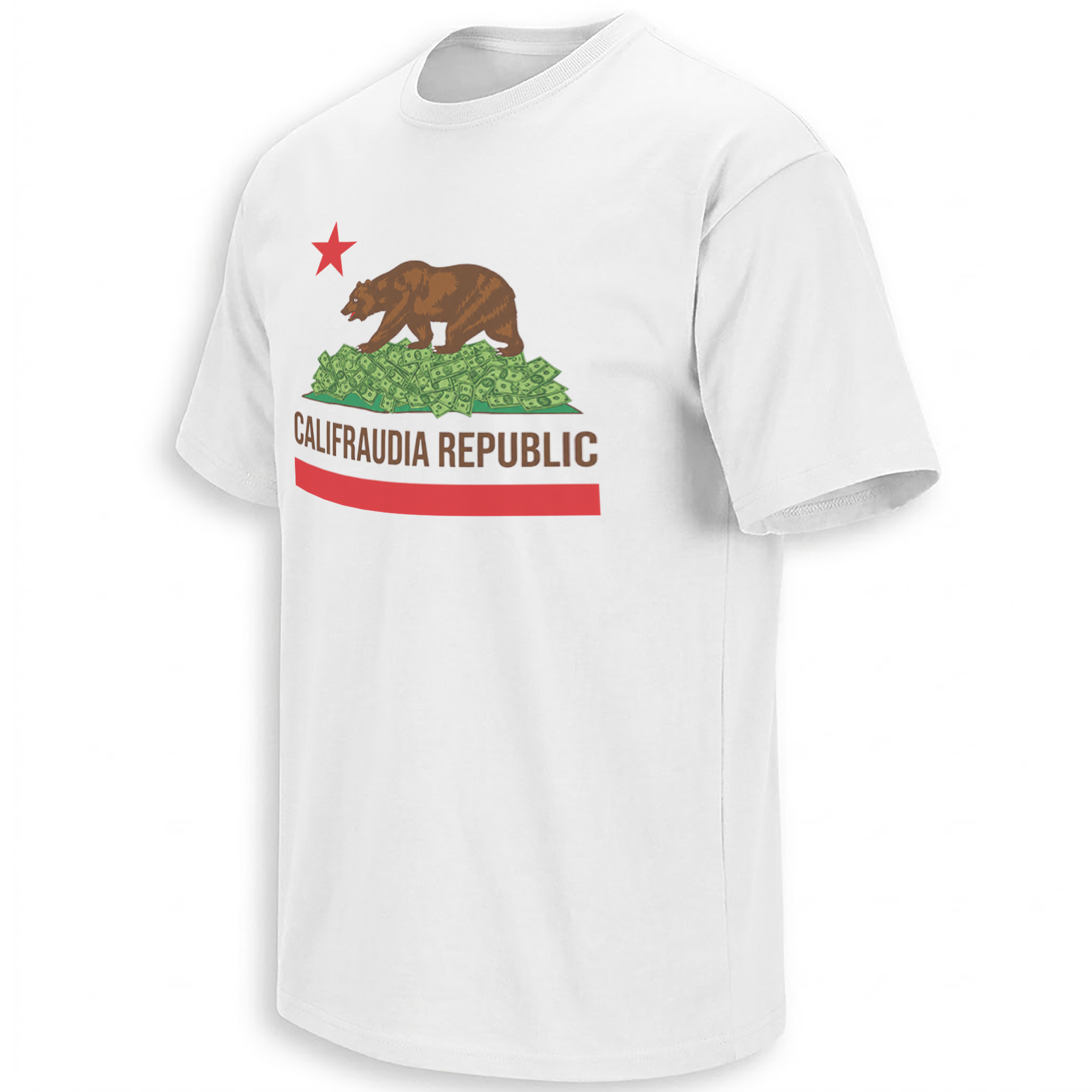
The graphic functions like a parody state seal: familiar California imagery rewritten through the language of alleged waste, money and political distrust.
“Califraudia” works because it turns an investigation into geography: fraud is no longer presented as one case, but as the satirical name of the entire state.
How Nick Shirley’s California Videos Became a National Story
Shirley had already built an audience around direct street interviews and investigative-style videos before the California project. His March release expanded that approach by moving between daycare and hospice locations while framing the investigation around public spending and taxpayer accountability.
Coverage of the release reported that the video passed four million views almost immediately. Shirley’s central claim was that California contained problems larger than those he had previously alleged in Minnesota. Supporters treated the footage as evidence that traditional institutions had ignored obvious warning signs; critics questioned whether visual visits and confrontations were sufficient to establish the scale of fraud he alleged.

“Welcome to the Califraudia Republic” Moves From Caption to Brand
By summer, Shirley was using the phrase directly on X. One post read, “Expose it and they will create laws against you. Welcome to the Califraudia Republic.” That sentence captures how the slogan expanded beyond the original fraud claims into a broader conflict about journalism, access and California legislation.
The phrase is powerful precisely because it does not attempt to summarize a case file. It functions as movement language. Supporters can use it to express a broad belief that fraud, bureaucracy and weak oversight are connected; opponents can point to the same slogan as evidence that complex allegations are being converted into partisan branding.
The AB 2624 Fight Made the Slogan Even More Political
The story gained another layer when California Assembly Bill 2624 became associated with Shirley. Republican Assembly Member Carl DeMaio and other critics labeled it the “Stop Nick Shirley Act,” arguing that its privacy provisions could interfere with the sort of confrontational reporting Shirley practices.
That description is contested. Reporting from the San Francisco Chronicle characterized the nickname as a misleading political talking point and described AB 2624 as an expansion of California’s Safe at Home protections for certain immigration-service workers. The debate therefore became a useful example of the larger Shirley phenomenon: one event generating two completely different narratives depending on which political community is telling the story.
Independent investigators are revealing suspected misuse of taxpayer money and encountering political resistance for making institutions uncomfortable.
Viral confrontations can overstate what has been proven, while privacy legislation is being reframed online as an effort to suppress journalism.
The blog-worthy story is the collision between those interpretations. “Califraudia Republic” belongs to one side of that argument, but its spread tells us something broader about modern political communication: a nickname can travel further than a 40-minute investigation or a multi-page legislative analysis ever will.
The California Bear Rewritten as Internet Satire
The Califraudia Republic Shirt turns that nickname into an altered California emblem. The familiar bear-state language gives viewers an immediate reference point, while money and fraud symbolism change the emotional meaning of the image.
The second colorway changes the mood without changing the argument. On a lighter base, the state-seal parody becomes even more legible, almost like a souvenir from an invented jurisdiction. That absurdity is central to the visual language: “Califraudia” is presented as if it were already an official place.
Why “Califraudia” Is Strong Internet Language
Political nicknames succeed when they require almost no explanation. “Califraudia” has phonetic familiarity, a built-in accusation and a recognizable geographic target. The audience does not need to remember the name of a hospice operator, a funding program or a committee hearing to understand what the person using the phrase is trying to say.
That simplicity is also why responsible editorial framing matters. A meme can preserve the mood of a controversy without proving every allegation attached to it. The graphic records what a segment of political internet culture was saying about California in 2026; it should not be mistaken for an audit report.
Readers following that broader current of U.S. political graphics can explore Ellie Shirt’s Politics collection, while the Nick Shirley search archive gathers designs linked directly to the creator and the conversations around his reporting.
Frequently Asked Questions
What does “Califraudia Republic” mean?
It is a political satire nickname that blends “California” and “fraud,” used to criticize alleged waste, fraud and weak public-sector oversight in the state.
Who popularized “Califraudia Republic” in 2026?
Nick Shirley used the phrase in his social-media commentary around his California fraud investigations and promoted it as part of the wider political conversation surrounding his work.
Did Nick Shirley prove $170 million in California fraud?
Shirley publicly claimed that his investigation uncovered more than $170 million in fraud. That figure should be described as his allegation rather than a final court or government finding unless independently confirmed case by case.
What is the “Stop Nick Shirley Act”?
That is a political nickname critics applied to California AB 2624. Supporters and critics disagree sharply over its implications, and the nickname is not the official title of the legislation.
Why does the Califraudia Republic design use the California bear?
The bear immediately signals California, allowing the design to transform familiar state symbolism into a parody emblem centered on money, fraud allegations and political distrust.
The Califraudia Republic graphic freezes that transformation — from allegation to viral phrase to visual emblem — while Ellie Shirt’s Politics collection follows the wider cycle of American events becoming meme language and wearable political memory.
Califraudia Republic Shirt captures Nick Shirley’s 2026 California fraud discourse through a parody state emblem, California bear imagery and the viral “Califraudia” nickname that turned taxpayer anger into internet political language.