
Tolle Time: Boston’s Young Lefty Is Learning More Than One Way to Dominate
Payton Tolle struck out 14 Athletics hitters on August 7, then went to Toronto six days later and threw eight scoreless innings while recording only four strikeouts. One game looked like raw power. The other looked like veteran control. Together, they explain why Boston now has four different visual ways of saying the same thing: it is Tolle Time.
Young pitchers often arrive in the majors with one easy story. The fastball is loud. The strikeout numbers are exciting. Every highlight package is built around radar-gun readings and hitters swinging through pitches they cannot catch.
Payton Tolle arrived with plenty of that material. At 6-foot-6, throwing from the left side with unusual extension and upper-90s velocity, he never needed much help looking intimidating.
But August 2026 has made his Boston story more interesting than velocity alone.
On August 7 at Fenway Park, Tolle produced the loud version: 14 strikeouts in six innings during a 13–1 win over the Athletics. Six days later at Rogers Centre, he produced the opposite version: eight scoreless innings on only 91 pitches as Boston beat Toronto 7–0.
The 14-strikeout game proved Tolle could overpower a lineup. The Toronto start mattered because he proved he did not need to.
August 7 was the night “Tolle Time” became obvious
The Athletics game looked like the version of Tolle prospect evaluators had imagined when his fastball first began generating attention.
He was perfect through four innings. He eventually allowed only two hits and one run in six innings, did not walk a batter and struck out fourteen.
The efficiency made the strikeout total even more absurd. Tolle needed only 84 pitches, topped out near 100 mph and produced his career-high strikeout performance while Boston extended a winning streak that had completely changed the atmosphere around the club.
It was the first 14-strikeout performance by a Red Sox pitcher since Chris Sale in 2019.
Six days later, Toronto forced a different answer
The Blue Jays did not give Tolle the same type of game. Toronto attacked earlier in counts, put more balls in play and prevented the afternoon from becoming another strikeout montage.
Tolle did not record his first strikeout until the sixth inning.
And yet he was even more efficient.
Eight innings. Two hits. Zero runs. Two walks. Four strikeouts. Ninety-one pitches.
Boston entered the game on a five-game losing streak and needed length from its starter. Tolle gave the bullpen almost the entire afternoon off and helped produce a 7–0 win.
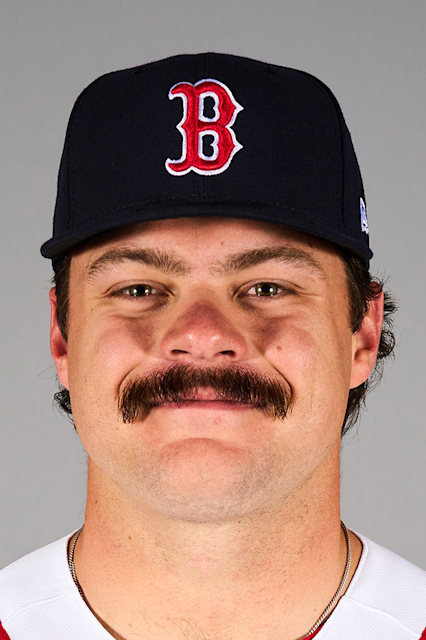
MLB’s official August 13 report focused on Tolle’s evolution: Toronto put the ball in play, his strikeout total disappeared, and he still controlled eight innings with only two hits allowed.
Read the official MLB report →That evolution is why four Tolle designs make sense together
A single game can support one shirt. A developing player identity can support several visual interpretations.
The four Payton Tolle pieces here are not four versions of the same product. They preserve four different ways Boston fans are beginning to see him: the imposing left-handed pitcher, the “Tolle Time” slogan, the No. 70 collage and the vintage pitcher interpretation.
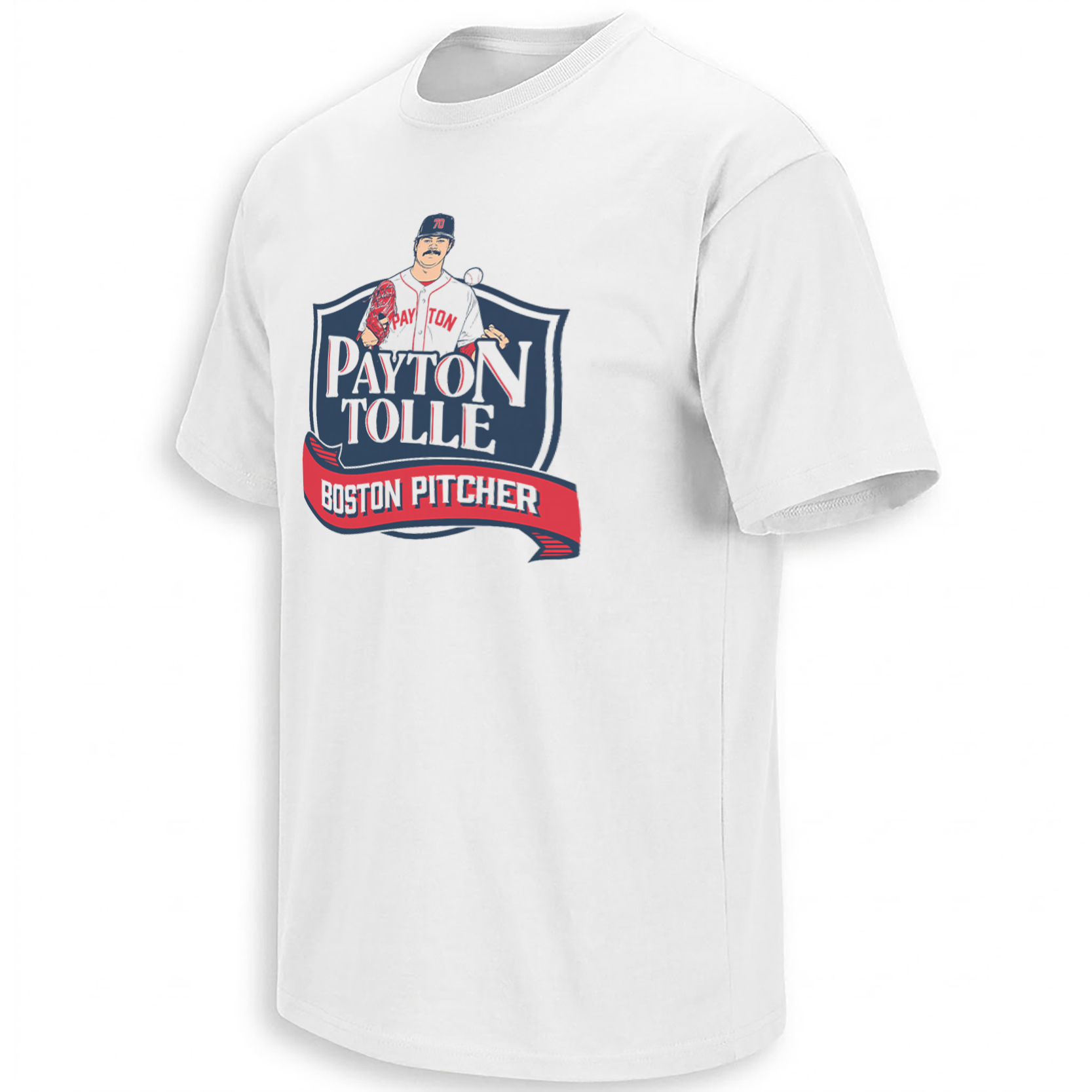
The cleanest interpretation: Tolle as a large, powerful southpaw whose physical delivery already looks unmistakable on a mound.
View the pitcher graphic →
The surname becomes game-day language: when No. 70 takes the mound, the phrase functions like a miniature countdown to the first pitch.
View Tolle Time →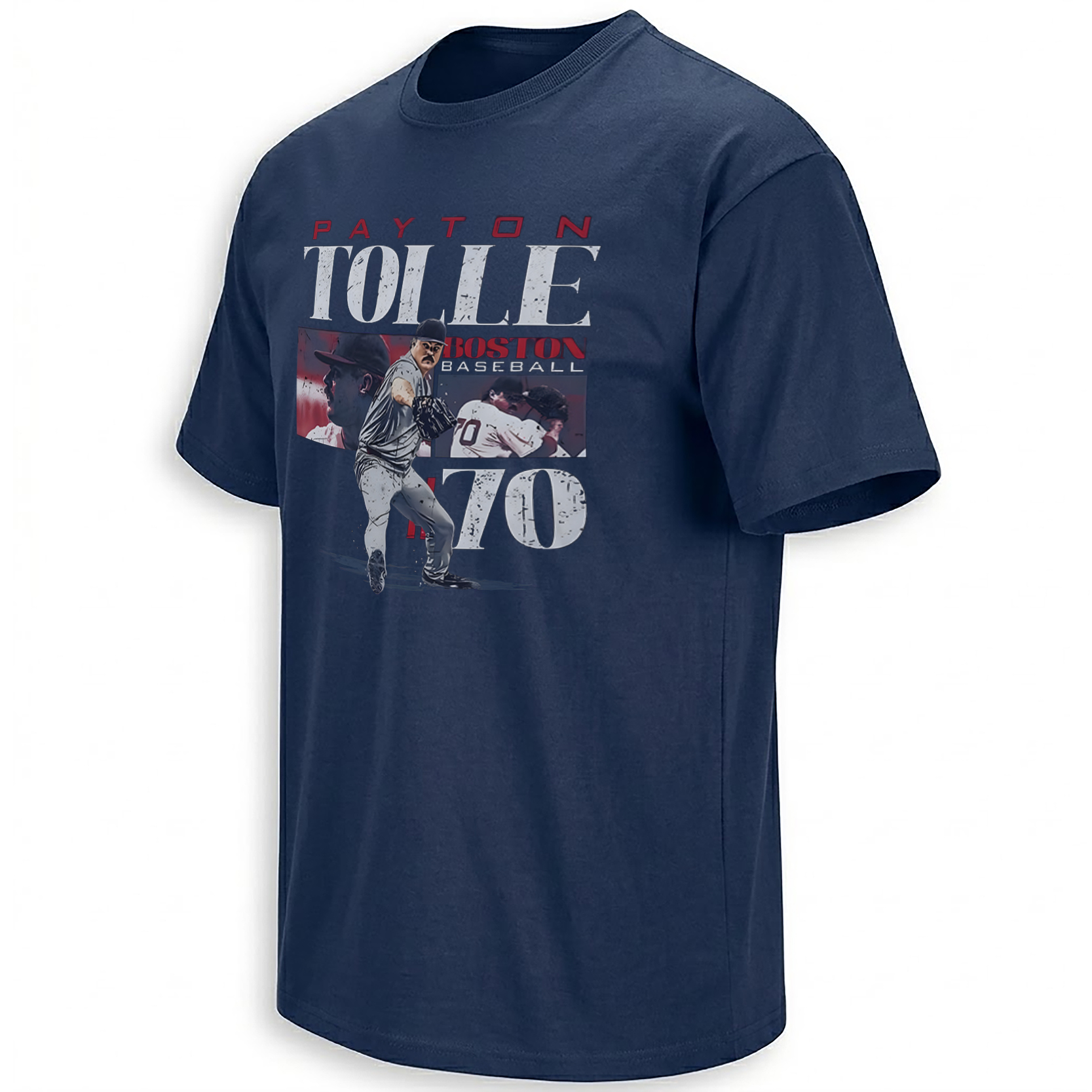
A layered approach that treats Tolle less like an anonymous rookie and more like a player whose number and pitching silhouette are becoming recognizable.
View the No. 70 collage →
The current breakout filtered through an older baseball-poster language, giving a very new pitcher the visual treatment usually reserved for established Fenway figures.
View the vintage Tolle design →The fastball created the hype, but the secondary pitches are changing the ceiling
Tolle’s rise through the Boston system was built around a fastball that looked different to hitters because of velocity and extension. He can release the ball unusually close to home plate for a starting pitcher, compressing reaction time even when the radar reading itself is not the whole story.
The Athletics game showed the destructive version of that advantage. Tolle also landed his breaking ball often enough to make hitters protect multiple planes, producing awkward takes and swings rather than simply trying to catch the heater.
Toronto showed the next stage. When hitters refused to provide fourteen strikeouts, Tolle had to create outs through location, contact quality and sequencing.
Early Tolle hype was easy to explain through size, velocity and strikeouts. The more important August development is that Boston is beginning to receive efficient innings even when those ingredients do not produce the same highlight reel.
Boston’s 2026 season made the timing much bigger
The Red Sox season itself has been unusually volatile. Boston fell as far as fourteen games under .500 before producing one of the strongest extended runs in baseball and forcing itself back into the postseason conversation.
Tolle became part of that turn rather than arriving after everything had already stabilized.
The 14-strikeout game came during Boston’s winning surge. The eight-inning start in Toronto came when the club needed someone to stop a five-game losing streak.
Those are very different forms of pressure. He answered both.
Even Toronto’s manager noticed that the pitcher had changed
Opposing manager John Schneider praised the way Tolle attacked the Blue Jays and generated weak contact. Boston’s interim manager Chad Tracy went further, focusing on how much more complete the young starter had become.
The important word in that evaluation was evolution.
Tolle’s curveball has become a larger factor. His changeup provides another speed. Command is allowing him to place pitches instead of treating every plate appearance as a velocity contest.
That is the difference between an exciting arm and a sustainable starting pitcher.
“Tolle Time” now has enough evidence to become Boston language
Sports phrases work when fans do not need a full explanation. “Tolle Time” is simple because the surname already provides the structure.
What gives the phrase life is repetition. Another start. Another Fenway reaction. Another scoreboard graphic with No. 70. Another outing where the visual of a 6-foot-6 left-hander becomes familiar rather than novel.
Readers looking specifically for him can continue through the Payton Tolle product search.
The wider Boston Red Sox collection connects the four Tolle pieces to the rest of Boston’s current roster and cultural moments, while the MLB collection places his breakout inside the broader visual world of baseball.
Frequently Asked Questions
Who is Payton Tolle?
Payton Tolle is a 6-foot-6 left-handed starting pitcher for the Boston Red Sox who wears No. 70 and emerged as one of the organization’s top young arms.
How many batters did Payton Tolle strike out against the Athletics?
Tolle struck out a career-high 14 batters in six innings on August 7, 2026, during Boston’s 13–1 victory.
What did Tolle do in his next start against Toronto?
He threw eight scoreless innings, allowing only two hits while using 91 pitches in Boston’s 7–0 victory on August 13.
What does “Tolle Time” mean?
“Tolle Time” is a surname-based Boston baseball phrase built around the moment Payton Tolle takes the mound, especially as his 2026 breakout has made No. 70 increasingly recognizable.
Why are there several different Payton Tolle designs?
The designs capture different pieces of his emerging identity: the imposing left-handed pitcher, the Tolle Time phrase, his No. 70 visual signature and a vintage Boston baseball interpretation.
The breakout has become a sequence. Explore the Payton Tolle archive or move into the wider Boston Red Sox collection to follow the current chapter of Fenway baseball culture.
Tolle Time captures Payton Tolle’s 2026 breakout from two directions: the overwhelming 14-strikeout Fenway performance and the eight-scoreless-inning masterpiece that followed in Toronto. Four designs preserve the fastball, No. 70 and the growing Boston phrase around one of the club’s most exciting young pitchers.