“I Will Succeed Because I Am Insane”: When Motivation Became a Little Unhinged
A cowgirl on a winged tiger turns one of the internet’s favorite anti-inspirational affirmations into the kind of image that makes no logical sense — which is precisely why it works.
Motivational language used to arrive with sunsets, mountains and disciplined little instructions about believing in yourself. The internet has largely broken that format apart. In its place came a stranger kind of confidence: affirmations delivered with raccoons, frogs, cowboys, absurd animals and sentences that sound halfway between determination and a warning.
“I will succeed because I am insane” belongs perfectly to that vocabulary. The line has continued circulating through social posts and meme graphics rather than settling into one fixed template. That matters because the joke is bigger than a single image. Its appeal comes from taking the language of relentless self-improvement and pushing it one step beyond respectable ambition.
It does not say success will come from superior planning, networking or a five-step morning routine. It says the person speaking may simply be too unreasonable to stop. The exaggeration is the punchline, but underneath it sits a recognizable internet feeling: sometimes stubbornness is easier to believe in than polished inspiration.
The joke is not “I have everything under control.” The joke is that control may have stopped being necessary.
Why Chaotic Motivation Feels So Native to the Internet
Internet humor often works by borrowing the structure of something sincere and quietly replacing its emotional center. “I will succeed because I am insane” still sounds like motivation. Grammatically, it behaves like an affirmation. Emotionally, however, it replaces calm confidence with feral persistence.
That shift explains why the phrase can survive across so many visual versions. It has appeared around absurd animals, chaotic office humor and social captions because the image is almost secondary to the attitude. The message stays recognizable: failure may exist, but the speaker has apparently decided that normal limits do not apply.
The social format matters. A phrase like this is built to be reposted because it can operate simultaneously as a joke and as something suspiciously close to genuine encouragement. Someone can send it ironically at 2 a.m. and still mean about forty percent of it.
Then the Cowgirl Gets on a Winged Tiger
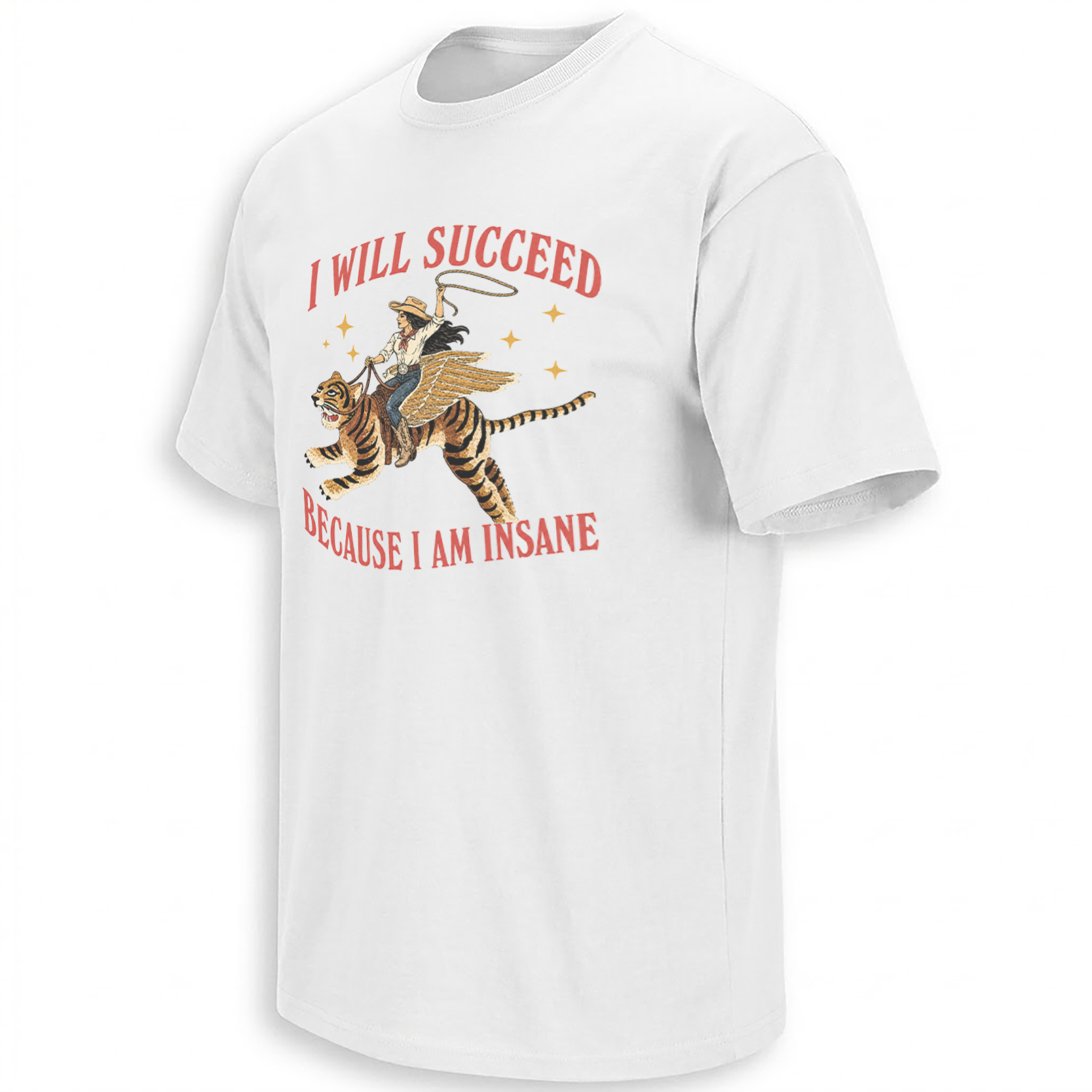
The Ellie Shirt graphic pushes the phrase into full visual absurdity. A conventional Western scene would give the cowgirl a horse. A conventional fantasy illustration might give the hero a winged creature. Combining the two and making the mount a tiger creates exactly the escalation the sentence demands.
The Cowgirl Aesthetic Makes the Joke Stronger
Cowgirl imagery already carries a useful visual shorthand: self-reliance, danger, dusty independence and an almost theatrical refusal to ask permission. Modern internet fashion has repeatedly recycled Western vocabulary — boots, rodeo lettering, desert palettes and exaggerated Americana — because it gives otherwise contemporary jokes the weight of an old poster or roadside sign.
Here, that vintage vocabulary collides with something deliberately impossible. The tiger is not merely being ridden; it has wings. The image therefore starts in recognizable Western iconography and then leaves reality entirely. That move mirrors the wording. “I will succeed” is ordinary. “Because I am insane” kicks the sentence through the saloon doors.
The graphic works best as faux-vintage absurdism: a scene that initially resembles old Western ephemera, then reveals an impossible fantasy animal and an aggressively modern meme sentence.
Why the Phrase Works Better Than Normal Inspiration
Polished motivational culture assumes the reader wants to become more disciplined, optimized and controlled. Chaotic motivation does something different. It makes space for people who are exhausted by being told to package ambition neatly.
That is why the joke travels so naturally through work chats, social captions and meme accounts. It lets people admit that persistence is often messy. You can procrastinate, panic, overthink, laugh at the situation and still keep moving. The phrase turns that contradiction into identity.
The wider Newest Shirts collection functions as a useful running archive for this kind of internet language: phrases and images that move from feeds into physical visual culture while the joke is still recognizable.
Frequently Asked Questions
What does “I Will Succeed Because I Am Insane” mean?
It is a deliberately exaggerated motivational phrase. The humor comes from replacing conventional reasons for success — discipline, planning or talent — with unreasonable persistence and chaotic confidence.
Is there one confirmed original version of the meme?
No single origin is established strongly enough to treat one graphic as the definitive source. The phrase has circulated through multiple social and visual formats, which is part of why it behaves more like a reusable internet affirmation than one fixed meme template.
Why is a cowgirl riding a winged tiger?
The impossible image amplifies the joke. A cowgirl suggests frontier confidence; a flying tiger makes that confidence absurdly excessive, matching the exaggerated logic of the phrase.
Why does the design look vintage?
Western and retro illustration styles make internet nonsense feel like an old piece of Americana. That contrast between nostalgic presentation and modern meme language gives the graphic much of its personality.
Why is “chaotic motivation” popular online?
It allows encouragement and self-mockery to occupy the same sentence. People can laugh at their own messiness while still expressing real determination, which makes these phrases easy to share without sounding overly sincere.
The I Will Succeed Because I Am Insane design preserves that exact collision of Western nostalgia, impossible imagery and the internet’s favorite kind of semi-serious confidence.
I Will Succeed Because I Am Insane Shirt turns chaotic motivation into surreal Western imagery with a cowgirl riding a winged tiger — part vintage Americana, part internet affirmation and completely unreasonable confidence.