
Democrat for Halloween: When the Costume Joke Is Really an Insult
The “my head wouldn’t fit” punchline turns Halloween costume language into an intentionally abrasive piece of partisan comedy built for people who prefer their political jokes loud, immediate and impossible to misunderstand.
Halloween has always offered Americans permission to exaggerate. People become monsters, celebrities, movie characters and visual puns for one night, while political obsessives turn the news cycle into costumes that may only make sense to someone who has been following the same arguments online.
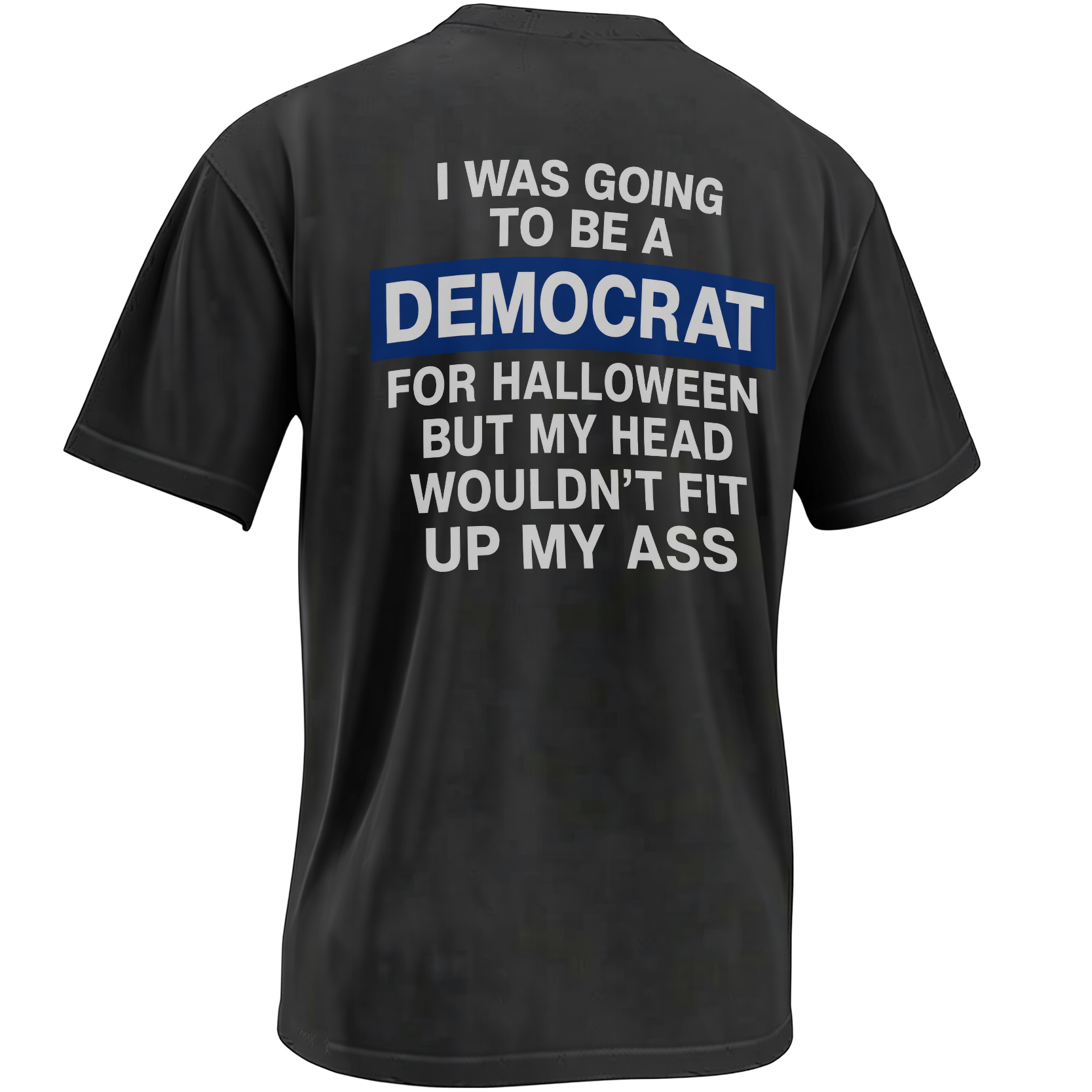
“I was going to dress as a Democrat for Halloween, but my head wouldn’t fit” belongs to the bluntest version of that tradition. The setup sounds like a seasonal costume confession. The ending reveals that no costume was ever being planned. The entire sentence exists to deliver an insult about political opponents.
The joke is not a new campaign slogan or a quotation traceable to one politician. Versions using “Democrat,” “liberal” and “leftist” have circulated for years across novelty products and partisan meme spaces. Reverse versions aimed at Trump voters have circulated as well, showing that the structure is less about one party than about an endlessly reusable form of political ridicule.
The costume is imaginary. The partisan signal is the entire point.
The slogan is partisan satire rather than a factual statement about Democrats. Its meaning comes from deliberate exaggeration, insult comedy and the expectation that the audience already shares the speaker’s political viewpoint.
Why Political Halloween Jokes Keep Returning
Political humor and Halloween fit together because both depend on recognizable disguise. A costume reduces a public figure, party or controversy to a few visual cues. A political meme does something similar with language, compressing an argument into a phrase that can be understood before anyone investigates the details.
In Washington and other politically engaged communities, Halloween costumes regularly become wearable commentary on scandals, policy fights and viral images. Some require elaborate props or deep knowledge of current events. Others use nothing more than a printed sentence and the wearer’s willingness to become part of the punchline.
The Democrat for Halloween slogan belongs to the second category. It does not recreate a recognizable Democratic politician or policy dispute. Instead, it uses party identity itself as the costume. The target is deliberately broad, allowing the joke to remain usable even when candidates, campaigns and specific controversies change.
How the Sentence Delivers Its Punchline
The wording follows a classic misdirection structure. “I was going to dress as a Democrat for Halloween” invites the reader to imagine a costume. The expected ending might involve a donkey symbol, blue clothing, a candidate mask or another recognizable piece of political imagery.
“But my head wouldn’t fit” delays the complete meaning for one final beat. Only after the viewer connects the wording with the design’s crude visual implication does the joke resolve. The result is intentionally confrontational because it converts a playful holiday premise into a declaration of contempt.
That kind of humor rarely attempts to persuade undecided people. It mainly performs group identity. Someone who already dislikes Democrats recognizes the message as confirmation of an existing attitude, while someone outside that audience is more likely to read it as offensive rather than convincing.
This distinction explains why such slogans work especially well as apparel. A political shirt does not wait for a debate to begin. It announces the wearer’s side before any conversation takes place and allows reactions—laughter, approval, discomfort or argument—to become part of the experience.
Why the Halloween Styling Softens—and Sharpens—the Insult
Orange typography, pumpkins and spooky-season framing give the design a comic wrapper. At first glance, it belongs to the same visual world as haunted houses, skeleton jokes and easy costume shirts. That familiarity makes the political turn arrive more abruptly.
The seasonal design softens the entry point but sharpens the contrast. A viewer expects harmless October humor and instead receives partisan mockery. The clash between cheerful pumpkin imagery and crude political language is what gives the graphic its attention value.
Large centered lettering also allows the sentence to function across a room. The hierarchy moves from “I was going to dress as a Democrat” toward the smaller setup and then lands on the final punchline. The viewer reads the design in the same order a comedian would deliver it aloud.
Pumpkin orange creates immediate Halloween recognition, while the distressed lettering gives the slogan the feel of a seasonal yard sign or old novelty graphic. The layout remains simple because the joke depends on timing: setup first, insult last.
An Old Joke in a New Meme Environment
Although the slogan predates the current election cycle, the contemporary internet gives it new opportunities to circulate. Political memes increasingly move through customized graphics, reaction images and products built for highly specific audiences rather than through one universally recognized template.
Research into online political imagery has found that memes frequently operate as tools for group support and attacks on opposing groups. The most successful examples do not necessarily present detailed arguments. They create quick associations between an identity and a joke, insult or emotional reaction.
This design follows that logic. It does not explain why the wearer disagrees with Democratic policies. It turns “Democrat” into the setup for a crude Halloween punchline and leaves the audience to supply the surrounding political beliefs.
That makes it culturally useful as a record of partisan communication. The graphic shows how American political identity increasingly appears not only in campaign ads and speeches but also in holiday humor, social captions and everyday clothing.
Where the Design Fits Inside Ellie Shirt
The product belongs naturally inside the Trump Ultra MAGA collection, where anti-Democratic satire, conservative slogans and pro-Trump meme language form a broader archive of right-leaning political apparel.
Its pumpkin typography and costume premise also connect it to the Halloween collection. That link matters because the joke depends as much on seasonal culture as it does on party politics: without Halloween, the sentence loses its setup.
The newest releases place the graphic alongside other current internet jokes, political reactions and cultural designs, preserving how familiar partisan phrases continue to be repackaged for new seasonal moments.
Marketplace archives show multiple versions of this joke using Democrat, liberal, leftist and Trump-voter targets. No reliable source reviewed for this feature establishes a single original author, first publication or official political campaign connection.
Frequently Asked Questions
What does the Democrat for Halloween joke mean?
It uses a fake costume setup to deliver a crude partisan insult aimed at Democrats and liberals rather than describing a real Halloween costume.
Is the phrase a quotation from Donald Trump?
No reliable source reviewed for this article attributes the wording to Donald Trump or another specific political figure.
Where did the slogan originate?
Its exact origin is unclear. Similar versions have circulated for years on novelty products, social posts and partisan meme pages using several different political targets.
Why is the joke connected to Halloween?
Halloween provides the costume-based setup, allowing the slogan to begin like a seasonal joke before shifting into political insult comedy.
Why do political slogans work as easy costumes?
A printed phrase can communicate the entire concept without masks or props, turning the wearer into a moving political joke that other people can recognize immediately.
The Democrat for Halloween design places an old partisan punchline inside pumpkin-season visual language, while the broader Trump Ultra MAGA archive tracks the slogans, insults and meme structures used across conservative political culture.
Democrat for Halloween Shirt combines pumpkin-colored seasonal lettering with the long-running “my head wouldn’t fit” anti-liberal joke, turning partisan insult comedy into an easy political costume graphic.