Three Mune Moon:
When Murakami Entered Meme History
Munetaka Murakami’s first months with the Chicago White Sox created enough home-run mythology to revive one of the internet’s most recognizable shirts. Three wolves became three Munes—and an old online joke found a new South Side life.
“Three Mune Moon” is not a claim that Munetaka Murakami hit three home runs in one game. It is a visual pun built on the legendary Three Wolf Moon shirt, replacing the howling animals with three versions of Chicago’s Japanese slugger. The joke works because Murakami’s 2026 arrival already felt large enough to belong to baseball folklore.
Murakami did not require a long adjustment period before becoming one of the most recognizable figures in Chicago baseball. He homered on Opening Day and then went deep in each of the next two games, becoming the first player in White Sox history to homer in each of his first three Major League games.
The sequence immediately established the language surrounding his rookie year: towering flight, distant landing points and baseballs repeatedly being sent toward the moon. That vocabulary made a lunar meme adaptation feel almost inevitable.
Murakami opened his MLB career with a home run for the White Sox in Milwaukee.
He homered in each of his first three games, creating an immediate Chicago storyline.
Three portraits, one moon and a name perfectly suited to baseball wordplay.
A Rookie Arrival That Felt Mythological
The original excitement was not simply about home-run quantity. It was about the speed with which Murakami’s established reputation in Japan translated into an American baseball setting.
He arrived after becoming one of Nippon Professional Baseball’s most feared power hitters. Chicago fans were therefore watching two stories at once: a decorated Japanese slugger adapting to MLB and a rebuilding White Sox team discovering a new center of gravity.
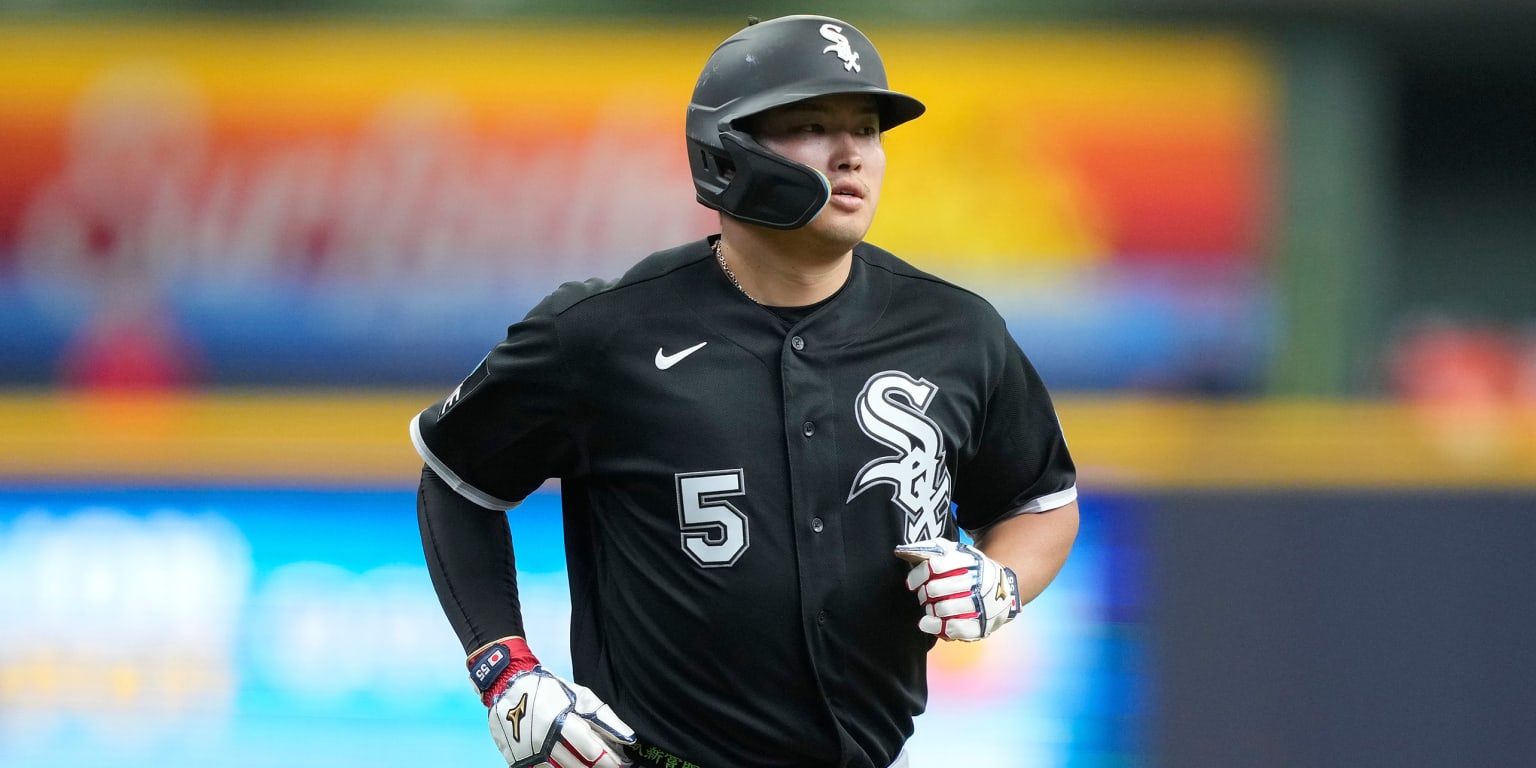
By late July, that early electricity had become a season-long identity. Murakami had been selected as an American League All-Star reserve and had participated in the Home Run Derby. His power was no longer an Opening Week novelty; it was one of the defining elements of Chicago’s season.
Bobblehead Day Becomes a Family Baseball Story
On July 26, the White Sox celebrated Murakami with a bobblehead depicting his first MLB home run. His parents, Fumiyo and Kimiya, participated in the ceremonial first pitches before the game against Houston.
Murakami then supplied the sort of performance that merchandise departments cannot manufacture in advance. He went 3-for-5, hit two home runs and produced a career-high six RBIs as Chicago defeated the Astros 12–3.
The White Sox hit a season-high five home runs and avoided a sweep. Murakami’s performance turned what could have been a conventional giveaway date into a family celebration, a stadium memory and another chapter in the growing mythology around his rookie year.
The best baseball memes do not replace the game. They give fans a visual language for remembering how unbelievable the game already felt.
The Strange, Enduring Power of Three Wolf Moon
The visual foundation of “Three Mune Moon” predates Murakami’s MLB career by nearly two decades. The original Three Wolf Moon design showed three wolves howling beneath a large moon on a dark shirt.
In 2008, satirical Amazon reviews began attributing absurd powers to the shirt. Other users joined the performance, writing increasingly elaborate stories about confidence, attraction and supernatural transformation. By 2009, the collective joke had turned the design into a major internet phenomenon.
Its cultural durability comes from instant readability. The moon, the dramatic animal portraits and the excessive seriousness of the composition create a visual structure that can be reused with almost any beloved figure. Each parody asks the same question: what if this person possessed the ridiculous mystical power of the original shirt?
The Original Internet Language
Airbrushed fantasy artwork, dramatic moonlight and exaggerated claims of supernatural power made the original shirt a participatory online joke.
The Baseball Translation
Murakami’s surname supplies “Mune,” while his towering home runs complete the moon connection without requiring a complicated explanation.
Why Murakami Is the Right Player for the Parody
Wordplay alone does not make a successful sports meme. The player must already carry a recognizable public identity, and the visual joke must connect naturally with what fans have watched on the field.
Murakami meets both conditions. His name fits the original phrase, while his power supplies the lunar imagery. Three duplicated portraits also echo his opening series, when one home run became two and then three consecutive games with a blast.
For White Sox supporters, the design contains an additional emotional layer. It records the moment when a globally established hitter became part of South Side baseball culture—not through a formal introduction, but through home runs, fan jokes and imagery that could circulate instantly online.
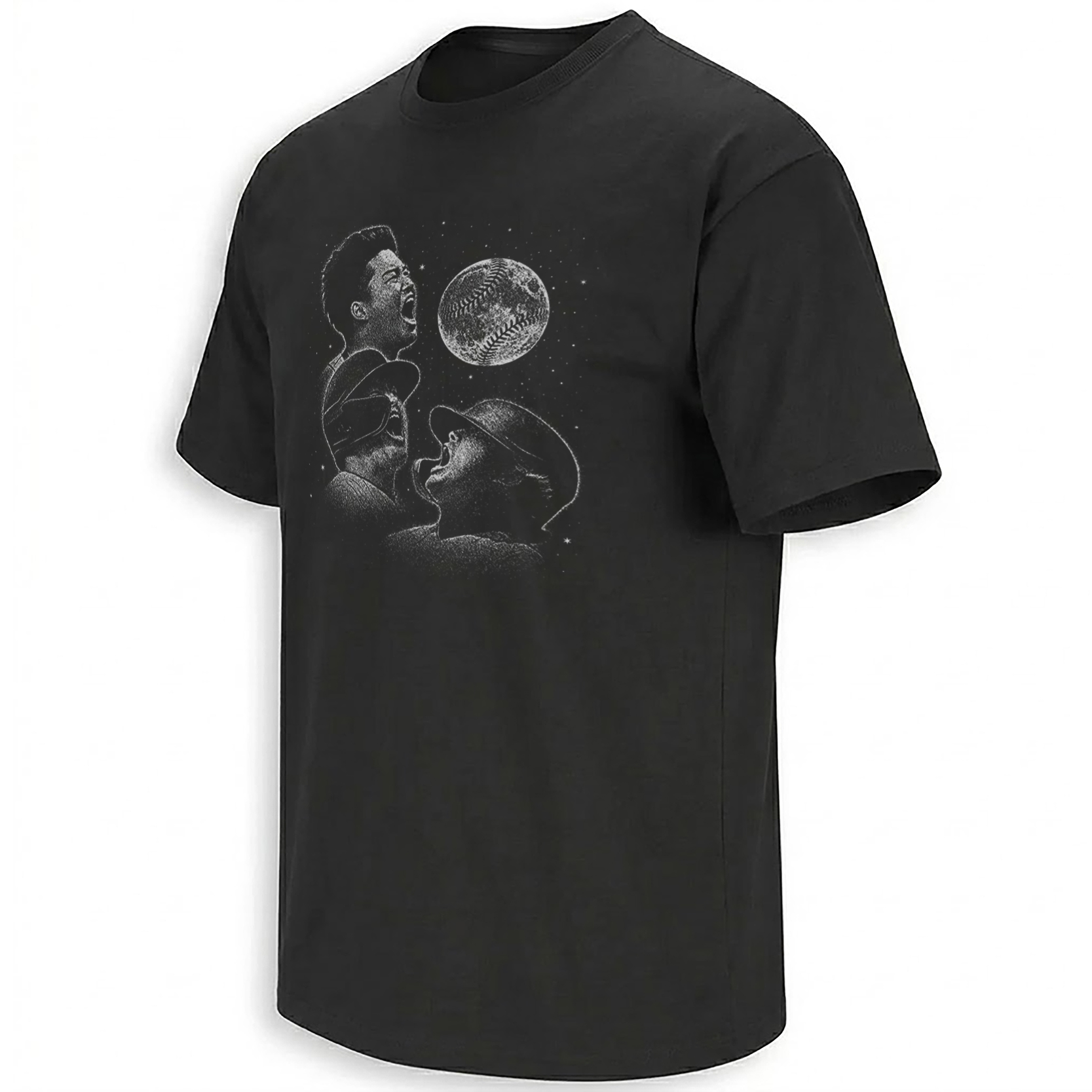
Three Mune Moon Shirt
The artwork preserves Murakami’s explosive White Sox arrival through the visual grammar of a classic internet meme: three solemn portraits, a glowing moon and the deliberately exaggerated mythology of a new South Side star.
From Marketplace Reviews to Stadium Culture
Three Wolf Moon originally became famous because internet users collectively transformed a commercial listing into a storytelling space. The jokes were not contained inside the printed design; the community built the mythology around it.
Sports fandom works in a similar way. A player produces the moment, but fans create the nickname, reaction image, sign, shirt and running joke that allow the moment to continue beyond the final out.
“Three Mune Moon” joins those traditions. It connects early social-commerce folklore with modern baseball conversation, where a clever image can travel between the ballpark, group chats and social feeds within hours.
A Timestamp of Murakami’s First Chicago Summer
The design belongs specifically to the summer when Murakami stopped being merely a major international signing and became a living part of White Sox fan culture. It contains the excitement of his first three games, the Home Run Derby invitation and the later bobblehead-day performance without needing to display a box score.
Years from now, the parody will still point backward to the same atmosphere: Chicago looking toward the night sky, another baseball climbing into it and a fan base deciding that one Murakami was no longer enough for the image.
Frequently Asked Questions
What does “Three Mune Moon” mean?
“Three Mune Moon” is a Munetaka Murakami-themed parody of the famous Three Wolf Moon shirt. It replaces the three howling wolves with three images of Murakami.
Did Munetaka Murakami hit three home runs in one game?
No. The title refers to the Three Wolf Moon internet meme. Murakami did, however, homer in each of the first three games of his MLB career.
What was the original Three Wolf Moon meme?
Three Wolf Moon was a fantasy-style shirt that became an internet phenomenon after Amazon users posted satirical reviews attributing exaggerated and supernatural powers to it.
What happened on Munetaka Murakami Bobblehead Day?
On July 26, 2026, Murakami hit two home runs and recorded a career-high six RBIs as the White Sox defeated the Houston Astros 12–3.
Why does the parody fit Murakami?
His nickname-ready “Mune” name, his towering home runs and his historic three-game home-run streak give the original moon imagery a natural baseball meaning.