
Two First Wins.
Two New Names.
One Changing Cup Series.
Corey Heim and Carson Hocevar reached NASCAR’s winner circle by radically different routes. Their breakthroughs—and the phrases “It’s Heim Time” and “Talla ’Dente”—became unmistakable timestamps of a younger 2026 season.
A first NASCAR Cup Series victory does more than change a statistic. It changes how a driver is introduced, how competitors race him and how fans interpret everything that came before. In 2026, two 23-year-olds made that transition: Carson Hocevar survived Talladega’s volatility in the No. 77, while Corey Heim turned a part-time opportunity in the No. 67 into a startling road-course breakthrough.
Their victories were separated by eight weeks and nearly two thousand miles. Hocevar won on the vast, high-banked oval at Talladega Superspeedway on April 26. Heim followed on June 21 at the new Qualcomm Circuit at Naval Base Coronado, a temporary course unlike anything previously used for a Cup Series race.
They did not arrive through the same circumstances or with the same public reputation. Yet together they offered one of the clearest signals of the season: NASCAR’s next group of leading personalities was no longer waiting quietly behind the established order.
Corey Heim — San Diego
First Cup victory in his 13th start, earned on a 3.4-mile temporary circuit while racing a partial schedule for 23XI Racing.
Carson Hocevar — Talladega
First Cup victory in his 91st start, secured by 0.114 seconds after three late restarts and 19 laps led in the final 37.
Carson Hocevar Turns Survival Into Arrival
Talladega rarely offers a straightforward path to the checkered flag. Drafting alliances form and disappear within seconds, one poorly timed push can erase half the field, and the lead on the final lap is often the most vulnerable position on the track.
The 2026 Jack Link’s 500 intensified every part of that reputation. A 26-car accident on Lap 115 eliminated or damaged many contenders and forced a 10-minute red flag. After the field was reduced and rearranged, the closing stretch still demanded three late restarts.
Hocevar responded with a drive that contrasted with the reckless label sometimes attached to his early Cup career. He led 19 of the final 37 laps, protected his position through the restarts and defeated Chris Buescher by 0.114 seconds for his first victory in NASCAR’s premier division.
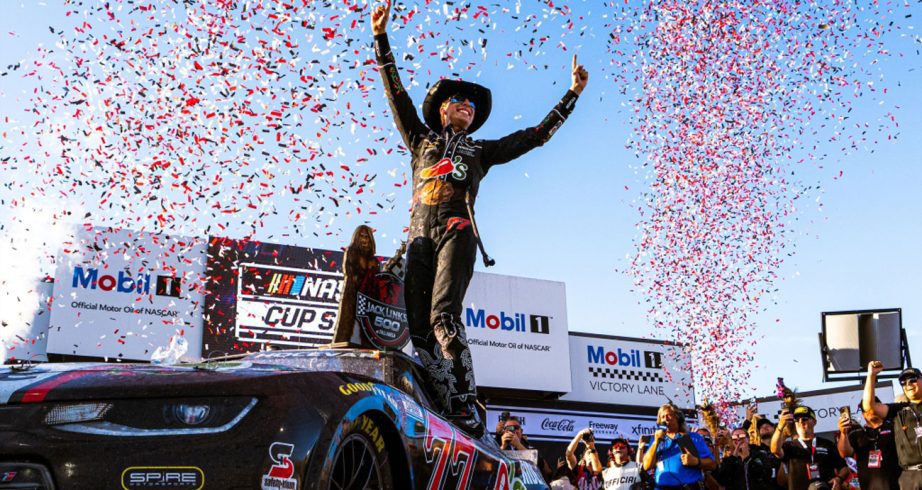
A Victory Lap That Became Part of the Victory
Hocevar did not disappear inside the car after taking the checkered flag. The 6-foot-4 driver positioned himself on the window ledge of the No. 77 Chevrolet and slowly passed the Talladega grandstand while facing the crowd. He wanted to see the fans seeing him.
It was unusual, precarious and completely consistent with the disruptive public identity Hocevar had built. Spire Motorsports described the moment as an instant-classic celebration, one that transformed a personal breakthrough into a shared spectacle for the Talladega crowd.
The phrase “Talla ’Dente” captured that atmosphere through deliberately playful wordplay. It reshaped “Talladega” into a phrase that sounded like a racing-night special served only once: the No. 77, the cowboy-hat celebration and the moment Hocevar finally converted raw speed into a Cup victory.
Coronado • June 21, 2026Corey Heim Wins Before the Waiting Is Over
Heim’s first victory produced a different kind of shock. He entered the Anduril 250 as a part-time Cup driver preparing for a full-time 2027 campaign. He had made only 12 previous starts at NASCAR’s highest level.
The venue added another layer of uncertainty. NASCAR was racing on an active military base for the first time, using a 3.4-mile temporary circuit at Naval Base Coronado. The weekend offered little historical data and no established Cup Series playbook for mastering the course.
Heim nevertheless raced with the composure of a veteran. He challenged 23XI Racing teammate Tyler Reddick, stayed positioned correctly through the final strategy cycle and delivered the No. 67 Toyota its first Cup victory. Bubba Wallace finished second, completing a major day for the organization.
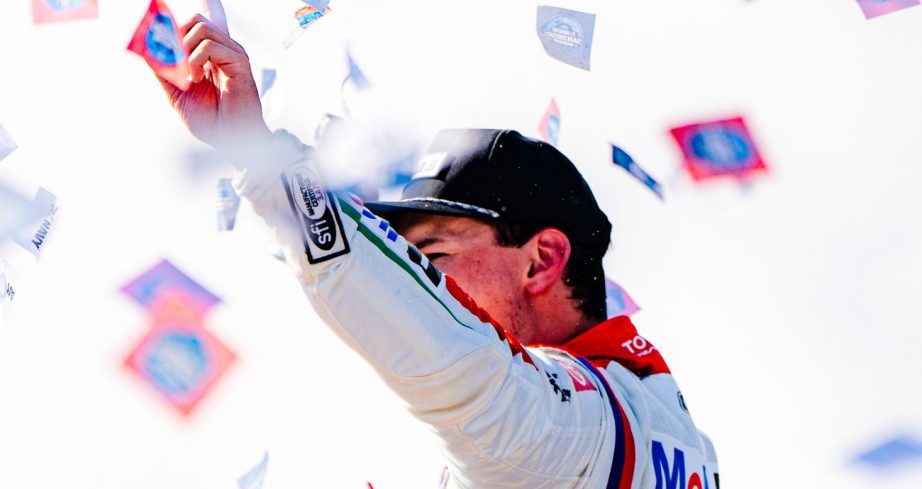
Why “It’s Heim Time” Was Ready for the Moment
Heim already possessed a celebration that fans could recognize immediately. Pointing to his wrist as if checking a watch converted his surname into a compact visual slogan: Heim Time. Even U.S. Navy service members joining him during driver introductions used the gesture before the race.
Hours later, the pose acquired new meaning. It was no longer attached only to Heim’s success in the Craftsman Truck Series. After his win at Coronado, it belonged to the Cup Series as well.
The timing made the slogan especially effective. Heim was expected to become a full-time Cup driver in 2027, but the victory suggested that his developmental period had already outlived the speed of his progression. The future had arrived ahead of schedule.
Hocevar needed 91 starts and one fearless Talladega finish. Heim needed only 13 starts and one unfamiliar street circuit. First victories do not follow a single timetable.
Two Breakthroughs, Two Different Racing Identities
Hocevar: Defiance and Spectacle
His Talladega win came from controlling pack-racing chaos. The window-ledge victory lap then made the celebration nearly as memorable as the finish.
Heim: Precision and Acceleration
His Coronado win came from preparation, road-course discipline and an unusually rapid conversion of limited Cup experience into results.
Hocevar had spent several seasons forcing the Cup garage to take notice. His aggression brought speed, controversy and close calls before producing the result that permanently changed his résumé.
Heim’s rise felt quieter but even faster. His Truck Series record had already identified him as a major prospect, yet winning a Cup race while still competing part-time moved him beyond the category of “future star.”
This contrast is precisely why the two victories belong in the same conversation. NASCAR’s younger generation is not arriving with one personality or one development model. It includes the driver who turns every opportunity into theater and the driver whose calm preparation makes an improbable result appear inevitable.
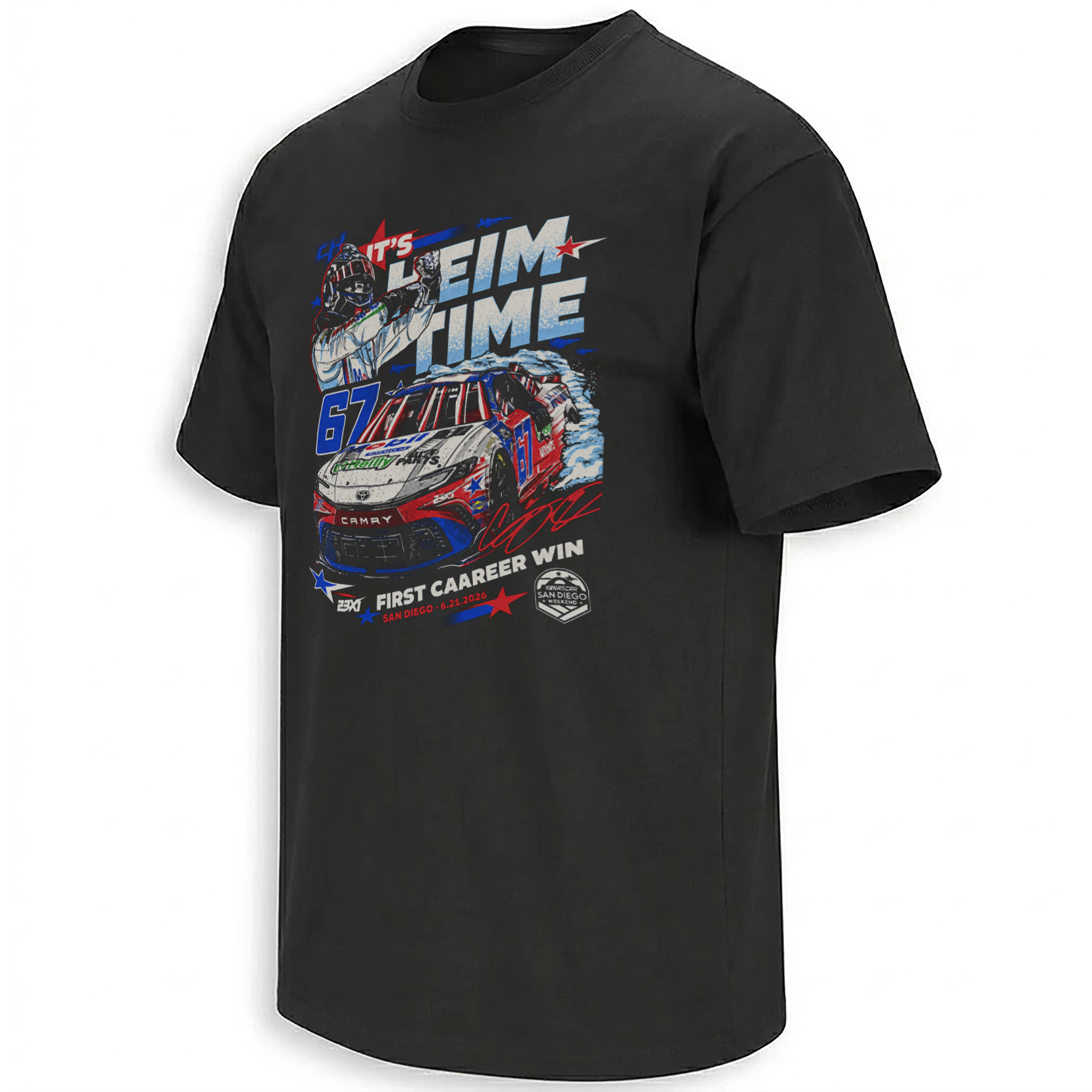
It’s Heim Time Shirt
A visual timestamp of Corey Heim’s first Cup Series victory, built around the No. 67 and the wrist-pointing celebration that followed him into Victory Lane at Coronado.
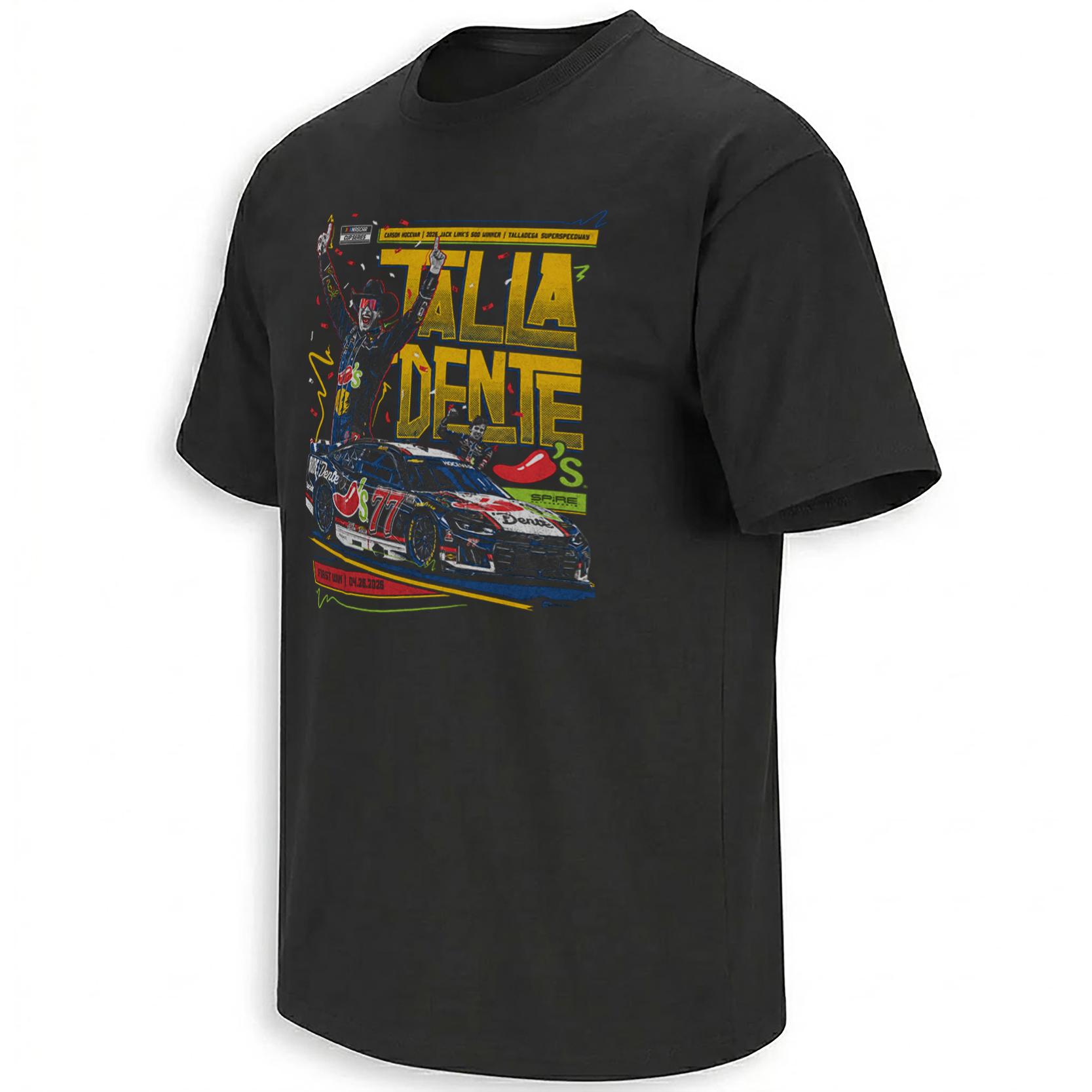
Talla ’Dente Shirt
A playful record of Carson Hocevar’s Talladega breakthrough, connecting the No. 77, his first Cup trophy and one of the season’s most distinctive victory celebrations.
When a Racing Phrase Becomes a Cultural Timestamp
Driver merchandise is most meaningful when it preserves more than a name and car number. The strongest designs hold onto the language fans used at the precise moment a career changed.
“It’s Heim Time” records the feeling that Heim’s arrival had become unavoidable. “Talla ’Dente” belongs to the location, humor and exuberance of Hocevar’s first win. Neither phrase functions as a generic racing slogan. Each is attached to a driver, a circuit and a specific Sunday in 2026.
That specificity gives the designs their value as cultural artifacts. Years later, No. 67 at Coronado and No. 77 at Talladega will still point back to the weekends when two young drivers stopped being potential winners and became Cup Series winners.
A Preview of NASCAR’s Next Rivalries
The story did not end with their breakthrough weekends. At the July Brickyard 400, Heim and Hocevar raced directly against each other near the front. Heim ultimately earned his second Cup victory while Hocevar, the polesitter, became one of his most visible rivals during the race.
That Indianapolis duel gave the earlier wins additional significance. Talladega and Coronado were not isolated surprises. They were opening statements from two drivers likely to encounter each other repeatedly as the Cup Series moves into its next competitive era.
The numbers 67 and 77 therefore represent more than two first-time winners. They mark the beginning of a generational storyline: two 23-year-olds with contrasting styles, memorable slogans and increasingly legitimate claims on the future of NASCAR.
Frequently Asked Questions
When did Corey Heim win his first NASCAR Cup Series race?
Corey Heim earned his first Cup Series victory on June 21, 2026, in the Anduril 250 at the Qualcomm Circuit at Naval Base Coronado near San Diego.
How many Cup Series starts did Corey Heim have before his first win?
Heim won in his 13th NASCAR Cup Series start while driving the No. 67 Toyota for 23XI Racing.
When did Carson Hocevar earn his first Cup Series victory?
Carson Hocevar won the Jack Link’s 500 at Talladega Superspeedway on April 26, 2026, in his 91st Cup Series start.
What made Carson Hocevar’s Talladega celebration memorable?
Hocevar sat on the window ledge of his No. 77 Chevrolet and drove slowly past the grandstand while facing the crowd, creating one of the season’s most recognizable victory laps.
What does “It’s Heim Time” mean?
“Heim Time” is Corey Heim’s signature surname-based slogan and celebration. He points toward his wrist as though checking a watch after major victories.
What does “Talla ’Dente” refer to?
“Talla ’Dente” is playful wordplay associated with Carson Hocevar’s first Cup Series win at Talladega, combining the track’s identity with the celebratory personality surrounding his No. 77 victory.