South Beach: The name stack of a Marlins team that made 2026 feel different
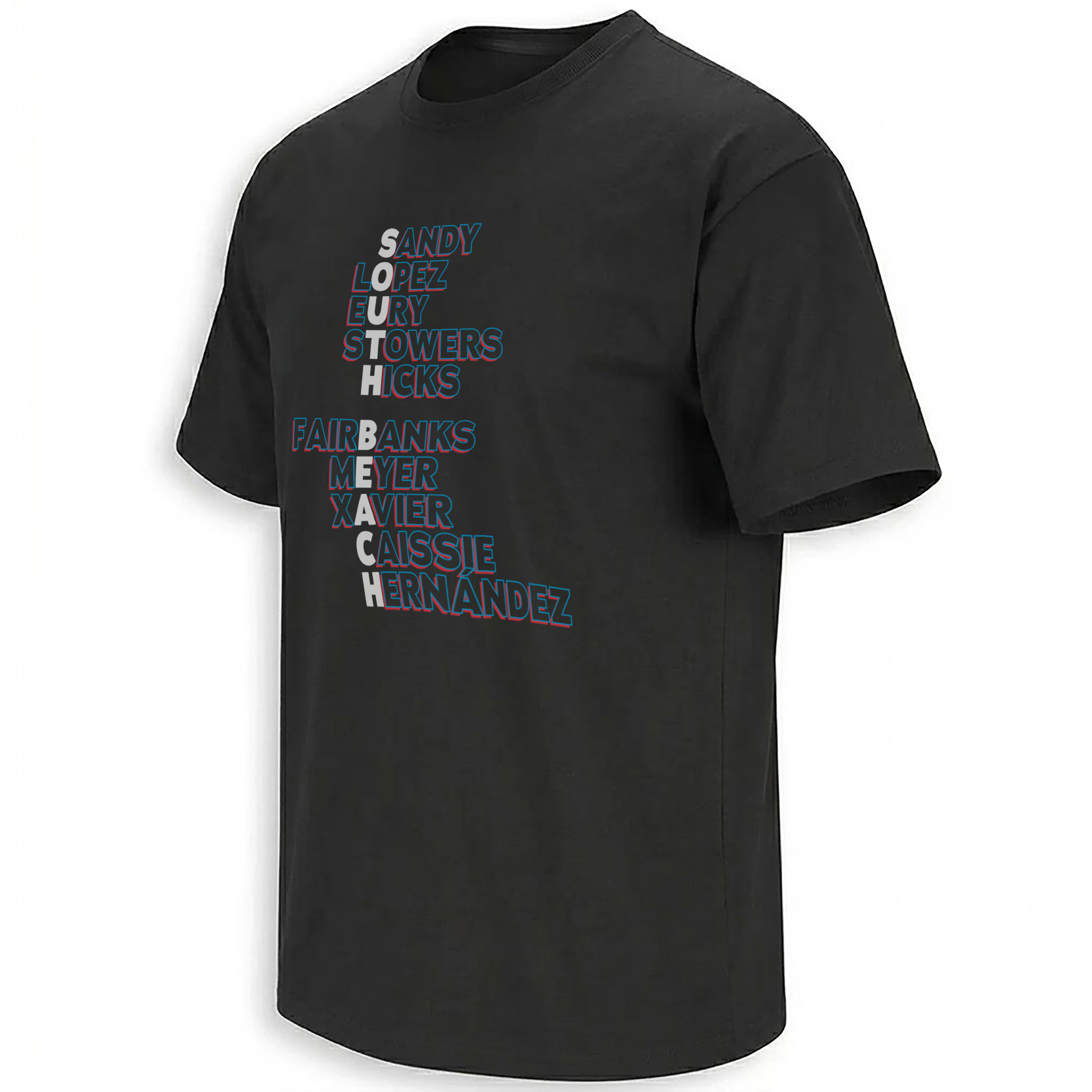
Sandy. López. Eury. Stowers. Hicks. Fairbanks. Meyer. Xavier. Caissie. Hernández. The graphic does not need a team photograph because the names themselves have become the map of Miami’s unexpected season.
At the 2026 All-Star break, the Miami Marlins were no longer functioning as a quiet rebuilding footnote. A 52–45 record had placed them inside the National League playoff conversation, and a six-game winning streak in July gave the season the kind of momentum that changes how every name on a roster is read.
Otto López had become one of the breakout figures of the first half, setting a franchise mark for hits before the break. Sandy Alcantara and Eury Pérez still carried the authority of a rotation built around elite arms, while Kyle Stowers, Xavier Edwards, Owen Caissie and Heriberto Hernández gave the lineup multiple forms of speed and damage.
That is the cultural logic behind the South Beach name stack. It does not isolate one star. It treats the roster as a collective identity and turns ten surnames into a vertical piece of Miami baseball typography.
The Marlins graphic works because 2026 has not belonged to one isolated face. It has belonged to a roster becoming recognizable together.
Why a name stack fits this version of Miami
Player-name designs usually celebrate a settled dynasty or a championship roster. Miami’s version carries a different energy. It captures a team while its identity is still forming in public.
Each name represents a different route into the season. Alcantara carries Cy Young history. Pérez represents the ceiling of a young power arm. López has supplied relentless contact. Stowers and Caissie bring left-handed impact. Fairbanks adds late-inning aggression.
Read together, the list feels less like a depth chart and more like the credits opening on a new chapter of Marlins baseball.
The names inside the graphic
Two right-handed starters who give Miami’s rotation both established authority and long-term power.
Contact, movement and infield athleticism—the type of pressure that makes Miami’s offense feel faster than the box score.
Left-handed impact bats capable of changing an inning with one elevated pitch.
Depth and lineup flexibility, essential pieces for a team attempting to survive a full competitive summer.
High-velocity arms that represent the harder, more confrontational edge of Miami’s pitching identity.
The visual argument is collective: no portrait, no hierarchy and no attempt to make the season belong to only one player.
Otto López changed the emotional center of the lineup
Every surprising team develops a player whose production begins to symbolize the larger shift. For Miami, López became one of those figures through volume, consistency and the ability to keep innings alive.
His franchise record for hits before the All-Star break gave the Marlins a statistical headline, but his larger cultural role came from making offense feel repeatable. A team does not stay in the playoff race through isolated highlights alone. It needs players who keep returning pressure to the opposing defense.
The name stack places “López” near the top because his first half helped change the way the rest of the list was perceived.
Pitching still gives the Marlins their deepest identity
Miami’s franchise history has long been connected to young pitching, and the 2026 roster preserves that tradition through several different stages of a career.
Alcantara represents the proven ace. Pérez represents size, velocity and future possibility. Meyer supplies another power profile, while Fairbanks brings late-game urgency.
Their presence prevents the artwork from reading like a simple list of hitters. The stack covers the full structure of the team—from the first pitch to the final outs.
Name-stack graphics become especially meaningful when they preserve a team before the season’s final outcome is known. They record who made the summer feel possible while the story was still being written.
Why the typography feels like South Beach
The design uses narrow, overlapping letterforms rather than heavy traditional baseball script. Blue and red outlines sit slightly out of registration, creating a visual vibration that recalls neon signage and layered nightlife posters.
Silver letters interrupt the color pattern and prevent the stack from becoming visually predictable. The result feels urban, vertical and contemporary—closer to a South Beach event flyer than a conventional roster shirt.
The black garment base functions like nightfall. It allows the colored outlines to glow while keeping the composition restrained.
A roster graphic made before the ending
The most compelling aspect of the piece is its timing. Miami had become a legitimate contender, but the season remained unresolved. The names therefore function as evidence of belief rather than a retrospective victory list.
That uncertainty gives the design energy. It captures the moment when fans began to ask whether the 2026 Marlins were becoming something larger than expected.
The South Beach name-stack graphic preserves that collective roster identity, while the broader MLB collection places Miami’s season beside other player breakthroughs, team moments and baseball-culture stories from 2026.
Frequently Asked Questions
Which Marlins players appear on the South Beach shirt?
The design lists Sandy Alcantara, Otto López, Eury Pérez, Kyle Stowers, Liam Hicks, Pete Fairbanks, Max Meyer, Xavier Edwards, Owen Caissie and Heriberto Hernández.
Why is the design called South Beach?
The name connects the Marlins roster to Miami identity, while the blue, red and silver outlines recall the layered neon color associated with South Florida visual culture.
Why was the Marlins’ 2026 first half notable?
Miami reached the All-Star break with a winning record and remained in the National League playoff conversation after entering the season with modest external expectations.
Why is Otto López important to the 2026 Marlins story?
López emerged as one of Miami’s most consistent hitters and set a franchise record for hits before the All-Star break.
What does the stacked typography represent?
The stack removes player hierarchy and presents the roster as one collective Miami baseball identity rather than a design centered on a single star.
The South Beach Marlins name stack preserves the roster that changed Miami’s 2026 expectations, while the broader MLB archive follows the team stories and player moments reshaping the season.
South Beach Shirt captures the 2026 Miami Marlins through a neon-inspired name stack featuring Sandy Alcantara, Otto López, Eury Pérez, Kyle Stowers and the roster behind Miami’s unexpected playoff push.