Trump Account for Kids: How a $1,000 Policy Became a Pro-Trump Family Search Moment
The phrase “Trump account for kids” is surging because parents are not reading it like an ordinary Washington headline. They are reading it like a household question: does my child qualify, where does the money go, and why is everyone suddenly talking about a kid’s first investment account?
The internet did not turn “Trump account for kids” into a trend because the phrase sounded polished. It turned because the phrase sounded personal. In the space of a few hours, Google searches around Trump Accounts began clustering around the practical questions parents ask when politics crosses the kitchen table: what is it, who qualifies, how do I sign up, and what does the $250 Dell boost mean?
That is the signal hidden inside the search data. The rising queries are not built around protest language or scandal framing. They are built around eligibility, children, money and action. “Trump account for kids born before 2025,” “sign up for Trump account for kids,” “Trump account $250,” and “what is a Trump account” all point toward a public trying to understand a benefit, not a crowd trying to mock it.
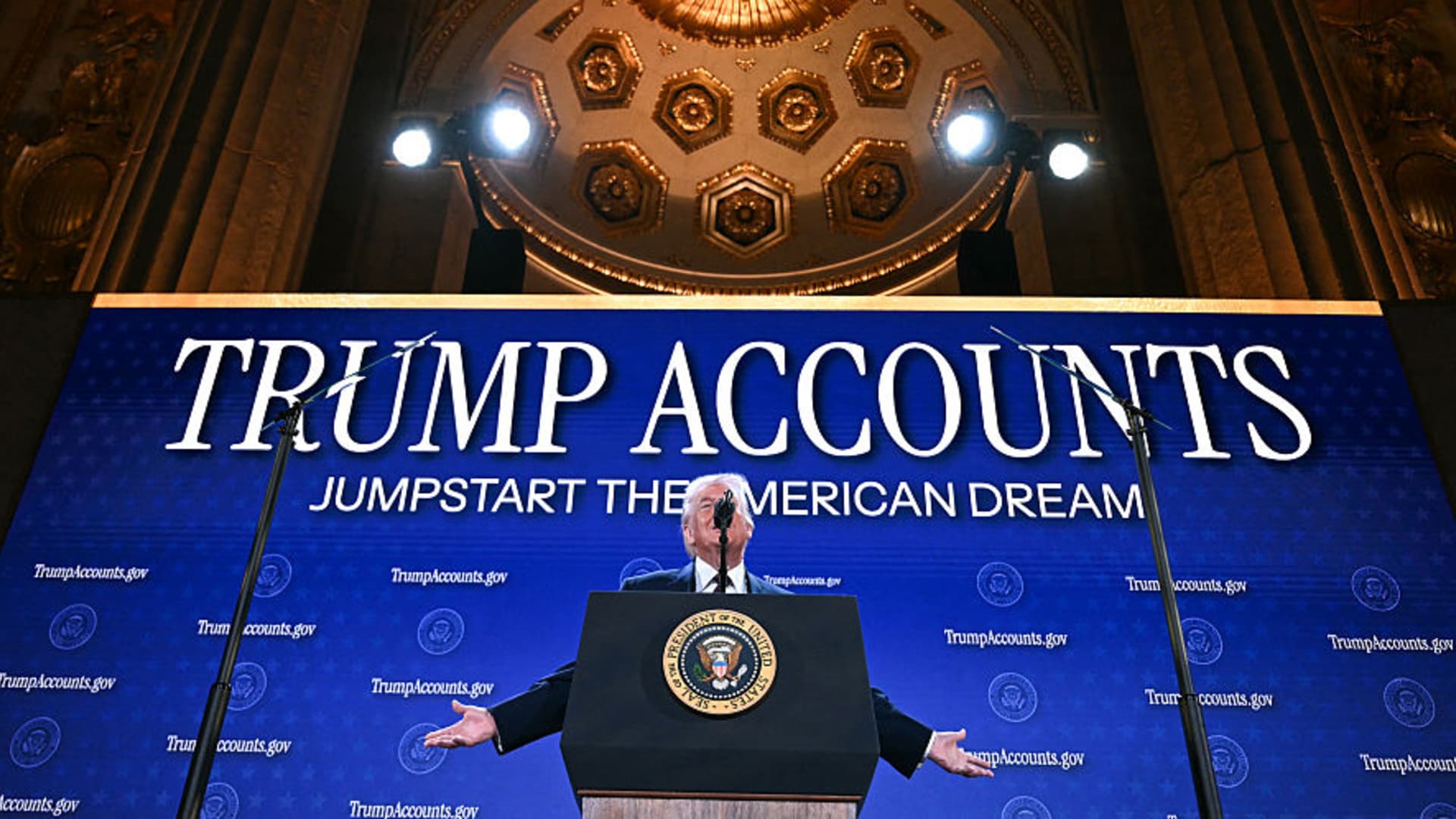
The timing made the phrase even louder. As the Trump Accounts rollout moved into the Wall Street spotlight, with the program framed around child investment accounts and early wealth-building, the search behavior started to look less like standard political curiosity and more like a parent-money wave. In other words, this is not simply a Trump headline. It is a family finance headline wearing a Trump name tag.
This is the kind of political phrase that spreads because it stops sounding like policy and starts sounding like something a parent might repeat at the dinner table.
Why the search trend leans pro-Trump, not anti-Trump
Political search trends usually reveal their emotional direction quickly. If a topic is moving through anger, the query language tends to become accusatory. If it is moving through mockery, the related phrases lean into jokes, memes and ridicule. The current “Trump account for kids” pattern is different. The dominant language is functional: parents want definitions, signup paths, birth-year rules and dollar amounts.
That does not mean every person searching is politically supportive. Search intent is rarely that clean. But the trend’s center of gravity is not anti-Trump. It is pro-benefit, pro-curiosity and highly family-oriented. The Trump branding gives the account its political charge, while the child-investment angle gives it emotional reach beyond normal campaign merchandise or partisan commentary.
That is why this moment matters for culture. A policy only becomes internet-native when people can compress it into a phrase. “Trump Account Baby,” “my kid has a Trump account,” “future little investor” and “$1,000 baby club” are not official language. They are the kind of informal phrases that appear when households, comment sections and merch culture begin translating a government program into everyday identity.
The keywords are not random — they map the parent psychology
The strongest search phrases around the trend show a clear journey. First comes the basic explainer query: “what is a Trump account.” Then comes the family eligibility question: “Trump account for kids born before 2025.” Then comes the action query: “sign up for Trump account for kids.” Finally, the money hook widens the audience through “Trump account $250” and “Dell account for kids.”
This is exactly how a policy phrase becomes a mainstream search moment. It moves from confusion to personal calculation. Parents do not only want the headline. They want to know whether the headline touches their own household.
For SEO, that keyword map matters because it separates the informational article from the wearable cultural angle. A straight explainer should answer what the account is. A culture article should ask why this phrase is suddenly traveling, why it feels more supportive than hostile, and why pro-Trump families may turn the language into a joke, a proud-parent line or a baby’s first political-finance meme.
Why money-for-kids language travels faster than normal campaign slogans
Most campaign slogans ask people to identify with a side. The Trump Account trend asks people to identify with a child’s future. That is a stronger emotional mechanism because it moves politics from the rally floor into the family calendar. Parents think in birth years. Grandparents think in legacy. Supporters think in symbols. A child investment account gives all three groups a phrase they can repeat.
The $1,000 number gives the story a clean hook. The Dell-linked $250 language gives it a second hook. The birth-year question gives it urgency. Together, those pieces make the trend feel less like a policy memo and more like a household sorting exercise: which kids qualify, which kids missed the window, and what does this say about the kind of economic future Trump wants his supporters to imagine?
The strongest merch angle is not “official account” language. It is the family joke that grows around the policy: proud parents, baby investors, MAGA households and the idea of a child entering the market before they can even read the ticker.
The merch angle: not official, not instructional, but instantly readable
The mistake would be to make the trend look like a signup notice. Apparel should not pretend to be connected to the IRS, the Treasury, Dell or any official program. The cultural lane is different. It is about the phrases people use after the news breaks, once the official wording has already been translated into jokes, family captions and partisan identity.
That is why “Trump Account Baby” works better than a stiff policy phrase. “My Kid Has a Trump Account” works because it sounds like something a parent would say with a grin. “Future Little Investor” softens the politics without losing the money angle. “$1,000 Baby Club” turns the number into a membership phrase. The strongest lines do not explain the program. They let the reader recognize the moment.
This is also why the surrounding Trump Ultra MAGA collection matters. Trump merch has always moved through a mix of loyalty, parody, grievance, humor and spectacle. The Trump Account trend adds a newer lane: family-money symbolism, where a government program becomes something supporters can fold into parent identity.
How existing Trump graphics frame the new family-money moment
The Trump Account trend does not exist in isolation. It lands inside a long-running visual culture where Trump supporters already understand shirts as conversation starters. Some graphics lean campaign-rock. Some lean working-class parody. Some lean viral performance. Together, they show why a phrase like “Trump account for kids” can move from search bar to wearable language so quickly.

A campaign-rock graphic that shows how Trump visuals borrow from arena culture, nostalgia and patriotic logo language.
View the piece →
A blue-collar parody frame that connects Trump support with garage humor, tools, workwear and everyday political identity.
Open the design →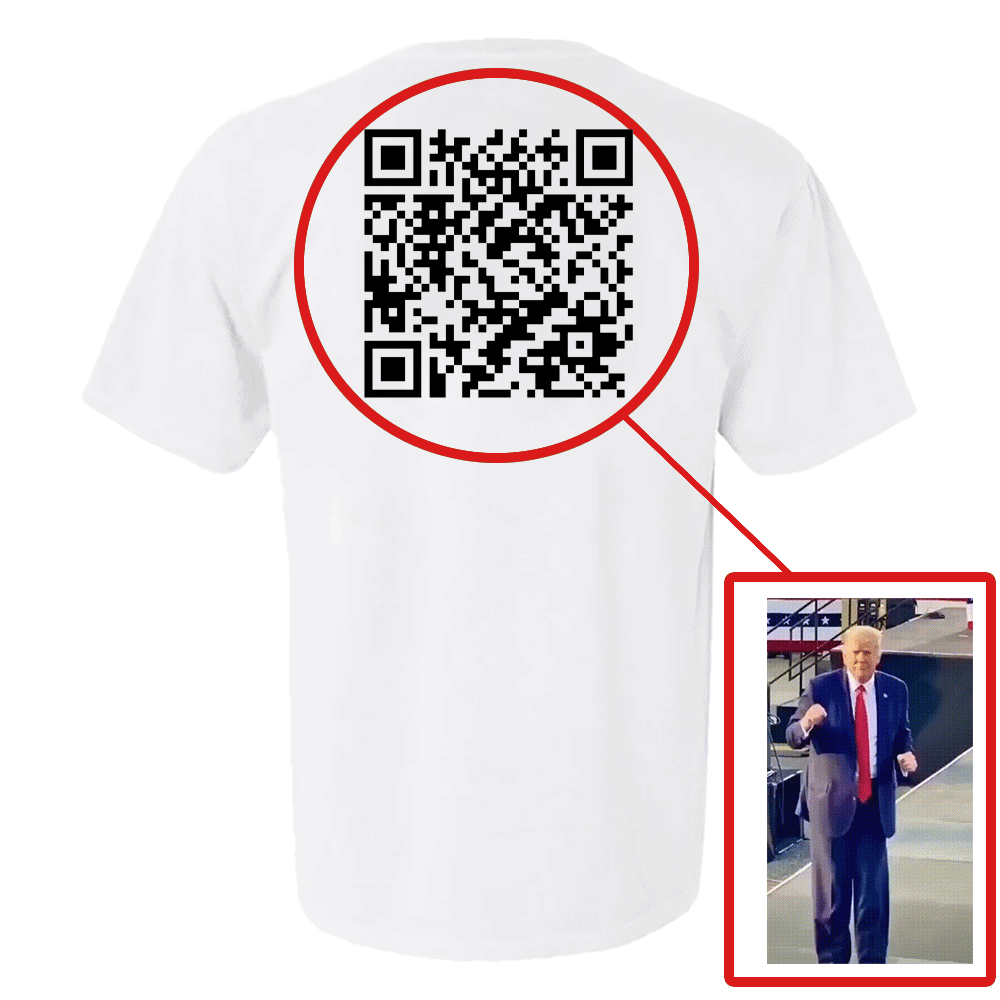
A viral-performance piece built around the way Trump moments often become gesture, remix, troll language and crowd memory.
See the graphic →Why “Trump Account Baby” is the cleaner apparel phrase
The phrase “Trump account for kids” is perfect for search because it is clear and informational. But on apparel, it can feel too literal. “Trump Account Baby” is cleaner because it compresses the entire trend into three words: the Trump brand, the account concept and the family angle. It is short enough to read across a shirt, but specific enough to ride the current search wave.
That is the difference between SEO language and streetwear language. Search wants clarity. Shirts want recognition. A strong graphic should not try to answer every eligibility question. It should capture the feeling of the moment: parents talking, supporters sharing the phrase, and a child’s first account becoming part of a broader MAGA family story.
In visual terms, the design direction should stay bold but not bureaucratic. Red, navy, cream and gold can carry the financial-patriotic mood. Typography should feel like a family announcement crossed with a market-day headline. The best layout would treat the dollar amount as a cultural symbol, not as an official promise.
The real opportunity is the phrase entering household language
Trends with staying power usually have one thing in common: people can use them in ordinary conversation. “Trump account for kids” has that quality because it is not abstract. It attaches to children, birthdays, family planning, grandparents, future money and the American habit of turning financial milestones into identity markers.
The phrase also creates natural social tension. Some parents will ask whether their child qualifies. Others will joke about being born too early. Supporters will frame it as proof of a pro-family economic agenda. Critics will debate whether the program actually helps families who need it most. That mixture keeps the search alive without requiring one single viral post to carry the entire trend.
For Ellie Shirt, the smartest editorial path is to treat the moment as a living archive of Trump-era family culture, not a narrow product pitch. The article can rank for the explainer intent, but the merch connection should feel like a cultural afterimage: the phrase people searched first, then joked about, then wanted to wear.
Frequently Asked Questions
Is the Trump Account for Kids trend pro-Trump or anti-Trump?
The visible search pattern leans pro-benefit and mildly pro-Trump because people are searching for eligibility, signup information, dollar amounts and child account details rather than anti-Trump protest language.
Why is “Trump account for kids” trending?
It is trending because parents are trying to understand a child investment account program tied to a $1,000 federal seed contribution, birth-year eligibility and additional attention around Dell-related $250 support.
Why does the Dell $250 phrase matter to the trend?
The Dell-related $250 language expands the conversation beyond the core newborn eligibility window and gives parents another simple money figure to search, share and discuss.
What shirt phrase fits the trend best?
“Trump Account Baby,” “My Kid Has a Trump Account,” “Future Little Investor” and “$1,000 Baby Club” fit the trend because they turn the policy phrase into family humor without sounding like an official government notice.
Why does this trend connect to Trump merch culture?
Trump merch often turns political moments into wearable identity, jokes and rally language. The Trump Account trend adds a family-money angle, making the phrase feel personal to parents and grandparents.
As parents keep searching and supporters keep translating the moment into family language, the Trump Ultra MAGA archive becomes the natural place to track how Trump-era headlines turn into graphics, jokes, slogans and wearable political memory.
Trump Account for Kids trend captures the pro-benefit search wave around $1,000 child investment accounts, Dell’s $250 conversation and the MAGA family language forming around proud-parent financial humor.