
Why “7 Inches” Still Works: The Joke Is Visible Before You Finish Reading It
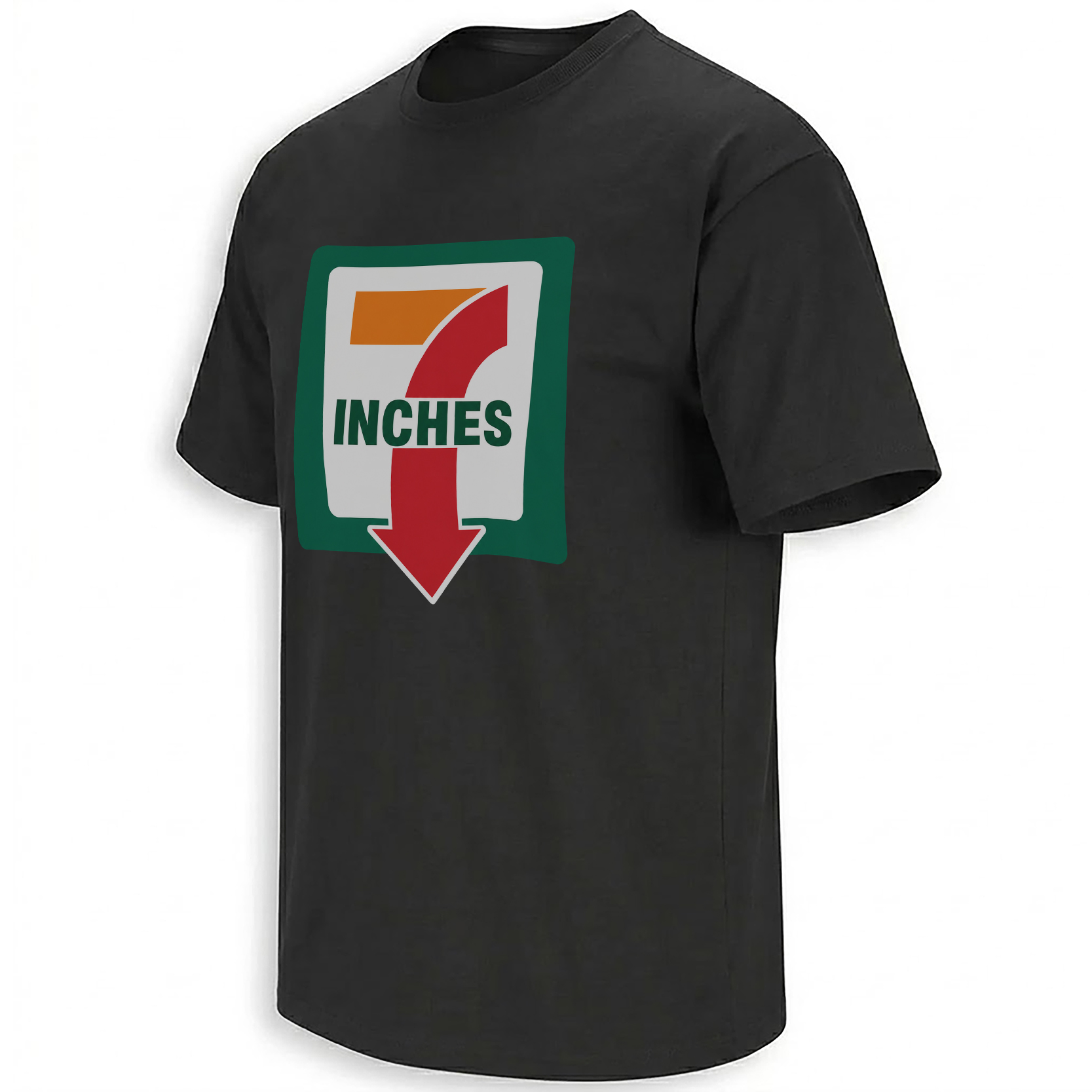
The 7 Inches Shirt borrows the visual grammar of an all-night convenience-store sign and changes only one word. That tiny edit is enough to transform corporate familiarity into a perfectly compact piece of adult humor.
Some graphic jokes need context, a screenshot or an explanation in the caption. “7 Inches” needs almost none. The familiar blocks of red, orange and green appear first; the eye recognizes the convenience-store language; then the altered word arrives half a second later.
That delay is the entire mechanism. The design looks legitimate from across a room and becomes ridiculous at conversational distance. It creates the same two-stage reaction that powers the strongest logo parodies: recognition, correction, laughter.
This is not a new celebrity moment, sports result or one-week social trend. Variations of the “7 Inches” convenience-store gag have circulated for years through novelty graphics, stickers, internet marketplaces and casual streetwear. Its durability comes from simplicity. The joke does not depend on knowing a specific post, creator or news cycle.
The strongest parody logos do not destroy the original visual system. They leave it recognizable enough for one changed word to do all the work.
A Sign Everyone Already Knows How to Read
Convenience-store branding is designed for speed. Drivers need to recognize the sign from a distance, at night and often while moving. The colors are bright, the geometry is simple and the number dominates the composition.
That familiarity makes the visual system ideal for parody. The viewer does not have to study the design. Long before the modified wording becomes clear, the basic category has already registered: corner store, late-night drinks, fluorescent lighting and a sign visible from the road.
The 7 Inches graphic preserves nearly all of that fast readability. The large striped seven remains the anchor. Red, orange and green still create the same compressed visual rhythm. The typography beneath it retains the practical confidence of commercial signage.
Only the word changes. “Eleven” becomes “Inches,” shifting the graphic from everyday retail memory into an obvious double entendre. Because the rest of the design stays disciplined, the joke lands without visual clutter.
The Half-Second Gap Between Recognition and Realization
Visual comedy often depends on timing, even when nothing moves. In this design, timing is created by hierarchy.
The eye sees the number first because it is large, colorful and familiar. The lower word is read second. For a brief moment, the brain assumes it already knows what the complete sign says. Then “Inches” interrupts that assumption.
That correction produces the laugh. The viewer is not only reading a joke; the viewer catches their own brain completing the logo incorrectly. The design turns recognition itself into the setup.
This is why the graphic works better when it remains visually clean. Extra illustrations, explanatory phrases or additional punchlines would reduce the timing. The joke needs the confidence of a real sign: one number, one word and no apology.
The color bands and oversized seven trigger a familiar brand memory before the viewer reads every letter.
The brain expects the known store name and briefly supplies it without checking the actual word.
“Inches” replaces the expected ending, converting corporate signage into an adult joke with one small edit.
Why Logo Parody Became a Streetwear Language
Logo parody existed long before social media. Bootleg shirts, punk flyers, skate graphics and underground labels have always altered familiar branding to question authority, make jokes or create insider recognition.
The internet accelerated that language because familiar logos are easy to decode on small screens. A viewer scrolling quickly may ignore a detailed illustration, but a corrupted corporate mark can communicate instantly. It arrives with decades of existing visual knowledge already attached.
In streetwear, these altered logos also produce a useful tension. At first glance, the wearer appears to be carrying a common commercial symbol. On closer inspection, the graphic reveals a different affiliation: humor, irony, irreverence or an appreciation for visual tricks.
The 7 Inches design belongs to that tradition. It does not invent a completely new image. It hijacks an image people already carry in memory and redirects it toward a joke that feels slightly inappropriate, deliberately immature and immediately social.
The joke is not tied to one platform, influencer or viral clip. As long as the convenience-store visual remains recognizable, the altered wording can continue producing the same two-step reaction from new viewers.
The Difference Between a Meme and an Evergreen Gag
Not every internet-friendly design begins as a current meme. Some graphics behave more like recurring jokes: they disappear for a while, return through a new seller or social post and remain understandable because the original visual reference never left public life.
“7 Inches” fits that second category. It has appeared across novelty merchandise and user-generated design spaces for years, often accompanied by variations such as “open 24 hours.” There is no single 2026 event that suddenly explains it, and presenting it as a newly invented viral phenomenon would overstate the evidence.
Its continued presence is still culturally interesting. The design demonstrates how an old visual gag can remain useful in an environment obsessed with constant novelty. It does not need a weekly refresh because the core interaction remains effective: people recognize the sign, notice the replacement and understand the adult implication.
In that sense, the graphic resembles a classic one-liner. Its value is not that nobody has ever encountered it before. Its value is that the setup and punchline remain efficient enough to work again.
Why the Joke Feels Like It Belongs at 2 A.M.
The convenience-store setting adds an atmosphere beyond the logo itself. These stores occupy a particular place in American visual memory: fluorescent aisles, late-night snack decisions, road-trip stops, questionable coffee and brief encounters under signs that never turn off.
Adult novelty humor fits naturally inside that environment because both share an after-hours tone. The joke does not feel polished or corporate, even though it uses corporate-looking graphics. It feels like something noticed on a sticker near a register, printed on a bootleg tee or worn during a night when everyone understands that sophistication is no longer the goal.
“Open 24 hours” also gives the joke an additional layer without needing to appear prominently in the artwork. The original commercial promise becomes suggestive once the store name has been altered. The visual reference does more than identify the source; it quietly expands the double meaning.
How the Artwork Preserves the Original Sign’s Discipline
The design’s strongest choice is restraint. The number remains oversized and upright. The diagonal color bands remain clean. The word “Inches” sits beneath the seven with enough weight to feel like part of the original identity system.
The red supplies urgency and visibility. Orange keeps the graphic warm and slightly nostalgic. Green creates the stabilizing lower band associated with the familiar roadside palette. White outlines separate the elements on darker garments, allowing the logo to read clearly without unnecessary effects.
The slight retro treatment matters because parody logos often work best when they feel found rather than newly engineered. The image suggests an old gas-station decal, convenience-store employee graphic or late-1990s novelty tee that somehow survived into a new internet cycle.
On black or navy, the colored bands appear illuminated, almost like signage against a night sky. On white, the graphic resembles a clean promotional logo that has been corrupted only by its wording. Sport grey pushes the composition toward classic casual novelty apparel, softening the contrast while reinforcing the retro tone.
Why Black Is the Strongest Documentary Image
Although the design is available across black, white, sport grey and navy, the black version communicates the central idea most immediately.
Convenience-store signs are designed to glow after dark. Against black fabric, the colored logo appears separated from its surroundings in the same way an illuminated roadside sign stands against the night. The resemblance is not literal, but the emotional recognition is strong.
Black also keeps the joke from feeling overly cheerful. The bright corporate palette remains intact, while the surrounding darkness gives the design a sharper adult-novelty edge. The viewer sees the familiar sign before the garment color competes for attention.
White creates the opposite effect. It makes the graphic look almost official, increasing the surprise when “Inches” becomes clear. Sport grey produces the most vintage casual reading, while navy maintains the nighttime effect with slightly less contrast than black.
The Social Function of Wearing an Obvious Bad Joke
A shirt like this is not trying to communicate a complex worldview. Its cultural function is smaller and often more useful: it starts conversations without requiring the wearer to initiate them.
Someone recognizes the logo from a distance. Someone else reads it correctly. A third person notices the first reaction. The design creates a small chain of recognition that turns an ordinary public setting into a shared joke.
This is part of why intentionally immature humor remains durable in apparel. It lowers the stakes. The wearer is not asking to be perceived as mysterious, fashionable or intellectually serious. The graphic announces that a perfectly structured dumb joke was reason enough to print a shirt.
That confidence is important. A weak novelty design often looks embarrassed by its own premise and adds extra text to justify it. “7 Inches” commits fully. It trusts that the altered sign is enough.
Where the Design Fits Inside Ellie Shirt’s Current Archive
The 7 Inches Shirt does not belong to a sports team, celebrity collection or one-time news event. Its closest editorial home is the broader culture of logo corruption, adult jokes and graphics built for immediate recognition.
Because Ellie Shirt does not currently have a confirmed dedicated convenience-store parody collection, the most accurate broader internal route is the Newest collection, where current parody, meme and statement designs appear alongside sports and pop-culture releases.
That placement also reflects how this graphic functions online. It may use a long-running joke rather than a brand-new meme, but it can still re-enter attention whenever someone posts, wears or rediscovers the altered logo. Old gags often become new content simply because a different audience encounters them for the first time.
Frequently Asked Questions
What is the joke behind the 7 Inches Shirt?
The design changes the wording of a familiar convenience-store-style logo from an expected store name to “7 Inches,” creating an adult double entendre while preserving the recognizable color and number structure.
Is the 7 Inches design based on a current viral meme?
It is better understood as a long-running logo parody than a single new viral meme. Variations of the joke have circulated for years across novelty merchandise and internet design spaces.
Why is the graphic instantly recognizable?
The oversized seven, striped color bands and commercial-sign layout resemble a widely recognized convenience-store visual system, allowing viewers to identify the reference before reading the altered word.
Why do parody logos work well on shirts?
Familiar logos can be decoded quickly from a distance. Changing one word or symbol creates a delayed realization that turns recognition itself into the setup for the joke.
Which color best matches the convenience-store concept?
Black creates the strongest night-sign effect because the red, orange, green and white graphic appears illuminated against the dark background. White, sport grey and navy produce cleaner or more retro interpretations.
Why does the design still feel relevant if the joke is not new?
Its humor depends on a familiar visual reference rather than one temporary news event. Each new viewer can experience the same recognition-and-correction moment, allowing the joke to return across different internet cycles.
The 7 Inches Shirt preserves a classic logo-parody mechanism in its cleanest form, while Ellie Shirt’s newest visual archive follows the changing mix of internet jokes, cultural references and graphics designed to be understood before anyone explains them.
7 Inches Shirt transforms a familiar retro convenience-store sign into a compact adult logo parody, using red, orange and green commercial branding to create an instant recognition-and-realization joke.