
The Comeback Kids: How the Phillies Made Three Straight Ninth Innings Feel Inevitable
Philadelphia entered Washington with an experienced lineup and left with a new collective identity: the first team in MLB history to hit a go-ahead home run in the ninth inning in three consecutive games.
Baseball comebacks are usually remembered through one swing. The Phillies’ extraordinary series at Nationals Park resisted that simplicity because every night created another ending that should not have been possible.
One rally began with two outs and nobody on base. Another reached the final strike before Derek Hill changed the game. The finale required Philadelphia to erase a five-run deficit before Bryce Harper and Hill homered during a five-run ninth.
By the end of the series, “The Comeback Kids” was no longer a sentimental nickname. It was an accurate description of a team that repeatedly arrived at the final inning behind and treated the situation as unfinished.
The most frightening part of Philadelphia’s comeback streak was not that one star kept rescuing the team. It was that the identity moved from hitter to hitter.
Three Games, Three Different Forms of Impossible
Philadelphia entered the ninth trailing 8–6. The inning began quietly, reached two outs and then became an eight-run avalanche that overturned the game.
Down 4–3 with two outs and two strikes, Hill hit an opposite-field, two-run homer in a pinch-hit appearance to give Philadelphia a 5–4 lead.
Philadelphia erased a 5–0 deficit, tied the game before the ninth and then received homers from Bryce Harper and Hill during a 10–5 victory.
A Record That Required the Entire Roster
The record was officially defined by go-ahead home runs, but its foundation included walks, pinch-hit decisions, disciplined plate appearances and relievers keeping games close enough for the offense to respond.
Kyle Schwarber initiated one rally with a demanding ten-pitch walk. Brandon Marsh produced important hits throughout the series. J.T. Realmuto extended the final surge. Harper supplied the franchise-star swing. Hill became the least predictable hero.
Late rallies survived because hitters refused to chase the result before the pitcher supplied a hittable offering.
A recent acquisition and part-time outfielder became one of the most important players of the entire week.
Each comeback made the next deficit feel less final, creating pressure that moved from Philadelphia’s dugout into Washington’s bullpen.
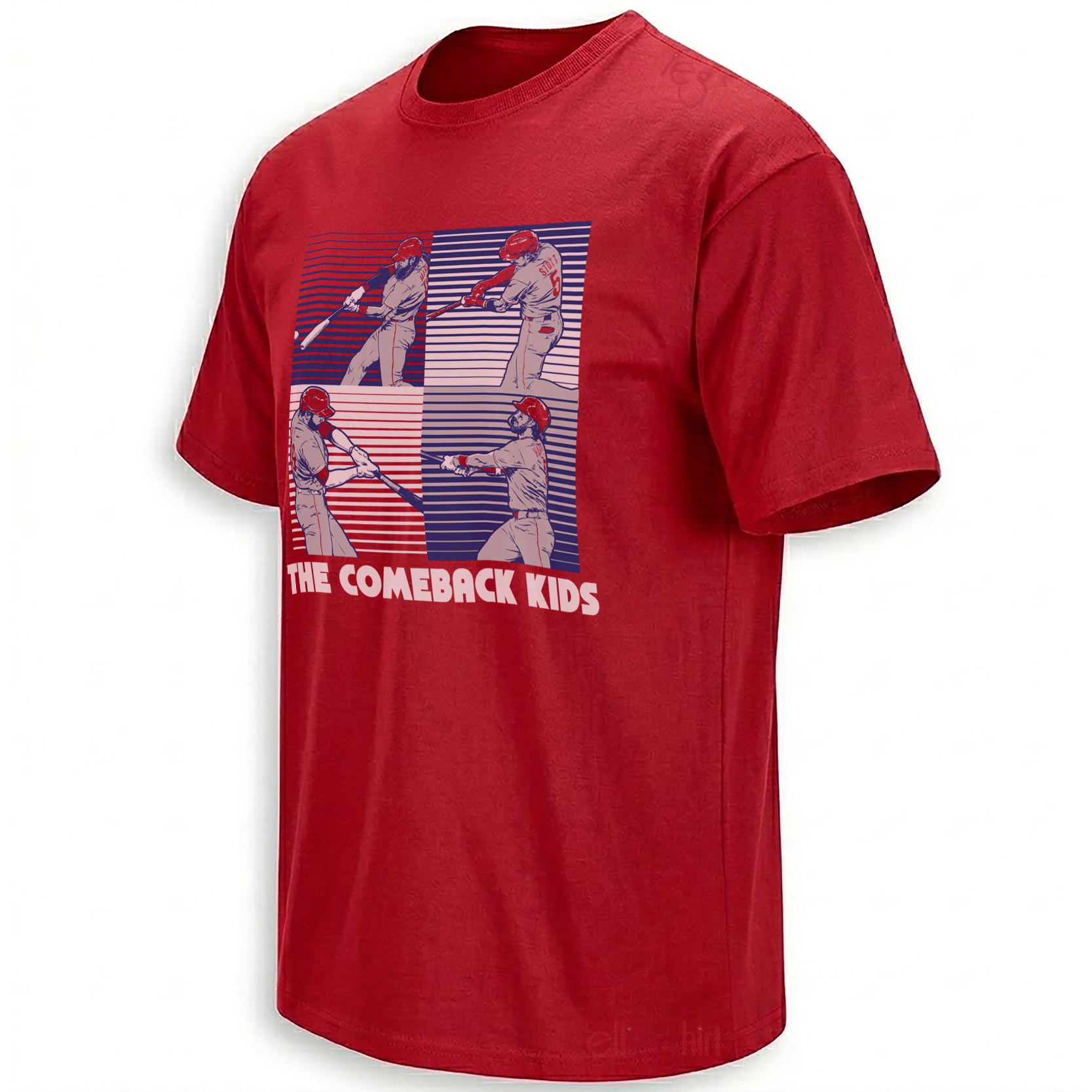
The Artwork Turns One Series Into a Team Identity
“The Comeback Kids” is broader than a player-specific celebration. It does not assign ownership of the streak to Harper, Hill or one ninth inning. The phrase belongs to the group.
That collective framing matters because the artwork preserves the most distinctive truth about the Washington series: Philadelphia’s late-game danger could emerge from anywhere.
Momentum Became Psychological
After the first comeback, the Phillies gained a memorable win. After the second, they gained evidence that the first had not been random. By the third, the Nationals’ lead carried a different emotional meaning.
That is how momentum functions across a series. It does not mechanically guarantee another hit. It alters the expectations surrounding each pitch. Philadelphia’s hitters entered the ninth with proof. Washington’s relievers entered it with recent failure still visible.
Why Philadelphia Fans Recognize This Story
Phillies culture has long preferred teams that make the game emotionally difficult. Clean, efficient victories are welcomed, but the club’s deepest mythology often forms through defiance, noise and the refusal to accept the apparent ending.
“The Comeback Kids” fits that tradition. It does not promise perfection. It celebrates the quality Philadelphia supporters often value more: the willingness to remain dangerous after the game appears lost.
The Ninth Inning Became a Shared Ritual
For supporters watching the series, each late deficit changed the meaning of the next inning. The proper response was no longer resignation. It was attention.
That is the cultural gift of a comeback streak. It retrains the audience. Fans begin to remember where they were, who texted first and whether they almost turned the game off before history arrived.
Frequently Asked Questions
Why were the 2026 Phillies called “The Comeback Kids”?
The name reflects three consecutive late comeback wins over Washington, each featuring a go-ahead home run in the ninth inning.
What MLB record did Philadelphia establish?
The Phillies became the first MLB team to hit a go-ahead homer in the ninth inning in three straight games.
Who delivered the key home runs?
Derek Hill delivered the decisive homer on June 24, while Bryce Harper and Hill both homered during the ninth inning on June 25.
How large was the final-game comeback?
Philadelphia recovered from a 5–0 deficit to defeat Washington 10–5.
Why is the design team-focused?
The comeback identity was created through multiple hitters, pinch-hit appearances, walks, defensive work and bullpen innings rather than one player alone.
The Comeback Kids design preserves the week Philadelphia made the ninth inning feel like the beginning rather than the end.
The Comeback Kids Shirt commemorates the Philadelphia Phillies’ historic sequence of three consecutive ninth-inning go-ahead home runs and their unforgettable comeback series in Washington.