
World Champions Subway: The Train That Carried the Knicks Into 2026 History
New York’s title was won by a roster that kept moving together. In the city’s visual language, the perfect championship portrait was never a formal podium. It was the whole group riding one blue-and-orange train toward the final stop.
The New York Knicks officially became NBA champions in San Antonio, but the emotional journey back to the city began before the trophy ceremony was over. Their 94–90 victory in Game 5 completed a 4–1 Finals win and ended a championship wait stretching back to 1973.
Jalen Brunson scored 45 points and delivered 13 consecutive New York points in the fourth quarter. Yet the image that followed was larger than one individual performance. Teammates gathered around the trophy. Knicks fans filled sections of the road arena. Back in New York, people poured into bars, sidewalks and public spaces as though every borough had received the same arrival announcement.
That citywide feeling explains why a subway train works so well as the visual center of the championship. The train is ordinary, crowded and collective. It belongs to no single neighborhood. Everyone boards from a different point, but for a period of time, everyone is moving toward the same destination.
The Subway Is New York’s Most Democratic Championship Symbol
A trophy belongs naturally to the players who won it. Madison Square Garden belongs to the people who can enter it on a given night. The subway belongs to nearly everyone.
It carries office workers, students, performers, tourists, construction crews, lifelong residents and supporters wearing the same colors for entirely different reasons. Some riders grew up with stories of the 1973 champions. Others found the Knicks through the 1990s. A younger generation entered this Finals run without ever having seen New York complete the journey.
During a championship celebration, those differences become secondary. The train car creates temporary community out of people who may never speak on an ordinary morning. A cap, a jersey or one shouted score is enough to turn the ride into a moving postgame section.
2026 Championship Express
The subway is effective because it avoids the polished distance of a formal championship image. It places the players inside a familiar piece of city infrastructure, making the title feel less like something delivered from above and more like something traveling directly through New York.
The result becomes communal transportation: one city, one roster and one final destination.
The Knicks Reached the Last Stop Through Shared Work
Brunson was the defining offensive force and the Finals MVP, but the Knicks’ route required more than one conductor. Karl-Anthony Towns gave New York frontcourt scoring, rebounding and spacing. OG Anunoby supplied the two-way pressure and the Game 4 tip-in that completed the largest comeback in NBA Finals history.
Mikal Bridges connected both ends of the floor through wing defense, timely scoring and durability. Josh Hart turned rebounding and pace into an emotional engine. Supporting players preserved possessions and minutes that allowed the starting group to arrive at the decisive moments with enough room to finish.
The train image captures that structure better than a traditional lineup pose. No one is separated into an individual frame. The players occupy the same vehicle, lean into the same celebration and move as a single championship unit.
The Design Turns a Team Portrait Into a Moving Celebration
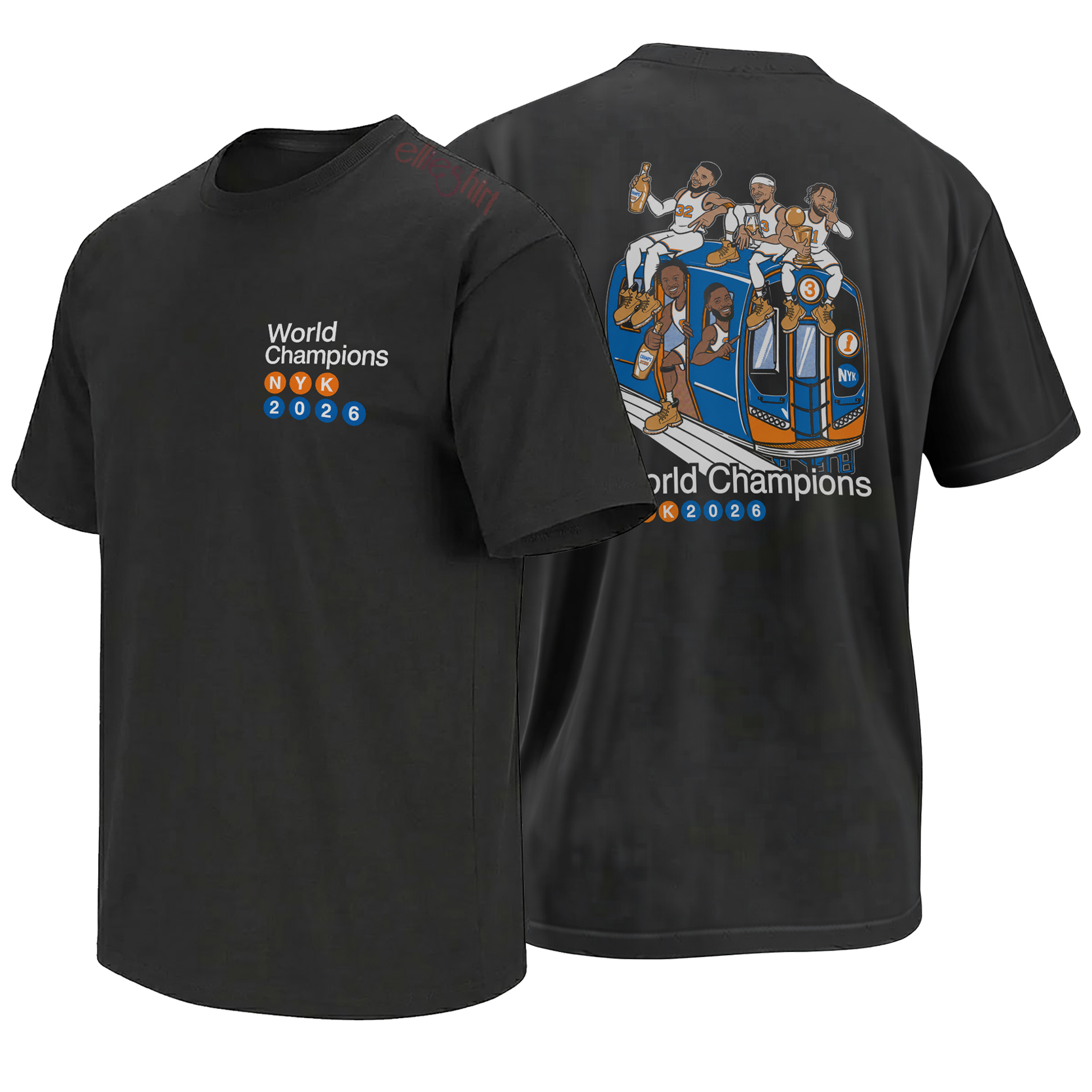
The World Champions Subway Shirt uses two different visual speeds. The front is quiet: a compact NYK 2026 mark styled like a transit identifier. The back expands into a complete scene of the championship core riding and celebrating on a New York train.
That contrast gives the design its editorial clarity. The front operates like the small route symbol a rider notices before entering the system. The back reveals the full destination, the passengers and the reason the train is moving through the city with unusual energy.
The Front Whispers the Result
Minimal front graphics can carry more confidence than oversized declarations. The NYK 2026 marker does not need to explain the entire postseason. Its shape, year and team identity function like a route badge understood by anyone who followed the championship run.
The compact scale also creates an authentic transit feeling. Subway systems communicate through short codes, colored circles, numbers and directional symbols. The chest mark borrows that economy, turning the championship into something that resembles an official line designation.
Visually, this restraint gives the back room to become the main event. The front opens the gate. The back carries the full train.
The Back Makes the Whole Team Part of the City
Traditional championship portraits often place players in rows or around a trophy. The train composition avoids that formality. Players sit, lean, raise bottles and occupy the carriage like a group that has already left the ceremony behind and entered the celebration.
The blue-and-orange subway car does more than repeat team colors. It fuses the roster with New York’s visual identity. The players are no longer merely champions representing the city from a distance. They are physically riding through its symbolic infrastructure.
The trophy remains visible because the destination still matters. But the energy comes from the group around it. The back is not a picture of one player carrying everyone else. It is a picture of everyone taking the championship home together.
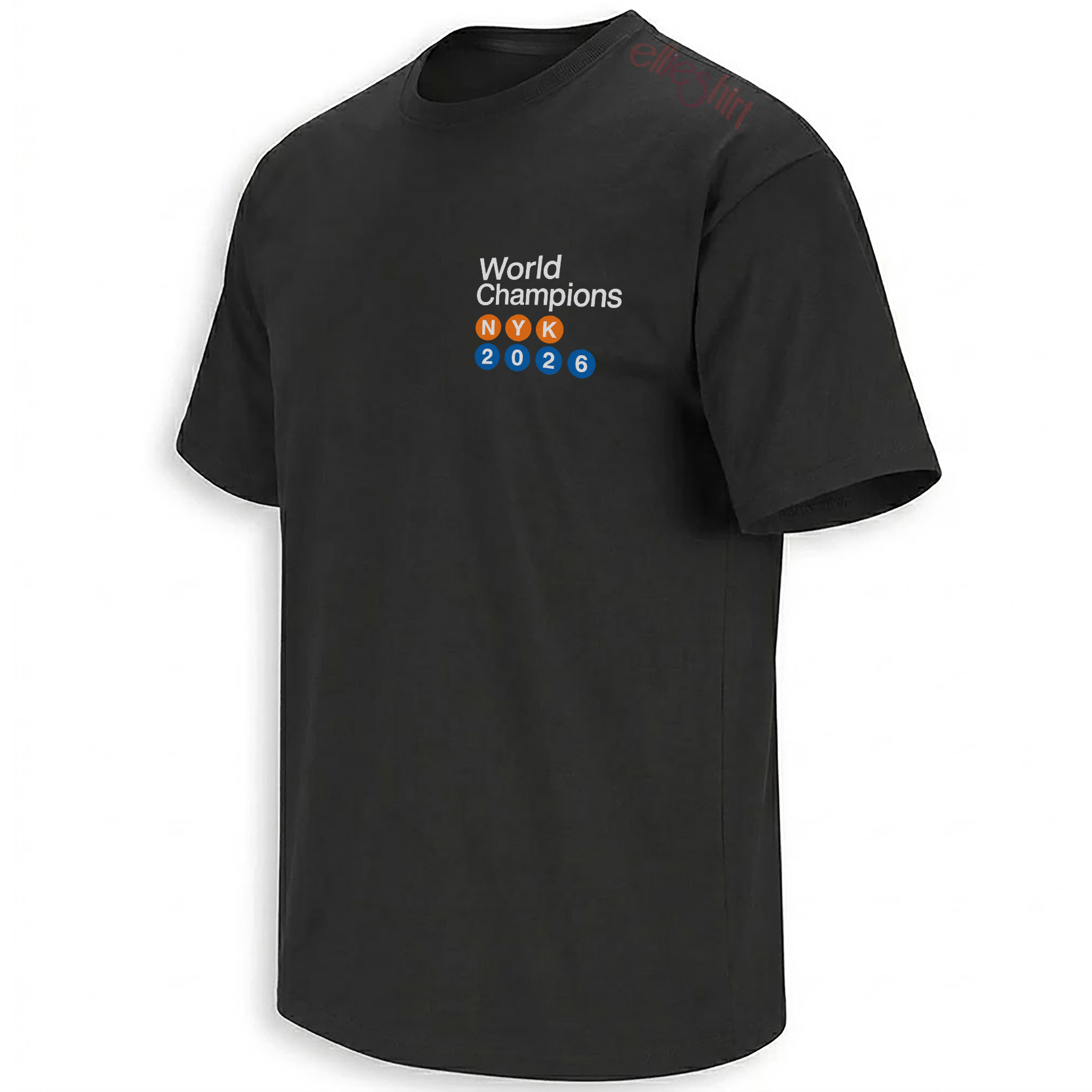
A small NYK 2026 chest symbol reduces the championship to the visual economy of a New York transit identifier.
Open the front design →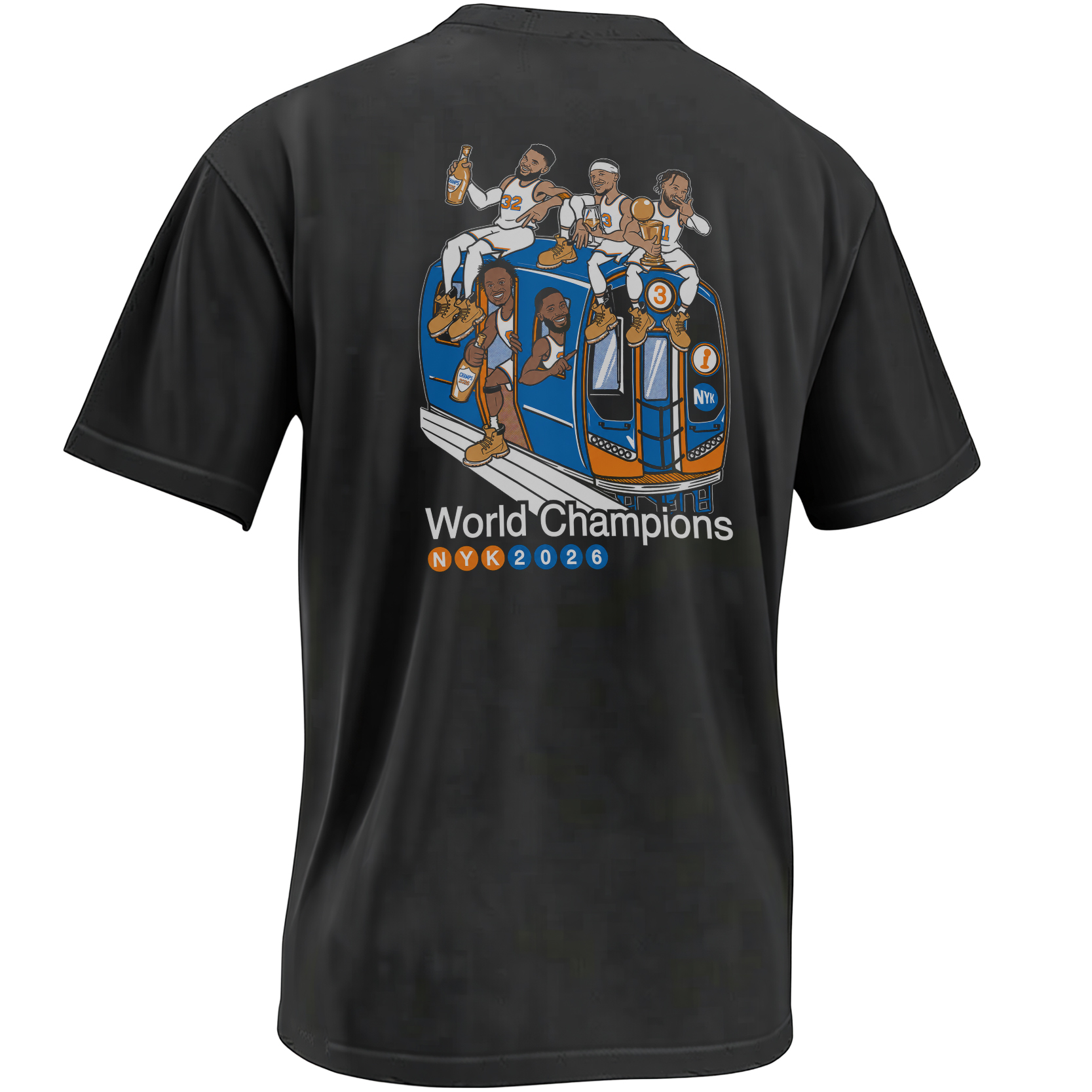
The full back illustration places the title-winning core, the trophy and New York’s transit identity inside one moving celebration.
Open the team train graphic →A Subway Line Is the Perfect Metaphor for a Playoff Run
Every postseason begins with multiple possible routes. Teams enter from different seeds, cities and histories. Each round removes another line until only two destinations remain.
New York’s route passed through Atlanta, Philadelphia, Cleveland and San Antonio. The circumstances changed at every stop. Atlanta forced an early response. Philadelphia and Cleveland were swept. San Antonio created five late-game tests and built double-digit leads in every game the Knicks eventually won.
The line did not run without delay. It kept running anyway. That distinction matches the emotional identity of the team: New York was not defined by avoiding trouble, but by refusing to let trouble become the final station.
The Train Carries Five Personalities Without Separating Them
Brunson’s control is different from Hart’s chaos. Towns changes the game through size and range, while Anunoby and Bridges create pressure through defensive length and positional flexibility. The starting group does not share one personality.
That diversity is exactly why the train composition works. Public transit brings different people into one temporary system. Each passenger keeps an individual posture, but everyone moves at the speed and direction of the same vehicle.
The artwork allows the championship core to remain recognizable as separate figures while making collective movement the central idea. The roster is not presented as five isolated stars. It is presented as one line in service.
The Blue-and-Orange Train Turns Infrastructure Into Fandom
New York transit is usually rendered in steel, black, white and institutional color coding. Rebuilding the carriage through Knicks blue and orange changes infrastructure into fan territory.
Blue gives the train structural weight. Orange supplies motion and heat. White creates contrast, while the dark garment allows the complete scene to appear like a night train moving through the city after the final buzzer.
The result avoids turning the subway into a generic New York backdrop. It becomes a Knicks object, as though the championship has temporarily taken control of the line and repainted it for the ride home.
The train represents shared direction, daily New York life and the idea of an entire roster traveling toward one destination.
Knicks blue and orange transform public infrastructure into a moving piece of championship fan culture.
Sitting and celebrating on the train feels more immediate and human than a formal lineup arranged around the trophy.
The Championship Celebration Was Already Moving Through the City
New York did not wait for an official parade to begin processing the result. Fans gathered around Madison Square Garden, filled bars and public viewing areas, moved through Times Square and carried the celebration across boroughs.
That movement made transportation part of the night’s emotional texture. People were not only celebrating where they had watched. They were traveling between groups, neighborhoods and gathering points while the city attempted to absorb a result that had been unavailable for fifty-three years.
The subway therefore becomes more than a clever local reference. It is the system through which separate celebrations begin to feel like one event. A chant started on a platform can reappear several stops later. A crowded train can become a mobile extension of the arena.
San Antonio contained the official trophy presentation. New York contained the larger emotional release. Every street gathering, bar, platform and train car helped carry the championship away from the court and into public memory.
Why This Image Feels Different From a Standard Roster Shirt
Roster graphics usually rely on names, numbers or formal player portraits. Those structures are useful because they document who belonged to the team. The subway illustration documents how the group felt.
Players are not reduced to a list. Their body language becomes part of the storytelling. The trophy is being transported rather than displayed behind glass. The group appears to have boarded immediately after the celebration, carrying the title directly toward the city that had been waiting for it.
That imagined movement creates emotional continuity between the final buzzer and the next morning. The championship does not end when the ceremony ends. It gets on the train.
Why “World Champions” Fits the Scale of the Back Graphic
“World Champions” is traditional language within American professional championship apparel. Here, the phrase also creates a productive contrast with the intensely local subway image.
The achievement is presented at the largest possible scale, while the setting is unmistakably New York. Global declaration and local infrastructure occupy the same composition. The Knicks rule the basketball world, but they are still taking the train home.
That contrast protects the artwork from becoming too ceremonial. The title is enormous. The celebration remains grounded in the everyday life of the city.
The Final Stop Is Not Madison Square Garden
The Garden is basketball’s stage, but it is not the only place where Knicks identity lives. Fans carry the team into Queens, Brooklyn, the Bronx, Staten Island, Long Island, New Jersey and far beyond the physical boundaries of the city.
A subway train is valuable because it refuses to make the championship belong only to courtside seats or one Manhattan address. The route extends outward. The title reaches people who experienced the season from different distances but shared the same emotional destination.
In that sense, the final stop is not one station. It is the point where a championship becomes permanent in the lives of the people who waited for it.
A Moving Piece of the Knicks’ New Championship Archive
The wider New York Knicks Shirts collection now records the 2026 title through many visual forms: individual performances, comeback moments, Finals slogans, roster tributes and citywide celebration graphics.
The broader NBA Shirts archive shows how basketball history moves beyond official highlights. A score can become a slogan. A player can become a symbol. A city train can become the vehicle carrying an entire championship story.
The Train as a 2026 Championship Timestamp
The World Champions Subway graphic preserves the title through collective motion rather than a static trophy pose. Its front provides the route marker. Its back places the championship core aboard the most recognizable shared system in New York.
The design belongs to the exact period when the Knicks’ long wait ended and the city began carrying the result from one neighborhood to another. It is a team portrait, a transit image and a visual announcement that the final stop had finally arrived.
World Champions Subway FAQ
What does the subway train symbolize in the Knicks design?
The subway represents New York’s shared daily life and the way the championship roster traveled toward one destination together. It also connects the title to supporters across the city rather than only to Madison Square Garden.
Why are the Knicks players shown riding together?
The composition emphasizes collective movement and shared work. Jalen Brunson led the Finals, but Karl-Anthony Towns, OG Anunoby, Mikal Bridges, Josh Hart and the wider roster all contributed to the 2026 championship.
What does the NYK 2026 front symbol mean?
The compact chest mark treats the team and championship year like a New York transit route identifier. It quietly introduces the larger subway celebration shown on the back.
Why is the train colored blue and orange?
Blue and orange connect the subway car directly to Knicks identity. The colors transform familiar New York infrastructure into a moving piece of championship fan culture.
Why does the subway idea fit the 2026 title moment?
The championship celebration moved rapidly from San Antonio into streets, bars and public spaces across New York. A train carrying the entire roster captures the sense that the trophy was traveling home to a city that had waited 53 years.
Brunson, Towns, Anunoby, Bridges and Hart reached the Finals through different careers and responsibilities. Knicks supporters entered the story through different generations and neighborhoods. The 2026 title placed them on one line, moving toward the same destination.
World Champions Subway Shirt turns the Knicks’ 2026 NBA title into a New York transit story, pairing a minimal NYK 2026 chest marker with a full back illustration of the championship core riding a blue-and-orange team train with the trophy.