
Five Ways to Remember the Night the Knicks Became Champions
New York’s 2026 title produced one official result and several emotional versions of history — teamwork in blue and orange, trophies glowing against black, vintage sand graphics and victory symbols already designed to look decades old.
By the time the final buzzer sounded in San Antonio, the result had already escaped the boundaries of one basketball game. The New York Knicks had beaten the Spurs 94–90, completed a five-game NBA Finals victory and ended the franchise’s championship wait stretching back to 1973.
Jalen Brunson supplied the defining individual performance with 45 points, but the emotional architecture of the title was broader. New York had repeatedly fallen behind throughout the series and repeatedly found a way back. The championship therefore arrived carrying two ideas at once: one superstar’s control and an entire group’s refusal to accept the shape of a losing game.
Almost immediately, the title began producing different visual identities. Some graphics emphasized collective strength. Others centered the Larry O’Brien Trophy. Some looked like fresh locker-room declarations; others were distressed and faded as though the championship had already spent years inside New York memory.
A title this emotionally large could not fit inside one graphic language
Championship design usually begins with certainty. The ambiguity of the season is gone. There is a winner, a year, a trophy and a word powerful enough to carry the entire result: champions.
Yet certainty does not mean uniformity. Fans do not all experience the same title in the same way. Some remember the teamwork that kept the season alive. Some see the trophy as the only image necessary. Others respond to a retro treatment because a 53-year wait already feels connected to archival photographs, old newspaper type and clothing inherited across generations.
These five Knicks designs reflect those separate emotional entrances. Together, they function less like a product assortment and more like a small visual exhibition about how New York began processing the title in real time.
The same Knicks title, translated into five different visual moods
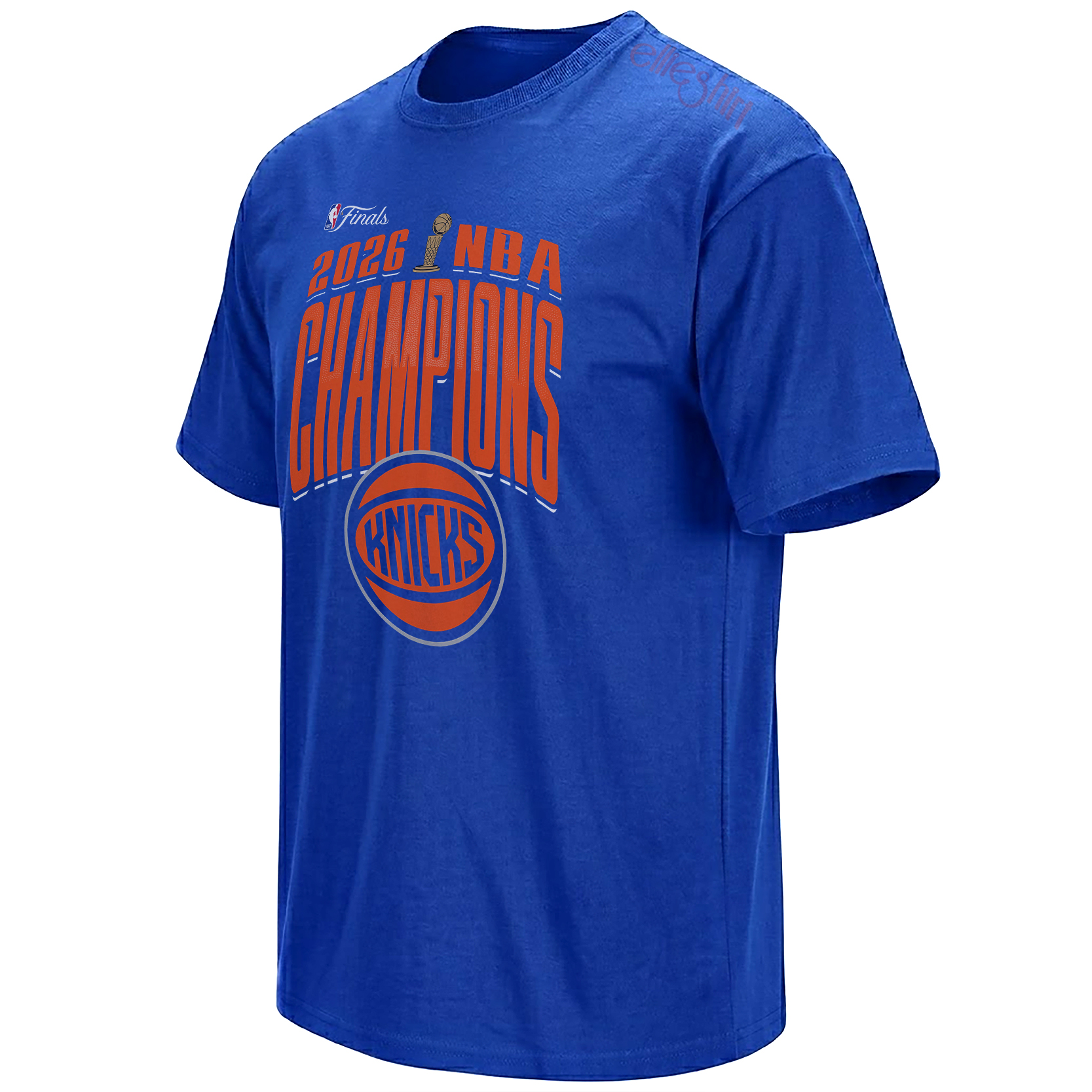
Tall orange lettering rises from a royal-blue field, making the championship feel direct, public and inseparable from Knicks color identity.
View the bold championship piece →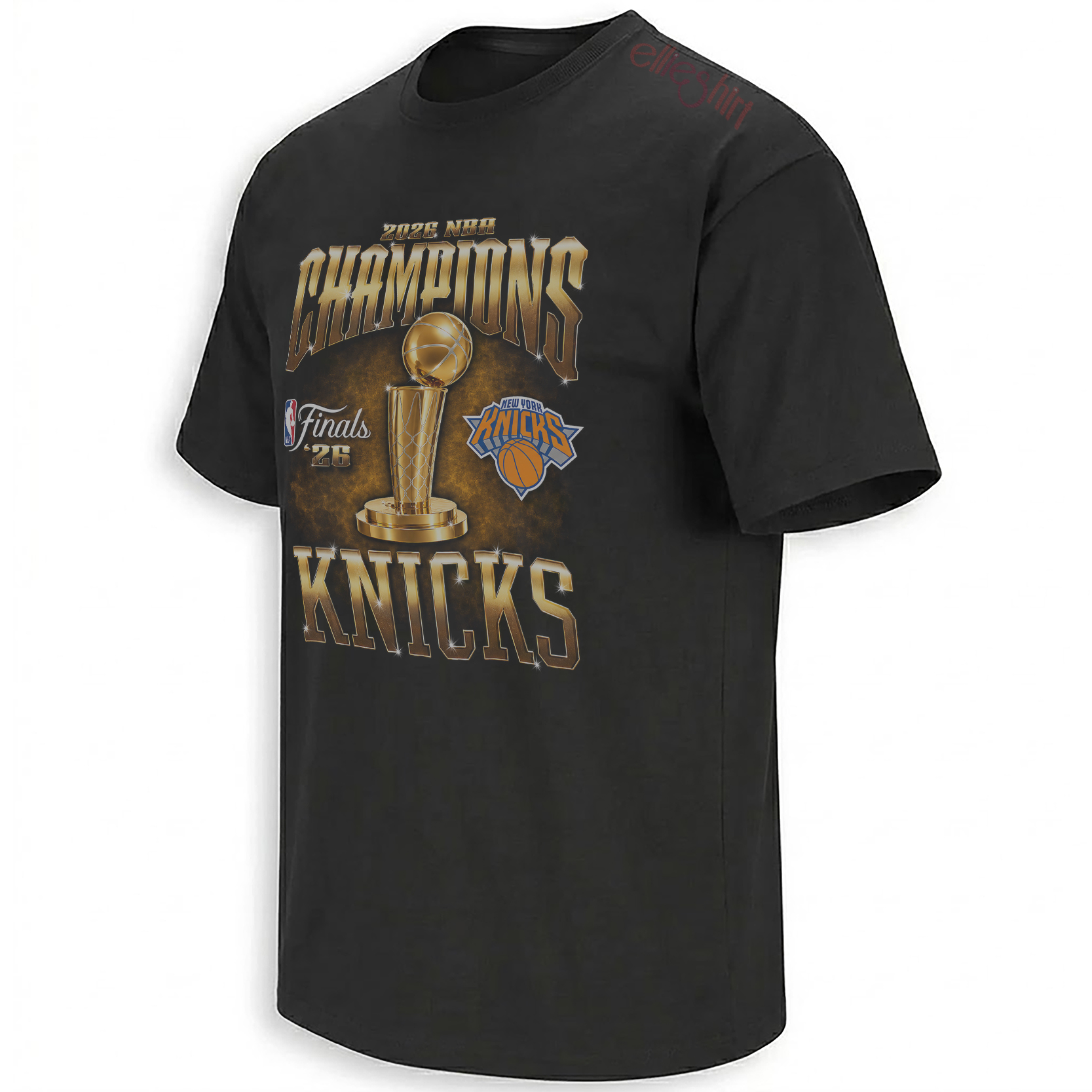
Against black, the trophy becomes a source of light while distressed gold type gives the graphic the weight of a hard-earned monument.
Open the gold trophy design →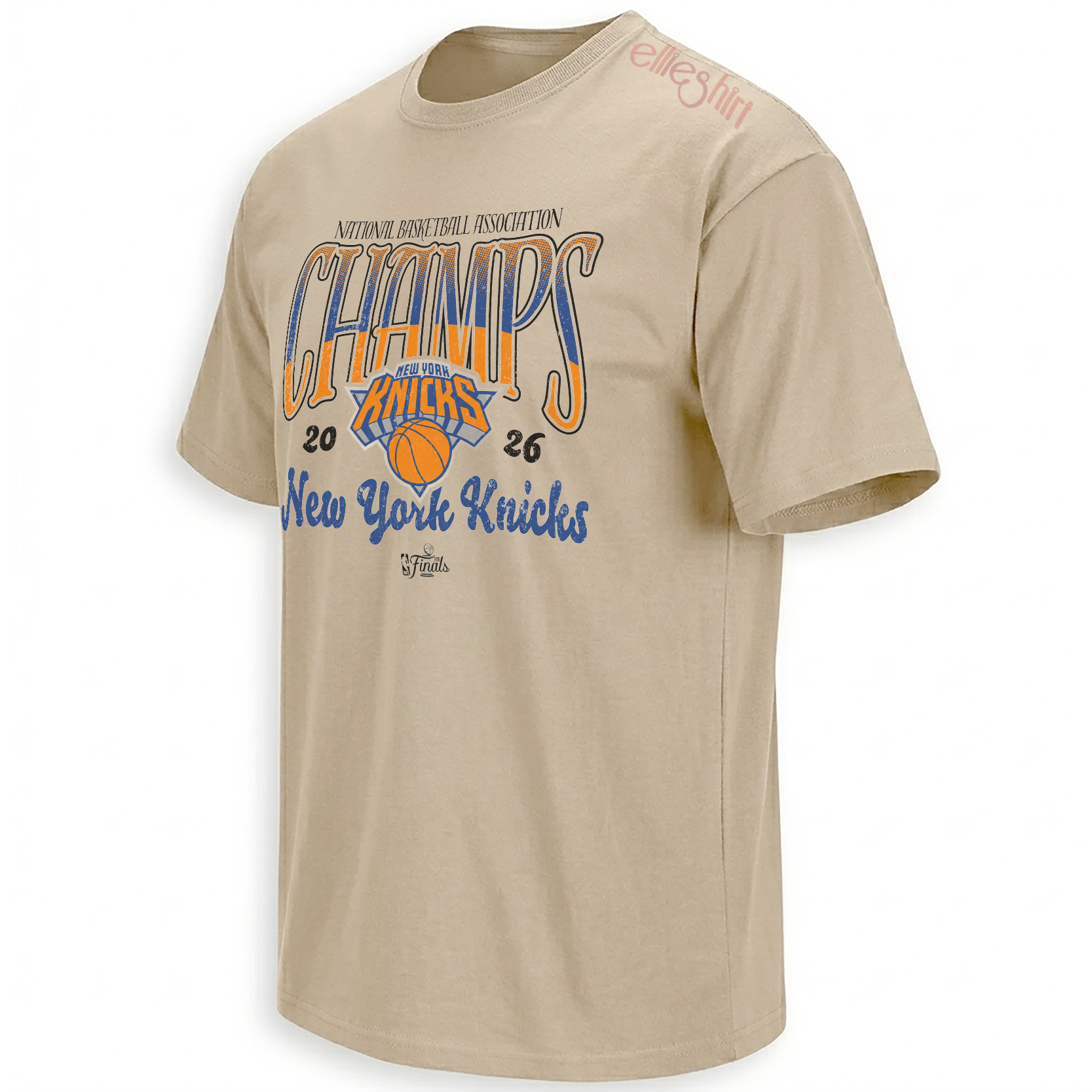
Faded blue script, muted orange and a warm sand base make the new title feel like a piece recovered from an old New York sports drawer.
Explore the vintage treatment →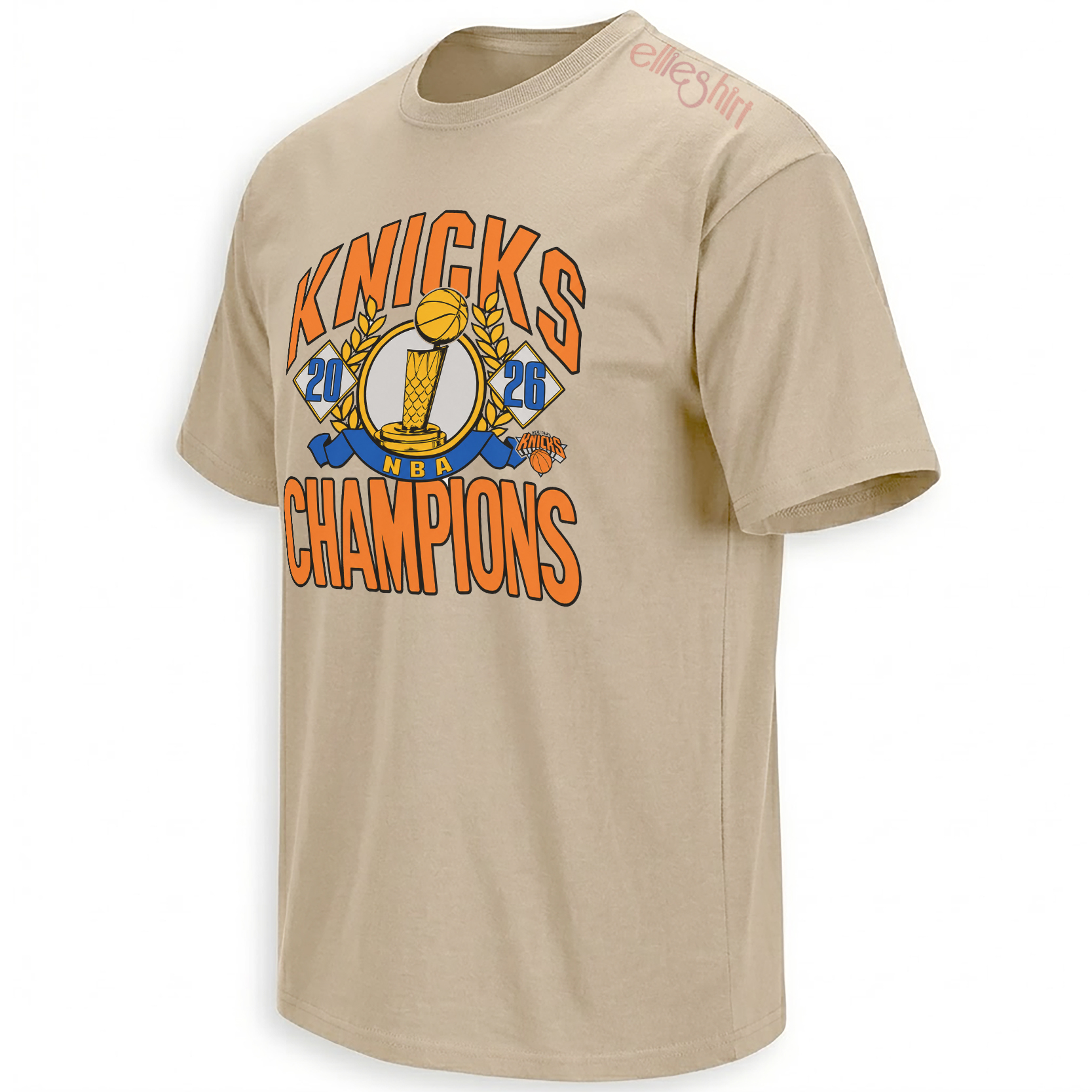
A trophy framed by laurels transforms the basketball result into a victory crest, balancing classical symbolism with bright Knicks color.
View the trophy-and-laurel piece →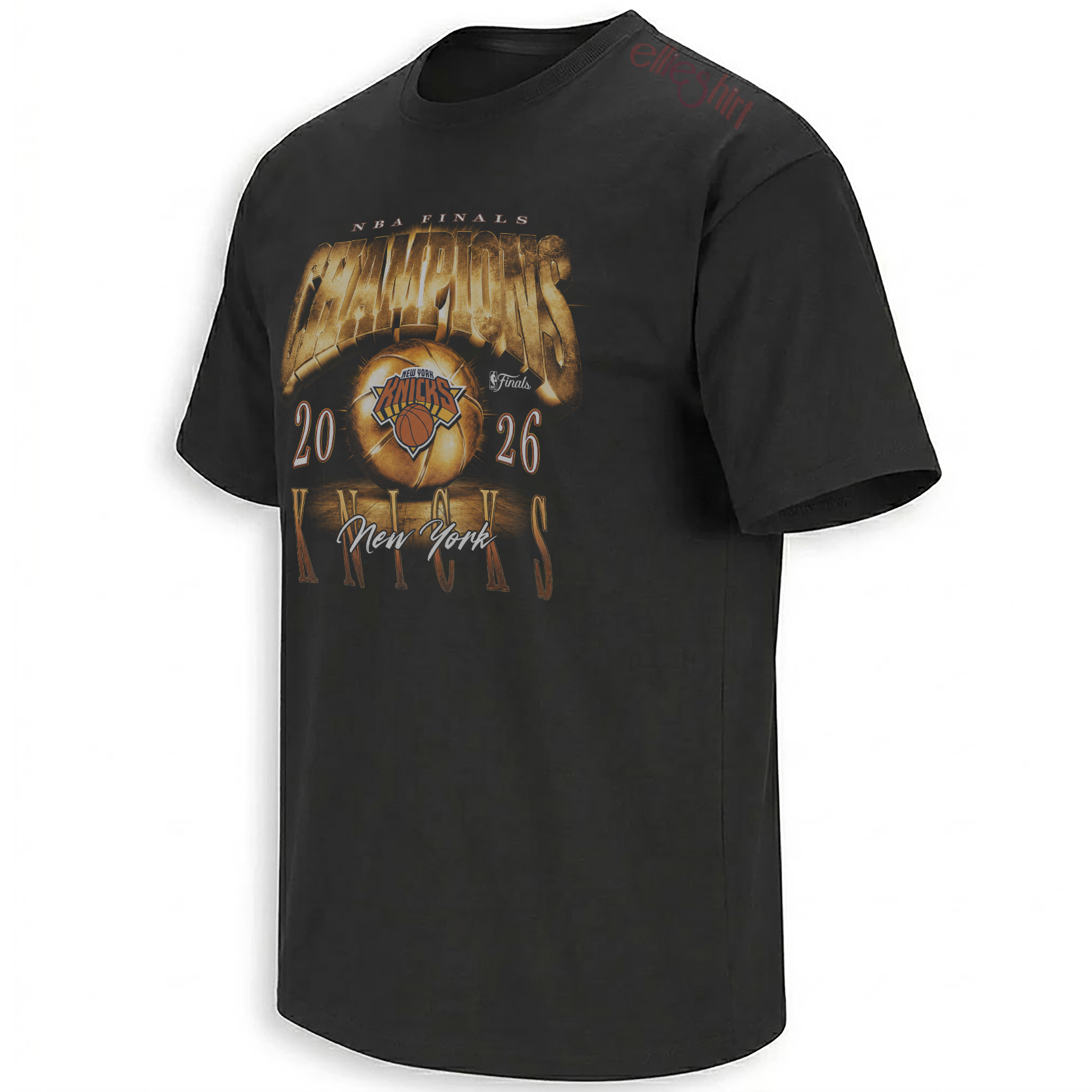
The central basketball glows like a championship object, merging the instrument of the game with the gold language of victory.
Open the golden-ball graphic →Bold teamwork turns Knicks color into the championship itself
The royal-blue teamwork design is the most immediate of the group. It does not ask the viewer to interpret complicated symbolism. Its message is built from scale, contrast and team color.
“2026 NBA Champions” rises vertically in condensed orange type, creating the rhythm of a banner hanging inside an arena. The narrow letters feel crowded upward, as though the graphic is trying to use every available inch to make the result visible from across a room.
The circular Knicks mark beneath the headline gives the composition a stable endpoint. Rather than allowing the word “Champions” to float as a generic league statement, the round insignia brings the claim back to the team and city.
This is the graphic closest to the emotional language of the series. New York’s four victories required recoveries from double-digit deficits. The bright blue-and-orange treatment therefore feels less ceremonial than physical — direct, stubborn and built around a collective identity that kept returning after games appeared to be moving away.
The gold trophy graphic treats victory like a monument
Where the royal shirt speaks through team color, the black-and-gold design speaks through hierarchy. The Larry O’Brien Trophy occupies the center. Everything else supports it.
The dark background removes visual noise and lets the metallic tones carry the emotion. “Champions” arches above the trophy in large distressed lettering, while “Knicks” anchors the composition below. The team logo sits beside the prize rather than overpowering it.
That arrangement mirrors the emotional clarity of the final buzzer. For decades, Knicks culture had contained countless personalities, arguments, rebuilds and memories. In this version of the story, all of that complexity narrows toward one object New York had not held since 1973.
The distressed finish prevents the gold from looking overly polished. It suggests weight, age and effort. The trophy shines, but the surrounding type looks as though it had to survive the entire wait before reaching the same night.
Vintage sand makes a new championship feel inherited
The sand design performs a different cultural task. Instead of presenting the title as a breaking announcement, it imagines how the championship might look after years of memory have softened its edges.
The warm garment color recalls old souvenir shirts, faded sports programs and apparel stored long enough for the fabric and print to become emotionally inseparable. Blue and orange remain present, but neither color arrives at maximum intensity.
The word “Champs” appears large and distressed, while the curved New York Knicks script below introduces a handwritten quality. The result feels less like a corporate declaration and closer to an artifact purchased outside the arena, worn through summers and eventually passed to another generation.
That approach is especially effective for this championship because the event already contained inherited memory. Many supporters experienced the title alongside parents, grandparents or family stories formed long before the 2025–26 roster existed. The graphic visually shortens the distance between 1973 and 2026.
The laurel crest turns New York’s victory into ceremony
Laurel branches have represented victory for centuries, but their function inside sports design is not simply historical decoration. They provide a visual frame that separates an achievement from an ordinary season.
In the trophy-laurel graphic, the Larry O’Brien Trophy stands in the center while blue branches rise on either side. Orange “Knicks” and “Champions” lettering holds the composition above and below, creating a badge-like structure.
The small basketball details and team marks keep the graphic rooted in modern fan culture, while the laurel gives it the formality of a championship seal. It feels appropriate for the part of the title story that belongs to banners, ceremonies and the permanent addition of 2026 to the franchise record.
The sand base keeps that ceremony approachable. Rather than becoming a formal black-and-gold emblem, the crest sits inside a softer vintage palette, balancing official achievement with neighborhood sportswear memory.
The golden ball remembers the object that carried every comeback
The final design shifts attention away from the trophy and toward the basketball. That is a subtle but meaningful change.
A trophy represents the completed achievement. The ball represents the work required to reach it: Brunson controlling possessions, teammates creating space, rebounds recovered, passes made under pressure and four separate Finals victories pulled back from double-digit deficits.
Rendered in gold against black, the basketball becomes almost celestial. It sits inside the composition like an object of gravity, pulling the team logo, the year and the championship lettering toward its center.
The surrounding typography is distressed and partially shadowed, giving the piece a darker late-night feeling. It belongs to the hours after the win, when the game ball has stopped moving but still seems to contain every possession that made the result possible.
Different designs, one shared idea: this championship was earned through recovery
The visual differences between the five graphics are significant, but they all return to the same emotional center. New York’s title did not arrive through uninterrupted control. It arrived through a team repeatedly absorbing the shape of defeat and changing it.
The bold teamwork design expresses that resilience through scale and color. The trophy graphics show the final reward. The vintage sand piece connects the result to generations of waiting. The laurel marks the victory as permanent. The golden basketball preserves the game itself as the object through which every comeback had to pass.
Together, the designs form a more complete record than any single championship logo could. They show how supporters move from seeing the final score to deciding what the result means personally.
That process is central to fan culture. Official history tells the public who won. Visual culture determines how different communities carry the win forward.
From individual moments to the completed New York story
The title did not begin with Game 5. It grew through Brunson’s late-game control, OG Anunoby’s Game 4 tip-in, Karl-Anthony Towns’ interior presence, Josh Hart’s activity, Mikal Bridges’ versatility and a postseason identity built around refusing to remain behind.
The wider New York Knicks Shirts collection preserves those different stages through player graphics, comeback language, city references and completed championship designs.
The 2026 NBA Finals Champions collection narrows the focus to the final achievement, while the broader NBA Shirts archive places New York’s title inside the larger visual culture of playoff basketball, Finals moments and fan-created memory.
Frequently asked questions
Why are there so many different visual styles for the same Knicks championship?
Each style emphasizes a different emotional meaning. Bold blue-and-orange graphics focus on team identity, gold trophy designs emphasize the prize, vintage treatments connect the title to history and laurel or basketball symbols frame the achievement through ceremony and the game itself.
Why does vintage styling fit the Knicks’ 2026 championship?
New York’s title ended a wait extending back to 1973, so the championship immediately connected several generations of supporters. Faded typography, sand fabric and archival colors visually express that inherited memory.
What does the gold trophy represent in Knicks championship designs?
The gold trophy represents finality. After decades of incomplete seasons and near-misses, it reduces the entire emotional story to the object that confirms New York finished the season as NBA champion.
Why is teamwork an important theme in the 2026 Knicks title story?
Although Jalen Brunson delivered the defining Game 5 performance, New York’s run depended on complementary scoring, defense, rebounding and late-game execution across the roster. The team also recovered from double-digit deficits in each of its four Finals victories.
How does the golden basketball design differ from a trophy-centered graphic?
A trophy symbolizes the completed result, while the basketball represents the possessions and collective work required to earn it. Turning the ball gold connects the physical game directly to the championship reward.
From the bold teamwork design to the golden-ball championship graphic , these pieces preserve the Knicks’ 2026 title through different forms of fan memory — immediate celebration, historic weight, collective resilience and the trophy New York waited 53 years to see again.
The Knicks 2026 NBA Champions collection translates New York’s historic title into five visual moods, from bold blue-and-orange teamwork and gold trophies to vintage sand, victory laurels and a glowing championship basketball.