
McDowell’s All-American Turns Recruit Hype Into Fast-Food Comedy
The joke works because basketball already treats teenage stardom like a menu board: rankings, showcases, mixtapes, sauces, nicknames and instant legacy. McDowell’s just makes the whole thing taste more ridiculous.
Basketball has always known how to sell a phenom before the phenom has even played a minute on the biggest stage.
That is the real joke underneath McDowell’s All-American. The phrase sounds like a cracked fast-food version of basketball’s most polished youth pipeline: the elite showcase, the televised dunk contest, the player intro, the uniform reveal, the idea that a teenager can become a brand before he becomes a college freshman.
By mixing that world with McDowell’s-style movie nostalgia, the design lands in a funnier place than a normal basketball parody. It is not only making fun of fast food. It is making fun of the way sports culture packages talent like a combo meal: extra hype, extra sauce, future franchise on the side.
Why The Joke Feels Instantly Readable
Some parody designs need explanation. This one does not. “All-American” already carries sports prestige. McDowell’s already carries fast-food comedy energy. Put them together and the viewer understands the joke before reading the fine print.
The basketball layer matters because “All-American” is one of the sport’s most loaded phrases. It suggests scouting reports, rankings, gym buzz, future lottery dreams and the clean visual language of youth basketball showcases. The food layer pulls all of that down to earth.
That contrast is what makes the idea funny. Elite basketball culture wants to look serious. McDowell’s All-American asks what happens when that seriousness gets printed like a fictional restaurant promo.
McDowell’s Is Still Perfect Pop-Culture Shorthand
McDowell’s has survived because it is more than a fake restaurant name. It is a perfectly understood parody object: close enough to fast-food culture to feel familiar, different enough to become its own joke, and memorable enough that people still recognize the reference decades later.
That makes it especially useful for sports design. Basketball fans love references that feel like inside jokes without needing a full explanation. McDowell’s gives the shirt that instant throwback comedy layer, while the All-American language gives it the athletic frame.
Together, they create a fake universe that feels weirdly plausible: a world where top prospects do not get invited to a polished showcase, but to a burger-counter basketball classic with a mascot, a tray liner and a scouting report on the receipt.
The Design Reads Like A Fake Showcase Poster
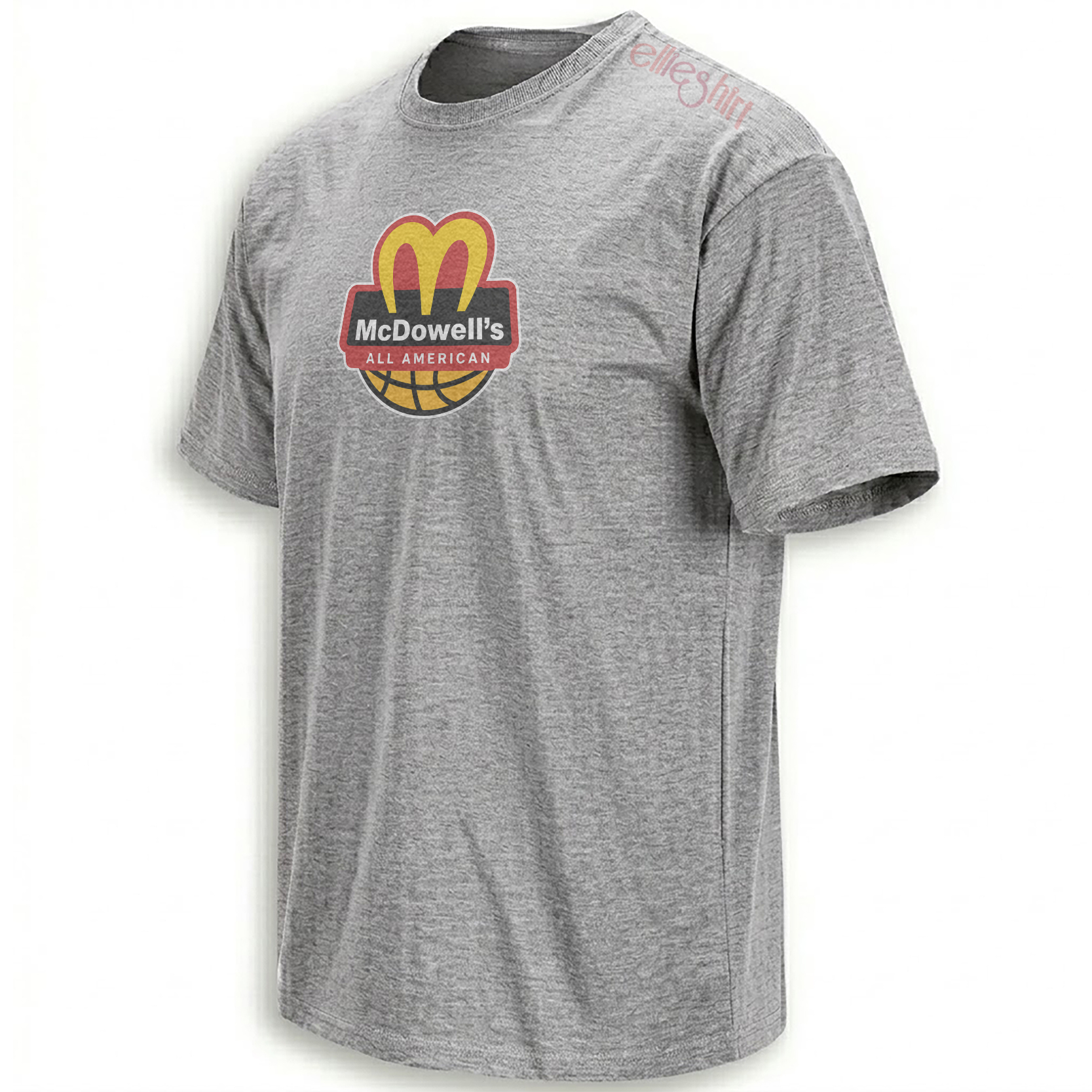
The McDowell’s All-American Shirt Basketball design works because it feels like an event that could exist inside a comedy universe. It has the confidence of a real showcase graphic and the wrongness of a fake fast-food promotion.
The color language does a lot of the storytelling. Red and yellow instantly suggest fast food, speed, appetite and signage. Basketball language brings in prestige, athletic identity and youth-sports mythology. The joke sits right in the collision between those two worlds.
The best part is that the design does not have to name every reference out loud. The phrase “McDowell’s All-American” is doing the work. It sounds official and unserious at the same time, which is exactly where good parody lives.
Why Basketball Fans Love Fake Institutions
Sports culture is full of fake institutions that feel real because fans repeat them enough: imaginary academies, joke leagues, meme awards, fake restaurants, made-up trophies and group-chat Hall of Fames. McDowell’s All-American fits that tradition.
It gives fans a way to laugh at the machinery around basketball greatness. The player rankings, the food sponsorships, the national showcases, the glossy graphics, the pre-draft vocabulary — all of it becomes lighter when framed as a fake fast-food honor.
That is why the shirt can work beyond one team or one game. It is not tied to a final score. It is tied to the broader comedy of basketball culture: the way hype gets packaged, branded and served before anyone knows what the career will actually become.
In cultural terms, this design is a parody artifact. It does not claim to be part of any official basketball showcase or restaurant brand. It works as a fan-made comedy object about the overlap between recruit hype, fast-food nostalgia and movie-reference humor.
The Basketball Collection Gets A Pop-Culture Side Quest
Not every basketball graphic needs to come from a box score. Some come from the sport’s surrounding language: recruiting, commercials, throwback movies, sneaker culture, food jokes and the weird ways fans connect everything back to hoops. The broader basketball collection is stronger when it has room for those side quests.
This piece also fits naturally beside the wider pop culture collection and funny shirts collection, where the appeal is not only team loyalty but recognition. The viewer either gets the joke immediately or asks someone why the fake restaurant basketball shirt is funny.
That is why McDowell’s All-American has more range than a simple food joke. It turns basketball’s most serious prestige language into something you can imagine glowing above a counter, next to a value meal and a five-star scouting report.
FAQ
What is the joke behind McDowell’s All-American?
The joke mixes fast-food parody with basketball All-American culture. It imagines elite recruit language as if it belonged to a fictional restaurant-style basketball showcase.
Why does the design use food-parody colors?
The red and yellow style gives the graphic instant fast-food energy. That visual language makes the basketball phrase feel like a fake menu-board event instead of a normal sports logo.
Is this connected to an official basketball showcase?
No. The design works as parody and fan humor. It uses All-American basketball language as cultural reference, not as an official event or affiliation.
Why does McDowell’s still work as a pop-culture reference?
McDowell’s remains recognizable because it is a classic fictional fast-food parody. It signals throwback comedy, restaurant satire and movie-reference humor without needing a long setup.
Who is this kind of basketball parody for?
It fits hoop fans who enjoy recruit culture, fake sports institutions, old comedy references and designs that feel like they came from a fictional event poster.
For fans who like their basketball jokes with a side of fast-food nostalgia, the McDowell’s All-American basketball shirt sits naturally between hoop culture and pop-culture parody — not as an official showcase piece, but as the fake event graphic the joke always deserved.